

The Help Chain for Maintaining Production Stability

The purpose of this article is to describe the importance of the Help Chain in the process of production stabilization and to present methods for reacting to the instability problems that arise during production.
1. DEFINITION
The Help Chain is a routine of interaction and engagement among people to solve a problem when it arises, starting with the production operator and involving the immediate leaders and those responsible for all support areas, eliminating process instabilities.
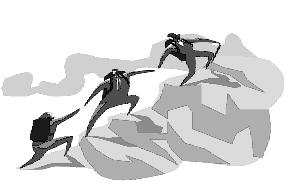
Figure 1: The Help Chain
It also requires people to have “zero” tolerance for problems that generate waste, in an environment where the question is not “who is responsible” but “what is the problem”. This “mental model” that prevails at Toyota is one of the reasons these losses are identified: the goal is not to hide them but to have a routine for identifying and solving them, since problems are considered opportunities for gains.
The Help Chain is fundamental to the stabilization process, as described in the article “Production Stability at Toyota do Brasil” (see item 4, “Methods to guarantee stability”, production stability at toyota do brasil).
The management of the future starts at Lean Summit Brasil! Join the 2025 event and explore new frontiers. Register now!
2. THE TYPICAL SEQUENCE OF ACTIONS
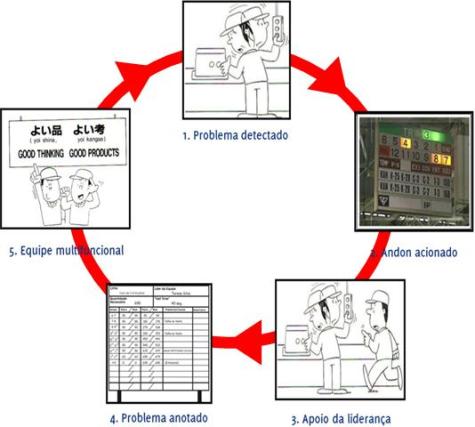
Figure 2: Help Chain Activation Sequence
The first event in a Help Chain is detecting the problem at its source. These are usually problems of quality, machine breakdowns or setups, safety and ergonomics, absenteeism, or employee lateness. In the example above (see Figure 2) we show what basically should happen.
The first intervention is made by the operator, and the more skilled and trained he is, the faster we avoid the resulting complications. Later on we will see the importance of this skill-building (versatility matrix).
The second event after a problem occurs is the way we signal it, and we normally use a light or sound signal, called “Andon” (see the description in the article How to operate an andon), to alert everyone involved. It is important to stress that the signal is given before production actually stops, and in that interval the operator and his support must act.
The third event is the assistance of the area Leader after the signal indicating that there is a problem, automatically and within the “Pitch” (a multiple of Takt). The operator and this Leader must solve it using well-defined methods such as the “5 Whys” or the Ishikawa Diagram.
The fourth event arises when the problem is recorded on the production tracking board, and from there we take certain actions: if the problem has not been solved, production is stopped and supervisors, managers and those responsible for the relevant areas (multi-departmental group) provide support. If the problem has been solved or a containment has been made so as not to stop production, it is recorded on the board and the problem-solving routine follows. We can display the A3 documents (PDCA), the forms with the “5 Whys” analyses and the Ishikawa Diagrams next to the board, as a way of giving feedback to the area's employees and passers-by.
And the fifth and last event would be the intervention of the multi-departmental group, which will address the problem more appropriately using the existing scientific methods. This multi-departmental group is made up of people from the most varied support areas: Quality, Production Planning and Control, Engineering, Maintenance, Procurement, Logistics and others.
Discover the impact of Lean manufacturing consulting and see how it can revolutionize your production, reduce losses and maximize industrial performance. Start building a leaner, more profitable production system now.
Interested in the topic? See our Help Chain training
3. THE FUNCTIONAL STRUCTURE AND THE FREQUENCY OF SUPPORT IN THE GEMBA
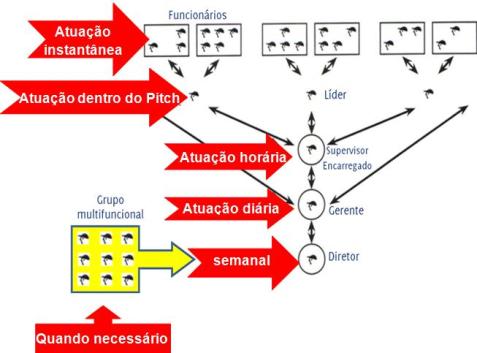
Figure 3: Organizational Structure and Frequency in the Gemba
The company's organizational chart must provide the conditions for this procedure of helping with problems to take place. Demanding things of people without providing humane working conditions is a common problem, and one that usually causes dissatisfaction and resistance to the procedure.
We usually find a 5:1 ratio in the organizational chart (see Figure 3), that is, one director looks after five managers, who look after five supervisors or foremen, who look after five leaders, who in turn look after five employees. The Leader would be that multi-skilled employee who can be trained to work in another area and, in the absence of another Leader, must replace him (the Leader's versatility matrix would be directed toward his skills in working in and leading other areas), and so on for the positions of Foreman, Supervisor, Managers and Directors. This skill-building ensures that the higher position can always step in to help its subordinate, thus guaranteeing help to the process as well as encouraging people's growth.
In addition to this human condition, there must be the habit of acting directly in the Gemba, and a minimum frequency would be for the Director to go at least weekly, the Manager to be there daily, the Supervisor and Foreman to be there hourly, the Leaders obviously to be active within the “Pitch” (a multiple of Takt), and the employees to act immediately when faced with problems.
Forming a multi-departmental group with more specific technical knowledge is also indispensable to support the structure mentioned. These team members must have the mission of helping, under the coordination of management, and solving the problems the production area was unable to solve.
4. DEFINITION OF RESPONSIBILITIES
For the Help Chain to work to reduce production instability, becoming instinctive and a habit for everyone involved, there must be a clear definition of responsibilities so that this “chain” does not break and there is no duplication of actions.
A kind of standardized and organized set of behaviors so that people get involved in an optimized way, following a sequence that goes from the operator to senior management.
As we said, the first action must be performed by the employees (see Figure 4), who must be fit to carry out the work as Standardized Work requires, with training in problem-solving methods such as the “5 Whys”, so that they act quickly, activate the “Andon” informing everyone that a problem is about to occur and stop the line. And if they cannot solve the problem, call the Leader urgently.
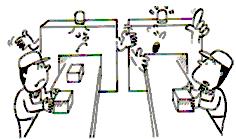
Figure 4: Employees trained according to the standard
The Leader (see Figure 5) begins his work before the workday starts, through 5-minute daily meetings, usually before the start of work, in which he checks the employees' attendance and, using the Kanri-ban Board (a board for daily control of attendance and analysis of individual skills), draws up the assignment of where each person will work, taking the versatility matrix into account. He is also responsible for carrying out people's training and skill-building, following the versatility matrix set by the supervisor, and analyzing shortfalls of trained people on the Kanri-ban board.
When areas emit a light-and-sound signal through the Andon indicating the existence of problems, the Leader must go to the area and assist the employee. Acting quickly and being technically skilled, he must analyze within the Pitch, as well as plan the solution and carry it out with the existing resources. He is responsible for identifying, through the Tracking Board, the problems that have or have not been solved, since unsolved cases must be handled by his superiors.
One of the Leader's behaviors is constantly observing the Andon, since it shows the status of existing problems. When it is showing “green”, the Leader's attitude must be preventive, analyzing and planning improvements. When it is showing “yellow”, he must go to the area and interact, and when it is “red” he must act together with all those responsible to address the cause.
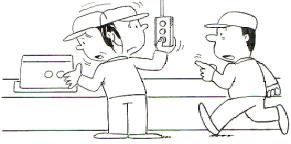
Figure 5: Immediate support from the Leader
Supervisors or Foremen (see Figure 6) must monitor the Production Tracking Board hourly to ensure that problems are being identified and addressed. Whatever the Leader was unable to solve becomes their responsibility, and they must use the existing resources to eliminate or reduce waste, acting in a planned and methodical way (Quality Control Circle, Kaizen Circle, Suggestion Plan). They are also responsible for directing the actions of the multi-departmental group to solve the problems pending on the board and, if there is a failure in workforce skills, they must draw up the people skill-building plan, defining the versatility matrix.
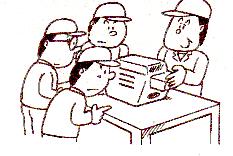
Figure 6: Teaching, developing employees and doing kaizens, the Supervisor's main role
Managers and Directors also play an important role in problem solving. They must follow production and the Tracking Board daily, check whether lean tools and concepts are working properly (audits), and step in when problems are not solved.
They are also responsible for developing new leaders and multipliers of the concept, which is perhaps the most important mission at this hierarchical level, and they must guide and support the Supervisors and their employees, and the multi-departmental group, in eliminating waste and solving problems.
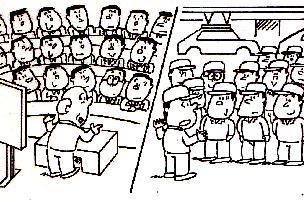
Figure 7: Developing multipliers and safeguarding the philosophy, the main role of Senior Management
The multi-departmental group (see Figure 8), made up of those responsible for support areas such as Quality, Engineering, Planning, Logistics, Procurement, Maintenance, HR and others, must provide all the technical help needed to solve problems systematically and consistently.
This support must be provided daily, not necessarily by everyone at the same time, but quickly, especially when the Andon reports a stop in the production area.
Under the coordination of the Supervisor or Senior Management, they must deal with the problems shown on the Production Tracking Board that were not solved by the Leader and his employees, since scientific or detailed methods will probably be needed.
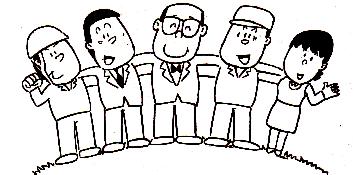
Figure 8: Supporting production in the face of instabilities, the group's main role
5. THE START OF THE HELP CHAIN AND ITS CONSEQUENCES
The whole process begins when the Leader checks his employees' attendance, about 5 minutes before the workday starts. This activity is important to ensure that the company's productivity is maintained, since the losses from employees arriving late to their area are considerable and happen in most companies.
After confirming who is present, the Leader uses the Kanri-ban Board (see Figure 9) to assign employees according to their skills (versatility matrix) and the specific needs of each workstation. This is important, because an employee chosen correctly is able to start the Help Chain when a problem arises. This appropriate action by the employee usually reduces the multiplication of problems, since it is well known that one problem will generate many others.
The Kanri-ban Board has 2 distinct parts: one identifies the number of workstations each production area needs to produce within the planned Takt and the specific stations that need people with better performance. The other part shows how many people there are in that area and their qualifications according to the versatility matrix classification, as well as identifying who is absent and the assignment of those who are present.
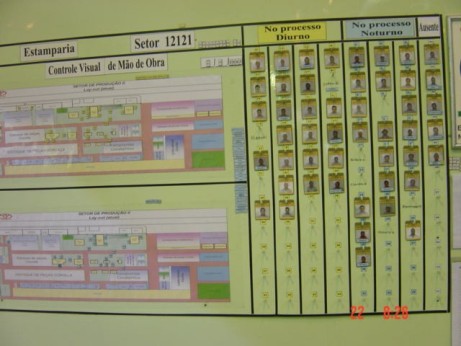
Figure 9: Kanri-ban Board
It is through the Kanri-ban Board that Leaders can also provide the training determined by the Versatility Matrix, carry out the kaizens planned by the Supervisor, and even lend labor to areas that have absenteeism problems, provided labor is available.
The Versatility Matrix (see Figure 10) is the visual way of checking where we have the problem of unqualified labor and where we have processes with shortfalls. It is also through it that we are able to develop multi-skilling, which is fundamental to starting the Help Chain.
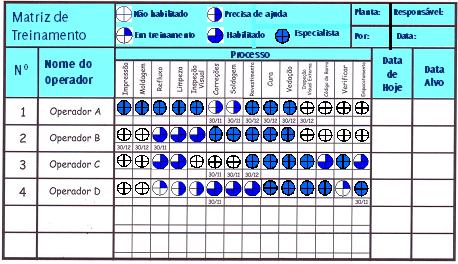
Figure 10: Versatility Matrix
At this moment of the Leader's Daily Meeting we have the “First level of the Help Chain”, and those who take part are usually the employees and their Leader (see Figure 11), possibly with the participation of the Supervisor. The assignment is made, along with announcements and attention to various matters.
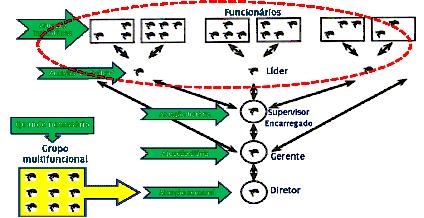
Figure 11: First level of the Help Chain, the Daily Meeting x Kanri-ban
Once the employees have been assigned, work must start strictly on time, because in a company that implements lean, with all areas connected, it is important that processes work like a chain.
Problems will eventually occur during production, and we need to equip the system with a way of warning where and when waste is going to occur. There are two ways of identifying waste: either before it happens or after.
The combination of Andon, Jidoka and Pokayoke (see the Jidoka article) are important tools for detecting and identifying a possible abnormality in the process, and as we saw in the article “How to operate an Andon”, certain actions must begin.
In Figure 12 we show that every time the employee detects an abnormality, he must activate the Andon or another light-and-sound device to call the leadership while he tries to correct the processing. The activated Andon (yellow light on) informs several areas of the plant about the abnormality in the customer process, and both the employee and the leadership (Leader and Supervisor) must, within the Pitch, solve it and prevent the line from stopping.
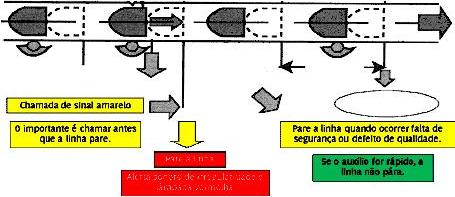
Figure 12: Actions taken from the Andon
If this Help Chain action does not solve or contain the problem, an audible alert is triggered by the Andon and the red signal will come on, indicating that production has stopped. If the skills of the team of employees, combined with the knowledge of the Leader and the Supervisor, are adequate, the line will not stop.
In Figure 13 we see the “Second level of the Help Chain” and what the involvement in this activity should be: detection of the problem, warning through the Andon, followed by involvement and action.
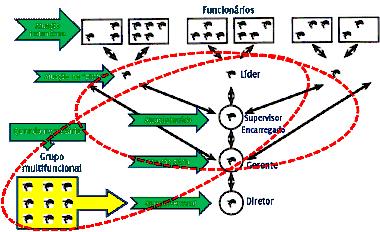
Figure 13: Second level of the Help Chain, the Andon x leadership action
The warning generated by the Andon of the area where the problem is occurring also generates, in sequence, warnings for the areas that supply the component or inputs, and even for the service-providing areas.
In Figure 14 we show an example of a problem that caused production on the “Assembly Line” to stop, with its Andon triggering the red signal. The Line's Andon will consequently trigger the Andon of the “Transmission” area (the Assembly Line's supplier process), which will trigger the Andon of the Machining area (the Transmission's supplier process), and in certain cases it will trigger the Engineering and Maintenance Andon, when these are the support areas for solving the detected problem that caused the Assembly Line (customer process) to stop.
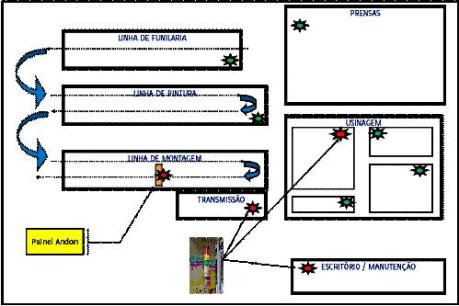
Figure 14: Andon system activating support areas
In the case of problems that totally or partially stop the production area during the day, the losses are recorded on the Production Tracking Board and the problems identified (see Figure 15).
At this stage we then have the “Third level of the Help Chain” (see Figure 16), in which, every hour, the Leader must analyze and solve the problems under his responsibility; every day, the Supervisor must analyze and solve whatever the Leader was unable to address; and during the day the multi-departmental group must step in and help wherever the Supervisor has needs.
During its Gemba, Senior Management has the obligation to check whether the Help Chain routine is working properly, checking the actions of the “First”, “Second” and “Third” levels.
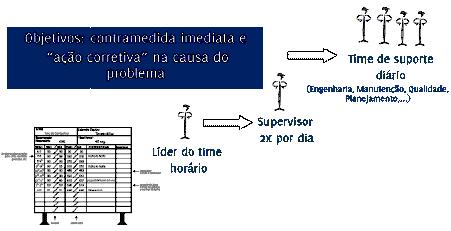
Figure 15: Production Tracking Board
In Figure 16 we see the “Third level of the Help Chain” and what the involvement in this activity should be, from the detection of the problem through the Tracking Board to the involvement of the multi-departmental group.
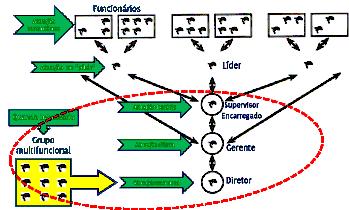
Figure 16: Third level of the Help Chain, the Tracking Board x frequency
6. WHICH PROBLEM-SOLVING METHOD
The problem detected on the Production Tracking Board must be handled in the most efficient and fastest way, and that is why we must determine which method will be used by each level. Our suggestion is shown in Figure 17.
The Leader and his team must solve whatever is under their responsibility, thus tackling the easiest problems, using methods such as the “5 Whys”. For each problem recorded, fill out a form that prompts asking why until the root cause is reached, take the countermeasure and place this form on a panel next to the Board.
Foremen and Supervisors must solve whatever the Leader did not solve by adopting a more complete method, for example the Ishikawa Diagram with the 5 Whys, or PDCA.
When more complex methods are needed, the multi-departmental group may use statistical methods (6 sigma), since technically they will have more ease and time to determine actions.
Appropriate technical skill-building for each level of the organizational chart is an important factor in speeding up the “Help Chain”, as well as a matter of respect for employees, since we cannot demand without providing working conditions.
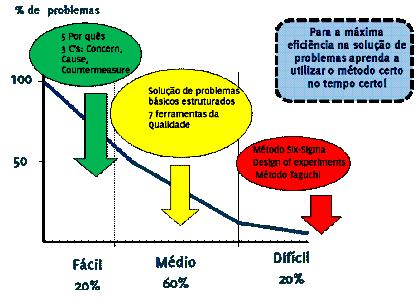
Figure 17: Definition of the problem-solving methods
An important tool for supporting the Help Chain is the Kamishibai Board, which can be used to regulate Senior Management's audits and to help with autonomous maintenance. On this board we can set the prioritization of improvements identified by the Production Tracking Board and observations from all levels of the Help Chain.
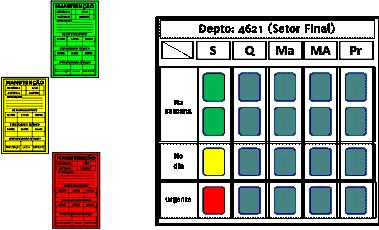
Figure 18: Kamishibai Board
There are other good practices to support the Help Chain, such as implementing a culture of the “Suggestion Plan” (Kaizen Teian) and of QCC - Quality Control Circles (see Figure 19).
Some of the problems identified on the Production Tracking Board may be assigned by the leadership so that the area's own employees accept the challenge of solving them, with the help of the area's management. Then, after implementation, the employee can write up the suggestion and send it for analysis and a future award.
The other way for employees to interact to solve one of the problems raised by the board is through Quality Control Circle activity. Basically, this action results from forming groups of employees from the same area, or even with the participation of people from other departments, who identify and eliminate root causes by applying the “PDCA” method.
Both the Suggestion Plan and QCC are types of problem-solving routines that support the Help Chain, and they also serve to recognize employees for applying their knowledge.
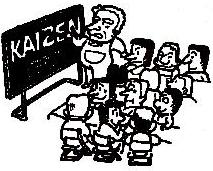
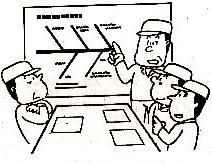
Figure 19: Kaizen Culture and the Quality Control Circle
Finally, remember that the decision that can change the course of your operation starts here: explore the Lean events calendar. Each event is a strategic opportunity for learning, networking and standing out in the market. Visit and register!
7. CONCLUSION
The stability of the 4M’s is a fundamental requirement for starting the lean journey, and maintaining it is what makes it possible to have the pillars of the Toyota House, “Jidoka” and “Just in time”.
This manufacturing stability is only achieved by identifying and solving problems, with defined methods and responsibilities, and the “Help Chain” is fundamental as a work routine (standard) for people, coming into play whenever abnormalities arise.
Discipline is the main factor in maintaining the “Help Chain” routine so that it becomes a habit for everyone involved, with Senior Management taking part as agents who support and enable the work.
Transform your career and your discipline in a practical and effective way with our Programa de Formação Lean!
Click here to download the English version of this article in PDF.





