

Quality of care for pregnant women stands out in the “Sífilis Não” collaborative
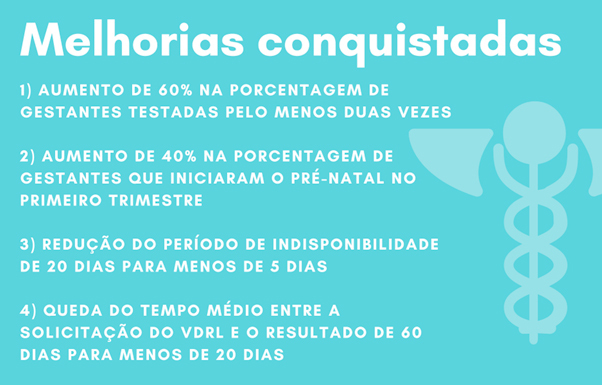
In a collaborative focused on the diagnosis and treatment of syphilis in pregnant women, the participating UBSs (primary health care units) managed to speed up care for pregnant women, ensuring appropriate care and treatment for women at this stage of life that requires special attention. The article on the full experience of this initiative was published earlier and can be read by clicking here.
Lean Institute Brasil sat down with Silvio, from the Boa Vista UBS, Mário, from the Viamão UBS, and Cida, from the Vitória UBS, to understand a little better how the lean journey in the fight against syphilis is unfolding in Brazil. See their answers below.
Lean Institute Brasil: What changed in the unit after the experience in the collaborative?
Silvio (Boa Vista – RO): We were able to greatly improve how we welcome and test pregnant women; one example is that when the results came out for the indicators related to rapid tests, such as syphilis and HIV, ours was the best in the macro-area. We also managed to improve medication dispensing; for example, our UBS has a guideline to use Benzetacil only for patients with syphilis and/or their partners. We are still trying to further reduce the loss of pregnant women, so that none who has come into the unit goes back home without the first prenatal appointment and the rapid tests.
Mário (Viamão – RS): The process we carried out of making rapid tests routine in all three trimesters created an organized testing process that led to more efficient prenatal care. I think this change is clear in the day-to-day of our work.
Cida (Vitória – ES): Our number of pregnant women tested and treated has increased a lot, and in our unit what improved the most was the reception desk, which is the pregnant woman's first moment in the unit. So I came to the conclusion that, although we prepared the entire technical team (and that is very important), the reception staff are the ones closest to the pregnant woman, and that is where we will see the main improvements.
LIB: Was a positive change observed in the process for pregnant women with syphilis in your unit?
Mário: Yes, the hearts and souls of the pregnant women and of the teams were changed. In a way, an educational discourse was built about the importance of screening for STIs in the prenatal period and its sense of urgency. That made all the difference.
Cida: Yes, I think the main change was that pregnant women became more interested in knowing about the consequences of the disease; they ask a lot of questions, are interested in learning and come back here even before finishing treatment to clear up doubts. In addition, they are now bringing their partners and, as a result, partners are receiving the partner-father prenatal care that was implemented at our UBS. This is a great benefit, because we are already able to reach out to these partners, something that was difficult before; for me, this is very positive and very important.
LIB: If you could give one tip to other units that are going to start this process, what would it be?
Silvio: I have to put the focus on Daily Management. Our DM was very useful for reorganizing demand, especially at the reception desk, so that we would avoid losing pregnant women. We also managed to adapt it to other situations, such as vaccination in schools, so that we could send out a team without being short-staffed here at the unit.
Mário: Something I learned was that the most important strategy is within the team. You need to know why you are doing something before building how to do it, and when the team understands the meaning of each action, it learns to care for pregnant women, transforming, as a consequence, the prenatal moment through better teamwork. And that truly makes all the sense in the world.
Cida: The tip I would give is for people to keep following this improvement flow and actually apply it, so as not to let care slide and to follow the guiding flow that was implemented. For me, this is important, because most of the ones we see start but do not continue, so my tip is not to abandon this project, but to continue and keep moving forward.







