

Hoshin connects business objectives with frontline objectives
At BJC, we turned to hoshin kanri almost naturally, at a time when we were trying to expand the reach of our visual management. It made sense: we realized we needed to exchange information more effectively between departments and find a better way to manage not just the production area, but the entire organization. We had already been experimenting with applying lean tools and principles for some time (especially in manufacturing, where one of us – Oscar – led the implementation drawing on his previous experience), which meant we had a solid foundation to build on.
Our goal with hoshin was to create a single, shared, visual tool for our deployment at management level. We needed a tool that could be implemented across all areas of the business to ensure that the boards at the lower levels (shop floor, individual departments, projects, etc.) followed the same approach and remained aligned with business objectives.
We put together a plan and, in full alignment with the corporate office and with the help of our coach Néstor Gavilán, of Instituto Lean Management, we kicked off hoshin. Néstor developed a simplified and very logical version of hoshin that met our needs: not only was it closely aligned with what we were doing in other areas in terms of developing indicators, but it also got rid of the complex matrix you find in strategy deployment frameworks.
Implementing hoshin itself was not difficult, but there were some basic steps that needed to be understood. Some people struggled a little with them, especially those who were not used to visual management and did not have a data-driven measurement culture, but overall the introduction of the new system went smoothly.
The most time-consuming part was undoubtedly defining and selecting KPIs and their related objectives. We knew we had to reach agreement with the areas and the people on the meaning of each indicator and on which indicators to choose. We did this as democratically as possible, as a team, during working sessions. We wanted to make sure we took everyone’s opinion into account.
It didn’t help that Covid-19 arrived exactly when we were starting our hoshin meetings. Suddenly, we had to stop them until we could find a way to recreate the same dynamic online and fully articulate our transition to digital. It took a few months. As soon as we recovered from the shock and adapted the workplace to the new health and safety measures, we decided to rely on software already in use in our group: a digital blackboard that turned out to be the perfect platform to host our hoshin boards. Of course, we still prefer to be able to be in the same room and meet regularly, but until we can do so, this is working well – because it allows us to continue the process during the pandemic without giving up our reviews. In hindsight, we were lucky to have started with the “analog” process: it helped us understand the full picture before entering the digital world.
Something we struggled with in the first months of implementing hoshin was getting people to understand exactly what they had to talk about during the meetings. We only needed a short, direct explanation of their situation, not long and detailed discussions. So, during the last workshop, we decided to define the work instructions and the standard process for using the hoshin board. That way, everyone could remind the team to always go back to the standard in case of deviation. It is clear to us that using hoshin requires some learning and adaptation, and it is good to see that nowadays it comes naturally to most of us.
We also had to make sure people realized we were collecting data to understand the situation and improve things, not to blame them for problems. We did this through many conversations, with small groups or even one-on-one. Once they understood this and we managed to involve them in tracking and improving the KPIs, we saw a big change in mindset – not to mention a bit of healthy competition between teams. Now that they do not feel threatened, most people at BJC understand the system.
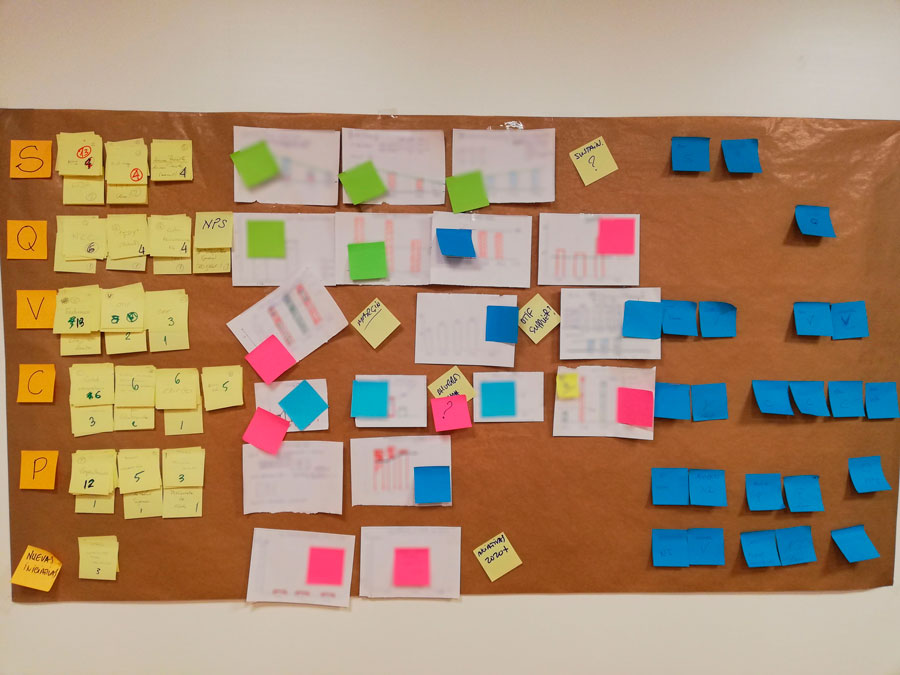
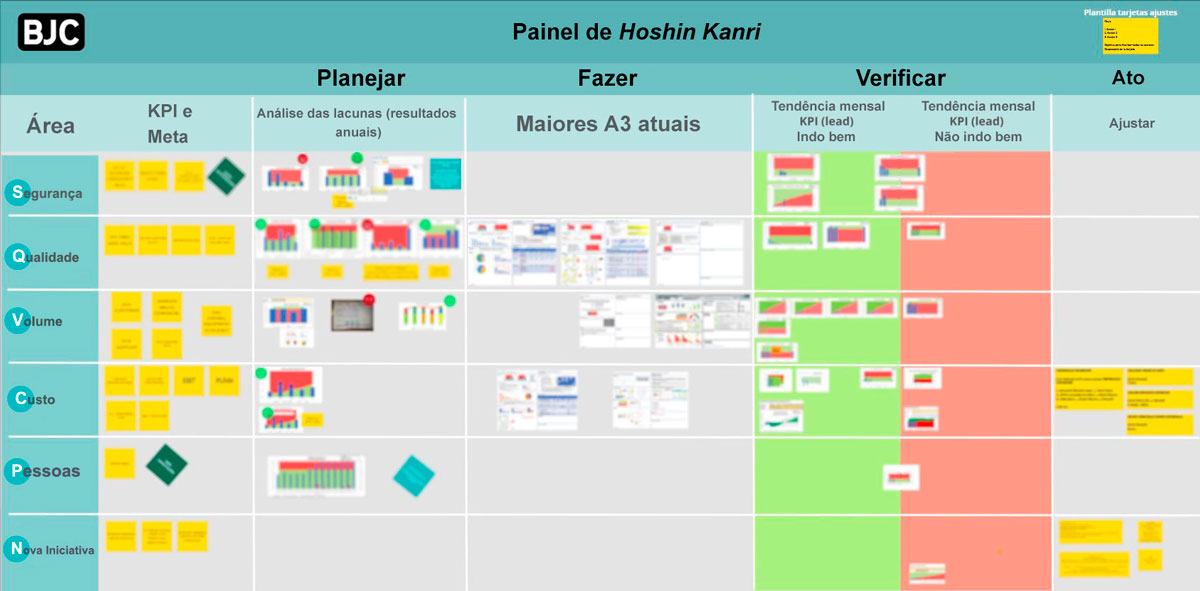
Lean is fundamentally about respect, which means that, as leaders, we had to be transparent. Honesty resonates with people: when things go wrong and you admit it and communicate it clearly, you eliminate the fear of flagging problems whenever they occur. When it comes to data, there is no room for interpretation: suddenly, the situation becomes objectively clear, and everyone sees it the same way. This leads to more effective joint efforts to tackle problems and allows everyone to move in the same direction.
In fact, hoshin has become a meeting point for us, an opportunity to quickly inform the entire organization about the latest developments and problems in the different departments. It has given every person at BJC visibility of the current state and of how the organization is doing in relation to its strategy. That is what respect is.
And as for Covid, having hoshin allowed us to overcome the challenges the pandemic presented us with – the lockdown, the work peak that followed and the current shortage of materials and components.
How hoshin changed BJC
Using daily visual indicators shared by several areas (and not just by manufacturing) has completely changed the way we communicate on site. Before they were introduced, we could discuss a topic for 15 minutes and everyone would still leave the meeting with a different idea. Now, in a few minutes, we all have a clear picture of the situation and the same information. There are fewer misunderstandings and more transparency. Simply put, we are all on the same page now.
Thanks to hoshin, we have been able to align the entire business around common objectives, connecting business objectives with frontline objectives. Each person’s contribution to the overall strategy is now clear, as are the reasons behind the decisions we make. The actions we take are no longer seen as the result of management decisions, but as a logical next step stemming from the fact that we identify the way forward together – because we all work together to identify the countermeasures to our problems. Hoshin is an impressive enabler of two-way communication!
With the uncertainty that Covid caused (spikes in component costs, lockdowns, drops and peaks in demand and so on), greater coordination has been fundamental to keeping BJC successful.
Still, we are only taking the first steps with hoshin. There are many things we need to improve, especially at management level, from integrating A3 thinking (which we had introduced a few months earlier) with the management boards to fine-tuning the KPIs. Our next steps will be, first, to clearly link the objectives and KPIs on the shop-floor boards with our hoshin and, second, to introduce and standardize the use of these boards for all areas and projects.
In our view, hoshin has given clearer meaning to everything we do at BJC. Through dialogue, we have reached a consensus on where the company is going and how it will get there; we no longer pursue local optimization, but think and act in overall terms; we are more coordinated in the way we work, and most importantly, people understand the reason behind every decision and action taken.
Coach’s comments
By Néstor Gavilán, Instituto Lean Management
Our initial people development efforts at BJC were a workshop, which was challenging and instructive for all of us. It was true learning by doing, which is why we saw such a good response from the participating team.
Initially, the hoshin implementation experienced some difficulties (especially in identifying and simplifying the KPIs, which generated a lot of discussion), but thanks to the transparency shown by the leaders and the standardization efforts that were made, it soon proved successful.
It was great to have Alberto as facilitator of the review meetings, as it helped define the process very clearly. Bringing a team leader – someone with experience in lean manufacturing on the shop floor – to the meetings also eliminated any hierarchical misconceptions people might have had. Alberto works to ensure the KPI review process.
In my opinion, the next step for the team is to keep pushing with A3 thinking to clarify how best to integrate it into the boards (some areas are already great at this, while others are still learning). And also to improve the overall management system, deploying KPIs and objectives using different management boards across all departments and levels of the business.







