

Transforming the way we manage using lean
Before lean came into our lives, our results and quality were good, but our desire to improve told us we still had a long way to go. We were going through typical construction company problems: we had delays on some of our projects, we had excess inventory of some items and shortages of others, and we needed to improve our relationship with our contractors.
For some time, we tried to approach and adopt lean thinking, but we made some mistakes along the way. At first, we had the wrong idea of what lean is and focused mainly on the tools. We stopped to reflect and realized that, if our goal was to industrialize our processes and increase our productivity, we would have to make lean our culture.
We saw so many problems in those early days that we did not know where to start. That was when we contacted Lean Institute Colombia. At first, we thought their work would focus entirely on process improvement; what we discovered along the way was that it had more to do with developing people.
With the institute's help, we went through the initial exercise of truly understanding the current state. They stayed with us for several days, observing the work and asking many questions about the way we manage. From this initial diagnosis came the proposal of an action plan, which we keep refining through experimentation and countermeasures, abandoning tools and practices that do not add value and focusing on those that do.
The lean management system comes to the rescue
One of the most important changes was the introduction of a lean management system at two of our sites: we identified the management levels at each site, defining the types of problems we experience and implementing the right tools and techniques to address them.
To stay on top of the work and ensure that problems were uncovered and solved quickly, we began holding daily meetings and gemba walks at the site's various management levels.
We also introduced weekly meetings, where problems were made visible and an action plan was created to solve them quickly. This allowed us to improve our effectiveness as managers. In addition, we began using tools such as standardized work, A3 and value stream mapping to optimize front-line performance and material supply.
The lean management system represented a major change in the way we work. At first, it was difficult, because we still saw lean as additional work. We had the feeling that there were more specific problems to deal with at our sites and that we were wasting time on something that did not matter. However, after a few months, we realized that our people were starting to get a better sense of how we were doing at all times and, if we were not doing well, of how to improve things.
Because the rules of behavior when an indicator falls behind were posted on the boards, where everyone could see them, this meant that information (which historically had been available only to the site manager) became available to everyone.
In the past, there was also a fear of raising problems, but the lean management system strengthened us as a team and helped us talk about them openly. Today, if we have problems with a KPI, it is not just a problem for management, but for everyone on the site. Thanks to the lean management system, we have gained visibility of problems and effective communication within the team. Now, when a problem arises, we know about it immediately and act together to solve it – for example, by opening an A3. Lean has taught us to organize ourselves better.
After introducing the lean management system at our pilot site in Cali, we were able to change the way the core functions of the production chain interacted with the front line of the site. We now receive from these areas the information we really need to manage and deal with problems effectively.
Another fundamental contribution of lean to the improvement of our organization was the categorization of problems. The four types of problems, as described by Art Smalley in his book, revealed that at our sites managers routinely dealt with Type 1, Type 2 and Type 3 problems. We discovered that managers were doing the work of junior engineers, that junior engineers frequently performed tasks that were the foreman's prerogative, and so on. It was wasteful, and at the end of the day, the work still kept us up at night!
The turning point
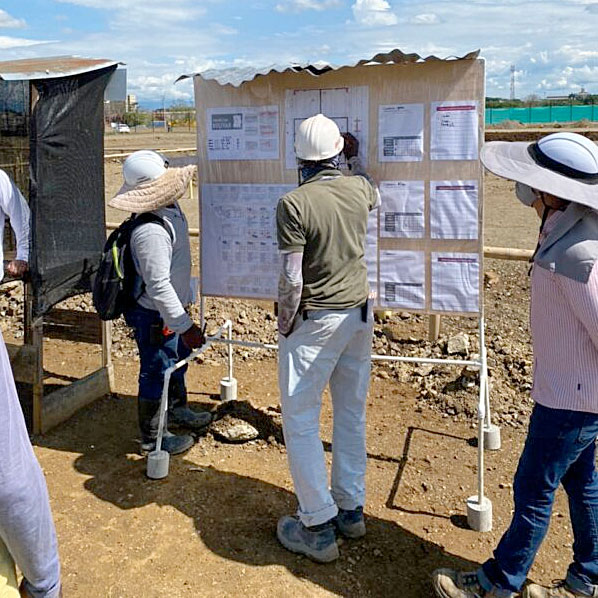
Our turning point came when we stopped seeing lean thinking as a set of tools and began to see it as a set of principles and concepts that lead to a people-centered cultural transformation. As soon as we realized this, we began to think about how we could maximize the value people can provide, tap into their talent and let them focus on process improvement.
We put people first. With this, we realized that it was not important to have the most sophisticated board with the latest technology: short meetings full of interaction and communication were really all we needed to change things.
Over time, we learned to create a much better approach to work, focused on people, on communication and on making problems visible and embracing them as opportunities for improvement.
Our journey accelerated when we began to focus on changing mindsets: now that our teams are empowered, we know we can still make mistakes, but we also know we can correct them quickly. That is why no one is afraid of problems anymore. When you are transforming a culture, it can take a while before problems are exposed comfortably and without fear of repercussions. We now understand that it is okay to make mistakes and point out problems, because this is the first step toward solution and improvement.
As our understanding of lean grew, we learned that the role of the improvement team was not to use tools and make changes on its own, but to guide people on their learning journey so that they could understand what their role within the company is, what kind of problems they should solve and how they can solve them.
The lean team offers guidance first and foremost. Our initial expectation was to have a “resident” lean expert at each site, but we discovered this was not feasible and, ultimately, not necessary. It is the people who do the work, not the lean experts. We want people to think lean, so we changed our approach and began to focus on developing their leadership and problem-solving skills.
Engaging contractors
No lean construction project can work without the involvement and support of contractors. To engage them in our new way of working, we shared the “magic of lean” with them and familiarized them with our plan to truly identify the process steps where they can provide the most value.
In these process phases, we began sharing with contractors all the relevant information we had gathered about the work performed, to ensure they too could successfully track their progress in terms of performance, delivery times, safety, etc. We gave them tools that helped them become an active part of the work, instead of just coming in, doing their part and leaving.
That was when their attitude changed and we were able to maintain a more constructive relationship with them. Even when problems arose and were escalated to a higher level of management, we found that contractors felt heard and were happy with the space they were given to discuss problems with the rest of the team. It took time for them to get used to the new way of managing the work – they were used to our previous system, where they received instructions and had no platform to raise issues and share their concerns.
It took a while for the wall to come down. At first, they would attend the meetings but did not say much, even when we asked them to share openly. Over time, they learned that it was their time and that the team was there to listen to them and help them. For us, this was a reminder of the importance of being consistent with the lean management system day to day. It is through this discipline that trust is built.
What lean means to us
Lean is a difficult journey, full of obstacles, ups and downs. The reason it is so challenging is that it forces you to think in a different way. But when you finally learn to see, it is a matter of discipline more than anything else. There is no magic recipe for change; you just have to persevere. For Construtora Bolívar, this is more than just a few projects. It is our new reality.
For us, lean thinking is more than reducing waste. It is also learning to assess our value creation chain and always knowing where the weak points are. That is what the scientific method offers: a way of generating concise, clear and relevant information at all times that will help you stay on top of your work.
It is a big investment for us, and we are already happy to see several good results (in addition to all the learning): we are producing according to our quality standards, keeping waste to a minimum and considerably reducing rework.
We know that if we stopped thinking lean, problems would soon overwhelm us. That is why our plan is to keep improving and taking this way of thinking to new areas of our business until Construtora Bolívar becomes a lean company.







