

CCR: Lean transformation at the toll plazas
One of the largest infrastructure concession companies in Latin America, CCR, is transforming the way it operates its toll plazas. With the help of the lean philosophy, the company is managing to improve its customers' experience through ever-better service, reducing queues, creating new forms of payment and reducing waste in the toll collection process.
This process began in 2021 as an important part of the growth and sustainability strategy of the highways division. Two strategic A3s were built, considering 2 concessionaires as pilots. These A3s generated seven important kaizens. Let's look at each of them below.
Kaizen #1: Evasion
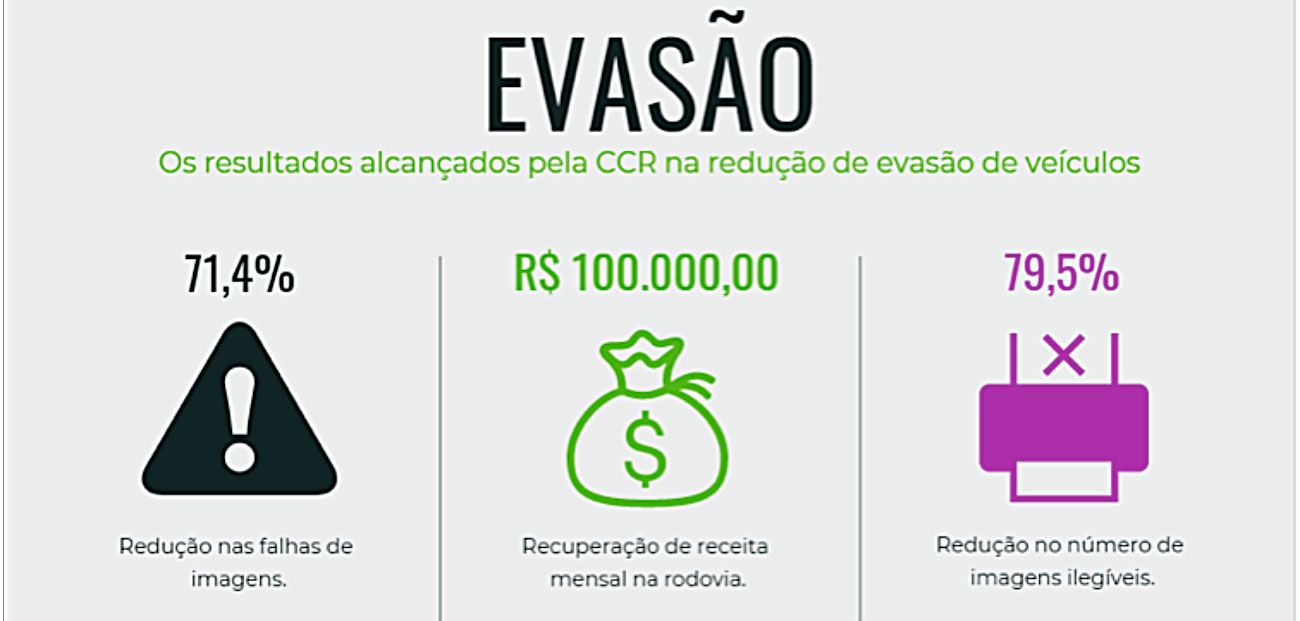
Sometimes, the image captures in the automatic toll lanes are unable to identify vehicles, causing financial losses to the company and generating a great deal of rework. This was one of the biggest pain points initially identified for the lean work.
Through repositioning and checklists for the cameras and other actions arising from the experience of those who dealt with the problems day to day, CCR managed to reduce the number of image failure cases by 75.6% between February and April 2021 at one of its plazas where the adjustments were made, with a 79.5% reduction in the number of illegible images. As a result, the company achieved a monthly revenue recovery of almost R$ 30,000.00 in just two months at the plaza where the pilot was carried out. When the entire highway is considered, the recovery exceeds R$ 100,000.00.
Kaizen #2: Innovation and the Voice of the Customer
Today we are experiencing a transformation in means of payment, with digital solutions that make people's lives easier. With this in mind, the focus of this kaizen was to listen to its customers, conducting surveys on the intention to use new means of payment and gathering data in the gemba.
Kaizen #3: Prosper
The idea of this kaizen was to study the operating models and work schedules to make them more aligned with the toll collection process. Initially, some experiments were carried out to analyze which schedules resulted in the best productivity performance and adherence to demand. Running the PDCA cycle, the company drew up a table of events and tested new start and end times, obtaining a before x after comparison to make the changes that proved most promising. In this way, CCR redefined its workforce in different shifts and intervals that best fit vehicle demand, always prioritizing safety and quality of service for its customers.
Kaizen #4: “Passei” at CCR – training for new employees
Focusing on employees, this kaizen sought to standardize customer service and safety training. The expectation was to have an even greater, positive impact on its customers' experience. CCR defined an initial training cycle and its refresher courses for all its concessionaires. This well-structured training had visible impacts on key indicators, such as incorrect change, compliments and complaints, and occupational safety rates.
Kaizen #5: Availability of change
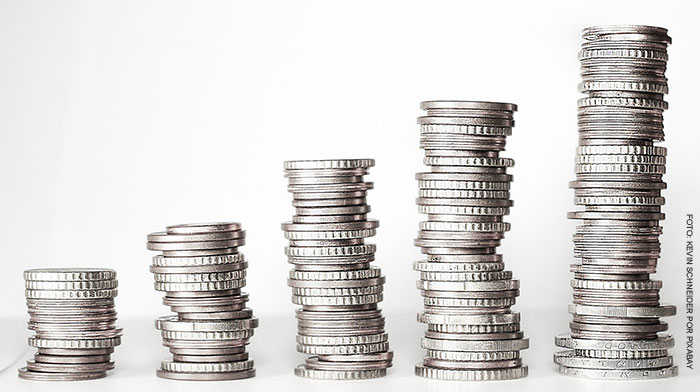
If the shortage of coins is a problem for all retail and services, imagine what it is like for the toll collection process on highways. with many impacts for the company and for customers. Through market analyses, CCR managed to draw up proposals for integrated custody among the Group's concessionaires, survey the units' change funds and change consumption, and also carry out coin collection actions and campaigns.
For customers who choose to pay at the manual booths, having change readily available means reductions of up to 50% in time spent stopped.
Kaizen #6: Task Force
Adoption of automatic lanes
Automatic tolling brings a great deal of comfort, safety and convenience to the customer. For this reason, this kaizen identified a series of actions aimed at encouraging customers to adopt this means of payment, such as sales of tags at the toll plazas and partnerships with operators.
Adoption of automatic lanes
*This chart refers to CCR ViaSul
Kaizen #7: Plaza Design
Finally, the “plaza projects” kaizen aimed to better define the processes and designs of the toll plazas. This kaizen focuses on one of the foundations of lean: finding the best known practices for carrying out the process and standardizing them throughout the flow. Working with this kaizen enabled the different plazas to share their usual methods and their pain points, bringing what works and what could be better, so that they could exchange best practices and experiences.
In lean, we call this “yokoten”. It is the practice of sharing “horizontally”, across the different sectors, areas and departments of the organization, good ideas, important practices and problem solutions that can be replicated; in short, everything positive and beneficial that is used in a given department and that could also be used with the same benefits in another. For CCR, this means accelerating the learning and gains achieved in the initial pilots.
Practice “what if” leadership
These kaizens are just a few examples of the excellent results CCR has achieved. The lesson is that the company achieved all this because it believed it was possible. Skepticism is an admirable quality, up to the point where it prevents you from trying. As happens in different industries, the people at CCR asked themselves: “This may work in manufacturing and other industries, but can it be applied to highway concessionaires? Does that sound familiar? If we went back in time and told them the results they would have achieved by this point, few would believe it. Believe in lean. If you are a chronic skeptic, then be suspicious of your own skepticism and give lean a chance. What if we tried? What if lean really delivers the results it promises?
The beauty of lean is that people naturally engage with the philosophy, but this does not happen for merely theoretical reasons. The people who do the work day to day see the results it brings, results they did not believe were possible before, and this leads them to willingly promote the philosophy throughout the rest of the organization. It becomes a virtuous cycle. So, before saying that “lean wouldn't work here”, that “these results aren't possible here for various reasons”, say instead “what if there is a better way?”, “what if we can improve the work?”, “what if we can be leaner?”.
The why of the implementation
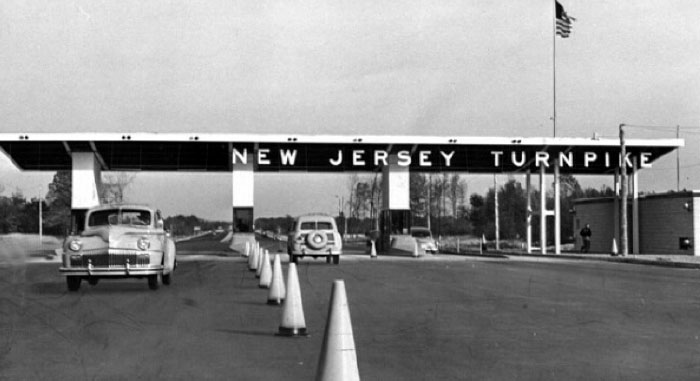
If we look at what the world was like seventy years ago and compare it with where we are today, we will hardly find any aspect of our lives that is even remotely similar. With numerous technological revolutions and advances in different spheres of our lives happening at full speed, almost every sector of the economy has already undergone significant advances in its processes. Tolling, on the other hand, continues to operate in a way very similar to how it did in its early days, and this situation often becomes a negative experience for users and for those who operate it. Seen through the lens of lean, it is a process with many opportunities for improvement.
The company is responsible for 3,955 kilometers of highways in the national concession network, in the states of São Paulo, Rio de Janeiro, Paraná, Mato Grosso do Sul, Rio Grande do Sul and Santa Catarina, managed by the concessionaires CCR NovaDutra (SP-RJ), CCR ViaLagos (RJ), ViaRio, CCR RodoNorte (PR), CCR AutoBAn (SP), CCR ViaOeste (SP), CCR RodoAnel (SP), Renovias (SP), CCR SPVias (SP), CCR MSVia (MS), CCR ViaSul (RS) and CCR ViaCosteira (SC). For 2021 and the following years, it is expected to keep growing rapidly with new concessions and renewals in the existing network.
For this reason, CCR embarked on a lean journey to transform the way processes are carried out, ensuring greater agility and cost reduction throughout the value chain, and delivering to its customers greater comfort, safety and convenience when paying tolls. To do this, they showed how, regardless of the size of their pain points, the best way to make significant progress toward better days is not through individual heroic feats that transform the entire process at once, but through small, gradual improvements that, added together, represent something much bigger. They embodied the true spirit of kaizen to make improvements in their processes.
Working with lean means giving the people who do the work day to day a voice so that they can improve their own work. That is why lean is different from other approaches. It is not an exclusively top-down system, but a bottom-up one. It is the people who do the work who take responsibility for improving the processes. That is why engagement with this philosophy tends to be higher than with others. The people who do the work are the ones who are really in charge. Thus, the people at CCR brought together their main pain points so that they would become the focus of the kaizens. We have seen here seven of these kaizens that helped CCR achieve this new way of working. Looking at them, can you reflect on your own pain points and on how similar actions can help you on your own journey?







