

The five forces of lean logistics in X2C

In the mid-1990s, Chihiro Nakao, a former Toyota employee who had become a renowned international consultant on the Toyota Production System after working with Taiichi Ohno for decades in Japan, was visiting some of his clients in Brazil. Whenever the occasion called for it, he would utter one of his most striking and provocative expressions: “We need to constantly advance the Production and Logistics System to produce and deliver anything, at any demand, at any time”. It was this vision, according to Nakao, that expressed the teachings of master Ohno and imposed itself on anyone dedicated to building a truly lean system. In a way, the phrase anticipated the contemporary movement toward strategies focused on delivery and customer service, with broad flexibility in their requirements, which the market is now beginning to call X2C – anything-to-consumer.
Although the phrase may still sound somewhat utopian in some sectors of the chain, its true strength and usefulness lie in the new thinking it sparks for creation and innovation, based on an assertion that inspires the design of lean and flexible, agile and integrated workflows, ready to deliver value to the customer regardless of changes and uncertainties in supply chains.
For many years, the logistics of goods moving through trade flows around the world was shaped by traditional B2B – business-to-business practices. Even when B2C (business-to-consumer) sales took shape with the practice of e-commerce, and the market became more competitive around freight prices, lead times and reliability, B2C initially borrowed from B2B the traditional practices for designing and operating supply chain flows. Now, consumer demands in different categories, in various forms, require a change in such practices.
Today, B2C dynamics are at a turning point. Consumers' demands for distinct options with short lead times and free shipping require the entire logistics system to be redesigned to favor the final stretch – the last-mile –, the decisive moment of delivery to the end customer. Consumers want faster deliveries and still expect to buy with the lowest possible freight cost.
The logistics concept is now approaching that visionary phrase of Nakao's, from the 1990s, about how lean should help redesign processes and flows in the supply chain. The customer wants more than a logistics service with the single option of delivering a package to their home or office. The market is already beginning to recognize that we are evolving from B2C to X2C – anything-to-consumer, with the adoption of a new logistics geared toward a variety of consumer delivery services. On the other hand, B2B is also starting to demand the incorporation of these new needs and of leaner, more agile response practices, reaping benefits in its operations through process redesign.
This article seeks to explore and expand that pioneering X2C vision of Taiichi Ohno's in building a Lean Logistics System, unfolding it into five driving forces for flow design, here called the five As. These forces are inherent to lean's lean and agile paradigm, shaping the flexibility and agility to handle small volumes in continuous flow when delivering value to the customer:
1) Anywhere – Any place
2) Anybody – Any person
3) Anything – Any thing
4) Anytime – Any time
5) Anyway – Any way
1) Anywhere

This first force means equipping the supply chain with the logistics capability to deliver products (or provide services) across a highly capillary network in the territory targeted by the business model. It is built by expanding the transportation network in a capillary fashion, combining both independent local partners and various modes alongside smaller, leaner distribution centers, located at strategic points but with reduced use of resources, thanks to the adoption of the lean principle of reducing or eliminating waste in the operation. One example is the construction of regional hubs that allow local networks to be integrated with national transportation lines through agile loading and unloading connections, migrating to an operation aligned with crossdocking. Recently, Amazon Brasil announced to the market its goal of opening new DCs, totaling eight centers, in order to serve more than 500 municipalities through units designed to operate with maximum efficiency, of the right size, with conventional technology, but with standardized operational work, appropriate to demand, in keeping with the lean principle.
Another Anywhere strategy is designing capillarity through so-called dark-stores. These are stores the public has no access to, but which work as mini distribution centers in urban areas. They represent the lean logistics concept of lean, low-investment distribution units. Such units are able to store and handle the variety of products destined for the region, making it easier to reach destinations through the transportation network because they can be located at strategic central points thanks to their lean size, which allows, among other operational advantages, competitive spending on rent. They combine location, variety and low facility cost. For example, a pharmacy chain from Rio Grande do Sul recently reported that this strategy of stores as mini DCs has made it possible to deliver express orders within two hours and scheduled orders within four to six hours in the neighborhoods served by the unit.
A dark-store fully meets the lean principle when it is located close to the customer, facilitating the last-mile operation, and requiring much less investment. In its role as a mini DC, the unit does not need customer parking and spends nothing on aesthetic refinements. It thus achieves the viability for greater capillarity to fulfill the Anywhere force of lean logistics.
2) Anybody

This second force is about including anybody at the origin and destination of the logistics process, regardless of socioeconomic level, gender, race or any other categorization one might consider about the consumer. According to the lean principle of creating value for the customer, regardless of who they are as a person, every operation is geared toward delivering that value to the customer. This force means not only delivering to wherever that person is, as we saw in Anywhere, but also providing access to product information, as well as supporting them in choosing product and delivery options. Recently, a wine company expanded access to information by holding live streams about its products in which consumers could ask questions and make the right purchase. Such procedures, with the support of the digital world, avoid the rework of returning goods bought by mistake. This is an example of logistics seeking to integrate itself into the stages of the customer journey. We achieve this integration as we map value streams through VSM (value stream mapping), from placing the order to delivery, portraying the entire consumer experience and assessing the waste and what is value from their point of view.
Different ways of including the different customer personas are assessed in Future State Logistics. Creating value by offering different delivery options for each audience, seeking inclusion. One of the most striking and inclusive examples of Anybody in lean logistics is quick pickup at stores and locations freely chosen by the consumer. Magazine Luiza and Leroy Merlin, for example, are companies that have adopted lean practices that make it easier for anybody to access and pick up products at their stores or warehouses.
On the other hand, there is also the beginning of the customer journey, making it easier for people to access the channels to make their choices and purchases in a friendly way. It is not just about having the sales channel open, but about integrating it with the experience of choosing the best way to receive the product, supporting it throughout the purchasing process. In this sense, inclusion means having friendly interfaces that clearly explain the delivery options and are easy to access and understand in the interface medium used by the customer. A consumer's experience with the logistics service should go beyond the moment of choosing the delivery method, including visibility of the next steps and how the customer will follow the process: traceability. For example, designing the sale for basic cell phone versions, combined with the option of receiving SMS notifications to follow the progress of the delivery, are inclusive aspects of the logistics service that fit the lean goal of delivering value to any consumer. This is the force of Anybody.
3) Anything
Consumers have access to marketplaces where they can combine, for example, the purchase of a piece of furniture, food and hygiene products. In logistics, this creates less-than-truckload shipments with an expanded mix, imposing the need to deliver orders made up of various types of products, formats and quantities. From order picking to final delivery, logistics has to cope with volumetric differences between distinct goods. This variable is recognized and targeted in the development of the third force of lean logistics: Anything.
Lean logistics aims to give the company the ability to adapt to new delivery profiles. The market demands a variety of delivery profiles for fractional shipments. To make it possible to meet this segmented and fragmented demand, lean seeks to think in terms of teams with standardized work, trained and motivated to detect waste of time and resources in the operation. It then applies kaizens and continuous improvement to eliminate waste and losses, in such a way as to reduce costs and make fractional shipments viable. One example is the design of compact storage in aisles with quick preparation, planned according to daily demand waves, and distribution with transportation networks using franchised vehicles, pulled with a just-in-time approach in which the delivery resource is activated according to demand.
The growth of e-commerce has accelerated the need to adopt this pursuit of Anything alongside the challenge of the delivery last-mile. Here, too, the lean thinking of small batches in continuous flow materializes in some cases through the implementation of processes designed for quick load preparation and loading by means of standardized work and methods. In other cases, we also make use of studies of vehicle movement and load plans, guiding loading and the sequence of deliveries.
On the other hand, the marketplace strategy, despite the increase in product complexity and variety putting pressure on stocks, can still benefit from keeping inventories at lower levels with the lean principle of heijunka, that is, leveling stocks with the partner network. Through the visibility of digital platforms, stocks are allocated across various units, including smaller partners. As a result, in 2020 a large retailer in the Brazilian market is estimated to have operated with 60% of its own stock, with the other 40% being stock held at partners. This wide variety, therefore, does not necessarily imply a large increase in stocks if the lean principle of leveling is applied by sharing and distributing stocks in smaller quantities throughout the chain's entire territory, complemented by agility in movement and reallocation pulled by demand. This is the force of Anything made possible by lean logistics.
4) Anytime
Anytime means applying the lean concept of understanding customers' demands regarding delivery lead times and synchronizing operations to meet those lead times at the lowest cost. Therefore, delivery time options can range from cases in which the customer wants express, same-day delivery, to those who prefer to schedule or receive within another time window (and still others, who prefer to set their own time and go to a given location, store or warehouse to pick up the order).
In this respect, Anytime expresses the force of the lean concept of pull, of pull systems built with traditional kanban cards through to their digital emulation, by means of information and order-processing systems, which classify and separate demands into scheduled waves for shipping days.
Traceability and feedback to the consumer through visual management on connected devices, using the Web, are also part of the force of Anytime, in which the consumer can follow the progress of what was agreed at any time. The customer can see when the invoice was issued, when the order was picked, shipped and transported, and can even receive a message on their device such as “Hi!! I'm on my way with your order!”, choosing to meet the delivery person in person, who, in a standardized and courteous way, will hand over the order, concluding this crucial stage of the customer journey.
A customer may also want to split their products and receive them at two different times. They may choose to receive them at defined intervals, in the case of recurring business models, in which goods such as food, clothing or services are delivered regularly in periods chosen and contracted by the consumer. For example, continuous-use medications can benefit from a lean and digital approach when the consumer, supported in their regular purchase by a digital platform, receives a notice on their device that the medication is about to run out, functioning as a kanban for the customer, then offering a new purchase and delivery just a click away, at any time. Agile models benefit from the force of Anytime in designing lean flows to operate with fractional shipments, agile networks and flexible equipment designed for quick setup.
5) Anyway
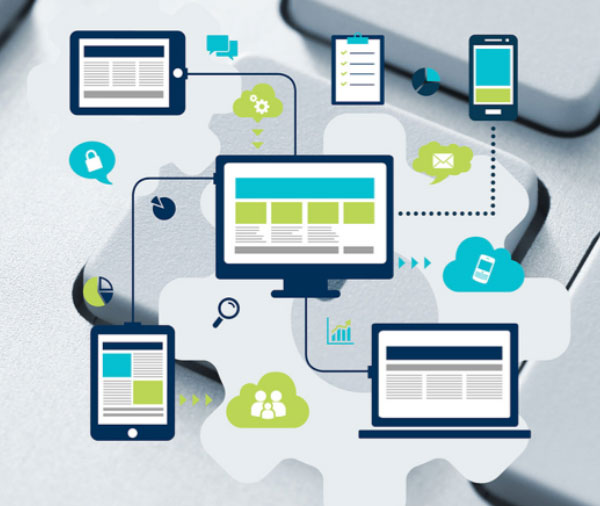
When expressing their intention to buy, customers want to do so in different ways depending on their behavioral profile. Regardless of gender or social class, as we saw in the force of Anybody, consumers behave in different ways as time goes by. Some prefer to buy in the physical store, others in the online store, via laptop, and still others via smartphone. After buying, some initially want to receive the order at home, but later change their minds and prefer to receive it at work or at a relative's or friend's house. Having chosen the relative's house, they may later have to give up that destination because the relative forgot to mention they would not be home; so, to conclude the journey, they change the order to pick it up at a store. In short, customers may adopt various forms of delivery over time, constituting the force of Anyway to be considered when designing the connection between physical and digital flows. There are various delivery methods and changes throughout the post-sale process which, combined with different packaging or even payment methods, must be considered in flow design so that they do not become an obstacle but a strength of the logistics operation: the force of Anyway embedded in the flows.
The different payment methods, for example, range from cards, bank slips (boleto) and digital wallets to Pix. Deliveries go from regular, express and scheduled to specific features, such as gift delivery. Customers may also want to receive the order from the delivery person or allow the package to be left at the front desk, or have the option of returning the packaging from another delivery to the delivery person, all according to the company's business model, for which lean logistics works to create and deliver value to the customer.
Therefore, from a lean perspective, all this diversity of channels and options is not an obstacle, but an opportunity that is assessed and incorporated in a friendly way once it is identified as value for the customer.
Apparently, this might contradict the lean principle of standardization or of standardized work. In fact, lean does not prescribe that there be a single standardized work in a given operation, but rather that we identify which families of delivery methods we need to design, each with its own standardized work. We do think of a standardized operational base for the options. A platform that supports the standardized work of the process families or options, with properly planned flows that can act in combination. The lean principle is to design digital and physical connections between such flows, quick and clear connections, without technical or bureaucratic obstacles.
For example, the Omnichannel strategy translates the force of Anyway into channels and information processing. Beyond that, what the lean logistics approach aims for is to bring the force of Anyway into the operations themselves, through the rapid reconfiguration and connection of standardized work within a range of ways of fulfilling the order through the various channels. This is what was already practiced on manufacturing production lines, where new lines are reconfigured in 24 hours to meet new models or demands for physical products, the so-called moonshine strategy. In logistics, with a lean approach, we quickly reconfigure picking, shipping and delivery teams into different standardized work to cope with the various distinct demands.
These five forces, the five strategic As, have been developed and conceived based on the possibilities that lean logistics practices give us to transform traditional B2B and B2C into the new, expanded X2C. It is the lean way of making businesses competitive in times of uncertainty, giving supply chains high resilience in the face of change. Combined with digital, it makes it possible to rethink business models, preparing them for more competitive future states through the creation and delivery of value to the customer along the entire length of the supply chain, according to certain principles and concepts discussed here in carrying out the five forces of lean logistics.
From inventory to the end customer: eliminate waste and increase value. Request a personalized analysis from our lean consultants specialized in supply chain and logistics and take your business to the next level.







