

Lean marketing and the voice of the customer
Many sectors of the economy are seeing rapid changes in the markets they serve, in line with the evolution of customers’ needs and requirements. Clearly, organizations need a new approach to delivering their products and services, one that is leaner, faster and that ensures the optimal use of resources. Now more than ever, to consolidate or increase the revenue they generate, companies will have to listen carefully to customer requirements – what lean thinkers call the “voice of the customer” (VOC).
But what does listening to the VOC mean? It means developing an understanding of the following elements:
- Customers’ buying habits.
- Our way of building customer loyalty.
- Their overall level of satisfaction.
- The products and services in our portfolio that create value for customers and delight them.
- What customers value most in our business.
- What customers dislike about it.
In search of information
If you do not have an information flow to provide data on the points listed above, you will have to act quickly – for example, through a satisfaction survey – to learn about your customers (existing and potential) and their habits. Do your homework and you will gain extremely valuable information about problems you did not even know about, customers’ opinions of your products, and the level of satisfaction and engagement of your employees and their performance. You will also be able to generate and test ideas for new products and services.
Analyzing customer satisfaction is a strategic activity, because the feedback we receive from people can help us understand where our competitive advantage lies (or hides), as well as our strengths and our weaknesses.
But what is the simplest, fastest and most “lean” way to listen to our customers?
Many organizations – especially small and medium-sized enterprises – believe that listening to the voice of the customer is an expensive and exhausting task, but it does not have to be. Nowadays, there are many tools for carrying out online surveys, cheap if not completely free, which give everyone the opportunity to identify customer value. It is important, however, to remember a few golden rules that will help you obtain important information about your customers. This is a lean marketing approach applied to customer satisfaction, aimed at helping you get maximum value from your survey and obtain as much information as possible.
RULE #1 – Set smart objectives – “SMART”
Your survey must have a clear goal, which – as the acronym SMART suggests – needs to be SPECIFIC, MEASURABLE, ACHIEVABLE, RELEVANT and TIME-BOUND. You need to know what kind of information you want to gather from the moment you start preparing the survey questions.
In the early stages, you will have to prepare and train the frontline employees who will be in direct contact with customers – salespeople, promoters, sales managers and so on. They will have to learn to listen to the customer and understand their changing needs, what they expect. They also need to be able to recognize the first signs of dissatisfaction, so that these can be addressed in a timely manner. In this way, your frontline salespeople will become investigators, a true Sherlock Holmes in search of problems.
If sales are falling in one area of your business, for example, a customer satisfaction survey can help you understand why. You can do this to understand whether, perhaps, something has changed that makes the product or service less attractive to customers, whether people no longer perceive the product as adding value, or whether a competitor has come along with a better offer. In the hospitality and healthcare sectors, for example, over the last year people have become much more concerned about safety and sanitization than ever before.
RULE #2 – Start with overall satisfaction, then go deeper
It is good practice to begin by focusing your survey on overall satisfaction levels to identify high-level problems. Then you can widen that focus as your analysis becomes increasingly specific. At the beginning, you should strive to ask generic questions, to get a sense of how people perceive your product or service. If you start out too specific, you risk scaring customers off and you will not get honest feedback.
RULE #3 – Keep surveys short and simple
The survey should feature keywords and simple questions that can be easily understood by participants. Ask a question that is too technical or complicated and you will usually get a superficial (and probably wrong) answer. It is also important to keep the survey short – no more than five minutes – so as not to lose people’s focus along the way.
RULE #4 – “Less is more”
The fewer questions we ask people, the more likely they are to complete the survey in full. Also strive to limit the number of open-ended questions, which are generally harder to answer and require a lot of effort. Make life easier for survey participants and give them a set of questions that can help them understand what they really value. Usually, one or two open-ended questions are enough to tell you which challenges you need to tackle first.
RULE #5 – Always contact different customers
Although it is good to carry out surveys periodically, it is important not to ask the same people to take part in a survey more than once or twice a year – to avoid bothering them. Whenever a customer does not answer the phone or does not respond to one of our texts, we lose an opportunity (imagine if they block our number out of frustration with our insistence).
RULE #6 – Offer customers a reward for their time
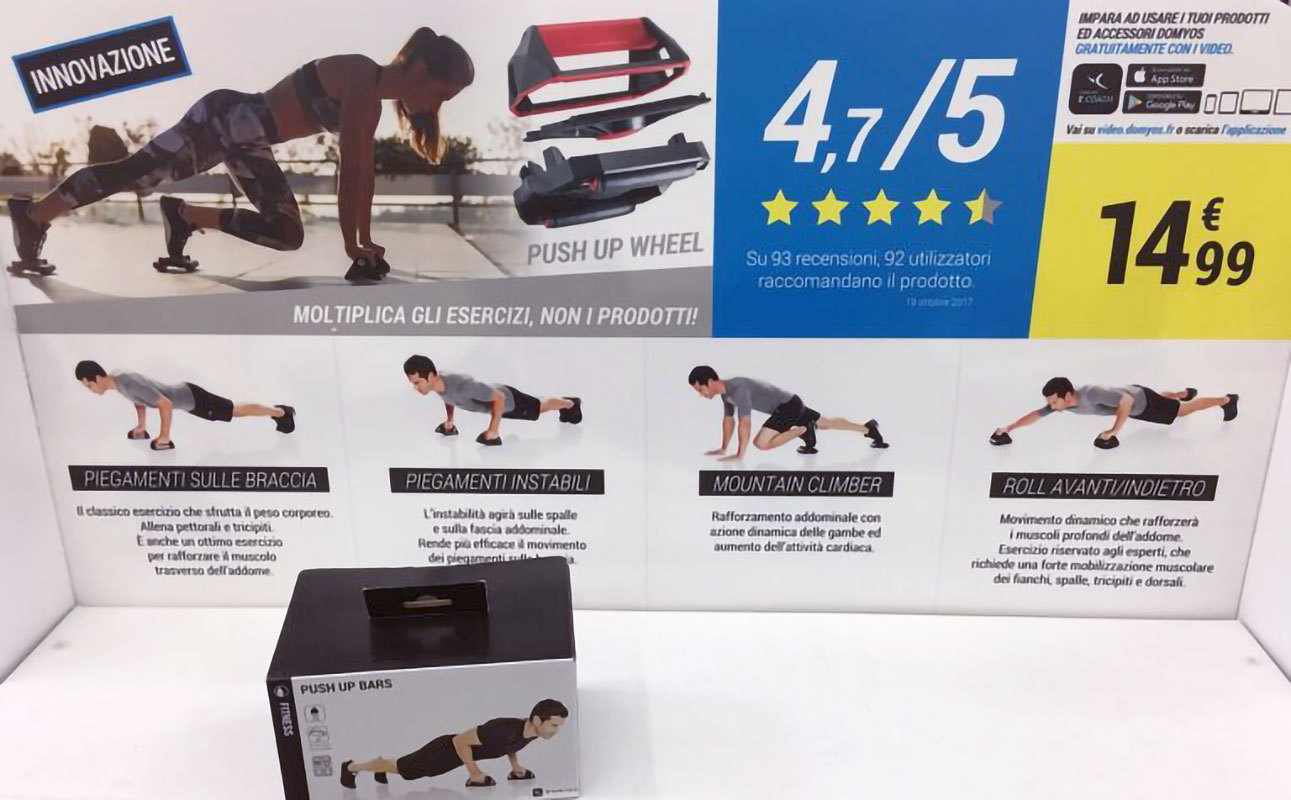
Gifts and rewards, no matter how small, are very useful for showing customers that the company values their time. Here in Italy, for example, McDonald’s gives away a €1 snack for free every time a customer fills in a questionnaire. Hotels use a similar system to encourage guests to leave a review, perhaps in exchange for a discount on their next stay.
Some real-life examples
A large company specializing in frozen foods received customer complaints daily, ranging from wrong prices to damaged products. The sales agents, seeking to please customers, used to insist that the problems they were dealing with required urgent attention and could only be solved by headquarters. A short questionnaire was distributed among the sales agents, asking about the customers’ problems, their urgency (high = same-day resolution; medium = 2-3 days; low = 1-2 weeks) and what actions could be taken to solve the problem. The answers revealed that only 5% of the problems were, in fact, urgent. In most cases, the agents were able to suggest the solution to the problems, and headquarters only needed to approve it. In this way, customers were more satisfied, because they received immediate attention, while the company was able to resolve a number of urgent issues.
At a blood donors’ association, we used a customer satisfaction survey to understand how to provide more value to people. The questionnaire revealed two things: 1) the breakfast offered to donors after donating was something people valued highly, and 2) young people preferred to be called to donate blood in the late morning (which came to be nicknamed the “sleepyheads’ donation”), at 10:30 a.m., so they could sleep in. This improved the donors’ experience while at the same time limiting waiting times at the blood donation center in the early hours of the morning.
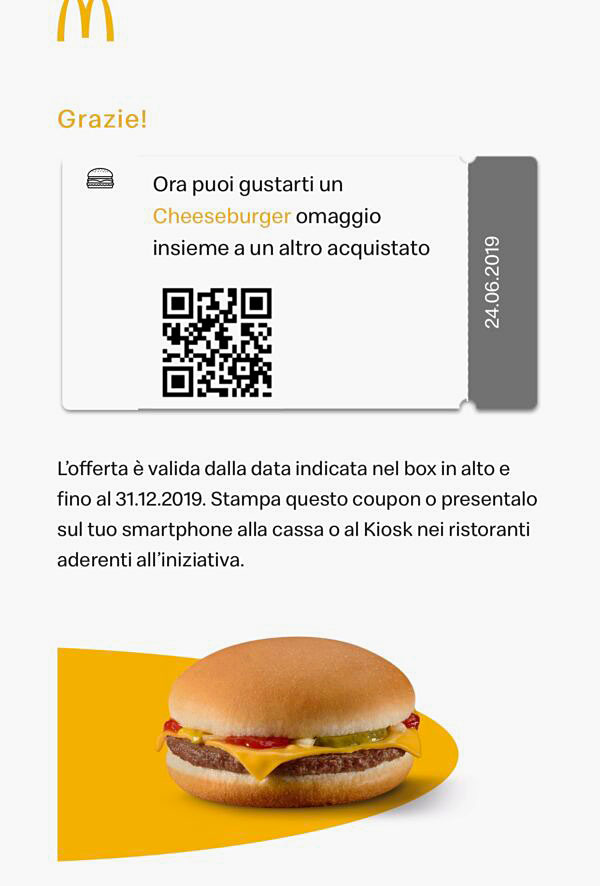
Surveys can also be used creatively as part of a company’s marketing strategy. IKEA and Decathlon, for example, display product reviews and 1-to-5 ratings as an effective marketing tool to convince shoppers to buy a particular product in their stores. Amazon Vine invites regular reviewers to publish their opinion on products that have not yet been placed on the market, to generate curiosity and help shoppers make informed purchases. Vine reviewers receive free products, and the seller cannot modify the reviews in any way.
Some of the best cheap or free tools for measuring customer satisfaction, both online and offline, include Google Modules, SurveyMonkey, polls on social media platforms such as Facebook or Instagram, and Doodle. Look at these tools to get an idea of how they might fit your own circumstances.
So, how and when should you share your survey? Below are some ideas.
- After the purchase, packing a card with a QR code in the product box, leading to an online survey, or through an e-mail or a banner on the company website.
- Placing a button on your website or online store linked to a Google My Business account, where customers can leave comments.
- Through a newsletter or other e-mail communication.
- Through an SMS or WhatsApp message.
- By recording a video testimonial with a customer.
This approach not only significantly reduces costs thanks to valuable customer feedback, but also helps your organization establish a lasting relationship with its customers. So, what are you waiting for? Start listening to your customers today!







