Lean and the global race for Covid-19 vaccines
In February 2020, the University of Oxford made a proactive appeal to the UK biotechnology community to request help in developing a process that could mass-produce a vaccine for what is now one of the worst pandemics of the last 100 years, caused by the novel coronavirus, SARS-CoV-2, which triggers the disease Covid-19.
Determined to take part in this complex and perhaps most important vaccine development process of our lives, Pall Corporation answered the call to action with enthusiasm. The company operates within the Life Sciences platform of Danaher Corporation, a US$21 billion revenue company whose success and growth over the last 30 years have been supported by a set of well-established lean practices described in the Danaher Business System.
80% reduction in the normal times for vaccine development.
Before Covid-19, the typical best-case scenario for vaccine process development would take several years, from the start of process development to the ramp-up to full production. With the dramatic effect this virus has on daily life globally, not to mention the deaths and the economic damage, the global community cannot afford to wait that long for a vaccine to be developed. Using the principles of lean product and process development (LPPD), Pall was able to develop and deploy a complete manufacturing process in eight weeks – an 80% reduction – to drastically shorten the normal development times.
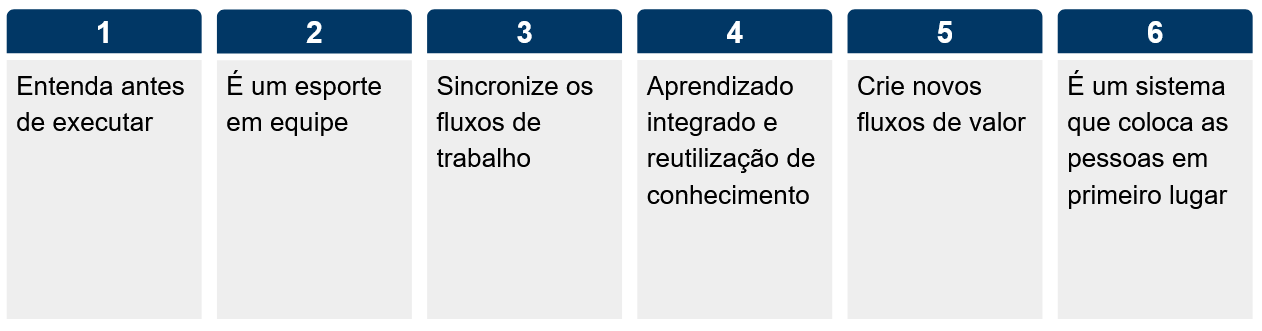
To help structure the key elements of this critical development cycle and organize its learning, the Pall Biotech team approached the delivery of this new value to customers using Danaher Business System (DBS) tools aligned with the six LPPD principles recently introduced by Jim Morgan, senior advisor at the Lean Enterprise Institute (which are based on years of experience and observation with LEI learning partners). The principles are:
THE CONTEXT
The University of Oxford already had a proven solution using a harmless, genetically modified virus to make the body stimulate an immune response against the virus. This had already been deployed for 12 other diseases, and they were able to adapt this technology very quickly to fight SARS-CoV-2. However, the previous diseases had never required more than a few thousand doses to be manufactured. Experts generally agree that, to be effective, the vaccine needs to be administered to more than 70% of the affected population. Given the global nature of the Covid-19 pandemic, the number of doses needs to be in the billions, not the thousands. Clearly, new knowledge was needed to deal with the situation.
In mid-March 2020, the University of Oxford, funded by the UK government, brought together a consortium of organizations to work on the large-scale manufacturing of the vaccine. It was decided to start manufacturing the vaccine in parallel with conducting the clinical trials needed to prove its efficacy. There was a chance that the vaccine would not be effective, which meant that manufacturing was started at risk. However, all parties understood that it was a necessary risk to avoid a terrible public health situation in which an effective vaccine could be approved for use, but with insufficient quantities available to vaccinate the population.
As part of this consortium, Pall Corporation was tasked with developing the manufacturing process that could produce millions of doses of the vaccine at a time. This involved several steps, including determining the ideal set of unit operations needed to first make the vaccine and then purify it. Since the product would be used for vaccination purposes, the manufacturing process is heavily regulated, and the vaccine must meet the highest standards of quality and safety.
As a global supplier of equipment and consumables to the drug manufacturing industry, Pall develops processes that use specifically designed equipment on a regular basis. What was not normal in this situation was the speed at which this development process needed to take place.
Process development involved specifying and building the equipment and configuring and supplying the consumables used in the manufacturing process. This was done through a series of calculation- and experiment-based steps, including calculating the required process volumes and system sizes for each process stage that were needed to create the required number of doses, designing all single-use consumables and running the complete process at reduced scale and at full scale to collect data and confirm its performance. The process – including the equipment and the list of consumables and all the settings needed to operate the equipment – was transferred to three contract manufacturing organizations (CMOs), which began running the process as quickly as possible to manufacture the vaccine.
AstraZeneca eventually took over as overall vaccine development lead and led the global effort, expanding manufacturing capacity so that, in addition to the original three, 20 CMOs are now running the process around the world. Collectively, this network has the capacity to generate more than two billion doses by the end of 2021.
The initial challenge for the Pall team was figuring out how to successfully develop this vaccine production process much faster than the typical 40-week lead time. The follow-up challenge was being able to supply the equipment and consumables for the manufacturing of the actual vaccine to a wide range of CMOs.
THE LPPD PRINCIPLES IN ACTION
Understand before you execute means deeply understanding your customer and their context to refine your unique value proposition for them before starting detailed development work.
In Pall's case, a critical part of its success was the development of a standard process platform 18 months before the start of the pandemic. This required the company to understand the process requirements through the voice of the customer. One of the first actions was to map the typical upstream and downstream production steps and understand the customer and process needs at each of these steps. This allowed the team to visualize the gaps on which process design work would need to be focused. Technical gaps were identified and prioritized to ensure that the process design met the needs of Pall's customers.
Due to the highly regulated nature of the biotechnology industry, well-designed risk assessment and management tools were employed at the beginning of the process development stages to mitigate the identified risks before proceeding to execution. With so many different organizations coming together so quickly and on an incredibly tight schedule, problems and risks need to be clearly understood before making the appropriate decisions to move forward.
The pre-existing vaccine technology solution we mentioned above was transferred from the Oxford laboratories to the Pall Process Development Services laboratory in Portsmouth, where it was scaled up from 3L, which can only produce enough doses for preclinical and early-stage trials, to 50L, to support the larger clinical trials needed to establish the safety and efficacy of the vaccine, up to the 200L scale, now capable of generating enough doses to contribute to a UK vaccination program. At the 50L scale, Pall involved the Process Engineering and Project Management teams in its biotechnology division to design the industrialized and scalable process solution that would be deployed to the CMOs. It was at this point that the standard kaizen platform solutions that Pall had previously prepared were brought into play to significantly accelerate the development process.
The second principle – It's a team sport – means that you need to involve the whole organization in product and process development. You need people from design, engineering, manufacturing, installation and many other functions to work together effectively to maximize the value you are creating for your customer.
A key difference in the fight against this virus was the open communication and trust of all parties, sharing problems and needs through collaborative discussions. This trust was built quickly through technical competence, as the consortium focused on the single goal of defeating the novel coronavirus, allowing them to align on the technical aspects to design and deliver the best possible process.
Pall Biotech had a highly dedicated cross-functional team of more than 20 people, who were co-located during the critical phases of the project. Hundreds of additional Pall Biotech team members supported other parts of the process development work. Having a clear focus and goal helped align the team to deliver surprising results in eight weeks, compared with the normal 40 weeks.
In development, creating flow – a basic lean principle – means facing the additional challenge of coordinating workflows across the whole organization. LPPD helps us synchronize workflows and maximize the benefits of concurrent development.
Collaboration and carrying out the technical work required Pall to align internal functions, external customers and the extended supply base of more than 20 CMOs. Daily visual management enabled a significant reduction in the lead time for long-lead items, such as critical new equipment that, on its own, had normal lead times of 12 weeks.
Daily visual management, which is the foundation of DBS, was already integrated into Pall's way of working, but communication between the companies required more effort. Early and frequent communication was essential, together with common expectations and clearly defined outcomes. Several technical problems arose along the way, and rapid communication allowed the consortium partners to adjust quickly to tackle these challenges as they arose during development.
Built-in learning and knowledge reuse consist of learning and discovery, and the ability to share that learning with the rest of the organization is essential for great product and process development. It is not just a matter of learning, but also of how to apply that learning to the development system of the next new product or process, which can lead to an enormous competitive advantage.
As noted before, 18 months before the start of the Covid-19 pandemic in February 2020, Pall made the crucial decision to study and develop the templates for repeatable viral vector process development work using kaizen events. The team determined that, across 15 previous projects, there were patterns of customers facing very similar problems. This could be the basis for a standard platform.
The challenge was to determine what should be fixed in the template and available for reuse and what should be flexible to allow customization. Eventually, the company developed a manufacturing template with 80% standard and reusable elements and the other 20% customizable based on each specific case. These standard templates were essential to quickly reuse knowledge for the Covid-19 vaccine process development work.
Creating new value streams, rather than isolated products, is also critical for sound lean product and process development. You need to think about every step needed to add value for your customer. For traditional physical products, this may be planning, design, engineering, supply chain, manufacturing, delivery and installation, as well as how all these functions think about innovation and value-creating activities for their work.
Pall needed to understand and design an end-to-end value stream for the large-scale production of the Oxford vaccine, including the processes, equipment and consumables to support the production of billions of doses. With the creation of the standard viral vector templates that reuse 80% of the technical effort, the team was able to configure standard solutions of bioprocess equipment and manifold designs with proven capability, without the need for prolonged validation of new designs – thus reducing risk.
With more than 50 different manifolds used in each bioprocess and more than 20 CMOs, not having a standard available could lead to more than 1,000 different designs. The standard simplified and compressed the design of the end-to-end value stream and simplified supply chain planning and reordering. Pall Biotech also had to create an extended value stream replenishment model to support continuous supply to the CMOs as they rapidly ramp up to the required vaccine production volumes.
Putting people first is part of a lean development system, which must be designed to engage and challenge people and help them do and be better.
A core group of 20 people, with hundreds of other Pall team members, was challenged to deliver results at unprecedented speed on a critical vaccine. To engage people, there was an immediate need for people to co-locate and work together, while also maintaining social distancing and contributing remotely (which had to become part of Pall's operating model since the start of the pandemic). Leveraging the previous viral vector template standardization work freed up technical resources and allowed the team to focus more time and energy on the critical, detailed process development work in order to deliver value during this global health crisis.