

Brazilian companies lose out from inequality in people development
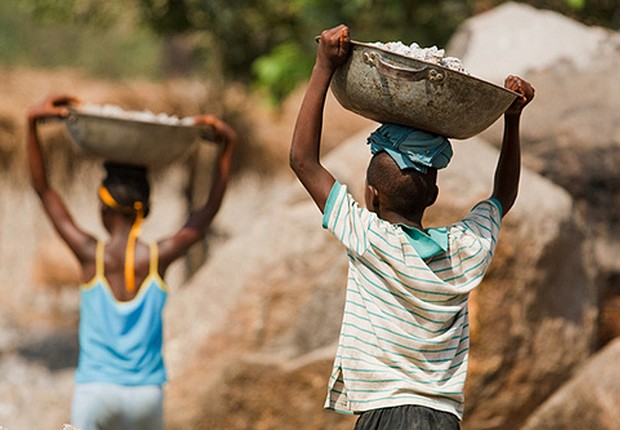
Have you ever noticed how in Brazil we see, in many areas, an ever-widening gap between the top and the base? Take the example of what has been happening with our mathematics.
In January, Brazil was elevated by the International Mathematical Union (IMU) to a select group of the ten nations with the most advanced mathematics research in the world. In 2014, Rio de Janeiro native Artur Ávila, aged 35, became the first Brazilian and the first researcher from Latin America to win the Fields Medal, considered the “Oscar” of mathematics. A few weeks ago, Brazil hosted, for the first time in South America, the International Congress of Mathematicians, which brought together the world's elite in the field (which unfortunately got more media attention because a Kurdish mathematician had the medal he had just won stolen).
Of course these are excellent achievements – apart from the theft, of course. But unfortunately they do not reflect the development of the base. If we take into account the results of the most recent Programme for International Student Assessment (PISA), one of the main global indicators of the quality of a country's education, we see that our students' education in mathematics is going very badly. In 2015, Brazil fell in all three areas assessed (science, reading and mathematics), ending up near the bottom: 63rd place in science, 59th in reading and 66th in mathematics among 70 countries analyzed.
In the 1970s, the economist Edmar Bacha coined the expression “Belindia”, which became famous for, in a way, summing up Brazil. According to the author, our country was a “Belindia”, that is, a mixture of Belgium, a rich and developed nation, and India, at the time an example of underdevelopment and poverty.
Time has passed and, although neither Belgium nor India are ideal examples of wealth and poverty anymore, Brazil still persists as the country of deep inequalities, where it is not hard to find modern and developed elites in the midst of an underdeveloped and precarious base – often in the same field. We are a “Belindia” in mathematics, in sports, in medicine and in so many other fields.
This very Brazilian reality occurs, in a similar way, in many of our companies. We have executives who are considered on the international scene to be very well prepared, being highly valued, for example, to take on senior positions in various multinational organizations. Good companies invest heavily in developing this level, with MBAs abroad, coaching programs and other means. This is a fundamental factor for us to be able to compete in a globalized environment and should undoubtedly be maintained.
What cannot happen is low investment in the base, in the people who carry out the day-to-day work of companies. When you look more closely at the organization's operational staff, whether in production positions or in offices, you often find people who are poorly educated, poorly trained and given no guidance, working under an outdated management that neither provides the conditions for nor encourages people to do their work better every day. It ends up being a “Belindia” in terms of people's capabilities.
In the lean system, there is a very strong focus on seeking extremely high qualification at the operational levels. After all, they are the ones who do the work that adds value to the products and services delivered to customers.
I recently visited a company in Japan that is iconic in lean management. The areas they showed visitors with the greatest pride were the “dojos”, places where hands-on training is given to all operators. There is a total emphasis on permanently developing, refreshing and advancing employees' knowledge and skills in basic techniques (such as welding, for example), but also in aspects of safety, problem solving, rapid response, etc.
Improving management only “at the top”, here or there, training this or that department, investing in this or that sector... can bring isolated results. But it will be necessary to look at the organization as a whole if you want to achieve truly exceptional, sustainable and long-term results.
Brazil and the world are obviously not the same as in the 1970s, when we were described by the expression “Belindia”. Unfortunately, however, our country still fits the meaning that the expression left for history: notable elites alongside bases that lag behind in many respects.
To have truly competitive companies, we need excellence in developing people's capabilities at all levels of the organizational pyramid, where the base is the one that is lacking the most attention, since its development is being neglected in many cases.







