

JIDOKA
Lean philosophy, with its five principles: value, value stream, continuous flow, pull and perfection, is inspired by TPS (Toyota Production System).
TPS is a system that goes beyond the boundaries of production activities and can be applied to any activity where there is a defined process, that is, a sequence of steps with a beginning, a middle and an end. For example, in service-related activities such as banks, insurance companies, medical and hospital care, etc.
It began at Toyota and its development was entirely anchored in necessity. It has proven to be a very effective and competent system for guiding an enterprise, given the success Toyota has achieved as a company on the world stage in one of the most competitive industries, the automotive industry.
To make it easier to understand, and for teaching purposes, TPS is structured with two pillars that support the system: JIT (Just in time) and Jidoka. Just in time relates more to the quantitative aspect, aiming to maintain a continuous flow of activities in process, while Jidoka relates to stopping the flow whenever any abnormality occurs. It is therefore more related to the qualitative aspect of the system.
Despite this separation, it is very difficult to draw a line between them, since they are interrelated, and one can say that Jidoka complements JIT so that the system moves toward perfection.
1. Jidoka
Jidoka had its origin linked to the automation of the loom
built by Sakichi Toyoda (1867-1930), founder of Toyoda Automatic Loom Works, considered one of the ten greatest inventors in Japan's contemporary history and inventor of the automatic loom.
The problem with the automatic loom was that:
- The machine kept running even when a thread broke, and; - The defect was only detected when the process was finished, after a lot of defective fabric had been produced.
In such a situation, if a thread broke, the machine would produce defective fabric! And to avoid producing defects, an operator had to look after the machine like a watchman and, at any sign of abnormality, stop the machine.
The solution Sakichi invented and put into practice in 1924 was a loom equipped with a device that stopped the machine when it:
- detected that the thread had broken;
- detected the end of the thread;
- detected that the programmed quantity had been reached.
Using these features, Sakichi was able to free the operator from standing watch over the machines waiting for an abnormality to occur.
That is what Jidoka is! Equipping the machine with devices or features that, upon detecting any abnormality, make the machine stop, thus avoiding producing non-quality as described above.
But this is only one part. It is the Jidoka that involves automatic machines. Not all activities are performed by machines, for example the activities of an assembly line, which involve a great deal of manual work. How does Jidoka work in this case? It is the operator who stops the activity upon discovering any abnormality.
At Toyota, the operator has the obligation and the right to stop the operation when he discovers an abnormality and it is not resolved within takt time. This is part of the commitment not to pass a part or work with an abnormality on to the next operation or process, and it constitutes one of the fundamental rules of TPS – quality built into the process.
The stop is followed by an alert or signal issued by the operator by pulling cords (or pressing buttons) placed along the assembly line within the operators' reach.
So far we have seen that Jidoka can be applied both to machines, as was its origin, and to activities that involve only human intervention.
The goal, in both situations, is to detect any
defect or abnormality and stop the operation or process to avoid producing non-quality.
Examples of Jidoka applied to an assembly line:
1. Nutrunner with “intelligent automation”. Tightening of the wheel lug nuts on the wheel hub.
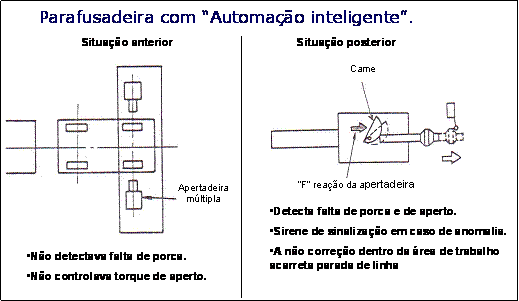
Figure 1a - Example of Jidoka on the assembly line
2. Torque wrench with micro sensor. It emits an audible signal if the tool is not used in the predetermined position; it is a way of ensuring that the torque is measured, guaranteeing quality within the process.
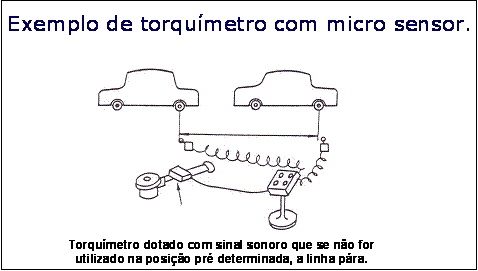
Figure 1b - Example of Jidoka on the assembly line
II. Quality within the Process
For some years now we have seen the development and manufacture of modern, high-speed machines and equipment. All of this is welcome, but it also comes with problems.
When a small abnormality occurs, caused, for example, by a small foreign object getting in or by debris accumulating and consequently damaging the machine, it ends up generating a large quantity of defective parts. All this because the machine has a large production capacity, most of the time automatic, and cannot detect or hold back a defective part, nor is it equipped with an abnormality-checking device, much less a system to stop producing. Therefore, to guarantee quality within the process, a machine built on the Jidoka concept must stop upon detecting any abnormality.
At Toyota, when a very advanced machine or piece of equipment is acquired, it is standard practice not to install and use it immediately. The recommendation is always to add some concept that incorporates TPS principles and only then use it. In more detail, before installing the machine or equipment in the “genba”, the Industrial Engineering and Production project teams run several tests, exchange ideas about improvements and, if necessary, make modifications; only after completing this careful preparation is the machine or equipment finally put into operation.
Even if the production line has to be stopped, a defective part is never sent to the next operation or process. Stopping the line will obviously cause a loss of production, but continuing to produce without having found the root cause of the abnormality will in fact end up compromising the downstream process, that is, it will end up directly affecting the end customer, with a consequent loss of the company's credibility.
1. Poka –yoke
One of the ways to build quality into the process is through the use of “foolproof” devices, called poka-yoke.
Poka-yoke (mistake-proofing): a simple device or mechanism that, installed on the machine or at the workstation, prevents errors from occurring, that is, even if someone wants to do it wrong, the poka-yoke does not allow it.
Situations in which poka-yoke is best used and contributes most:
Manual operations that require the operator's constant attention;
Where “mispositioning” of a part may occur;
Where adjustment is necessary;
Where attributes rather than measurements are important;
Where special causes may recur;
Where the cost of training and turnover is high;
On lines where several models are in production;
Where the cost of external failures far exceeds the cost of internal failures.
Rules for implementing poka-yoke:
Take a pilot process and make a list of the most common problems:
Prioritize the errors by frequency;
Prioritize the errors by importance;
Design poka-yoke devices to prevent the most important errors on both lists;
Whenever economically feasible, prefer applying poka-yoke devices instead of other inspection methods.
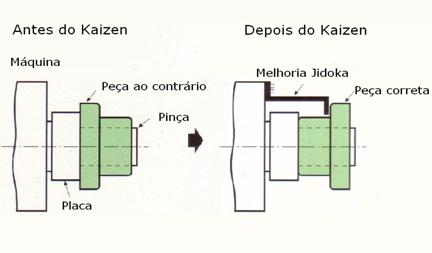
Figure 2 - An example of poka-yoke.
Upon detecting any abnormality, the operator must immediately inform his supervisor. At Toyota there is a saying: “the operator's job is to stop the line”, that is, they are used to stopping the line and informing the supervisor when they find an abnormality in production.
Nevertheless, the line should not be stopped immediately as the machine does; one must first give warning that it is going to stop, and only after a set time (takt time) should it stop. This helps avoid leaving the operation half done. To carry out this routine, the “fixed-position stop system” was devised. The tool most commonly used to signal the fixed-position stop is the “andon”.
2. Andon
This is a line-stop indicator board installed high up, near the ceiling of the “genba”, so that it is visible to everyone.
The board's indicators are activated when cords are pulled or buttons are pressed. Then the yellow light comes on, which is a warning that the line will stop if the problem or abnormality is not resolved. If it is not resolved, the line stops at a fixed position, and when that happens a red light comes on in the “andon”. Therefore, the “andon” is a tool that allows the operator to stop the line upon finding an abnormality and to seek help to resolve it.
At Toyota the operator has the autonomy to stop the line, and he is responsible for maintaining quality within the scope of his operation and never sending a defective part to the next process. This attitude and commitment are what sustain the high quality of Toyota products.
The tool that reports an abnormality on the production line does not necessarily have to be the “andon”. Small plants do not necessarily need an “andon”, since there are usually few processes and machines, and the operator himself can easily detect the abnormality. Since the “andon” is a tool for announcing an abnormality, any device that can perform this function is perfectly fine; it can be an audible alarm or even a flashing light signal.
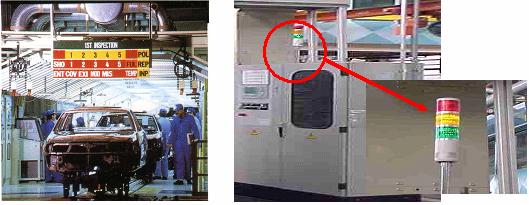
Figure 3 – Examples of “andon”.
The basic idea is that whatever the abnormality: a delay in the operation, an equipment problem, a quality problem, etc., the operator should not hesitate and must stop immediately so as not to produce non-quality, and then move on to analyzing the root cause of the problem.
What I have most commonly observed in companies is that, even when quality abnormalities are detected during the operation, out of fear of a drop in productivity due to a production stop, people turn a blind eye, segregating the defective part and/or inspecting at the end and doing repairs. Quality has to be built and guaranteed within the process itself. Therefore, stop when you find an abnormality, whether in a manual operation or on a machine. It is very important to preserve this fundamental concept of TPS.
3. Standardized Work
Interpret as an abnormality everything that is not in accordance with Standardized Work. To understand what an abnormality is, it is necessary to define the parameter of what is abnormal, and that is the role of Standardized Work. In the case of a machine, a device is installed so that the machine stops upon detecting any abnormality, but in the case of manual operations, Standardized Work is defined, and if it is not followed in full, the line is stopped.
Standardized Work is made up of three elements: takt time, the operator's work sequence and standard in-process stock. It is based on making the best use of the operator's availability, and it is what sustains TPS in terms of productivity, quality and also safety at work. It is an essential tool for keeping production stable.
III. Productivity
In the early 1950s, Mr. Taiichi Ohno (1912-1990), the father of TPS, came into action. It was he who, at that time, when Toyota was facing great difficulties, was confronted with the need to increase productivity in the machining area, of which he was the manager.
Mr. Ohno observed that having one operator fixed to each machine was unproductive. The solution was to change the layout to a system in which one operator could run more than one machine. Obviously, to achieve this the machines had to be equipped with Jidoka concepts.
Load the machine with as little work as possible, reducing the human workload and employing people in other activities that only they could perform. By giving the automatic machine the Jidoka characteristic, the method of controlling machines and equipment changes radically. There is no need for the operator to watch the machine while it is working; the operator only needs to go to the machine when it stops due to some abnormality.
Today there are automatic machines with devices that eject defective parts. In the past, it was normal for a machine to be monitored by an operator who removed the defective parts. The introduction of this device, capable of judging the defect and ejecting the parts, removed the need for this operator to stand watch, but it did not eliminate the production of non-quality. Therefore, it is important to understand this difference with Jidoka.
With Jidoka, the machine stops upon detecting an abnormality and signals that it has a problem. This avoids producing non-quality while at the same time enabling one operator to monitor several machines. In other words, as Jidoka advances there will no longer be any need for “watchmen” beside the machines. By eliminating the machine-watching task, there is a great opportunity to train operators to be multi-skilled, capable of working with several machines in different processes.
Alongside the rationalization of the workforce at Toyota, the most senior workers are given the mission of being specialists in carrying out kaizens that guarantee quality within the process.
Carrying out quality kaizen usually takes time, and there are cases that drag on without achieving results. These kaizens are carried out by the operators themselves, and there are cases they cannot resolve on their own and that can only be resolved at the management level.
Every plant has problems of this nature, and the veterans assigned as specialist advisors to the manager are given the mission of solving these problems.
Productivity can be increased through measures that prevent abnormal situations from recurring. Once an abnormality is detected, dig deep into the root cause to solve it once and for all and prevent recurrence.
With Jidoka, the machine stops upon detecting an abnormality. On these occasions, one must analyze very carefully the reason for the stop, work immediately to clarify the abnormality and dedicate oneself to actions that prevent recurrence.
Below is an example of using the PDCA method which, with the five whys routine, seeks the root cause:
Suppose that: “The switch came loose”.
Ask: “Why did the switch come loose?”.
On checking the cause: “It is because the lubricant was not applied correctly”.
Digging deeper with questions:
“Why was it not applied correctly?”.
“It is because there are no procedures”.
“And why are there no procedures?”.
And so, by questioning the answers obtained with successive whys, the root cause of the problem is sought, kaizens are carried out and the procedures are standardized. Basically, what is done is the continuous repetition of this procedure. Operators must be conditioned to question each and every situation. Not only the occurrences of abnormalities, but also the situations in which success is achieved, asking “why did it work?”.
To conclude, the important thing is always to practice using these concepts in the “genba”, where things are happening, rather than musing at the office desk. That is, to practice genchi-genbutsu.
Bibliographic References:
Jidoka presentation at Lean Summit 2006 by G.I.Kosaka
Toyota Production System: An Introduction. Masamitsu Ishii, 2005
Toyota Production System. Toyota Motor Corporation, 1977







