How to “tackle” middle-management weaknesses in civil construction
The challenges the construction industry currently faces in Brazil are not few. One can highlight, for example, the persistent labor shortage. Or the growing competition among builders. Not to mention the significant growth in customers who are more demanding regarding deadlines, costs and quality. This has encouraged builders to flirt with new technologies and methodologies to improve efficiency throughout the life cycle of their projects.
In this context, one specific challenge becomes clearer every day: the lack of knowledge and skills on how to manage people among a significant portion of the sector's leaders. One possible explanation is that a large share of the leaders in today's construction industry had no specific training and were not prepared in a structured way to take on such challenges. They learned on the job, drawing inspiration from personal role models or even testing behavioral hypotheses without much guidance.
Perhaps that is why “command and control” style practices are recurrent and seem to predominate. This creates an environment of insecurity that spreads across job sites, discouraging open communication and the search for effective solutions. As a consequence, many professionals adopt defensive behaviors, avoiding exposing problems or taking initiatives that could reveal failures.
In this way, several recurring "syndromes" are perpetuated in the construction sector. One example is the so-called "Gabriela Syndrome", inspired by Dorival Caymmi's song: "I was born this way, I grew up this way, this is just how I am, I'll always be this way". This mindset reflects strong resistance to change, hindering the adoption of new practices and innovations that could improve management and efficiency in the sector.
Another common syndrome is the "Endless Complaining Syndrome", in which employees spend much of their time complaining about how the company works, but without taking initiatives to bring about effective change. Likewise, the "Scapegoat Syndrome" reflects the tendency to shift responsibility, blaming failures on other departments or individuals instead of seeking joint solutions. These behaviors, among others, create a climate of stagnation and hinder significant progress in the sector.
Living day to day with all these syndromes, the so-called “middle management”, stands out, made up of professionals who act as the link between the executive board and operations. These professionals are decisive in ensuring that guidelines and technical specifications are followed in practice. They include construction managers and coordinators of engineering, quality, occupational safety, procurement and design. Job titles and responsibilities may vary, but the role of these leaders remains unchanged: to ensure the effective execution of strategic decisions and the smooth running of operations.
Given this scenario and the importance of middle management for the sustainability of the sector, we highlight below the main “weaknesses” we have frequently observed when working with construction companies:
1. Ineffective communication: middle management often faces challenges in "translating" senior management's guidelines for the operational teams. This communication failure affects integration between different areas, such as engineering, procurement, safety and planning, creating misalignment and hindering the efficient execution of activities. In addition, the lack of adequate feedback to teams can lead to demotivation and a less productive work environment.
2. Nonexistent conflict management: construction sites are naturally conflict-prone environments, whether among workers, foremen or engineers. However, many middle managers lack the skills needed to mediate these disagreements effectively. Added to this is the recurring difficulty of balancing the executive board's demands with the teams' limitations, which ends up creating tension and jeopardizing project progress.
3. Difficulty exposing problems: this phenomenon is characteristic of traditional management, in which problems are not tackled immediately but rather ignored or postponed, allowing them to worsen over time. At construction companies, this practice is often described as "hatching grenades", a metaphor for the accumulation of failures that inevitably explode in the future, creating potentially avoidable crises. This dynamic reflects organizational environments shaped by fear, where a lack of clarity about how to identify and correct deviations prevents proactive resolution of challenges.
4. Shortcomings in structured problem solving: identifying and exposing problems is already a challenge, but solving them in a structured way is a step further. In the construction sector, the culture of reactive management, which values the figure of the "firefighter putting out fires", remains predominant. This amplifies one of the sector's main “pain points”: over the years, projects are started and completed, new projects begin, but the same failures persist, repeating themselves continuously. Part of this cycle is due to the value placed on the so-called "hero manager", whose work is based on solving one-off crises instead of structuring processes that prevent recurrence. This management model not only keeps problems in a vicious circle but also hinders the building of a culture oriented toward improvement and operational efficiency.
5. Lack of team development and recognition: the weaknesses mentioned so far are aggravated by scarce investment in training and capability building, as well as the absence of recognition for team performance. This scenario is characteristic of more authoritarian management, with little openness to active listening and to employee participation in improving processes. As a result, middle management finds itself squeezed between the demands of senior leadership and the challenges of the job site. This misalignment widens the distance from the “gemba”, making it harder to identify and solve problems in a structured way. As a consequence, critical failures that should be escalated to middle management often remain unresolved in the field, while minor issues that could be solved in a decentralized way end up requiring unnecessary intervention by managers.
To try to avoid or reverse all this, it is necessary to develop in middle management, as soon as possible, at least four practices and behaviors:
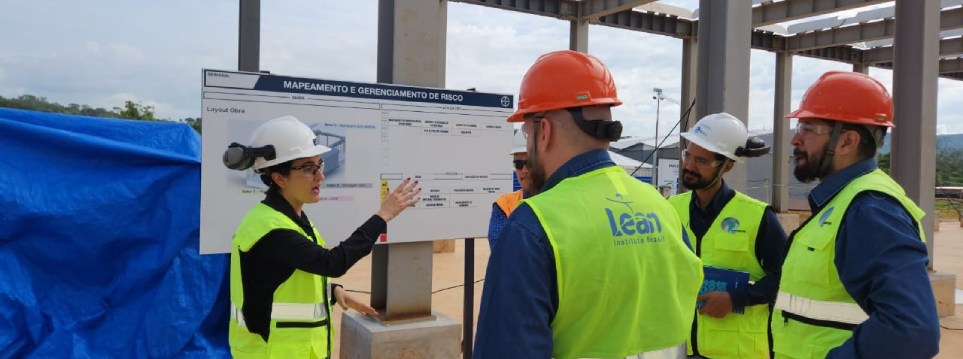
1 - Leader standardized work in the gemba: implementing and following structured routines for monitoring activities on site is essential to strengthen the teams' problem-solving capability. This process must be aligned with Daily Management (DM), ensuring that the main difficulties are identified directly in the “gemba” and addressed systematically. Furthermore, the leader's active presence in the production environment not only facilitates agile decision-making but also sets a role model for the team, fostering a culture of continuous learning and structured improvement.
2 – Leaders as management “architects”, not “micromanagers”: middle management tends to centralize problem solving, which overloads managers and limits team autonomy. However, when a structured “help chain” is established, teams gain the capability to address day-to-day issues more independently, while only the more relevant challenges are escalated to higher levels. This approach ensures that “the right person solves the right problem”, promoting more proactive and agile management. Instead of “micromanaging”, leaders should act as management “architects”, creating routines and mechanisms that favor decentralized decision-making and continuous learning by the teams.
3 – Structured problem analysis and solving: in construction, “firefighters” are still valued as heroes, but this mindset prevents the development of effective and sustainable management. A mature management system cannot depend on exceptional individuals to function; on the contrary, it must be designed so that any professional, with the right tools, can perform efficiently. Investing in capability building in structured problem solving is essential to strengthen this model. With a systematic approach, it is possible to guide and prioritize decisions objectively, reducing dependence on reactive responses and creating a more predictable and controlled environment.
4 - Mindset evolution and individual development: leader development only has a real impact when it is aligned with a transformation in the way of thinking and acting within the company, connected to its strategic priorities. To that end, middle management needs to recognize its own gaps, identify improvement opportunities and adopt practices that reinforce new leadership habits. An effective approach is to develop and apply “Individual Development Plans (IDPs)” that enable the continuous improvement of the competencies essential for management. However, this evolution cannot simply be imposed (top-down); it must happen in a “pull manner”, that is, driven by the real need of the business and by the leaders' genuine desire to improve their performance.
These four dimensions usually generate positive results, although the construction sector has particularities that require approaches adapted to the reality of each builder, its processes, designs and projects. Even so, it is essential that companies carry out a critical analysis of the “weak points” in their middle management, identifying patterns that hinder efficiency and the evolution of management. The challenge is not just to correct one-off problems, but rather to provide support so that these leaders overcome barriers and adopt a more structured, modern and productive management model. Lean management, with its broad set of concepts and practices, offers a solid path for this transformation, helping builders achieve performance, optimize processes and drive innovation.