Productivity with less waste
Better use of time, resources, and capacity to create more value for customers and society.
Understand what lean is: a management philosophy that develops people to improve work, creating more value for customers and society with less waste.

Lean transformation changes the world and solves problems
Rooted in the practices and results of the Toyota Production System, lean changes the way leaders and teams see work, solve problems, and make decisions. Its strength lies in building a management system based on improvement, learning, and respect for people.
In a lean organization, improving processes and developing people are part of the same movement. Leaders work close to the actual work (at the gemba), helping teams see waste, solve problems, and sustain performance day to day.
Learn about the history of Lean Institute BrasilLean thinking was born from Toyota's experience in post-war Japan, in a context of scarce resources and high quality demands. To compete with giants, Toyota developed a system capable of delivering value with less waste and strong involvement of people: the Toyota Production System (TPS).
The term "lean manufacturing" was first used in 1988 by John Krafcik, an MIT researcher, in his article "Triumph of the Lean Production System". However, the concept only gained global recognition in 1990, with James Womack and Daniel Jones.
They led MIT's International Motor Vehicle Program (IMVP), an extensive research effort that resulted in the classic book "The Machine That Changed the World". The study spread the term "lean" internationally, describing a new global paradigm for organizations able to create value by systematically eliminating waste.
The logic of TPS combined continuous improvement (kaizen), respect for people, built-in quality (jidoka), and everyday learning. Over time, these practices stopped being seen merely as an industrial production model and came to be understood as an innovative way of managing in any sector.
In 1996, Jim Womack and Daniel Jones published the book "Lean Thinking: Banish Waste and Create Wealth in Your Corporation". The book pushed the frontier of lean far beyond manufacturing, showing that its principles could be applied in any sector and establishing lean as a universal management philosophy focused on changing mindset and human behavior, not just on tools.
Lean Institute Brasil was founded in 1998 by Brazilian researcher José Roberto Ferro, a member of the original MIT research team. As members of the Lean Global Network, a global network dedicated to spreading knowledge, our mission goes far beyond teaching theoretical concepts: we act as sociotechnical partners to develop autonomous lean thinkers, transforming companies, making work more productive and dignified, and generating long-term impact on society.

As pioneers of Lean Thinking in Brazil, we base our work on the original MIT research. To truly transform an organization, the lean journey requires abandoning traditional mass-production thinking and adopting the five principles defined by James Womack and Daniel Jones: Click to see each principle in detail.
The critical starting point is to define value from the end customer's perspective and in terms of the whole product, not based on what the company "thinks" it should make. It means setting a target cost based on a real need, eliminating everything the customer does not want to pay for to get the solution or improve their experience.
It consists of mapping all the specific actions required to design, order, and produce a product. The goal is to identify muda (waste) in the organization by classifying steps into actions that create value, actions that create no value but are unavoidable with current processes (Type One muda), and actions that create no value and can be eliminated immediately (Type Two muda).
Once unnecessary steps are eliminated, value must be made to flow continuously. The focus is to leave behind the world of "work in process" (large batches and queues) and organize work so that products, services, and information move forward, eliminating batches, queues, and interruptions. This requires breaking down functional barriers, redesigning the layout, using flexible strategies, and applying techniques such as Standardized Work, TPM, Poka-Yoke, and Visual Control (Andon).
An upstream process should not produce a good or service until the customer downstream asks for it. Instead of pushing products onto the market based on inaccurate forecasts (which create obsolete inventory and chaos), pull is put into practice through takt time (the pace that synchronizes production with actual demand) and visual signals (kanban). This calls for level scheduling (heijunka) and level selling.
Once value is specified, value streams are mapped, and flow is pulled by the customer, the process starts over. Perfection demands total transparency and is an endless effort that combines radical improvement (kaikaku) with continuous improvement (kaizen), successively eliminating waste until the organization can deliver exactly what the customer wants, with zero defects and zero waste. This work is directed by top management through strategy deployment (hoshin kanri) and initially driven by a change agent.
Source: WOMACK, James P.; JONES, Daniel T. A Mentalidade Enxuta nas Empresas (Lean Thinking): Elimine o desperdício e crie riqueza. Rio de Janeiro: Elsevier, 1998 (Brazilian edition of Lean Thinking).
Came across a new term? Check our glossary of technical terms /vocabulario to deepen your reading.
Better use of time, resources, and capacity to create more value for customers and society.
Instead of inspecting the product at the end, lean focuses on immediately identifying the causes of problems. This prevents failures, reduces rework, and ensures work is improved right from its source.
Simpler, more stable, and continuous processes, with less waiting and fewer interruptions, and a drastically shorter lead time for the end customer.
More autonomy, ownership, and team participation in solving problems and improving work.
With leaders and teams working close to the actual work (gemba), decisions come to be based on real facts and data from operations.
People better prepared to improve processes, solve problems, and sustain the organization's progress.
Lower costs, better use of resources, and an ongoing ability to generate solid results over time.
Lean thinking has no boundaries. Different industries use the lean methodology to reduce costs, boost productivity, and dramatically improve their customers' experience. Swipe to explore the applications:
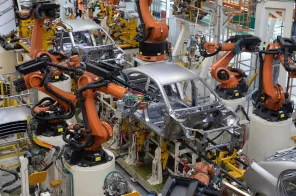
Agility, better quality, and higher productivity on the shop floor.
Improve patient flow and hospital and clinical processes, from the emergency room to discharge.
Eliminate steps that add no value and create simple flows to deliver operational excellence.
Gain efficiency and predictability by eliminating losses at every stage, from planting and harvesting to distribution.
Connect planning to execution on the job site to make schedules predictable and reduce costs.
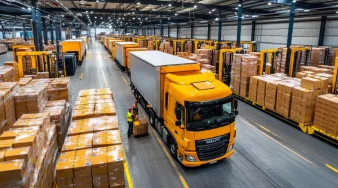
Connect the chain end to end, reducing variability, transportation costs, and delivery lead time.
Rethink processes and cut excess bureaucracy to deliver faster, higher-value services to citizens.
Eliminate bottlenecks and red tape to speed up value delivery in every transaction, without compromising compliance.
Make sure every technology investment generates real business returns by eliminating waste along the journey.
Redesign administrative and academic processes to focus resources on what really matters.
Bring flow and reliability to the entire customer journey, from underwriting to claims handling.
Optimize inventory and logistics to improve the shopping experience, connecting physical stores to e-commerce.
Transforming the way you and your team think about work starts with knowledge. Dive deeper into the concepts of lean management.