

Benefits of implementing Standardized Work at ThyssenKrupp
This article shows the significant results achieved (a 40% reduction in WIP, a reduction in operator movement of 1,500 m/day, a 9% improvement in productivity, greater operator satisfaction and better safety conditions) through the implementation of Standardized Work at two workstations on a crankshaft machining line at ThyssenKrupp - Campo Limpo.
ThyssenKrupp is one of the major technology groups, operating in the areas of Steel, Automotive Products, Elevators and Services. It has facilities in Europe, North, Central and South America, and Asia. One of them is located in Campo Limpo Paulista – SP (TKMCL), where the forging and machining departments produce crankshafts, connecting rods, wheel hubs, etc. for the Brazilian automotive industry and for export.
Since the 1990s, the plant has undergone significant transformations through an effort to create flow, moving from a functional layout to a product-family layout. In 2001 and 2002, new tools such as Value Stream Mapping (VSM) and the implementation of pull systems, as well as set-up reduction and maintenance improvement, were put into practice.
A new stage in the lean implementation at TKMCL
Starting in 2005, with the appreciation of the Real and the growing entry of new companies into this increasingly competitive market, TKCML saw the need for a new improvement and cost-reduction effort. It therefore decided to take a major leap in its performance, seeking to complete the set of lean tools already implemented.
To reach this new level in the plant's lean transformation, the company decided to implement some new lean tools such as Creating Continuous Flow (Operator Balance Chart), Leveled Pull System, Internal Logistics and Standardized Work (SW). In this article we will show how SW was implemented and the initial results achieved in a pilot area.
What is Standardized Work?
Standardized Work (SW) is a basic lean tool centered on the movement and work of the operator and applied in repetitive process situations, aiming at the elimination of waste. It consists of establishing precise procedures for the work of each operator in a production process, based on three elements:
1. Takt time, the rate at which products must be produced to meet customer demand.
2. Work sequence in which an operator performs his tasks within the takt time.
3. Standard in-process stock, including the items in the machines required to keep the process running smoothly and continuously.
SW enables the practice of Just In Time and Jidoka (Autonomation), in addition to ensuring basic stability in processes so that any improvements are sustained on an ongoing basis.
We should emphasize that Standardized Work is not synonymous with Work Standards. ThyssenKrupp already had basic Work Standards, such as the documents containing the process specifications (lengths, diameters, tolerances, etc.), but it did not have Standardized Work.
The implementation of Standardized Work
The technique was disseminated in a specific two-day Workshop with theoretical content, examples and practical exercises in the plant (Click here to learn more about this training). Participants were selected both from the pilot area on the crankshaft production line and from other areas such as connecting rods and forging, to facilitate later dissemination.
The first steps involved collecting operating times at the workplace itself through direct observation in the "gemba" (shop floor), setting aside Engineering standard times, and the support of the leaders and operators involved to build the Operator Balance Chart (OBC) for each operator, using the takt time as a reference.
Figure 1 shows how, before the implementation of SW, the operators' cycle times exceeded the takt time; that is, they could not meet customer demand with the existing work shift, forcing the company to resort to overtime. After the implementation of SW, the operators were able to work below takt, which meant meeting demand comfortably. Throughout the article, the changes made are highlighted.
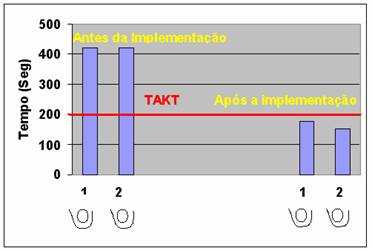
Figure 1 - Operator Balance Chart (OBC)
In turn, the automatic process times, when the machine was running, were also surveyed, as well as additional activities (e.g. walking), giving rise to the Standardized Work Combination Table (SWCT), as shown in figure 2.
Based on the OBC shown in figure 1 (before the improvement), it was possible to develop the SWCT, shown in figure 2, in which the work overload for both operators, exceeding the takt time, is evident.
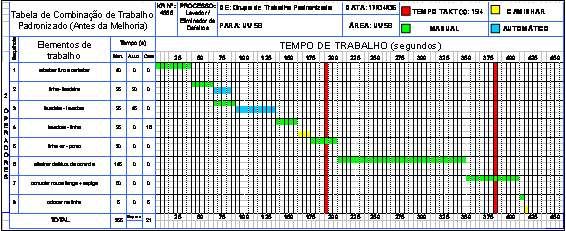
Figure 2 - Standardized Work Combination Table – SWCT (before implementation)
The implementation of Standardized Work led to the following improvements:
1. Distribution of workloads within the takt time, meeting customer demand without the need for overtime.
2. Transfer of work elements to upstream operations (thread checking), making better use of the operators;
3. Filling automatic times with manual operations (hole deburring and stamping);
4. With the separation of operations, walking is no longer necessary, avoiding this waste;
5. With the reduction of the workload, working at the takt rate, the waste of waiting (lack of parts at the downstream operation) was eliminated.
Thus, the operators' work content after SW became as shown in figure 3.
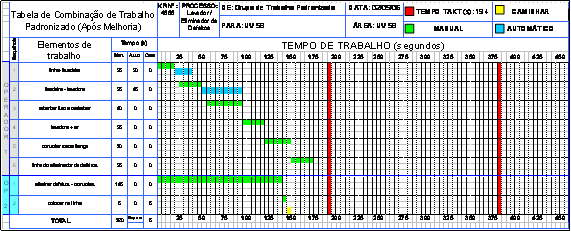
Figure 3 - Standardized Work Combination Table – SWCT (after implementation)
After the new SWCT (figure 3) was prepared and accepted by the team and the operators, the operation was standardized through the SWD (Standardized Work Diagram), as shown in figure 4.
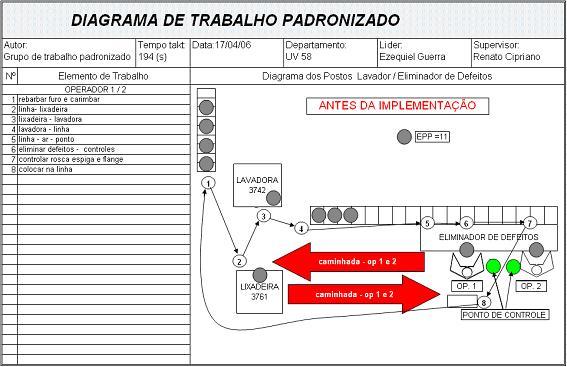
Figure 4a - Standardized Work Diagram (SWD), Before
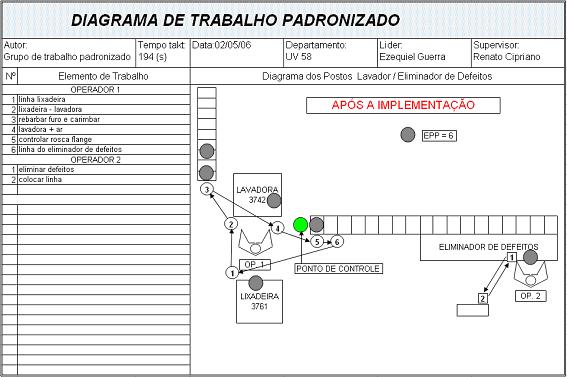
Figure 4b - Standardized Work Diagram (SWD), After
Benefits of the implementation
Without any investment, through the implementation of Standardized Work the plant achieved the following:
1. Reduction of WIP (Standard In-Process Stock) by around 40%.
2. Reduced workload with the elimination of walking (1500 m/day) and the transfer of work to the upstream operation.
3. Productivity gain with the balancing of operations, since parts are produced within takt, avoiding overload and overtime (2 hours/day). Therefore, a 9% improvement in productivity
4. Operator satisfaction: “Why didn't they think of this before?” was a phrase said by one of the operators that shows satisfaction with the implementation of SW, understanding that this tool came to improve the operation from their own point of view.
5. Reduced risk of accidents. There is a difference in floor level between the operations, and when the operations were separated, eliminating the walking, the operators no longer go up and down this step, avoiding the risk of accidents.
Lessons learned
The application of SW proved to be a powerful tool for sustaining kaizens. The company now has the conditions to implement improvements that are effectively sustained over time, and with this the operators can be directly involved. The company team involved in the work discovered new opportunities for gains, previously unknown.
Other elements of the lean system, such as the pull system with low inventories, continuous flow based on takt, etc., became more solid, making the problems in the pilot area more evident. Thus, with SW and appropriate problem-solving methods, it is possible to ensure process stability.
Including operators and leaders in work planning was fundamental. As a result, the involvement and suggestion programs gained more meaning because, finally, the operator was able to participate in defining and improving his own work.
Operator training became much easier thanks to the clarity of the content, the sequence, and the start and end of each operation.
Expansion to other areas of TKCML
The learning and the great benefits delivered by SW on a pilot crankshaft machining line will allow the trained team of multipliers to expand it to other lines in this area, as well as to the connecting rod and forging sections, among others, and thereby help the leap in the lean transformation of ThyssenKrupp Metalúrgica Campo Limpo.
Would you like to know more? Read Michael Ballé's article on How to start implementing standardized work
Bibliography
In the workbook Creating Continuous Flow by Harris, Rick and Rother, Michael (Lean Institute Brasil, 2002) you will learn how to build the Operator Balance Chart.
For more information on the main lean terms, see the Lean Lexicon (Lean Institute Brasil, 2003).
About the authors
Marino Kishida is a lean specialist at Lean Institute Brasil. He was Production Manager at Toyota do Brasil's Indaiatuba plant, where the Corolla is produced.
Ezequiel Guerra is General Machining Master and Adriano Silva is Junior Engineer, both at TKMCL.
Contributors to the Standardized Work workshop: João Luiz Marassi, Luis Fernando Ruffino, Alessandro Pessoto, Elcio Ferracini and Renato Cipriano of TKMCL and Gilberto Kosaka of Lean Institute Brasil.
Kishida, Marino (Lean Institute Brasil)
Silva, Adriano Henrique (ThyssenKrupp)
Guerra, Ezequiel (ThyssenKrupp)






