

Lean logistics solutions: Sustaining omnichannel retail

Retail is the economic and business activity that most brings together and contributes a wide range of experiences to the consumer. In retail channels, value creation is experienced in what we call the moment of truth, the occasion when the customer connects with possible solutions in the form of products and services, through which he seeks to meet his desires and values. The lean approach to logistics is fully embedded in this context, proposing to direct efforts and resources toward the creation and fulfillment of these values, placing them at the right time, in the right way, in the right form and in the right places for the customer.
In this article, we describe the case of a large retail company with operations throughout Brazil, in which the organization leveraged its growth and profitability through lean logistics as a way to sustain its retail policy and strategy. The business, with a long tradition, has evolved over the years with its customer-centered strategy. Competently, by anticipating changes in consumer habits and the technological facilities provided by digital innovations, the company incorporated into this strategy the adoption of digital channels integrated with its physical stores, in such a way as to build an omnichannel platform.
Omnichannel is the expansion of the multichannel concept. It goes beyond the various channels, physical and digital, through which the customer can interact with the company, because it incorporates a single experience in which the consumer can complement what he sees in the physical store – with the information available on digital devices –, know that he can interact through remote communication (or decide to buy later with the data stored there) and also choose where he wants to receive or physically pick up his product without limitations. The experience continues after the sale and delivery, with information and offers through interactions in all channels with the same policy and the same willingness to serve.
The words “all” and “integration” are fundamental to understanding the opportunities and challenges that the strategy adopted in the case presented imposes on the logistics system. Omnis is of Latin origin and means all. Channel, in turn, comes from English, meaning channels. Thus, the expression leads us to the concept of “all channels brought together”, not in parallel in the operation, but in an integrated way. All aligned and connected with a focus on the customer's single experience. In the case described here, the retail company faced this same challenge in deepening the concept, duly supported by its supply chain and logistics standards. This ensured that single experience all the way to physical delivery within d+1 lead times, without errors, without damage and at a competitive cost.
1) The lean challenge in logistics
In the case of the retail company, this challenge was even greater because of the breadth of its operations throughout Brazil, the multiplicity and variety of items sold and the many options for combining and splitting deliveries to different addresses. Thus, the expansion aimed at excellent customer service gradually built up over the years into an operational complexity that required a robust method for approaching logistics problems before any investment decision.
Imagine a situation in which a customer views a certain product in his digital app. Through his interaction with the device, he discovers that the product is available at a certain physical store near where he lives. He decides to go to the store, sees the product, interacts with the salesperson and decides to buy it. He makes the purchase right there with the salesperson, settles everything with the same employee in line with the one face to customer philosophy and wants to receive the product at home within a maximum of two days. However, our customer lives in another city and bought that model in that product color, available only in a few stores because it is a limited end-of-season production run.
This sets off an entire logistics operation that, if it is not responsive and efficient, will result in great frustration with that digital-physical omnichannel experience. Behind the scenes, it will be necessary to transfer the product to an internal facility and then ship the merchandise to our customer within the established time frame. All this without increasing costs.
This is the omnichannel retail challenge faced by the company in question: similar situations numbering thousands of distinct operations that need to be integrated not only digitally, but also through interconnected circuits that in lean logistics we call operating loops, equipped with continuous flow without waste.
2) First step – the physical-digital connections
The first step in implementing the lean system to support the omnichannel retail strategy consisted of identifying these loops through value stream mapping adapted to logistics situations.
In this mapping (figures 1A and 1B), the connections between the physical system and the digital information systems are prioritized and analyzed in terms of their ability to flow the correct information at the right time. Points where there were symptoms of delay in information (or imprecise or incomplete data, hindering logistics flow) were investigated for their causes and directed to kaizens that removed these obstacles, calling whenever necessary on the help of digital and/or logistics development teams.
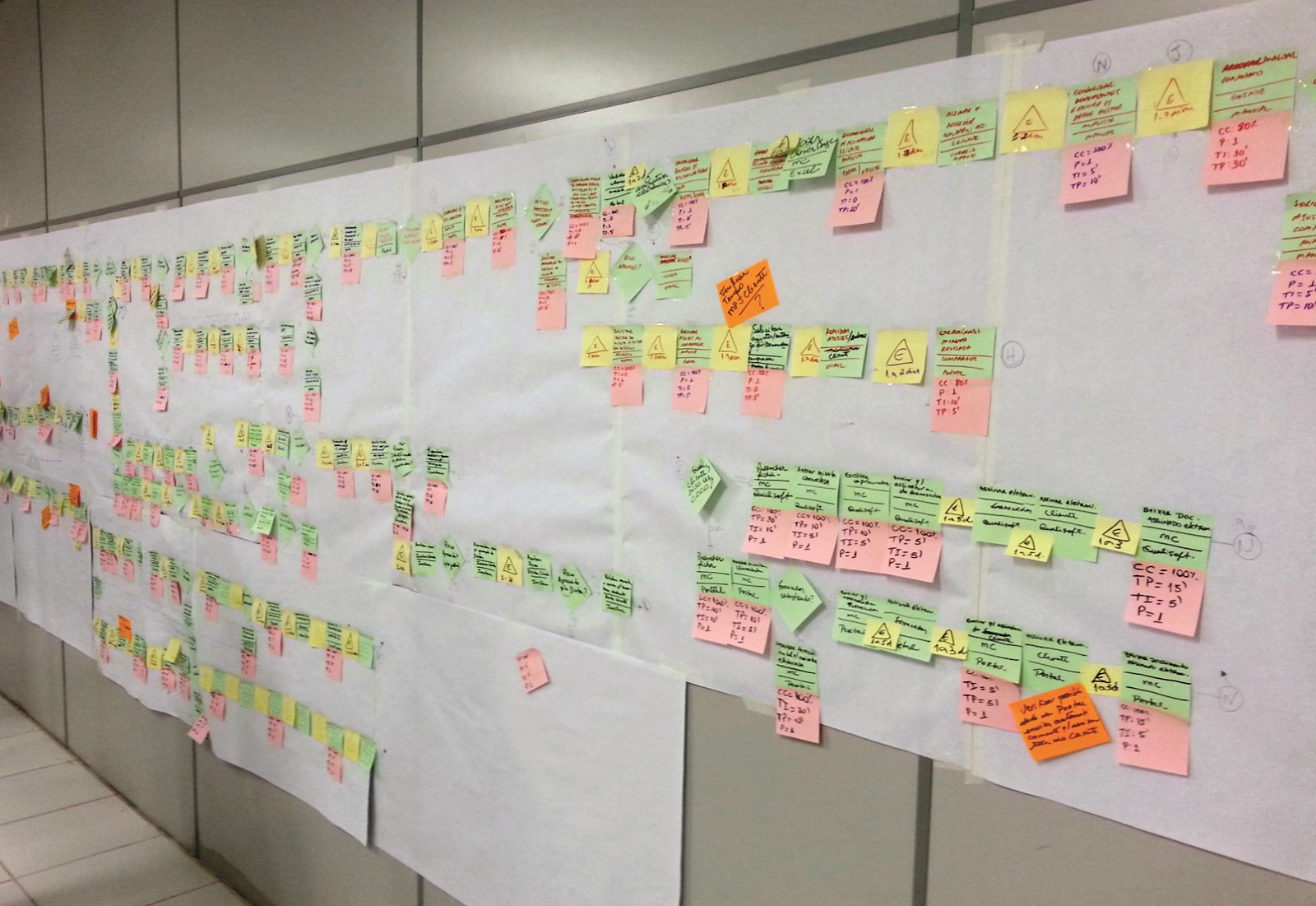
Figure 1A – Value Stream Mapping in progress
Source:
Value Stream Mapping training promoted by Lean Institute
Brasil
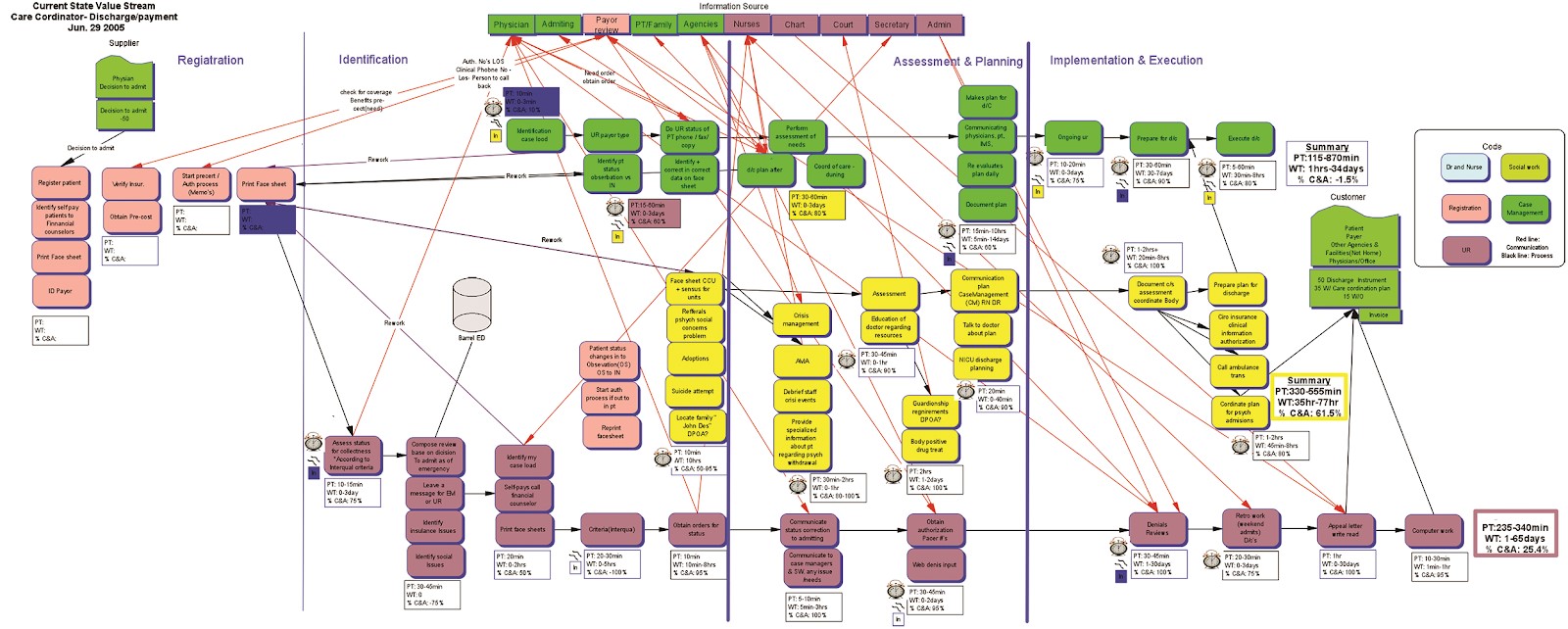
Figure 1B –
Value stream mapping with its loops and interfaces.
Source:
Value Stream Mapping training promoted by Lean Institute
Brasil
In the case in question, thanks to the mapping, the company identified the main loops, which became the subject of an action plan to facilitate and speed up the physical-digital connections:
- Store pickup system and transfers between DCs.
- Inbound system with the arrival of vehicles at the receiving docks.
- System for sorting incoming goods and quickly directing them to their locations in the warehouse.
- Storage system monitored by the WMS.
- Picking and order consolidation system.
- Outbound system with the various destination routes.
Another challenge was to integrate the solutions proposed by all the DCs in Brazil, aligning information and concepts among the managers of the transportation, regional DC management, customer service, after-sales, fleet operator and various support areas, enabling a single, critical view of the current state of the maps and their connections.
3) Building the plan – making connections agile and robust
The shared view made it possible to establish a transformation plan that reconciled the general aspects of the organization, with its customer-centered policy, the specifics of each operational loop, and the regional variables, whose solutions took into account the specific causes in each location. For example: in a given region served by a given DC, the physical-digital connection had to take into account a group of individual carriers with limitations in their communication devices. Whereas in another local scenario, involving a logistics operator's fleet, the availability of a geolocation service already made real-time communication easier. However, in both regional cases, speed in the processes of load allocation, scheduling and loading, together with the standardization of procedures and execution times, had to follow the same concept of continuous flow, without interruptions, which is the basis of the lean logistics philosophy.
To cover both the general aspect and the distinct particularities across Brazil, groups were formed by location with representatives from each operational loop, who designed the intervention based on lean thinking guided by the A3 strategy (figure 2). This is the layout of the PDCA cycle in a document that clarifies and organizes the data and facts collected. Dozens of A3s were prepared, and all of them were aligned with one another horizontally in what we referred to as a common view, to facilitate the connections between the loops and between the physical and digital systems, but also deepened vertically into local peculiarities in order to achieve sustainable solutions.
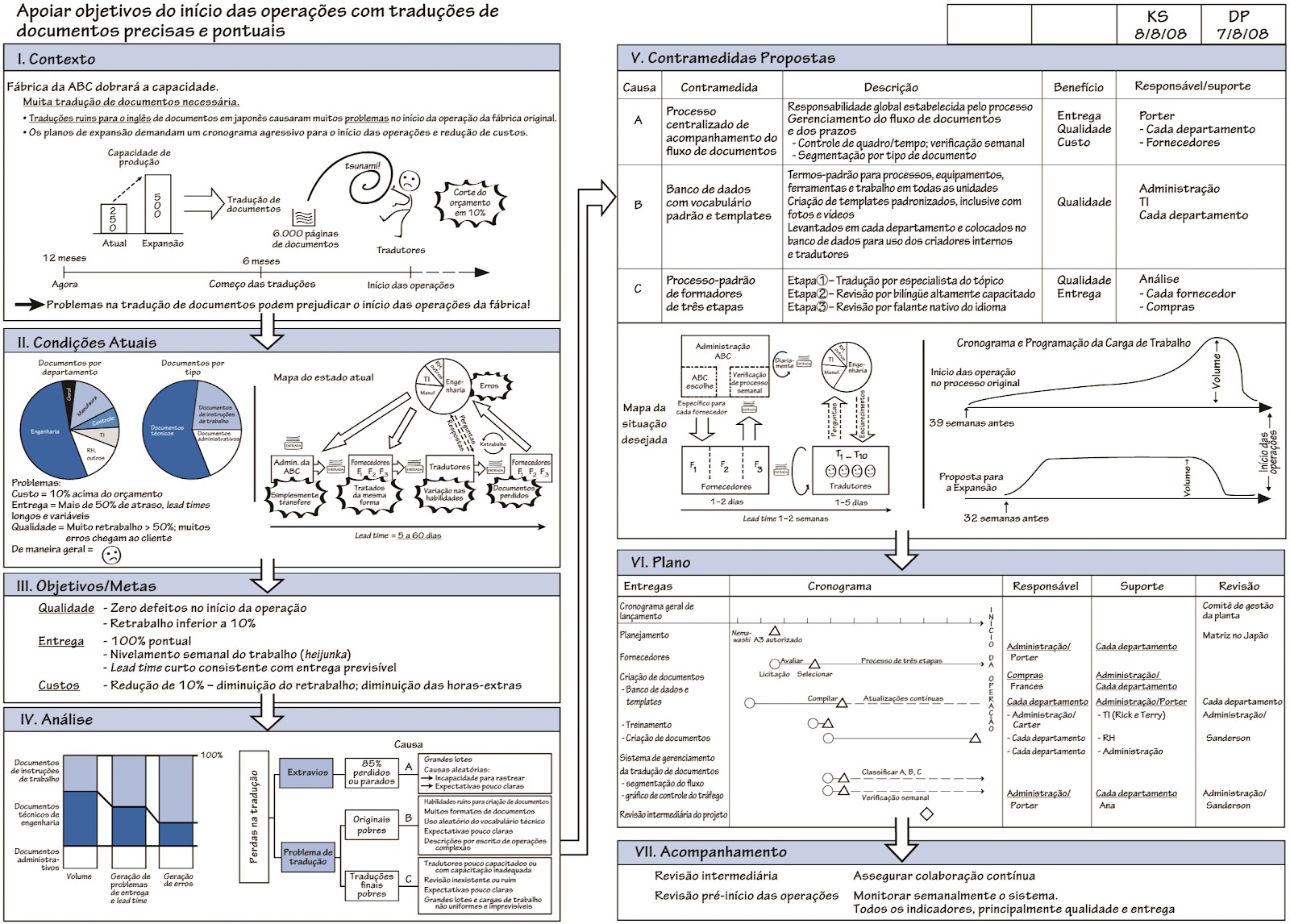
Figure 2 - Source: Shook, John. Managing to Learn, São Paulo: Lean Institute Brasil, 2008.
4) Making the connections – standardized work between flows
Several improvement actions were carried out by the groups following the lean approach. Some stood out for their extreme simplicity, yet sharp creativity. Others required, in addition to these attributes, the help of digital programming professionals.
In the first case, we have the illustration provided by the picking department, which had a weak connection with the order consolidation loop, often leading to delays in closing orders, releasing them for checking and shipping them. The dock was occupied for longer, and challenging 24- or 48-hour delivery indicators suffered.
The simplicity of reorganizing the aisles by product category, defining standardized work among the teams on each internal route, made it possible to synchronize the picking waves and resulted in shorter distances traveled and a shorter lead time for each aisle (figure 3).
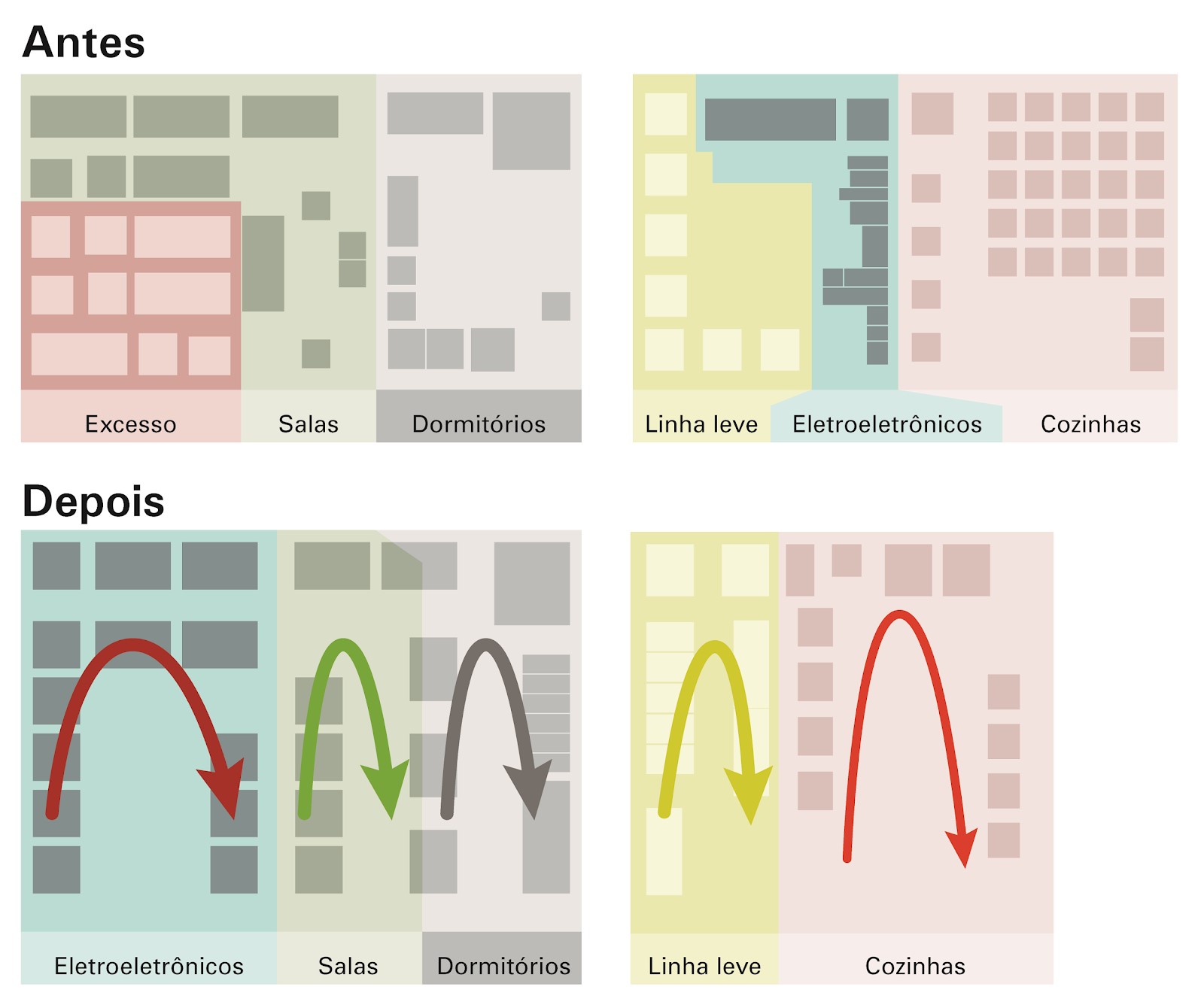
Figure 3 – before and after diagrams of the organization of picking routes.
Source:
prepared by the author
Reorganizing the teams into short-circuits with standardized work made it possible to set up visual scheduling on boards, mounted in strategic positions, which provided guidance on the start and finish times of the waves. As a result, everyone began to follow the progress of tasks and align them with the activities of the next stage. Simply designed tracking boards (with information written in pen) may become digital screens over time (dashboards connected to the WMS information system), as learning and the consolidation of the practice progress.
In the second case, tracking of delivery to the customer, with information provided in real time by digital devices, recording delivery times and any difficulties encountered by the delivery person, was better systematized through the implementation of standardized work steps for the driver. A set of response options for dealing with obstacles was systematized, ranging from real-time interventions by the back-office team to later analyses to find the causes of addresses lacking a reference point or incorrectly registered in the digital system, which still accounted for 79% and 15% of failures, respectively (figure 4). Overall, the interventions made it possible to increase the rate of successful deliveries on the first attempt (on the order of 50 to 80%, depending on the location).
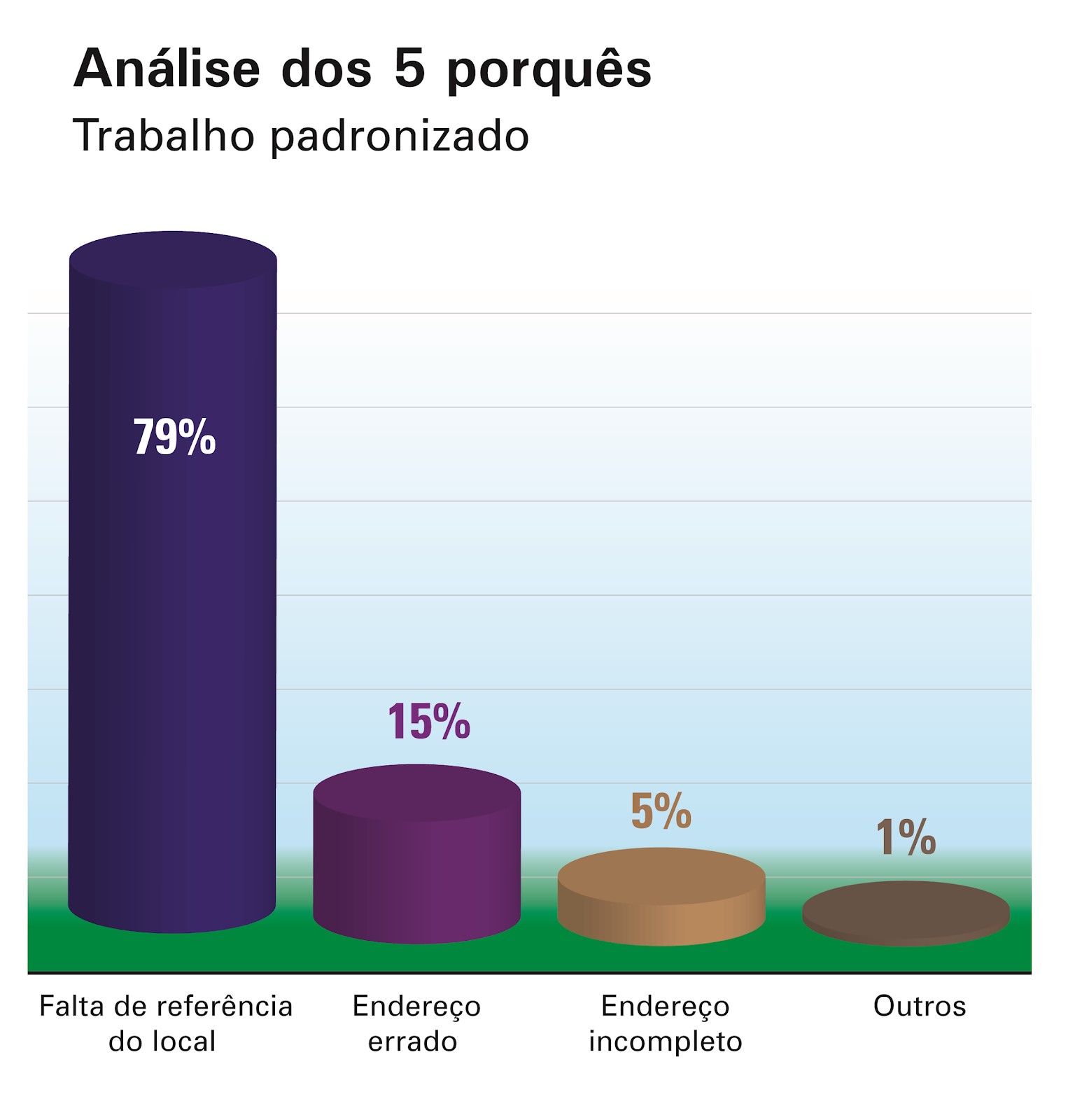
Figure 4 –
Pareto chart after 5 whys analysis of failures in standardized
delivery
Source: prepared by the author
5) Achieving results, monitoring and continuously improving the system
One of the benefits of the lean approach is to consolidate results and seek new challenges continuously, both in manual systems and in systems with state-of-the-art technology. This pursuit is made operational by installing tracking systems with indicators, designed to reflect the actual situation of the operation in the gemba – the actual place where things happen – through which lean logistics makes decisions based on evidence. This evidence is made available through data and facts tracked daily, which constitutes the practice of Daily Management. All operations in their loops – flow routines, as we have already said – were equipped with boards for tracking the daily goals of their processes throughout the day.
Thus, these visual management boards, from the simplest to the most sophisticated, with manual or digital data acquisition, were installed so that everyone involved in each process could recognize the progress of their work and, at the first sign of any difficulty in meeting the daily goal, could request help immediately.
In this way, daily scheduling changes were matched by the necessary operational agility in the physical channel, as each daily goal came to be set among the teams in a coordinated manner. These changes are typical of an omnichannel retail system, whose demand is pulled by the web on one day, while the sales profile changes radically on another, becoming pulled by a seasonal behavior distinct from that of the physical stores, for example. Each board observed is linked to another (figure 5). Each loop of a picking operation is linked to the shipping goal and tracking. Each sale recorded in the digital system is linked to each picking flow in the DC (or in the store transfer). Each operator's task will appear on the tracking board for the consolidation of all orders on the following day or, at the latest, on d+2.
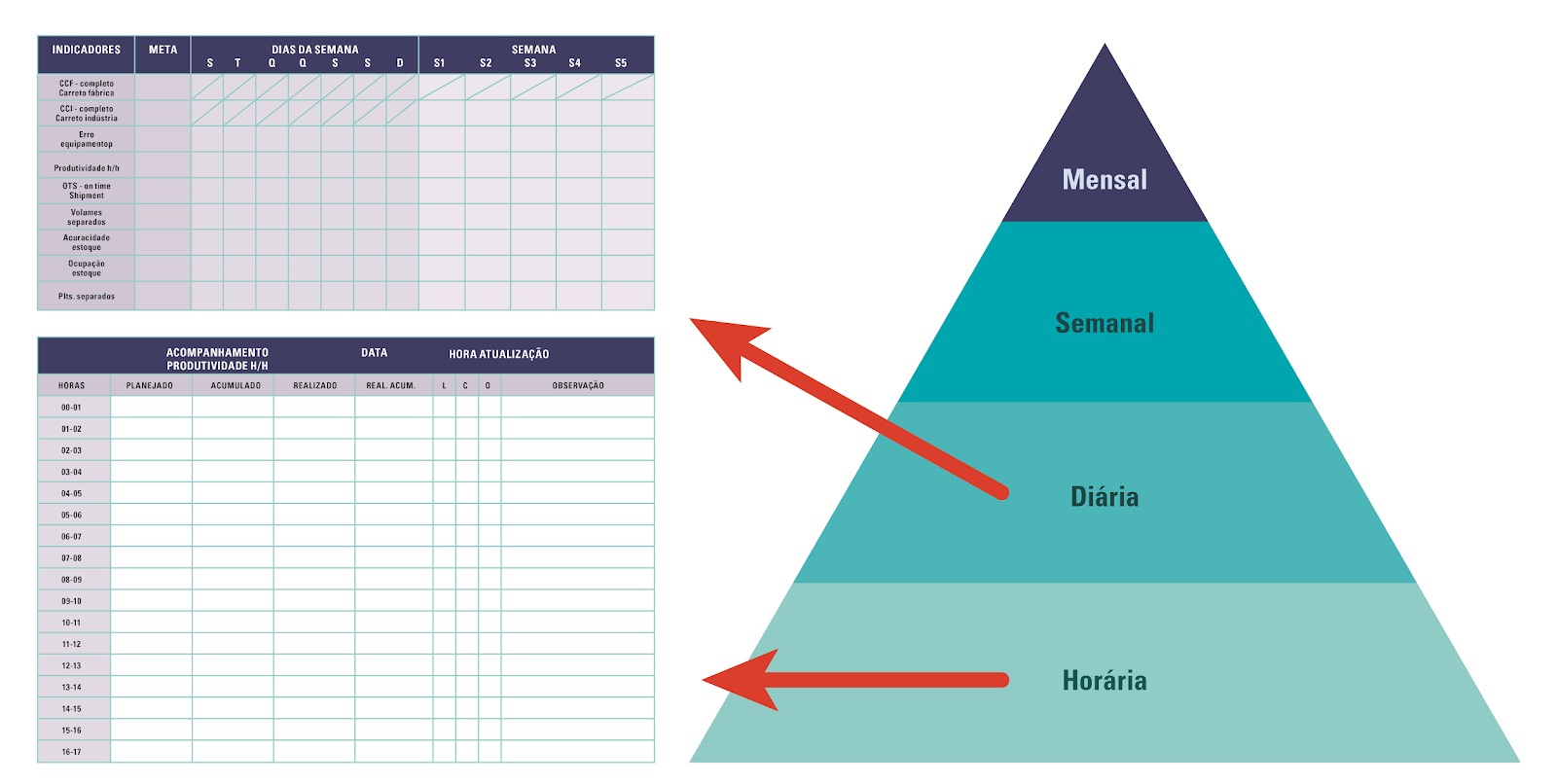
Figure 5 – Alignment between the planned and actual visual management boards, highlighting the tracking of the teams' hourly and daily goals. Source: prepared by the author
The daily changes and goals are discussed with the teams at various levels, through stand-up meetings with an objectively standardized agenda, setting in motion, at the start of the workday, the actions that are then communicated and recorded on the visual management boards.
In this integrated way among the loops of the logistics operation, the retail company implemented in its physical systems the same kind of integration provided by its omnichannel digital media. A symbiosis of lean logistics with digital lean produced the following notable results:
- Improved delivery performance within d+1 lead times (figure 6).
- Fewer delivery complaints on the e-commerce site (figure 6).
- Better use of docks with shorter waiting times.
- Shorter lead time in the loops, sustaining d+1 deliveries.
- Greater involvement and engagement of operators with improvement of the environment.
- More proactive leadership with a growing ability to see obstacles and opportunities to create value for the customer.
- More suggestions and
implementation of improvement projects for the business.
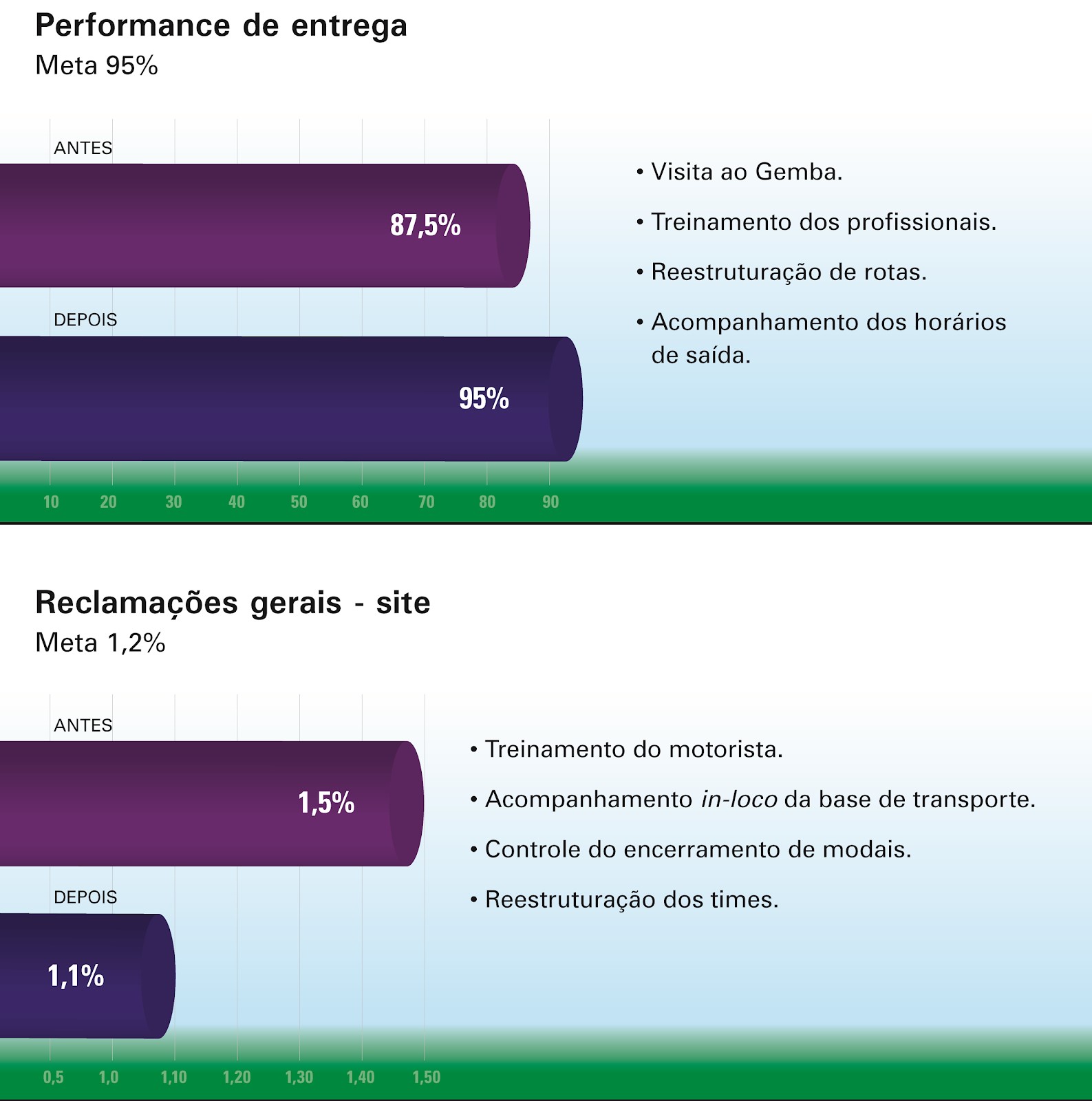
Figure 6 – Chart of
results before and after the lean logistics actions
Source: prepared by the
author
6) Current challenges
Finally, we cannot fail to draw attention to the real increase in agility, adaptability and alignment that these lean approach methods gave the company in facing the more recent Covid-19 crisis. Its rapid adaptation to higher e-commerce demand drew on the digital strategy anchored in its web channel platform, but it would not have achieved real success had it not been for the aligned connection with the physical systems through lean logistics.
The rapid, integrated transfer of store inventories to DCs throughout the country, meeting the demand redirected to direct-to-customer delivery channels, was only possible thanks to the agility with which the customer's single experience was incorporated into the physical system through agile connections and through the implementation of lean logistics. This is the solution for the omnichannel customer through physical-digital flows connected continuously, without interruptions.
Finally, with this practical case discussed here in light of the applications of the lean approach in logistics, we conclude that adopting such practices in coordination with digital connections is a safe and efficient way to reap excellent results in achieving retail excellence when operating in omnichannel environments.







