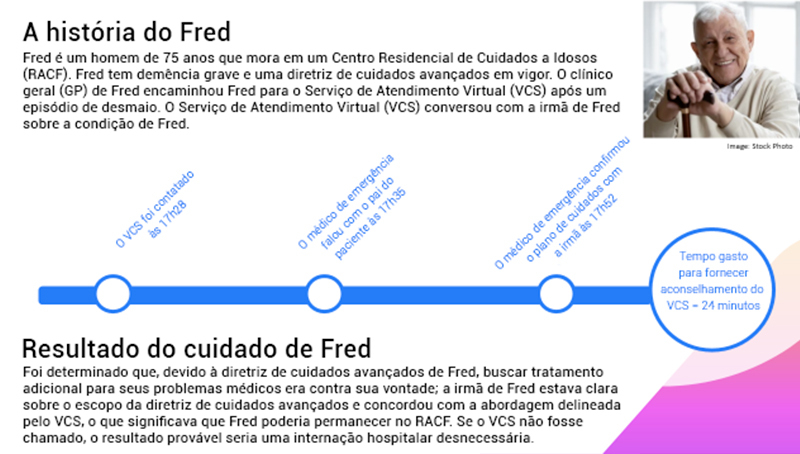

A successful experience with virtual healthcare
In South Australia, Covid cases were minimized through border restrictions until the end of 2021. As the state reopened, SA Health committed to supporting initiatives that could quickly provide more capacity to the health system – especially for emergency and urgent care.
We developed a concept based on what we learned from data and from the insights of clinicians and consumers. About 90% of patients who called 000 (the emergency number) ended up in the Emergency Department (ED), but more than 40% of these patients were discharged without being admitted. Could the care they needed be provided without them having to leave home? If so, would this provide a better patient experience and preserve ED capacity for those who need it?
In partnership with SA Ambulance Service (SAAS) and SA Digital Health, we saw a great opportunity to offer alternative care pathways, bringing senior clinicians into patients' homes, aged care homes and regional facilities through the use of digital technology. We hoped to avoid unnecessary transfers to already overloaded EDs by providing appropriate care at home and through community services. So our small team developed a service proposal that we could deploy quickly, which was approved by SA Health, and that is how the South Australian Virtual Care Service (SAVCS) was born.
In eight short weeks, we managed to stand up this innovative service, located in the Tonsley Innovation District, a site that, 15 years ago, housed Mitsubishi's car factory. It is the place where our healthcare colleagues first went to see and learn about lean thinking, when Australian lean healthcare was taking its first steps. To develop the best possible service in the shortest possible time, we called on our colleagues at Lean Enterprise Australia (LEA) to provide support and employed agile methodology to help us break down the work and focus on our daily milestones. Daily meetings kept us connected and aligned and helped us bring together an ever-growing number of employees and partners, many of whom had never worked together before.
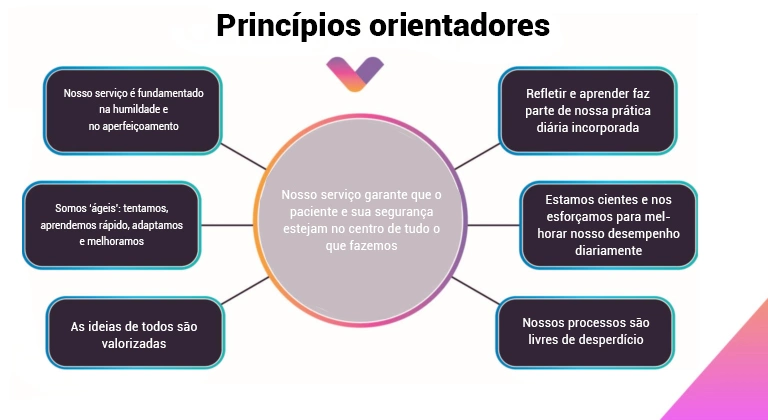
On our first day of collaboration with LEA, we developed seven guiding principles that we have used constantly over the last 10 months to guide the way we work, how we lead, what we focus on and how we make decisions.
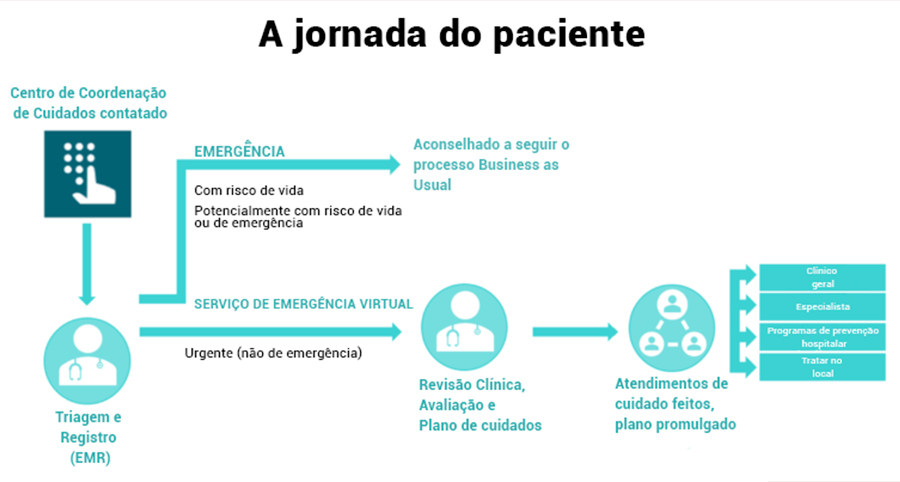
Our main “value stream” begins with a call through a digital platform from the ambulance crew on site. The call is triaged and logged by our team of nurses and paramedics, the Health Navigators (HNs). The paramedic on site speaks with an experienced doctor within 15 minutes. The doctor conducts a telehealth video review with the patient and their family or carer, if present, and, with the support of the clinician on site, assesses them and determines the course of action. An experienced VCS nurse can be included in the call with the care team to support care management. Consultations last between 20 and 60 minutes, depending on the complexity of the case.
Between December 2021 and September 2022, we managed more than 8,000 referrals, in partnership with our paramedics on site, in providing virtual care to patients in their homes. Long waits in the Emergency Department are avoided for 75% of patients who use the VCS, as care can be provided to them in their home or community.
Every day, we track the experience of our SAAS (ambulance) partners with the Net Promoter Score and seek to understand what is not working well as a basis for improvement.
In addition to the ambulance pathway, we are now developing other value streams. These include support for rural patients and doctors, providing virtual access to specialists to meet urgent care needs and helping to arrange transfers to metropolitan hospitals when necessary. Direct pathways for doctors in residential aged care facilities also began in October, after a successful two-month pilot.
We actively seek feedback from our patients and also from the clinicians who refer them to us. Some of their comments have included:
“I have already had 2 virtual consultations for my mother, who is in a nursing home, and I am happy with both consultations”.
“The paramedics needed advice to help me, and the doctor helped clarify my condition”.
“The doctor was clear and simple, no difficult words’. I felt confident they got it right. The nurse had a great sense of humor but was also professional”.
Learning and experimentation – our enablers
We invested in and built learning into our daily work. This was a deliberate decision, and just like our service, our learning system has gone through several PDCA cycles. The learning system has been essential for engaging all staff, providing a safe environment to learn and ask questions, and leveraging collective skills and experience. The learning system includes the following practices:
1. Daily Improvement Ideas – “Improvement Slips”
From the first day of operation, we implemented a transparent system for capturing the team's ideas and problems. Through “Improvement Slips”, we apply small adjustments to our processes to solve the daily problems we discover in the course of our work. Everyone can share ideas on how to solve problems and improve outcomes for patients. This approach proved useful from the start: in the first few weeks, there were several problems, many of them related to the speed at which we launched the VCS. The team's ideas also helped us improve the layout, communication and care processes. With Improvement Slips, we are empowering people to solve problems as they encounter them, instead of waiting for an answer 'from above'.
To date, team members have raised 265 improvement slips, and we have implemented or resolved 98% of them, with an average time of 7 days from idea to resolution. Our improvement leads increasingly work with team members to develop their problem-solving skills by working on their improvement ideas.
2. Learning time for problem solving
Time for learning is protected every day, and twice a week it takes the form of problem-solving sessions, in which a team is brought together to examine a larger problem or process improvement, often too big to be addressed as part of the daily system. As the dedicated improvement leads develop team members' skills, these team members become able to facilitate these sessions, mapping processes, asking the 5 whys to get to the root of problems and developing countermeasures. The success of these sessions can be attributed to the high engagement of the team and the leadership's commitment to this protected time.
3. Daily Huddle
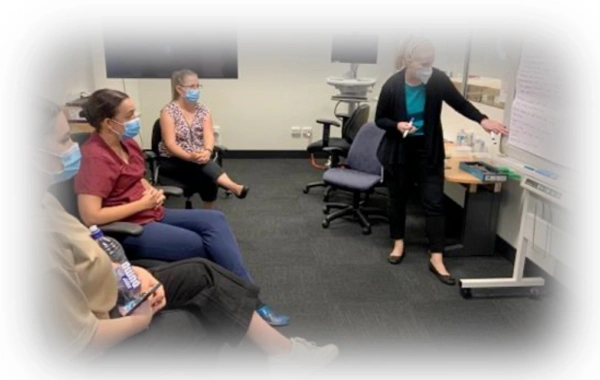
The most important daily practice is the daily huddle, where the team gets together to prepare for the following day. The huddle was key to developing our relationship with our SAAS partners, who are now an integral part of our VCS team. We clarify everyone's responsibilities, reflect on the previous day's performance and problems, and share a patient story. In our rapidly changing environment, the huddle is vital for keeping the team up to date on current experiments, service developments and any technology problems we may be facing. The forum is also a great time to check on the team's well-being and whether any team member needs some extra help from their colleagues.
What we are seeing at the VCS is a democratization of improvement: process changes are suggested and made by value creators, not by steering committees or senior management.
Another benefit of the Learning System was that it helped strengthen the relationship with SAAS: two very different cultures came together during the huddle and gradually began to understand each other.
4. Living Lab
Our Living Lab provides a structure for identifying and progressing larger strategic improvements that require more time and resources for design, development, testing and evaluation. These are problems or innovations that cannot be solved in daily work, requiring disruptive changes or ideas that may impact the entire process. Here are a few examples.
One of our team members suggested that we try integrating the use of digital stethoscopes to help the medical team complete an enhanced virtual assessment. We designed a proof of concept to test whether using a digital stethoscope to listen remotely to chest and heart sounds would reliably give doctors the information they needed. Tests carried out by our senior doctors revealed limitations in the digital stethoscope's audio quality. This kept us from making a significant investment that might not have generated value.
The other example is the development of a triage prediction model. Using patient demographic data and vital signs, we can predict whether a patient is likely to need to go to an ED rather than being cared for in the community by the VCS team. This would mean that the triage clinician could advise the ambulance crew to take the patient straight to the ED after asking a few questions, thus avoiding the need to wait to see the VCS doctor. Our first model did not show much difference between the accuracy of the algorithm and the clinician's triage, so we did not proceed and went back to the drawing board to work on the algorithm. However, we found another use for our model to help inform the design of new pathways. Although it was conceived for one purpose, we ended up using it for another – all made possible by our Living Lab processes.
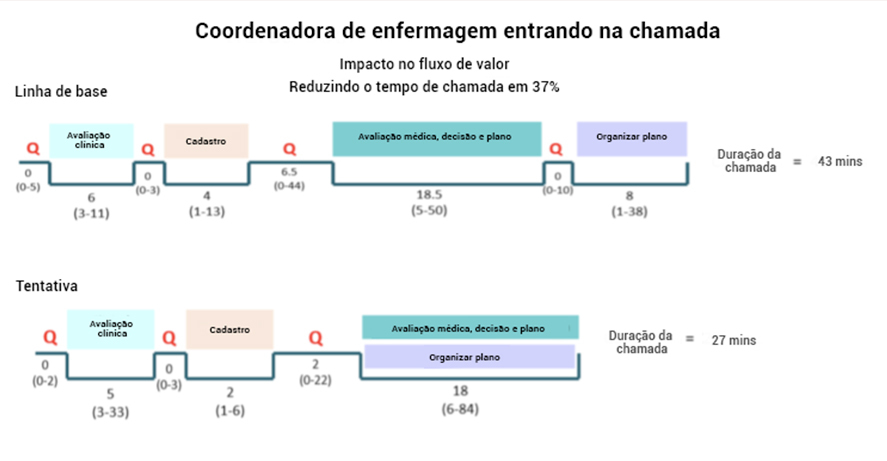
Another major contribution from the Living Lab was an experiment to increase the participation of the care coordinator nurse in the virtual call with the doctor and the patient, which reduced the total time spent on each patient call by 37% – freeing up more capacity for the VCS. It also increased the utilization of our skilled nursing staff, balanced the workload across the team and provided more opportunities to share knowledge between work groups. This has a positive impact on morale. This is proof that the Living Lab is truly a vehicle for innovation in healthcare, bringing practical solutions to everyday problems.
Added benefits of a virtual care service
Virtual care offers many opportunities to provide more timely and equitable acute care beyond the traditional walls of hospitals and closer to where communities and people live. In our work, it has allowed patients to get in touch with a senior clinician very quickly, and it has the potential to engage with priority population groups, such as Aboriginal Australians, and to provide timely and culturally appropriate care. Virtual Care has also proved advantageous for patients and doctors who live and work in isolated regional areas, providing virtual access to specialists and reducing the need for unnecessary long-distance travel. In this way, we can care for people virtually in the environment where they feel most comfortable and facilitate access to pathways in the system tailored to their individual needs.
We have observed that using technology to provide care has, somewhat paradoxically, led clinicians to focus more on fundamental clinical skills, allowing more appropriate and targeted use of advanced investigations that are not immediately available. Diagnostic and management plans are developed with patients, taking into account their wishes and clinical needs, rather than the one-size-fits-all approach so often seen in modern healthcare – enabling a values-based approach to delivering high-quality, patient-centered, digitally enabled healthcare.
To ensure that our virtual service provides safe, high-quality care, we made sure to build a robust evaluation process from the start of the service to monitor patient outcomes and experiences daily. Our experiment has shown that virtual care is not only possible but safe; it is a positive patient experience and it is very effective in giving patients timely access to a senior clinician so that an appropriate care plan can be developed and implemented.
To develop the Virtual Care Service, we took our experience and process understanding of urgent care systems in a physical environment and applied them to a virtual environment. In a short time, we got a service up and running that preserved system capacity and provided an exceptional patient experience. We now have the opportunity to challenge some of our long-standing practices, rethink how we work and discover what is possible by creating new pathways and innovative applications in partnership.