

Handling the supply of healthcare services
It is incredible what people can achieve when they decide on a goal and work together to reach it, no matter what it is. We saw this many times during our lean transformation at SulAmérica. We certainly witnessed it in our department – healthcare services supply. In 2018, our company processed 16 million procedure pre-authorizations across our network of more than 1,400 hospitals, and 7 million reimbursements. In this article, we would like to talk about our own lean journey.
It all started a few years ago, when we saw an opportunity to turn around our healthcare services supply process and, in doing so, make life easier for our people, reduce our costs and improve our margins. As you would expect, the hospitals in our customer portfolio need certain materials to perform surgeries on their patients.
Traditionally, hospitals bought the necessary materials independently and then billed us for that purchase. When SulAmérica handles the pre-negotiations and purchases, however, we normally obtain a large discount from suppliers (on the order of 33%), which offsets the total cost we incur to process the purchase. With this in mind, we decided to source the materials in-house, starting with the most expensive operations (orthopedic and oral and maxillofacial surgeries, where a single prosthesis can cost up to US$ 100,000).
Our idea was to search for the materials we needed, approve them, find the ones that best met our needs (with the help of the medical department) and then buy them. When we started doing this, we were relying on an outsourced company to conduct the negotiations and the actual purchases. This, however, was not a good decision, because the company did not specialize in this type of work, which resulted in many headaches: suppliers and hospitals were not being paid when they should have been, lengthy negotiations over the supply of materials often prevented hospitals from scheduling procedures, and sometimes there was no time to negotiate the price of the material. The third party would only handle surgeries using exclusively approved materials. Since most surgeries used a combination of approved and non-approved material, about 70% of cases were transferred to our department, which was not equipped to handle so many.
The main problem for hospitals was that material suppliers were not sending their invoices on time. Without the invoice, we could not notify the hospital of the total cost of the surgery; they, in turn, could not issue their invoice for the same reason. Whenever a hospital complained about this, we would take over the account directly and bring all the related processes in-house. By doing so, we hoped to solve the problems. Before long, we had a large number of accounts that we were managing and about 30 people (nurses, purchasing specialists and administrative staff) working on materials supply.
Unfortunately, the process was unstructured and we were not prepared to handle these volumes. Although dealing directly with the hospitals was very profitable for us, we simply could not keep up with the work. We kept hiring people, hoping that would solve our problem; instead, things soon became unmanageable. At that point, we asked the lean team for help. We had heard about the many experiences that had taken place, with great success, at SulAmérica and we wanted to take part as well.
FIRST STEPS
As in other projects before ours, our area manager became the leader of a cross-functional team with the mission of transforming our healthcare services supply operation. The lean team taught us about A3 thinking, giving us the tools to identify and solve problems and encouraging us to discuss how we could improve the situation.
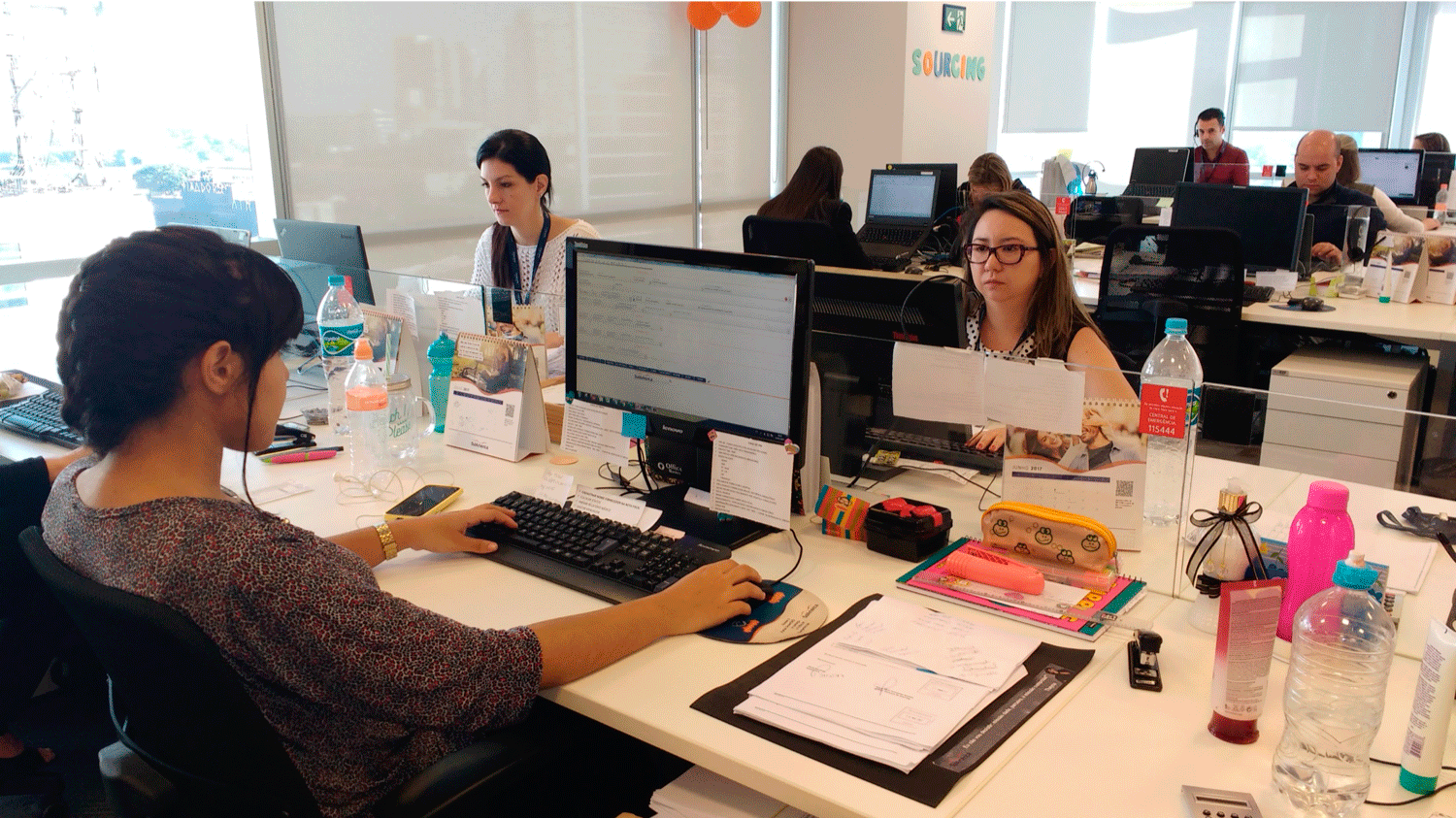
We soon realized that we had eight nurses in the area (we need nurses because they have in-depth knowledge of medical materials and procedures and can easily talk with doctors and hospital staff) and that they were doing everything – including the purchasing and the administrative work. There was no segmentation of the work and, therefore, no way to monitor the overall performance of the department. They were working entirely through personal email, which meant we had no way of knowing how many files and pending payments we had.
The first improvement was very small in scope: we had a pair made up of a nurse and an administrative worker and tried to segment the hospital portfolio. Each two-person team would handle the same hospital over time, so that the hospital would have a contact person at SulAmérica. We also tried to divide the tasks between them: the administrative worker was asked to take care of the pre-operative work, and the nurse took the post-operative work. The goal of our first A3 was to reduce the time needed to pay hospitals: the average was 30 days, which we wanted to reduce to 15. The new system – although still rudimentary – helped us obtain the information needed to also issue payment to the material supplier in a timely manner.
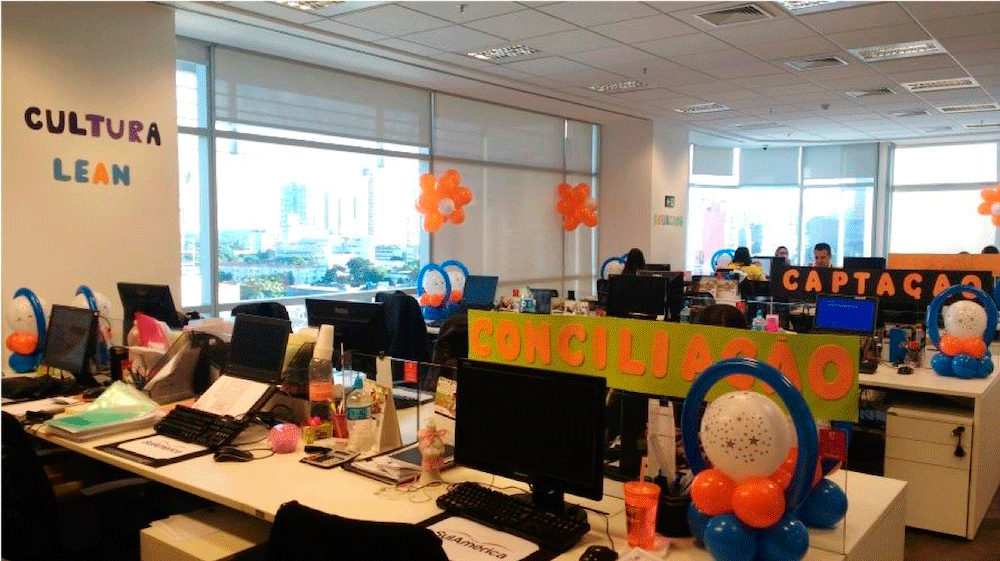
After a while, we saw the need to develop more A3 skills in our department. So we sent some people (some nurses) to classes organized by the lean team. This fostered a more in-depth discussion about the process and eventually led to the decision to segment the entire process and organize it into six work cells, each focused on one stage (post-surgery, pricing, reconciliation, negotiation, post-billing and complaints; later, a seventh cell was added, pre-surgery). This represented a complete overhaul of the process. It was a great idea, and our people were very confident, as it meant being able to rely on the nurses' unique skills instead of having them perform administrative tasks.
Somewhat hesitant at first, the team was encouraged to present the idea to the manager and then to the superintendent and the director. Everyone loved the proposal, but the large amount of inventory (pending payments) was a concern. As a way of challenging the team, management said they could go ahead with the proposed change only after reducing the inventory by about a third – from 2,799 files in the pipeline to fewer than 2,000. They managed to bring it down to 1,700! A great achievement, considering the increase in demand we experienced in the meantime.
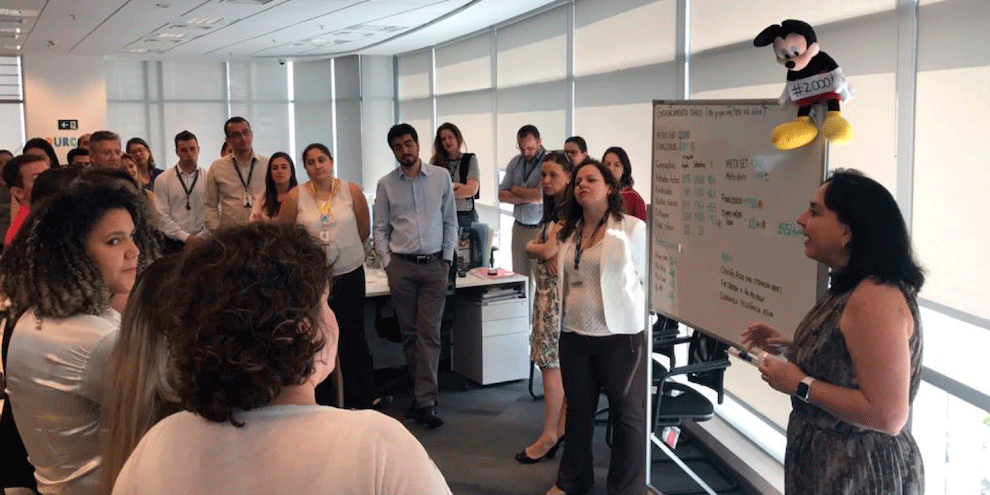
To achieve this, the team relied heavily on the daily meeting it had been using for some time. At first, the meetings did not help much, as they had been designed by management and the lean teams. Once the department team began to understand the value of the meeting and embraced it, it became a powerful enabler of change. The team created a different daily meeting to monitor the amount of inventory in the pipeline and to better understand what was needed to reach the level management had challenged them with. Critically, the meeting allowed them to keep an eye on inventory levels, but also to keep the average payment time within the acceptable range.
A NEW BEGINNING… EVENTUALLY
It was moving to see how happy people were as they tried to do things in a different way. They were incredibly busy, because in parallel they were also working to develop standards for each of the six cells. This involved writing down what each cell did, discussing the actions with people, deciding how many people to assign to the cells and talking about the skills that needed to be developed. It was a difficult exercise, and their motivation was commendable.
On the day the new system was finally implemented, the team decorated its work area and everyone showed up wearing the color that had been assigned to the cell they were working in. They managed to change the entire process – with a new layout and all – on that same day.
For a while, however, things were not so easy. As mentioned, our goal was to reduce the average payment time from 30 to 15 days. After the change was implemented, the average time increased, because the team focused entirely on the new organization of work and forgot about some “legacy systems” (for example, in some cases documents were missing and had to be retrieved from the original mailboxes – which was very difficult after the change had been implemented). For a month or so, we were all very nervous: we were sure the new process would work, but somehow we began to doubt ourselves. We kept trying, however, and the determination paid off (as usually happens in a lean transformation): within a few weeks, we were able to stabilize the new process thanks to many kaizen improvements and reach the future state we had set. Since each cell was now monitoring different things, a new meeting was introduced for each of them, while planning and analysis of the work across the department now took place weekly during another meeting. Thanks to this adjustment to the daily management system, each cell now knows exactly what it needs to do every day to contribute to the department's goal.
A few months later, our project team won SulAmérica's internal contest for the best improvement and earned a coveted trip to Walt Disney World, in Orlando. Even more gratifying was seeing, among the finalists of that contest, three more A3s from the healthcare services supply department. It was the result of the incredible amount of improvement that took place in the cells (focusing on simplifying the pricing process by giving people references they could use for each material they ordered). That first change, over time, generated a “wave” of kaizen. People were constantly suggesting new improvement ideas, and it was very inspiring to see.
Bringing the healthcare services supply process in-house led to major savings for the organization, and this was only possible because lean thinking made us more efficient in handling our workload. We see a lot of potential in our department and are currently assessing the possibility of extending this system to other types of surgery. But first, we want to stabilize our new system even further. After all, basic stability is a precondition for improvement.







