
Lean healthcare practitioners talk about fighting the coronavirus
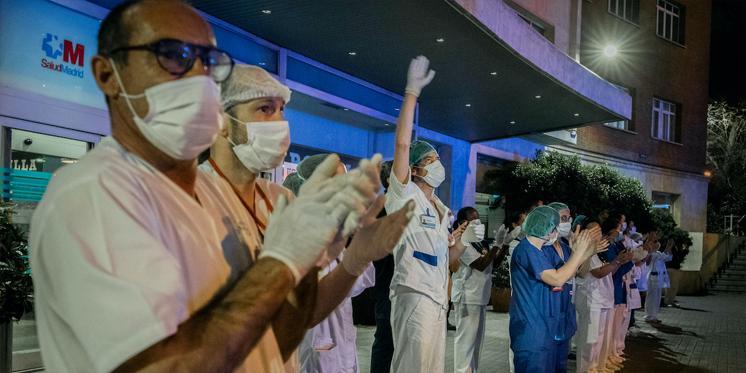
Photo credit: Enrique Campo Bello / Shutterstock
When things in the operating room get difficult, Dr. Llorenç Mateo of the Consorci Sanitari del Alt Penedès-Garraf usually repeats a mantra to his colleagues: “stable environment”. In an emergency, it is very easy to let yourself be overwhelmed by stress and do the first thing that comes to mind; what we should do instead is breathe and identify the cause of the bleeding.
The Covid-19 crisis is very similar to that scenario. In the early days, when chaos took over, we here at the Instituto Lean Management fell into the same trap. “Maybe this isn't the time to think. It's time to run, to focus on the D in PDCA, maybe even to jump to solutions”, we thought. Still, when we talked to the lean hospitals in our network — many of which had not been our learning partners for many years —, we heard a different story. For example, Vicenç Ibañez (one of the practitioners featured in this article) reminded us that “having to run doesn't mean we should stop thinking”. After all, we are running a marathon, not a 100-meter dash, and making decisions with a level head is the only way to finish it. Stable environment, remember?
Indeed, when we read about the experience of the three hospitals below, level-headed decision-making and the ability to anticipate the next development of the crisis are clearly common elements. While healthcare organizations were struggling to stay afloat and sending out distress signals in every direction, hoping someone would come and rescue them, several lean hospitals took the lead and used their knowledge and experience (with lean as one of their foundations) to find creative new ways to stay ahead of the emergency (see what Rosa Simón has to say about the supply of PPE, for example). They did not stop reviewing their standards, developing their people or learning; in fact, they did so more than ever.
Within days, these organizations were able to implement radical changes — in some cases, changes that had been discussed for months and months — and introduce practices that previously would not even have been considered. Many of these ended up sticking (telehealth, for example, as Ana Álvarez says below), showcasing the extraordinary ability of problem solvers to generate out-of-the-box thinking and innovation — even in the most stressful and overwhelming scenarios.
Indeed, everything changed in a matter of hours. The dedicated pathway for trauma patients in the emergency department of the Garraf hospital, for example, was turned into an extension of the ICU. Creating it had cost the team a great deal of sweat and tears over many months. In the first days of the emergency, we saw all the work they had done with us disappear and began to wonder whether we had really helped them over the years. But then we realized that perhaps the physical changes were not that important after all. What really matters is the way of thinking that allows an organization to adapt quickly to changing circumstances, and there is no doubt that, in recent weeks, these hospitals have proven they have internalized it. As we slowly overcome the threat of Covid-19 and slowly return to “business as usual”, this mindset will be more important than ever: if there is one thing that never goes away, it is problems (the first being the backlog of work accumulated during the crisis).
It is beautiful to see that the lean seeds we planted together are growing. We gave these people the tools to learn how to learn, and now it is their turn to teach us what they have learned from this crisis.
Ana Álvarez Soto, Process Director, Hospital de Bellvitge – Barcelona
“PDCA and the idea of getting to the root cause of problems is something that we, healthcare professionals, do every day, aware that ‘putting a band-aid on problems never works (even more so in a changing situation like that of the Covid-19 pandemic). During this crisis it became evident that lean thinking is now our DNA and that it always informs decision-making all the way up to the management team.
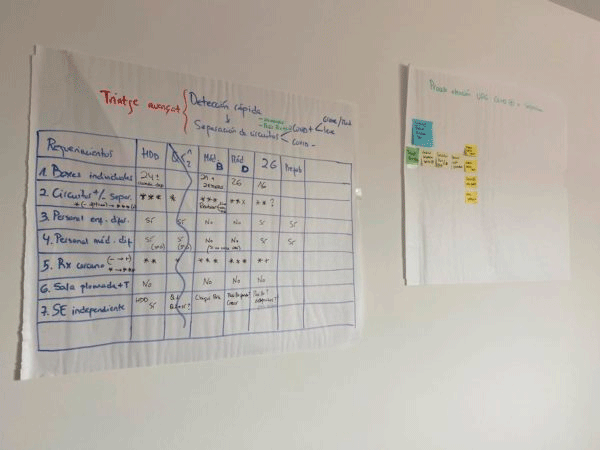
One of the lean practices that helped the most was standardization: with Covid-19 patients coming to account for 90% of our workload, many of our professionals had to learn new procedures very quickly in order to care for people properly and confidently. From how to properly wear PPE to how to handle patients who tested positive for Covid-19, we created standards as a way of transferring knowledge and expertise from those who knew more to those who knew less. We engaged in very rapid cycles of experimentation, testing a new standard one day and updating it the next to fix what didn't work. We followed protocols and recommendations, of course, but — to try to save as many lives as possible — we were not afraid to find our own solutions whenever necessary. Interestingly, changes we had struggled to implement for several months (for example, in our emergency department) were made in just a few days when Covid-19 appeared.
Now that things are a little calmer, we have begun to gather the lessons we have learned, and it has become clear that some of the changes are here to stay (we cannot expect to go back to normal after all this). For example, I believe we will start using videoconferencing tools more often than we did in the past, to communicate with colleagues at other hospitals and with patients' families. The relationship with patients and their families has changed: Covid-19 has made us more empathetic and proactive in informing family members about patients' condition, for example. I also believe that follow-up appointments will increasingly be done by phone, when possible — now that we have been forced to do appointments this way, we have begun to see their value. Finally, some elements of the new daily huddle we introduced in each area to discuss problems and the day's work are probably here to stay.
As of April 6, we are running the Fira Salut temporary hospital (there are 340 beds for now, with the potential for 1,000), and there too we are trying to apply lean. We are asking the people who work there to tell us how the work should be organized and trying to be flexible with our resources. Instead of keeping them idle there (which is a waste), we are studying different possible scenarios and preparing to rapidly increase their utilization within a matter of days, should the need arise”.
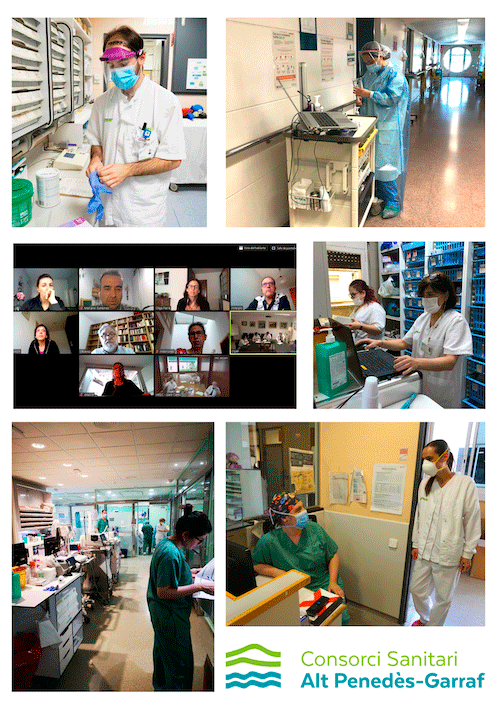
Rosa Maria Simón, Quality Director, Corsorci Sanitari Alt Penedès-Garraf
“We had all read the news about the town of Igualada, here in Catalonia, where, in mid-February, the hospital had become an epicenter of the Covid-19 outbreak. Given our proximity to Igualada, we began working on containment plans at the end of February. Having learned from their experience, our main objective was to protect our patients and our staff. To do this, we organized our two hospitals to create in each of them two completely separate areas — one for Covid-19 patients and one for non-infected patients.
CSAPG provides acute, general and geriatric care. In just three days, we were able to transform the entire hospital, using tape and visual management to separate the flows and keep Covid-19 patients isolated from the others at all times. Then we isolated the elderly care area, moved all patients who were not infected with the virus and who were in good health to a nearby hotel, and used the space we saved for people needing serious care (but who had not tested positive for Covid-19). The rest of the hospital was fully dedicated to coronavirus patients. Part of our emergency department was turned into an extension of our ICU (we went from seven to 20 beds), while pediatrics, the trauma area and surgery were moved to an outpatient area.
We relied heavily on the ILUO matrix to identify the professionals who have the skills to work in the ICU and in emergency care, to ensure our most critical patients receive the best possible care.
The availability of Personal Protective Equipment (PPE) has been a major problem in many countries, and, unfortunately, we were no exception. We quickly realized that our stock would not be enough and, as soon as it became clear that we could not rely on external suppliers, we had to get creative. Working with a network of volunteers, we obtained the materials and set up a small textile factory to manufacture the PPE ourselves. This helped us a lot in the most serious phase of the emergency. We also put a lot of emphasis on reminding our staff of the correct use of PPE in different scenarios (visiting Covid-19 patients, intubating and so on). We had to break the routine of doing things almost automatically and make sure they paid extra attention to every step. To achieve this, we found it very useful to observe professionals every shift, on every ward, as they put on their PPE and correct them whenever we noticed something wrong. Finally, we carried out small kaizens to maximize the use of the equipment: for example, we stopped entering a patient's room just to measure vital signs, taking the opportunity to complete other tasks as well.
Lean has given us a lot of flexibility, and there is no doubt we would have been much slower in our responses without it. I was really impressed by the discipline of our staff, for whom following standards and procedures (and passing them on to their colleagues) is clearly a natural thing to do after so many years on a lean journey”.
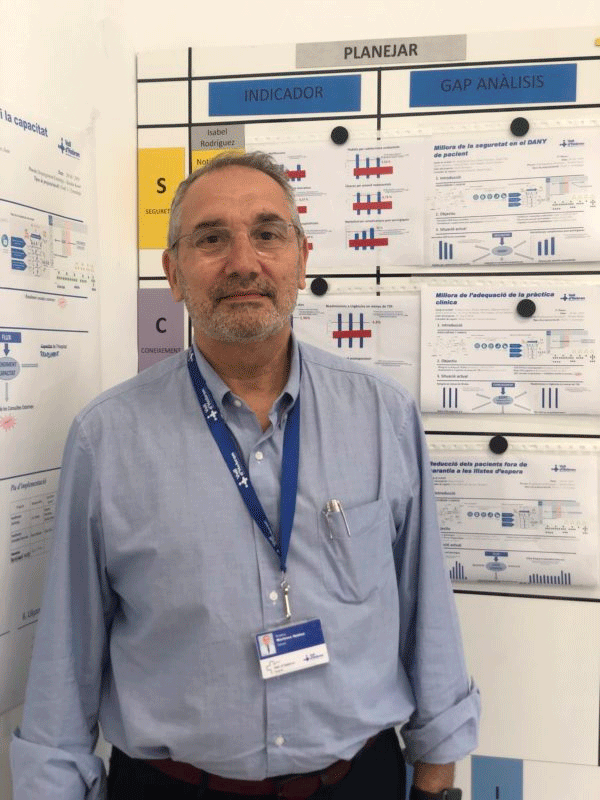
Vicenç Martinez Ibañez, CEO, Hospital Nacional de Parapléjicos – Toledo
“Our hospital, which opened in 1974, is a renowned center for the care and rehabilitation of paraplegic and tetraplegic patients. The fact that the organization has little or no competition means that, to introduce lean thinking here, we cannot rely on the sense of urgency provided by a ‘burning platform’. But then Covid-19 arrived (just one month after I started as CEO).
In recent weeks, it has obviously monopolized our attention. We had seven internal cases, but we also received patients from other hospitals that had run out of space. We currently have 90 coronavirus cases coming from the neighboring general hospital, here in Toledo — some of them in the ICU. We assigned the oldest part of our building to them, completely separating their flow from ours to minimize the risk of infection (their professionals and ambulances have their own entrance).
Another measure we took early on was suspending all visits — some of our patients were infected by asymptomatic family members who came to visit them. Our doctors call family members at the same time every day (this is easier to manage than waiting for people to call them).
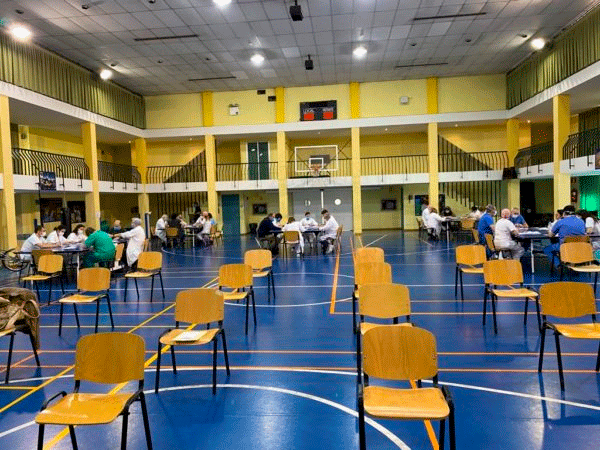
In addition, all patients whose rehabilitation could be interrupted until the emergency was over were discharged, which meant we cut the number of occupied beds in half (out of a total of 200). We grouped the remaining 100 patients in the modern section of the hospital — so that the older one could become a dedicated Covid area. Throughout the crisis, we have also been holding a special meeting every day to assess the situation and coordinate better among ourselves.
Things are calmer now, but we still have an opportunity to focus on solving the problems we have been seeing during this crisis and to start discussions about the future of our organization. It is a great time to bring everyone together and talk about where we want to go as a hospital. The first problem we will focus on is the fact that physiotherapy and rehabilitation activities take place in the morning, leaving the afternoons almost completely empty: there is a huge opportunity for a better redistribution of work. We also intend to introduce some design thinking into our improvement work, to make sure we are really considering patients' needs and feedback when we redesign our processes.
In my experience, in healthcare organizations, the most powerful lever for achieving change is people's passion for their work — in our hospital there is a lot of that, as the excellent work everyone did over the last month has shown us”.
Read also: continue your learning journey

Healthcare
What the Covid virus can teach us about the Toyota Way
What the Covid virus can teach us about the Toyota Way
Read article

Lean It Up
Toyota's 'Circular Factory' in Europe is an example of sustainability in practice
Read articleFrom theory to practice: next steps

Lean operations consulting
Diagnosis, planning and implementation with experts working directly in your organization's gemba.
Learn more →
Lean training
In-person and online training for leaders who want to implement continuous improvement in their organizations.
See upcoming dates →

Turn knowledge into results.
At LeanShop you'll find the leading books, e-books and collections on Lean, Lean Thinking, continuous improvement, leadership and operational excellence to take your management to the next level. Explore content that helps professionals and companies create more value with less waste.
Visit LeanShop now →
