

Building a Lean Student Relations Center
One of the largest private educational institutions in the country, Anima is one of the pioneers in implementing lean thinking in student services. With almost 15 years of experience in higher education and around 30 campuses in the states of São Paulo, Minas Gerais, Santa Catarina and Paraná, the institution is beginning an innovative and revolutionary journey in an area that calls for considerable and urgent improvements.
Anima began to realize that its students' satisfaction with the service could be much higher
At the end of 2015, Anima began to realize that its students' satisfaction could be much higher regarding how their requests were handled and their problems solved when they went to the Student Service Center (CAA) or to one of its remote channels (such as telephone or internet). This perception arose from tallying the number of complaints received daily. There were delays, incorrect or confusing answers and a lack of autonomy on the part of those serving the students. And this very common situation, which many educational organizations see as a “problem,” was seen by Anima as a great opportunity for improvement.
And this very common situation was seen by Anima as a great opportunity for improvement
How it all began
At a business event he attended every year, an executive of the group was introduced to the lean philosophy. Right from the start, he was very excited to see so many positive results shared at the event. He brought this news to his organization, to the purchasing department, which also needed change, but which was not a priority at that moment, since it did not have as direct an impact on generating value for the student as the service center.
With this in mind, it started the project by trying to understand what was happening in the processes
With this in mind, the service manager, Flávio Vouguinha, in partnership with his whole team and his leadership, started the project by trying to understand what was happening in the processes and why it took so long to solve the problems students brought to the area. To do so, he began mapping process by process, step by step, and went to the gemba (the place where the work actually happens) to live the student's experience when trying to get in touch with them.
The project
Together, Vouguinha and his team drew their first value stream map: the customer service process across the different channels. They analyzed step by step what the student had to go through to get what he or she wanted. And from there, they began to see huge problems, such as the fact that the channels were not properly integrated; in other words, the service agents could not tell whether or not it was the first time the student was getting in touch to make his or her request.
All this created a tremendous headache for students and service agents alike. Students were extremely dissatisfied at having to repeat everything they had already said through another channel. And the agents were left in a “tight spot” because they did not know how to get out of that situation.
With the value stream map ready and a better view of how everything happened end to end, the team began to analyze why each of these problems occurred and started listing the causes in an A3 report. In the case of the disconnection between channels, the team realized that:
- There was no way to record that the student had already contacted the institution.
- Recurring problems had no standard solutions.
- The agents could not see which were the most common problems presented by students.
- There was a set deadline for each request, but most of the time it was not met.
- In addition, contact with and support from backoffice areas were often needed to solve simple problems that could have been solved at first contact.
With the causes of the problems defined and clearly displayed for everyone to see, it became easier for the team to design effective countermeasures to reach the desired future state. Using objective and quantifiable targets, the team proposed some changes to the process to ensure higher-quality service. The main measures adopted were:
- Centralizing telephone and digital channel service for its HEIs (Higher Education Institutions), seeking synergies and standardization, with work structured in cells and with a predetermined, continuous flow.
- In the initial service area (N1), they began to separate services and problems from simple requests for information. As a result, they began to route services and problems according to their level of complexity to another group of agents (N2).
- Creation of centralized management in the service areas, ensuring greater clarity about each employee's role and more autonomy.
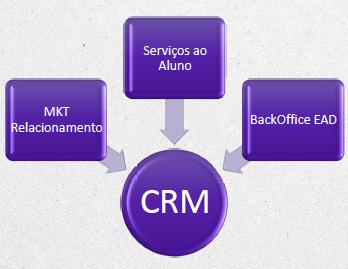
- Investments in the CRM (Customer Relationship Management) system to make it more integrated and ensure it records all contacts made with students, thus creating a 360º view.
- Seeking solutions in a single contact, reducing the number of interactions and simplifying communication with students.
- Expanding the range of self-service solutions, which ensured that low-complexity demands were resolved quickly and simply.
- Creation of an employee training process.
- Separating service for the institution's current students from service for prospective ones. They are distinct audiences, with different needs.
The project was structured using A3 thinking - a lean practice in which the problem, the analysis, the corrective actions and the action plan are written on a single sheet of paper (A3 size), usually using charts and figures (see more in the Lean Lexicon) - and all these proposals came with implementation plans that clearly defined who would do what and when. A follow-up plan was also defined, with quantifiable and clearly defined indicators, ensuring that action could be taken if necessary.
The team played an active and fundamental role
The results
The team - which at first was a little apprehensive about this “big change,” since it did not know what was coming and how its work would be affected - played an active and fundamental role in making the whole transformation happen. The project got off the ground in October 2016, and before long the team began to notice some results arising from these initial efforts; everyone became very excited and realized that they were increasingly involved in and taking ownership of their work.
One of the factors that helped results and engagement happen was thinking about the transformation in a structured way along the dimensions of the LFT – Lean Transformation Framework, which are: a clear purpose , a deep understanding of the way the work was done (process), the capabilities and skills of the people, the creation of a management system that could sustain and keep leveraging improvements, reflection on leadership behavior, and all of this based on the organization's basic thinking. (See more about the LTF in the article “Challenges of the lean transformation”, by Flávio Battaglia).
The structured development of leaders and the practice of daily management together provided the artifacts for the management model to come “alive” and for people to interact daily, discussing problems and improvement opportunities in a structured way – developing processes, people and leaders in a mutually reinforcing way.
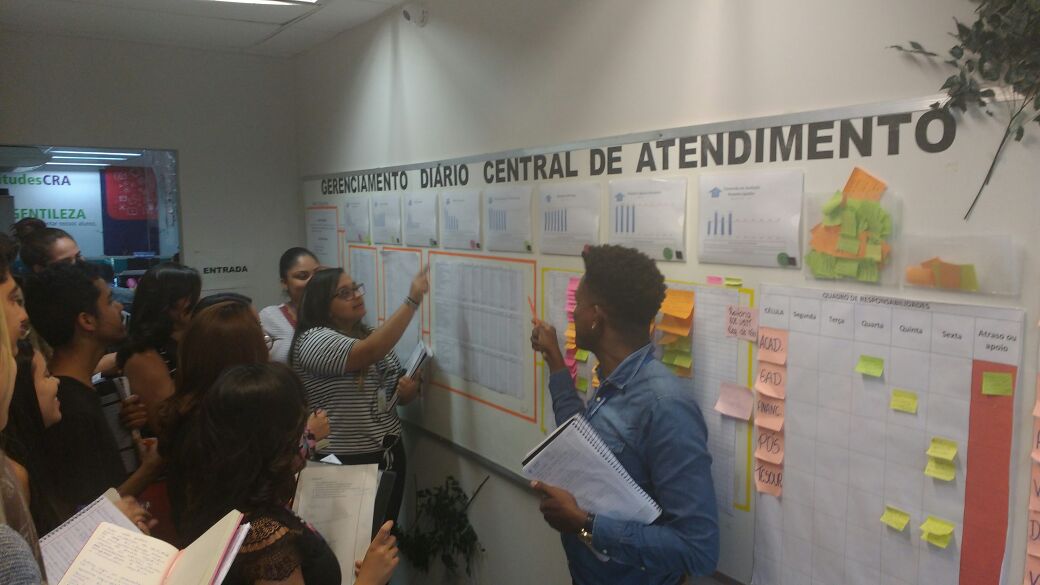
In the short time Anima has been on its lean journey, big steps have already been taken
In the short time Anima has been on its lean journey, big steps have already been taken: several A3 reports have been produced, and several systems created and updated. Some gains are subjective and hard to quantify, but easily seen in the company's day-to-day life (employee engagement, for example). Others are easily quantifiable, such as the following:
- Through the centralization of service, process efficiency, integration and alignment of information improved. Today Anima has a single base of content and information, which provides a greater guarantee of successful communication.
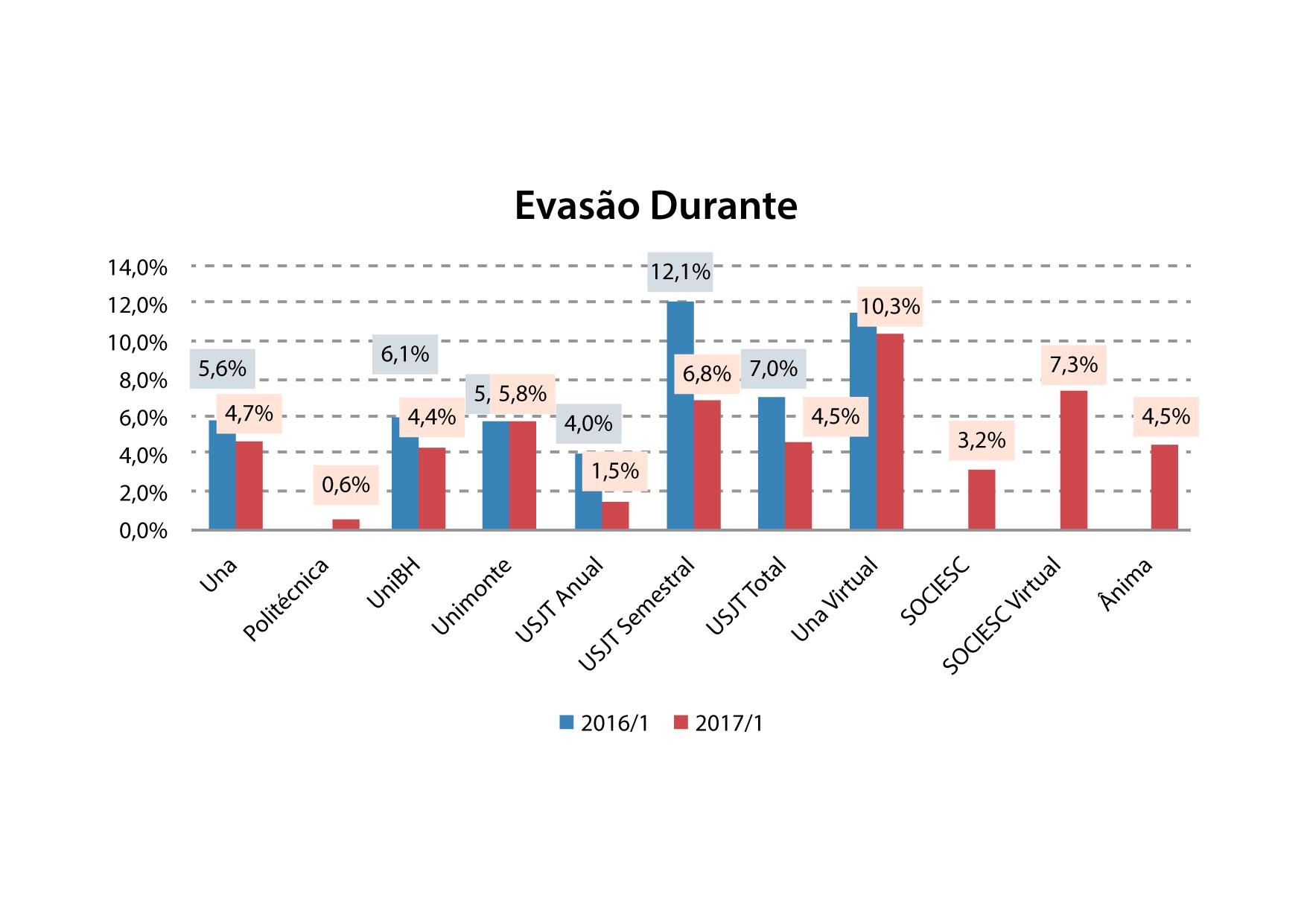
- The student dropout rate has fallen significantly since the start of the project, as the following chart shows.
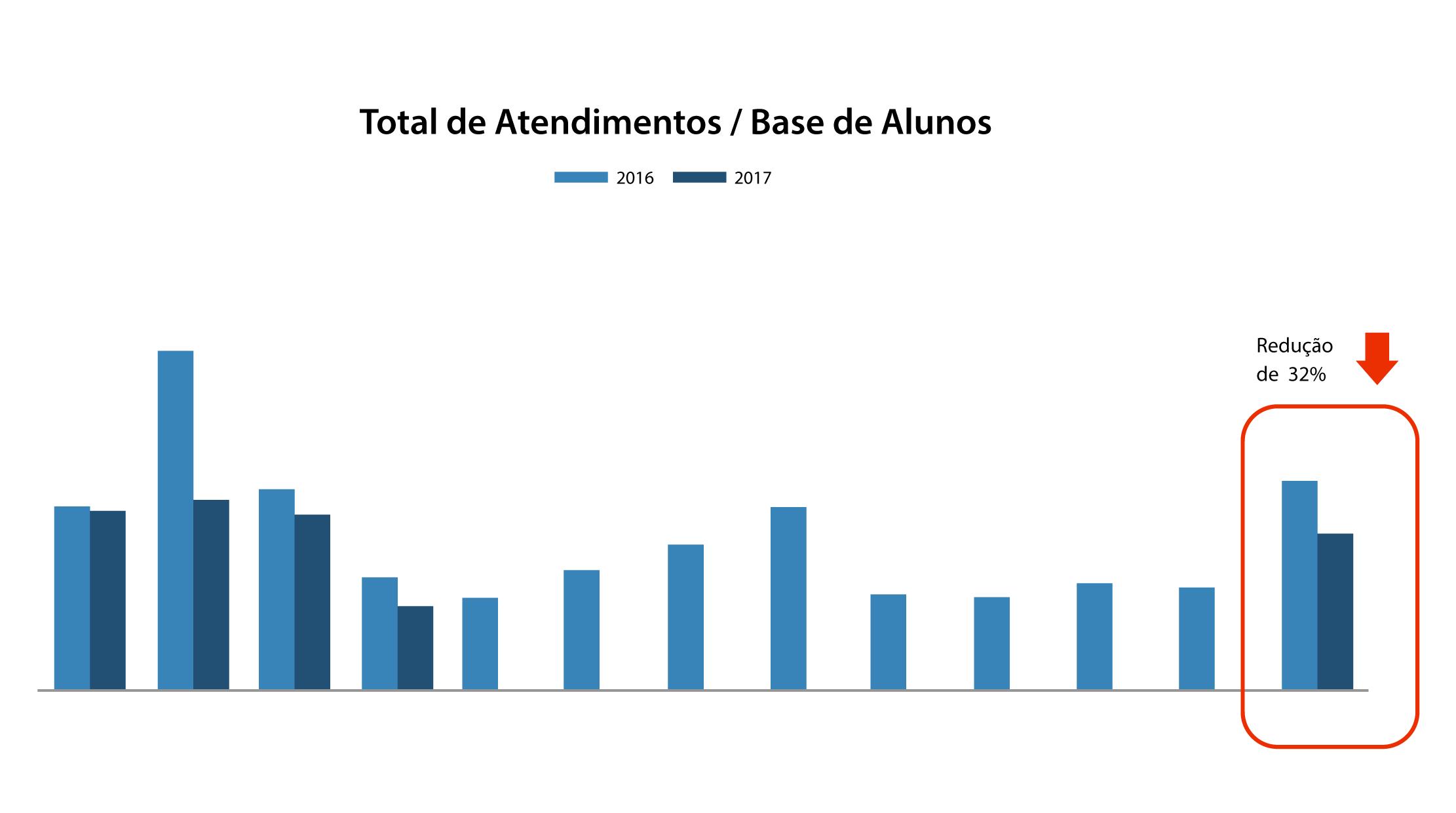
- The implementation of a continuous flow of service and the 360º view of students ensured that demands were actually routed, preventing students from having to come back or switch channels. As a result, the volume of student service contacts dropped considerably, as the following chart shows.
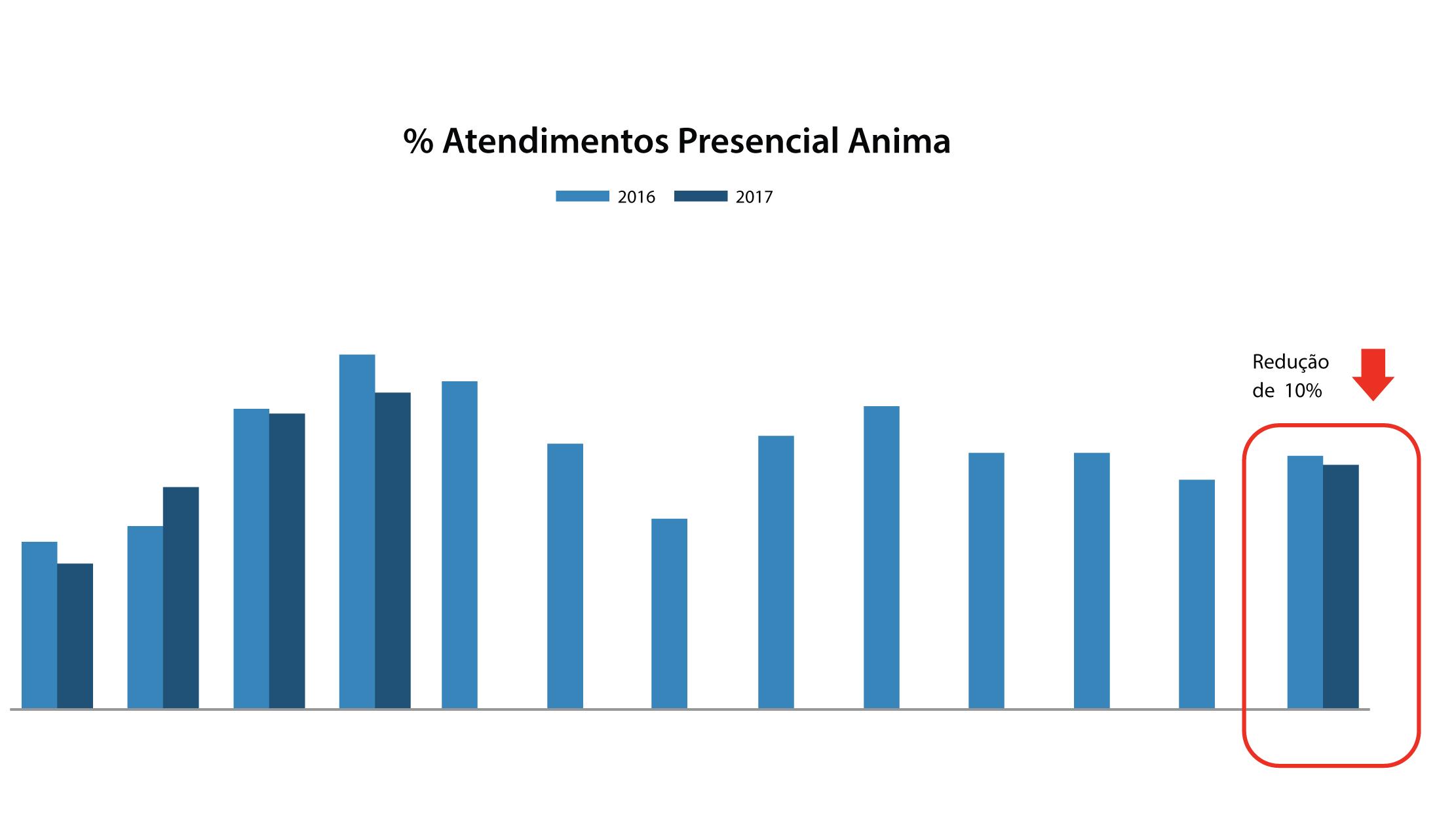
- By increasing the self-service offering and the efficiency of the telephone and digital channels, it was possible to reduce the percentage of student service contacts handled in person, as the following chart shows.
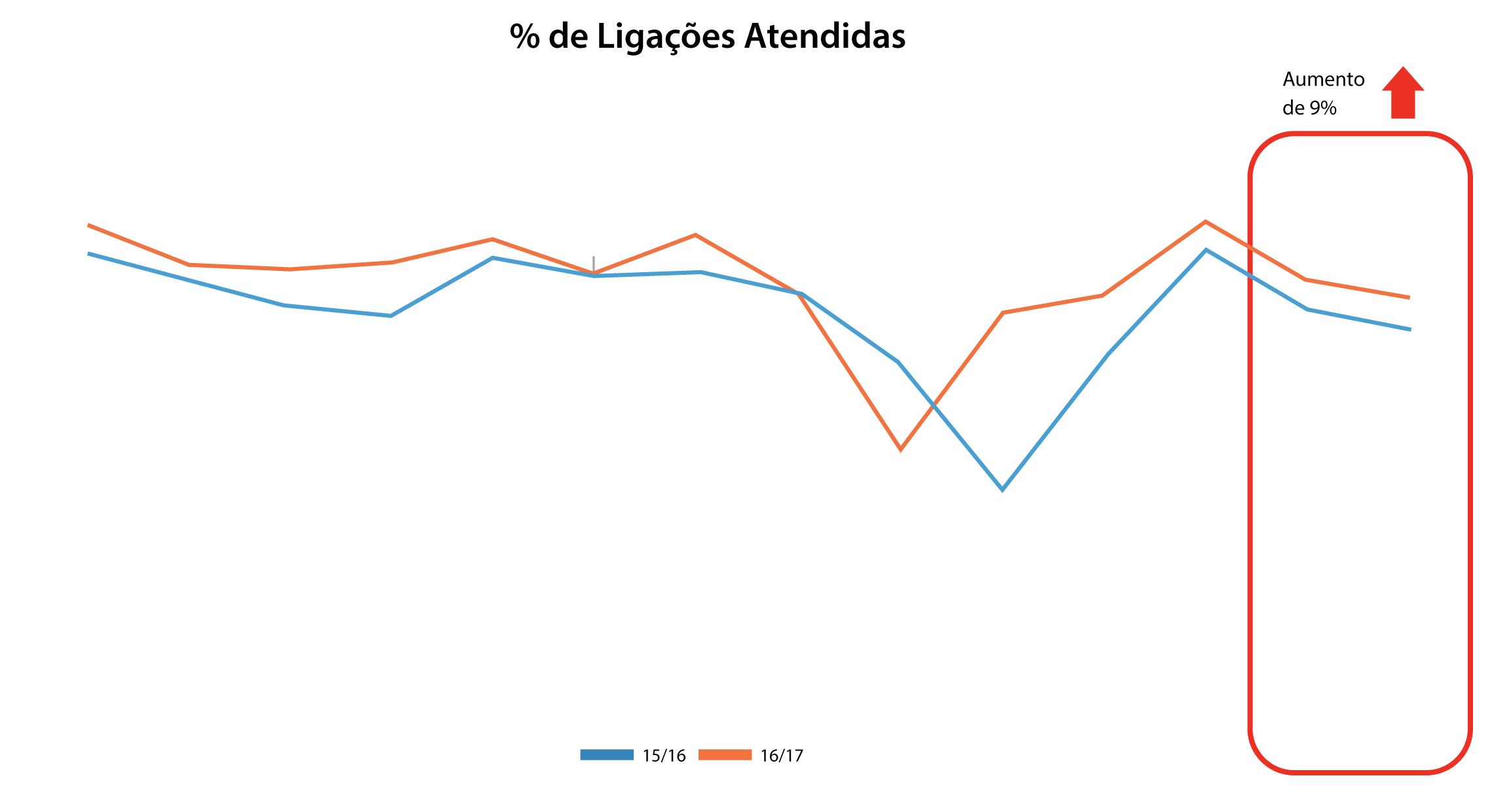
- The percentage of calls answered grew by more than 6%, as the following chart shows.
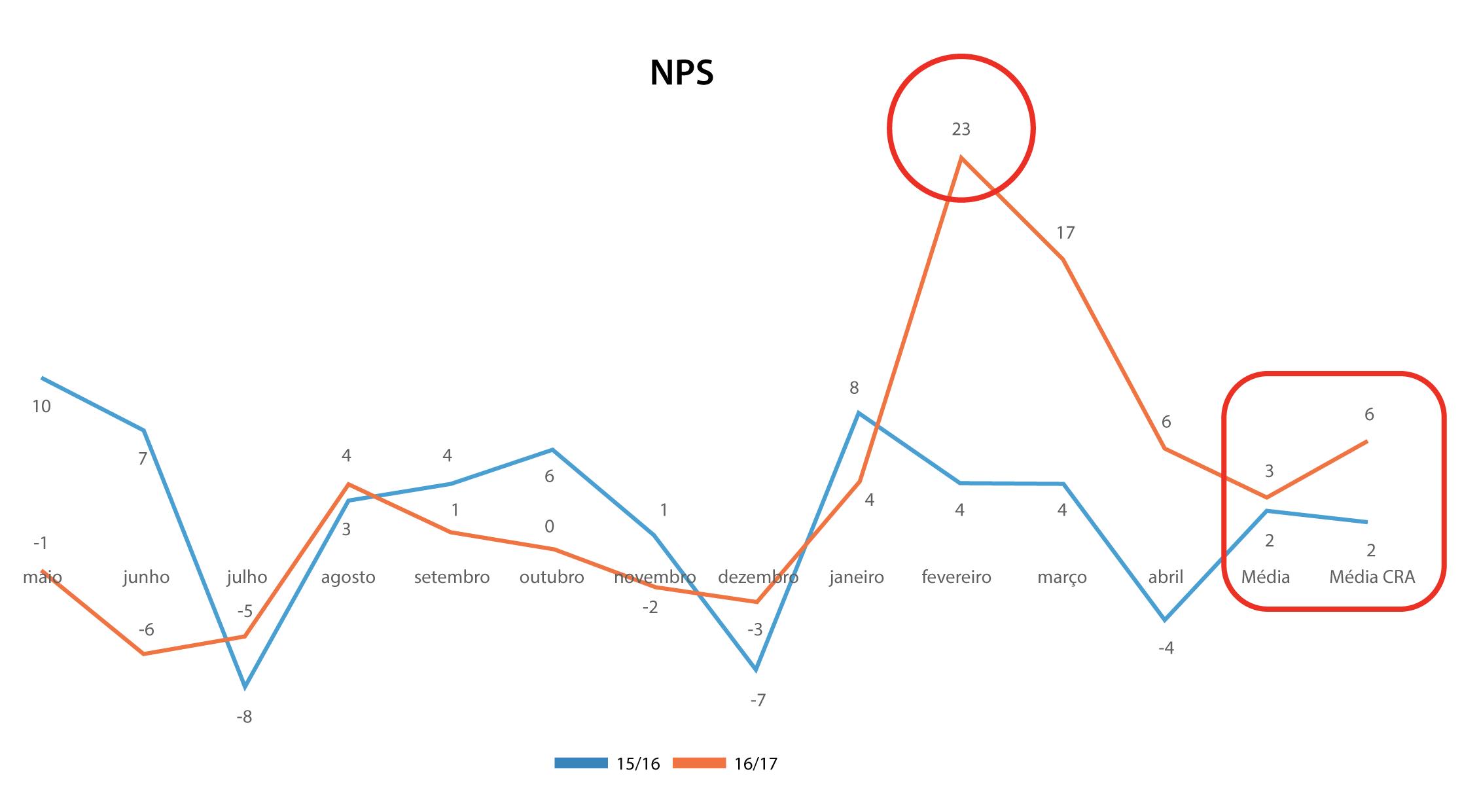
- The NPS (Net Promoter Score), a metric that aims to measure customer satisfaction and loyalty after the sale, rose from 2 to 6 after the project was implemented, as the following chart shows:
The next steps
After this first round of great results, Anima has big plans to keep improving and expanding, such as the following:
- Creation of a new Cycle of Enhancements to the CRM, including new integrations, reports and service flows.
- Redesign of the In-Person Service Model, aligned with the pillars of the lean transformation undergone by the Anima Relationship Center, which is responsible for the telephone and digital channels.
- Combating Dropout and Efficiency in Service.
- Review of the Format, Flows and Processes of the Refund request protocols.
- Unification of the CallBox Telephony Platform, which will enable better management of this channel's indicators.
- Development of the Anima Policy for Relationships with opinion-forming audiences, focused on loyalty.
- Integration of the Service and Relationship operations of new units and acquisitions.
Being lean is a premise for many organizations in different sectors today. The field of education, as we well know, is of the utmost importance for forming critical, aware citizens who can change the society we live in for the better. Lean is still in its infancy in this field, but Anima's initiative, even if in the educational support areas, is very promising and will certainly bring fruitful results and a great contribution to the lean community.
We have learned, once again, that lean practices and thinking can be applied in any business, in any situation, as long as there is a clear focus on purpose, small PDCA cycles for learning, and the unrestricted engagement of leaders and of all the people who do the work and who also become responsible for improving it.
At Anima, it was possible to see how lean thinking can mobilize people when there is a clear purpose. Today it is possible to see, at every level of service, employees who are restless and unwilling to accept errors, always looking for the root cause of problems and for a definitive solution. They are much more committed to what is best for the students and infected by the drive to always improve through kaizen.
There is still a lot to be done, and Anima knows that it is still taking the first steps of a passionate, evolving and never-ending journey.







