How Tokheim uses 5S to improve its environmental performance
HIGHLIGHT - The many benefits of 5S are well known, but few people realize the positive impact the technique can have on our environmental performance, says our lean sustainability correspondent after visiting Tokheim Italia.
Certain sustainability stories get a lot of acclaim. Solar energy and passive houses, for example, make for attractive headlines because they spark interest in our future. In contrast, the real-life stories about the day-to-day work that happens to help us achieve a sustainable future are often overlooked. So let me share one of those stories, which took place at a services company in the quiet town of Garbagnate, 15 kilometers from Milan.
Tokheim started out as a fuel pump manufacturer in 1901, but it now offers a range of products and services, including project management, installation and maintenance of fuel pumps (for both Tokheim and competitors' products), and technology and payment solutions in more than 30 countries. The Garbagnate location provides services for the Milan region.
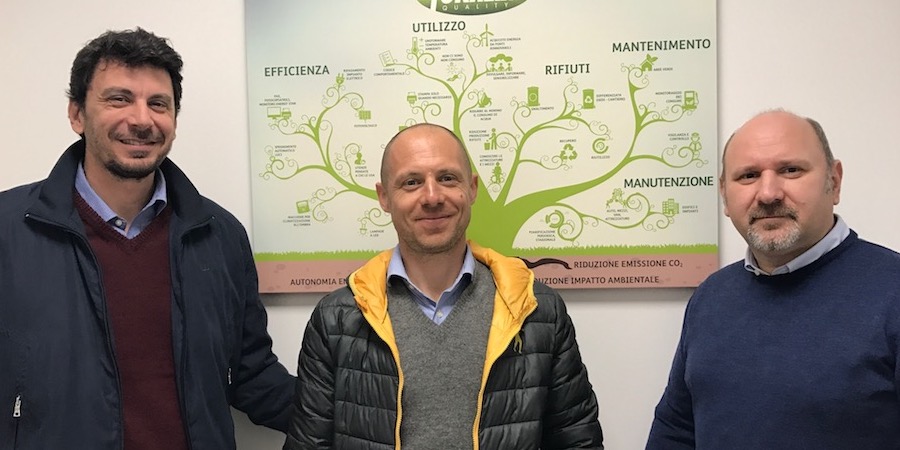
Tokheim Milan's operations director, Furio Clerico, and his managers, Mauro Cartello and Raffaele Romagnolo, are careful stewards of Tokheim's investments and infrastructure. However, this frugality and ingenuity are not just about improving the economic bottom line. Furio said: "The most sustainable building is the one that is already standing. In all our decisions, we consider the environmental waste we would create by replacing our fixed assets with eco-friendly options. Most of what we replace goes straight to landfill and, within the framework of carbon and life-cycle analysis, that simply doesn't make sense. We can compete on environmental performance with what we already have, starting today."
The trio created a Sustainability Manifesto to act as a "true north" to align the company's decisions with its long-term vision. That was a year ago, and their environmental results have been excellent. So much so that the Manifesto and its eco-improvement activities are now being shared and implemented at Tokheim sites throughout Italy.
But perhaps the most remarkable point of this ongoing "lean sustainable" transformation is that Tokheim has achieved environmental performance as great as that of companies two or three times its size, and without a dedicated Corporate Social Responsibility team.
How did they do it? By encouraging all employees to take part in one of the most basic principles: 5S. The practice of this workplace organization approach is known for its contribution to improving safety, quality, cost and delivery time. Now Tokheim has shown that 5S can also deliver environmental performance.
5S was developed at Toyota and the Japanese words can be translated as "sort," "set in order," "shine," "standardize" and "sustain." The idea is simple: organize a workspace for efficiency and effectiveness by sorting out only the necessary work objects, setting them in a dedicated place, keeping things in order, providing regular maintenance and sustaining it all. An employee-centered workplace is the foundation of a thoughtful organization and encourages all team members to adopt an attitude of "responsibility" - the alignment of a lean and sustainable transformation.
Tokheim first focused on the most evident element of disuse and excess: through 5S, employees eliminated excess inventory, unnecessary boxes and storage, and machines, and freed up unused space in the warehouse. They were relentless in their judgment, assessing everything based on the question: "Does this item make us more effective?" Whenever the answer was no, the item was removed.
After working on this for several months, the reduction was significant, and Furio realized he could operate in a much smaller warehouse and office. So they moved to another, smaller site. Mauro said: "Waste breeds waste. The better we get at eliminating waste and identifying things of real value, the smaller our impact on nature and on the use of natural resources, and the greater our business success." Tokheim's new office is one-third smaller, as is its carbon footprint, while the rent has been cut almost in half.
ELIMINATING SCRAP
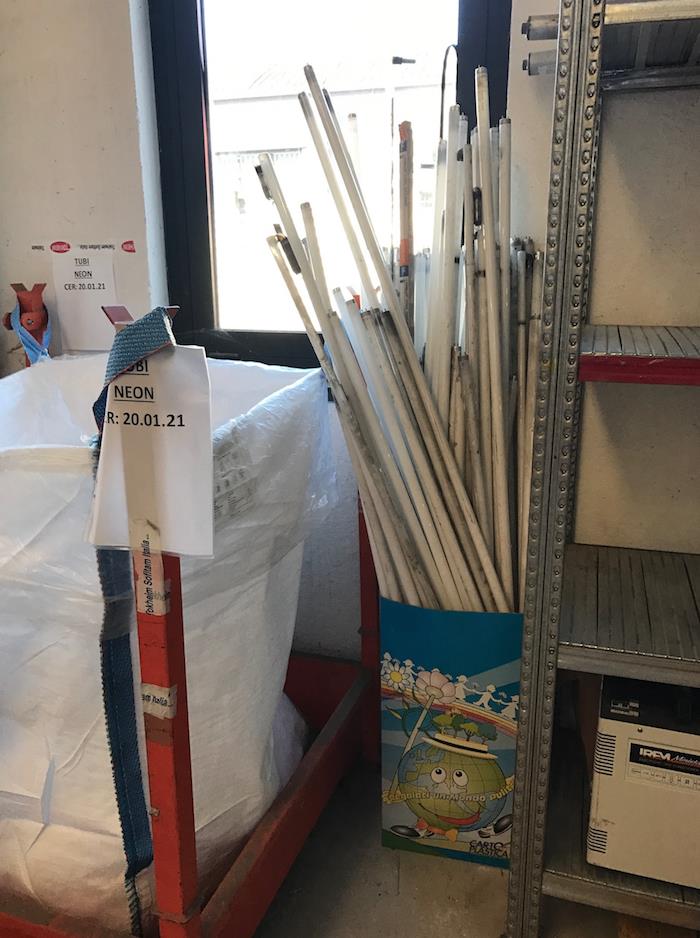
Tokheim employees continued the 5S practice at their new location, this time tackling the organization of waste and scrap metal. Having a place for each type of metal keeps the warehouse clean, but the real benefit is that sorting makes problems visible. Employees can identify when there is no solution available for a new type of waste or when there is a deviation from a standard - such as when a similar-looking but much rarer metal is placed in the wrong bin.
Sorting also increases the likelihood that materials end up in the right destination, a critical practice for ensuring a transition to the circular economy - a high priority for the European Union (materials of the same type and quality retain their value when recycled together, whereas recycling mixed metals results in a substance that can only be used for lower-quality products, requiring more precious metals to be extracted for production). Tokheim can also resell its "waste" to another company at a higher price when it is separated, and there is a lower collection fee from the city's waste management when recyclable materials and landfill waste are separated.
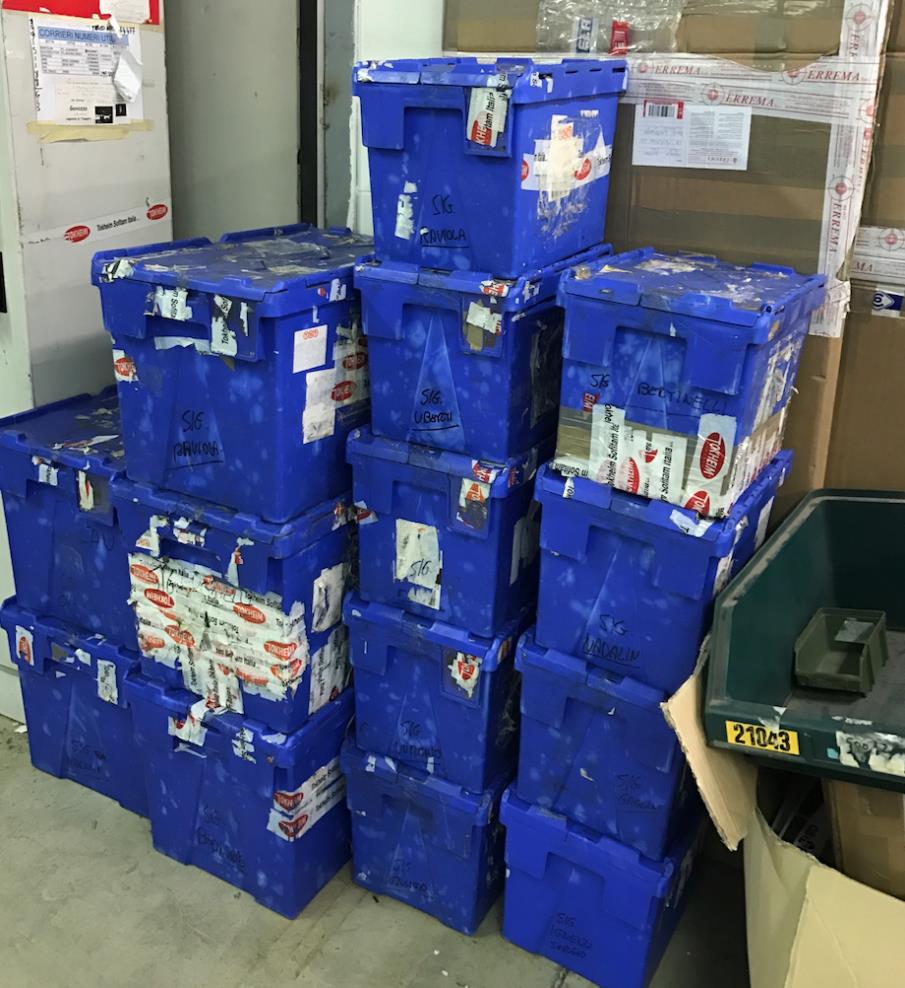
The 5S practice showed warehouse employees how much waste there was in packaging. They challenged themselves to cut it by 50% by coordinating with many other departments, offices and suppliers. In the end, they exceeded their goal (measured by weight) by introducing reusable containers for shipments between internal offices in Italy. Externally, they worked with suppliers to find containers that could be refilled with installation materials and delivered more frequently, reducing the size of the boxes in the warehouse. This eliminated plastic packaging waste going to landfill and even resulted in a small discount from the supplier. Currently, the warehouse team is investigating the possibility of buying more supplies without packaging and extending reusable containers to all service activities.
Outside the warehouse, the service and technical support team also achieved environmental success with 5S. They are on the road every day installing new products and fixing others for customers, and all that travel results in environmental and air pollution, the reduction of which is part of Tokheim's Lean Sustainability Manifesto. "We know there are better options than the fossil-fuel vehicles we use to deliver our services. We are working to make clean energy a reality in our company. In the meantime, we will do the best we can by maximizing our vans' fuel efficiency. And by reducing unnecessary trips. We are not just sitting around waiting until we find the perfect solution," said Raffaele.
Vehicle weight and engine power are two of the most important parameters influencing a vehicle's fuel consumption and CO2 emissions, so the service and technical support team decided to focus its efforts first on organizing the service vans for better fuel efficiency.
The vans were cleaned from time to time, but everyone knew they carried extra parts and unnecessary tools that had accumulated over the years. The team emptied the vehicles and reorganized them based on the critical tools and equipment needed to complete most jobs. The tools and parts needed for specialized jobs were kept out of the vans and loaded only when needed. This simple change reduced the van's weight by 140kg. An MIT study found that for every 100kg reduction, combined city/highway fuel consumption could drop by about 0.4L/100 km for trucks and vans. This improvement prevented the release of thousands of tons of carbon and saved Tokheim thousands of dollars in fuel.
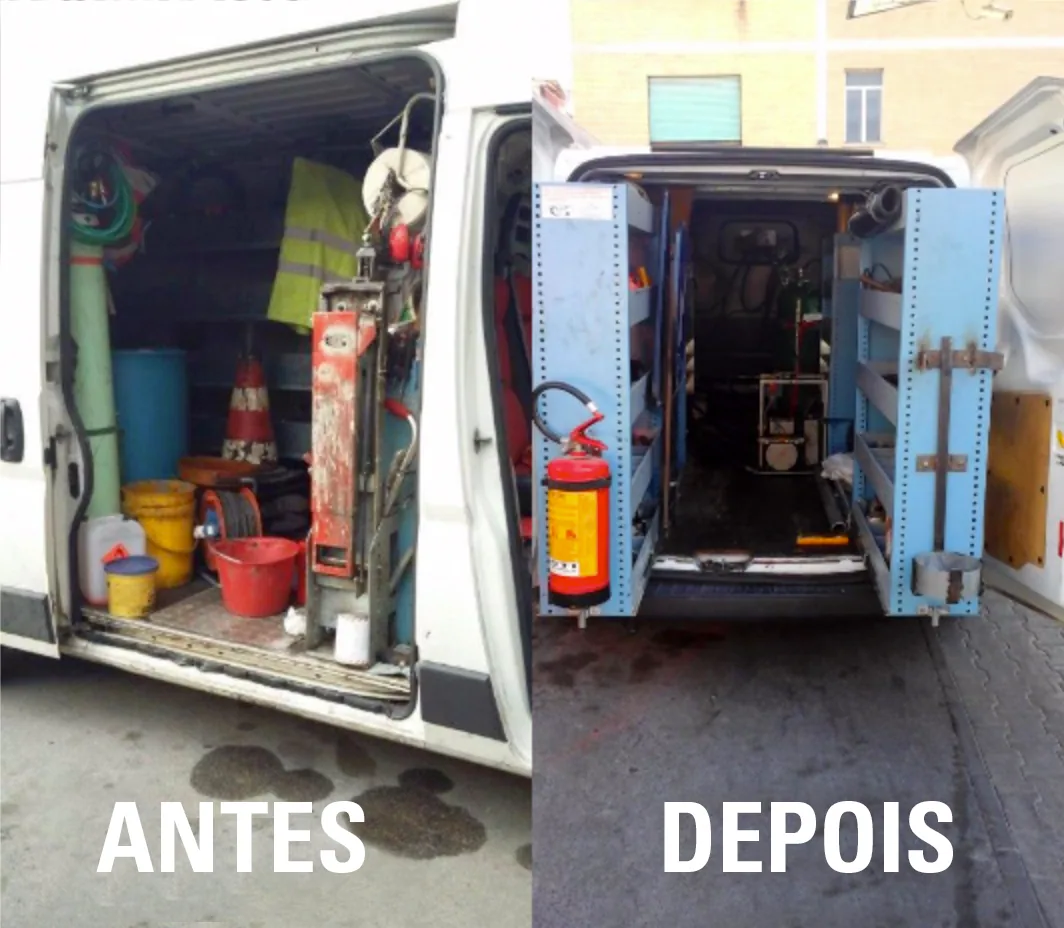
The improved organization of the vans also meant fewer rescheduled services, because technicians could easily confirm whether they had all the parts and equipment needed to do the job.
Considering the CO2 reduction and the increased profitability from fewer trips, the service schedulers were invited to join the challenge of increasing service-trip efficiency. From their experience, the technicians knew their trips could be better planned to save considerable emissions, as they often zigzagged across the city driving to on-demand jobs and returning to the warehouse midway to pick up parts. A new standard was set up to schedule service trips close to one another. When an urgent request came in, it was dispatched to the technician who was already in that area.
Tokheim has shown that one of the most responsible things we can do for the environment is to take care of what we have so that it lasts longer and to find ways to make it work better. It is as easy to make small, sustainable daily improvements as it is to keep wasting and degrading our planet. Abraham Lincoln said: "The future comes one day at a time."