

The 𝙆𝙖𝙞𝙯𝙚𝙣 I didn't know was there
I am leaving the house I have lived in for 38 years. It has been a challenge: even if I tried to avoid it, I accumulated a lot of stories here – some good and some bad.
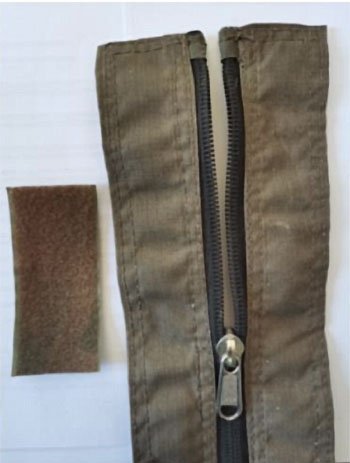
At the back of a storeroom, I found a zipper with Velcro sewn onto it. It has been there for many years and, when I thought about its story, I realized it was an example of lean problem solving before I even knew anything about the system.
The Meru Tent is the original Kenyan safari tent, designed in the days of the “Happy Valley”, made famous by the film “Out of Africa”, based on a book by Karen Blixen. This 250-kilogram tent is made of heavy-duty canvas and has screened doors and windows to keep out insects and the larger, scarier inhabitants of the African savanna.
Leaving Kenya, the design of this popular luxury tent traveled to Botswana with the well-known East African safari company Ker & Downey. As a luxury safari operator, this company runs safaris in Botswana from March to September to avoid the extreme heat and the summer rains that flood the swamps, making the roads impassable.
At the start of the season, the camps were set up in the Okavango and then taken down for maintenance in September. They served a high-end market that included royalty and some of the wealthiest families in the world.
A tent’s zipper is vital. If it does not work, it will make the inside of the tent accessible to unwanted visitors – such as mice, mosquitoes, snakes and a possible predator. Who would have thought such a simple little device had so much power? Putting a client in a tent where the zipper did not close properly was not an option, so the issue of tent zippers became a common emergency, since even heavy-duty zippers are quite fragile.
To repair a tent, a seamstress with an industrial machine traditionally had to travel to the camp in a 4x4 vehicle. Some of the roads are so bad that it usually took her eight hours to travel 90 kilometers. Once the machine and the seamstress were in place, the actual repair involved emptying the tent and taking it down to remove the old zipper and then put in a new one. Five to six people were needed to help the seamstress hold and maneuver the heavy canvas on the machine. It was a task that took an entire day.
It was around this time that Velcro became fashionable, and the tents were adapted so that it could be fitted on the window flaps to replace the zippers. Because of the heavy use of a tent’s front zipper, however, it was decided that Velcro would wear out too quickly to be used there.
My husband, Hennie, who worked for Ker & Downey as a field manager, grew frustrated with the problem and ran a small experiment, asking the tent maker to sew Velcro onto the tent on one side and a zipper on the other. The tent was put up with this new modification and used for a season. Whenever the zipper was damaged, another complete Velcro-backed zipper was pressed into place, which took approximately 10 minutes. Of course, this was a huge saving of time and energy, cutting eight hours of work, five workers and all the travel. What a great example of PDCA at work, done by the people who do the work!
At Ker & Downey’s request, the South African manufacturer began building all of its Meru tents with the new zipper design, making it a popular option.
I now realize that, in many respects, Ker & Downey was a lean company, which engaged in many other kaizen activities that were an important part of its problem-solving culture. One example was the use of sheet-mesh screens in front of the tents, instead of mats that had to be swept all the time. With this netting, the sand fell through the holes, keeping the area looking tidy, and did not get into the tent, keeping it clean.
Another example of the company’s lean approach is its replenishment system. In the camps, all food and beverage supplies were packed in the kitchen tent, using metal cabinets that were effective at keeping mice and other nighttime visitors out. The cabinets were numbered and packed according to a master inventory list. Every day that orders were placed, only a quick assessment of current stock noted on the list was needed. The supply office used a master list and topped up the stock with the correct amount. I now know this as just-in-time, or sell one, buy one.
Setting up the camps worked by pull, putting up only the tents needed for a safari when they were needed. They added and removed tents as needed, freeing up cash flow.
There was also a lot of lean communication going on. At that time, the only form of communication we had was long-distance radio. These devices tend to crackle and be hard to hear, which meant it was often necessary to spell out words using the NATO phonetic alphabet. Even simple words like coffee can take some time to spell: coffee became Charlie-Oscar-Foxtrot-Foxtrot-Echo-Echo, over.
The order lists were therefore uniform. They all used the same sequence and the same format. Each numbered line contained fields with the item description and a space below to fill in the quantity – which avoided having to say all the information, following the random order of a normal shopping list. This became very simple communication – instead of saying every word, it was only necessary to give the quantities: line 1 – 5-2-7-8-3-1-3-2-6 –, saving time and providing a more accurate result.
| coffee | Milo | sugar | flour | yeast | b/powder | salt | pepper | seasoning | |
|---|---|---|---|---|---|---|---|---|---|
| Line 1 | 5 | 2 | 7 | 8 | 3 | 1 | 3 | 2 | 6 |
As I dug deeper into the storeroom, I also found an operations manual containing standardized work so detailed that it included a diagram showing the placement of every item in the tent and in the bathrooms. It even had cleaning sequences and checklists.
I am not sure how Ker & Downey learned about these basic lean processes and thinking, but I do know that the kaizen examples I described earlier were carried out by the people doing the work, as and when they identified the problems. These active workers seemed to unwittingly carry out the PDCA cycle. Is it possible that, for the people who do the work, PDCA is a natural part of the process?
Then I wondered whether only people outside the work struggle to follow the PDCA cycle, because they do not do the work. From now on, when I am in a coaching session, I will pay attention to this.
I also wondered how lean thinking reached a remote part of Africa in the late 1980s, helping it survive. Reading the operations manual, I noticed that customer value was mentioned repeatedly. Perhaps it was the clarity with which customer value was described, combined with the constraints imposed by our resource-scarce environment and the right amount of freedom to solve problems, that fostered this virtuous circle of improvement.
Or could it be that the owners at the time, the Freidkin family, of Gulf States Toyota in Houston, somehow brought yokoten with them on their visits, asking the right questions and demanding clear standards?
I will never know for sure, but it is probably a combination of both. People often tell me that I am a naturally lean person, that I have always thought this way. Now I wonder whether I myself did not pick up that yokoten – and make it part of my thought process – while spending a lot of time in those camps as a young adult.







