

The deeper purpose of problem solving
Let’s face it: we live in an illusion. Modern theories of cognition claim that we don’t actually see what is around us: our eyes merely gather details to build a convincing model of what the world is really like, and we base our decisions on that model. We are unaware of the basic brain mechanisms that govern our actions, a phenomenon that can be noticed when we get lost in our thoughts and arrive somewhere without even remembering how we got there.
Although this marvel of biology allows us to achieve great things, it also proves unreliable on many occasions. The mental structure of a mistake is always this: “I thought that… but…”, and we make a lot of them. I thought the department store was open on Sundays… but… it was closed when I got there. I thought the batteries were included when I bought a watch… but… they weren’t, and I couldn’t use it when I got home.
Mistakes are not confined to our personal lives, of course. In fact, a typical workday is full of mistakes, small and large. And that is why lean is so brilliant: it is a complete business strategy based on eradicating and correcting our misconceptions. But what does that mean in practice?
Most people with an interest in lean are familiar with the Plan-Do-Check-Act cycle. A common misconception about this method is that its main purpose is to improve processes. The logic goes like this: you find a problem, discover a missing standard, set the standard and train everyone to use it. Although this understanding is not wrong in itself, it can lead to an environment in which people are expected to follow many processes without understanding why they are doing so – a dangerous situation if the company operates in a constantly changing environment.
A better way to understand PDCA is to see it as a means of eradicating misconceptions and correcting the flaws in our thinking.
Let’s take an example. Users of a website complain that pages are taking too long to load. By answering a few “whys,” one can easily get closer to the root of the technical problem:
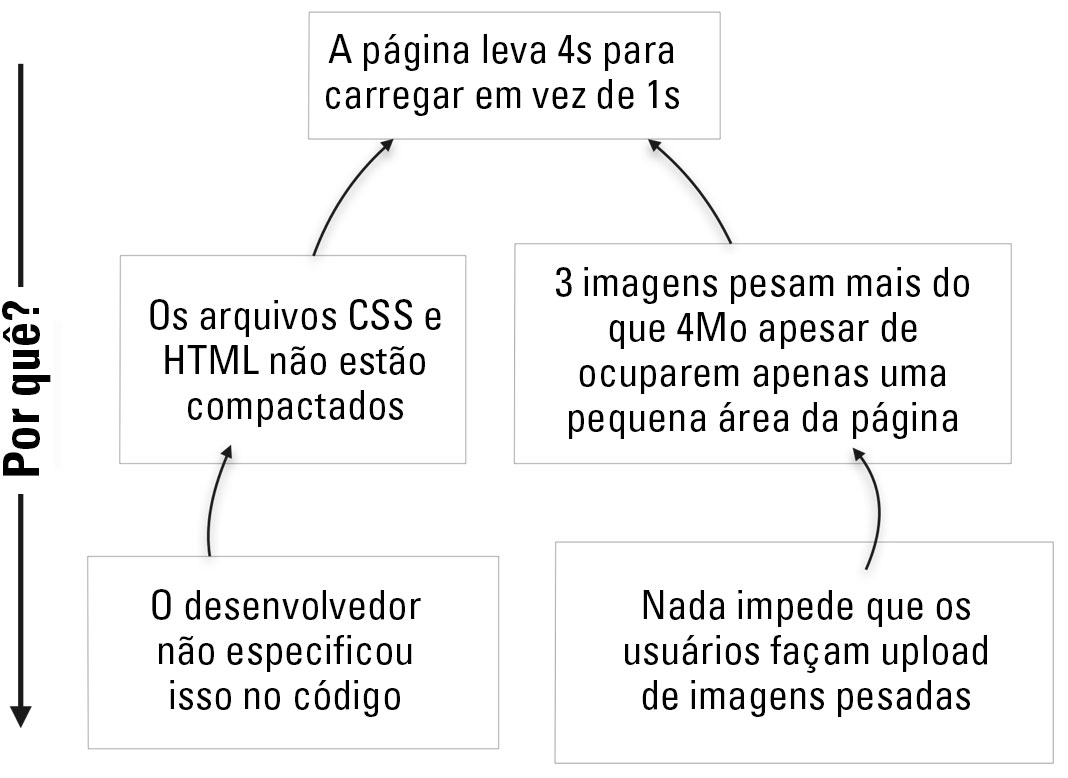
Although we should certainly dig into the technical details to find the specific point of change to fix the problem, let’s stay at this level for now. We can already infer that we will end up with two kinds of countermeasures:
- Fix the code so that CSS and HTML files are now compressed and load faster.
- Add some kind of check or warning to prevent users from uploading images larger than 1Mo or, better still, convert the files automatically so as not to burden users with extra work.
The problem would probably be fixed. But… we wouldn’t really have learned much. We can expect the same people and the same company to repeat the same kind of mistakes in the future.
A better way to guide our search for root causes is to try to answer the question:
What is the mistake we keep repeating that creates this problem?
In our example, it would be something like this:
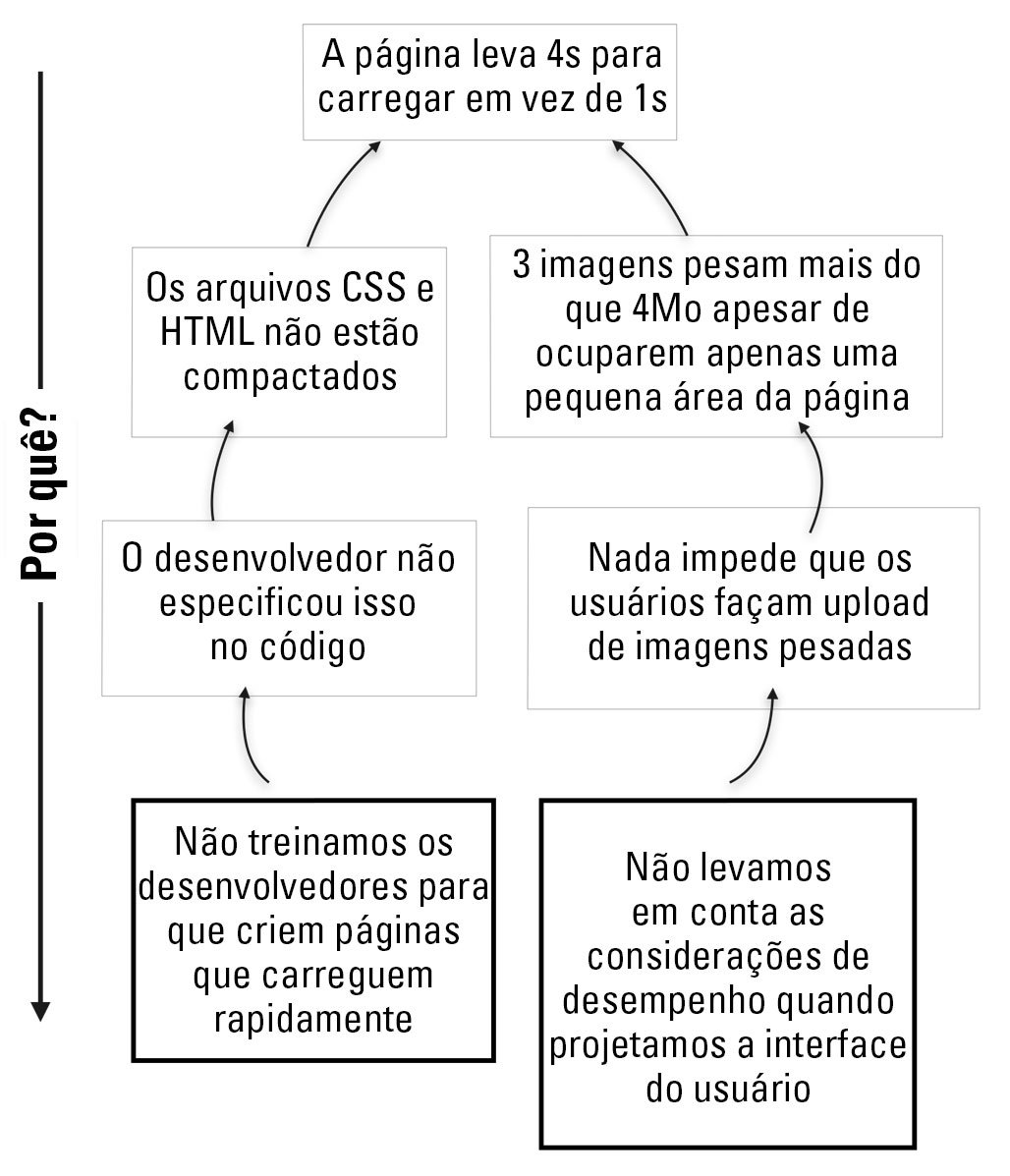
This is the moment when learning can really take place, because it makes us aware of the shortcomings of our own mental models. However, this is only the beginning.
By repeatedly solving problems in a given area, we can explore the factors that influence performance and progressively build a model of those factors. In our example, it would be something like this:
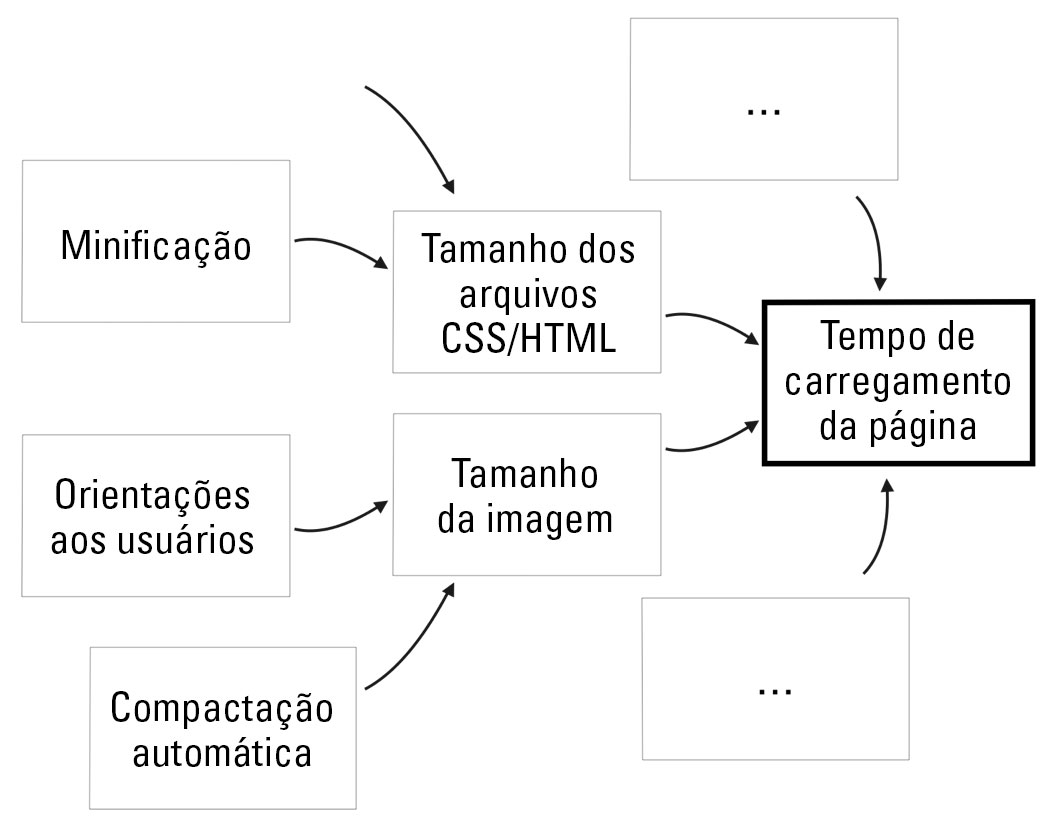
This model can then be taught, discussed and extended. This is called a standard: a set of knowledge points that serve as a basis for training and reflection.
This is how a company can deliberately build expertise in any subject. When done on topics that relate directly to customer preferences and when carried out by everyone every day, it creates a dynamic in which people are always building knowledge and changing to adapt to customer needs. That is the essence of lean strategy.
Ultimately, the goal of problem solving is not just to fix tools and processes. It is a unique opportunity to think about our thinking and develop expertise where it matters. It is a robust and practical formula for creating a company that keeps adapting to changing market conditions and creates value for society over decades.







