A new kind of mining emerging in Chile
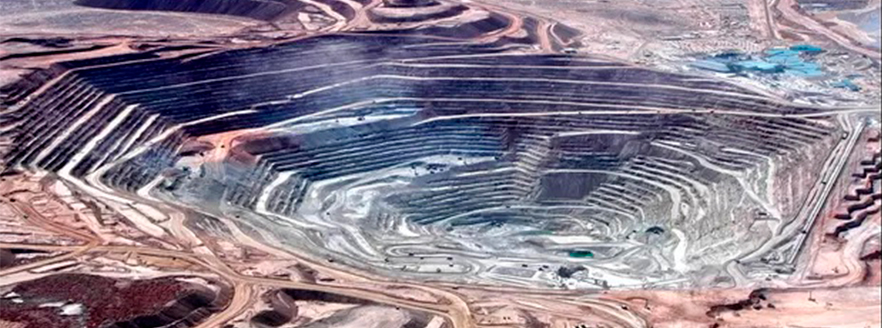
Last week I was involved in several mining-related activities and visited copper mines, including the largest mine of this ore in the world, in the Atacama Desert in northern Chile.
Copper mining accounts for around 30% of the Andean country's economic activity. Its capacity to generate wealth for the country is enormous and fluctuates according to international copper prices. At the moment, prices are low, and earnings have been much smaller than they were in the past.
This situation has been prompting an effort by the government and the mining companies to design a transformation of this industry. However, the period of high prices and the existence of abundant reserves ended up not generating the efforts and initiatives needed to increase the sector's efficiency.
Mining has very old-fashioned management practices, although they have improved recently. Work is usually poorly designed, unsafe and exhausting. Confrontational relationships with militant labor unions have generated confrontational practices, without mutual trust. Some of the world's most notable workplace accidents have occurred in mines.
Management leaders have made little effort to modernize the management system, with paternalistic practices prevailing. And little concern for environmental impacts is also a characteristic of mining in the past.
But this is changing. I recently followed the initial efforts to adopt some lean management practices in the various activities involved in mining at several companies, including the largest and most important of them, the state-owned company Codelco.
The first results have been impressive. Substantial improvements in work and management practices have brought dramatically better results, both in the extraction stages and in processing inside the plants, leading to enormous productivity gains and cost reductions. New forms of relationship with workers, as well as with the communities surrounding the mines, are beginning to take hold.
These are only the first steps. Mining has much to learn from other sectors of industry, since it began this management transformation later than other industries already have.
Mining is one of humanity's oldest economic activities. The extraction of minerals such as gold, silver, copper, iron, etc., has attracted human attention since very ancient times, as people use these materials to make products of the most diverse kinds.
In Chile, as in many other parts of the world, mining still is and will continue to be one of the country's most important economic activities. In this sense, the management modernization I witnessed is very welcome for customers, shareholders, employees, suppliers and governments.