

LDTM: how to measure your company's digital maturity with a focus on value
Digital transformation has become an urgent necessity for survival in the market, but many organizations still fail when they try to "automate chaos" without a solid foundation. For a successful digital transformation to take place, it is necessary to understand that digital maturity goes far beyond adopting cutting-edge technologies; it is about the organizational capacity to redefine value creation, decision-making and team structure.
It is in this scenario that the concept of lean digital transformation becomes essential, presenting the LDTM (Lean Digital Transformation Model) as the definitive solution for a sustainable, results-oriented technological evolution.
What is digital maturity from a lean perspective?
From a Lean perspective, digital maturity is not measured by the size of the budget invested in the cloud or by the number of AI algorithms in production. It is defined by the organizational capacity to solve problems systematically and generate continuous value through technology. A digitally mature company is one that uses tools not as an end, but as a means to amplify the purpose of the business.
The journey to maturity should not begin with the purchase of complex software, but with the elimination of waste and the stabilization of processes. After all, innovating on top of unstable processes is, in practice, investing in failures at scale. Lean thinking serves as the foundation for robust digital processes, allowing technology to act as a strategic lever. This frees human intelligence from repetitive tasks and data overload, allowing teams to focus on what truly transforms the customer experience.
What is the Lean Digital Transformation Model (LDTM)?
The LDTM (Lean Digital Transformation Model) is a robust framework, grounded in the Lean model, developed to consolidate agile and lean governance within organizations. Unlike purely technological approaches, the LDTM acts on the organizational structure to ensure that digitalization happens strategically and without waste.
The central focus of the model is the development of high-performance teams, equipped for rapid problem solving and oriented toward continuous delivery of value. By connecting business strategy to technical execution, the LDTM enables companies to achieve significant results in a short period of time. A real example of this impact was observed at BRQ Digital Solutions, which increased its teams' maturity index by 97% by applying the practices of the Lean Digital Transformation Model in partnership with Lean Institute Brasil.
The 4 essential aspects of the LDTM:
- Cultural: Developing a continuous learning mindset through practices such as Kata and Kaizen. A focus on transparency and on eliminating resistance through Nemawashi (prior consensus).
- Organizational: Structuring the value stream. Here, Value Stream Mapping (VSM) must go beyond the technical pipeline, including the behavior of data and the complete customer journey.
- Technical: A focus on Software Engineering excellence and technical leadership to ensure quality at the source and prevent technical debt from paralyzing innovation.
- Business: Total strategic alignment (Hoshin Kanri) and the use of OKRs to ensure that every line of code contributes to top management's objectives.
The real impact: a 97% increase in digital maturity
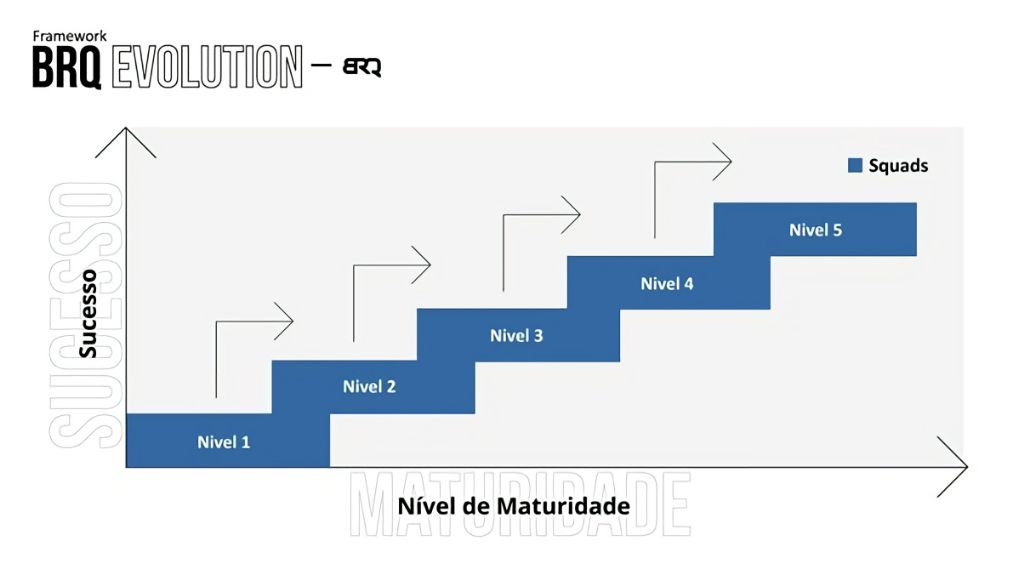
Figure 1 — Staircase chart of the BRQ Evolution Framework representing the growth of the Squads, showing the continuous evolution of the teams' digital maturity.
To understand the practical power of the framework, the BRQ Digital Solutions case serves as indisputable social proof. Before the implementation, the company operated with a focus almost exclusively on agile methodologies, a common challenge in large technology corporations that seek speed but often lose the systemic view of the value stream.
By integrating the Lean philosophy and adopting the LDTM in partnership with Lean Institute Brasil, BRQ managed to transcend superficial agility. The result was a profound transformation: in just three months, the organization achieved a 97% increase in its teams' digital maturity index. This leap shows that, by aligning engineering practices, business management and lean culture, it is possible to accelerate the delivery of results and consolidate truly effective digital governance.
Practical guide: how to measure digital maturity with the LDTM
Measuring digital maturity is not an isolated event, but an evolving, continuous process. In the context of the LDTM, this measurement works as a compass that connects high-level strategy to the digital "shop floor" (the gemba), allowing leadership to see where value is being created and where waste is hidden.
The diagnostic cycle must be closely followed by management, turning data into operational intelligence through the following pillars:
Structured improvement cycles
The journey begins with an in-depth diagnosis carried out with the teams to map the current situation. This assessment is not just an audit, but a tool for comparing the previous state with the current one, providing a clear view of technical and cultural evolution. It is recommended that these cycles be carried out every 3 or 6 months, measuring progress in the 4 pillars of the LDTM in order to identify competency gaps precisely.
PDCA and action plan management
The LDTM acts as an engine of a continuous PDCA cycle (Plan, Do, Check, Act). By gamifying the diagnostic process, the organization is able to raise employee engagement and accelerate the adoption of the framework's practices. The focus here is the rigorous follow-up of the execution of improvements, ensuring that every learning generated by the diagnosis is converted into practical, monitored and sustainable actions.
Virtual obeya and strategic alignment
To sustain this evolution, implementing a Virtual Obeya (a visual management environment) is fundamental. More than a simple control panel or dashboard, it works as a "war room" where leaders and coordinators align strategy with operations in real time.
In this environment, the concept of Nemawashi is applied to ensure that any technological or process change has prior alignment among the affected areas, mitigating cultural friction and ensuring that technology serves the flow, and not the other way around.
The indispensable connection with Lean Digital Transformation
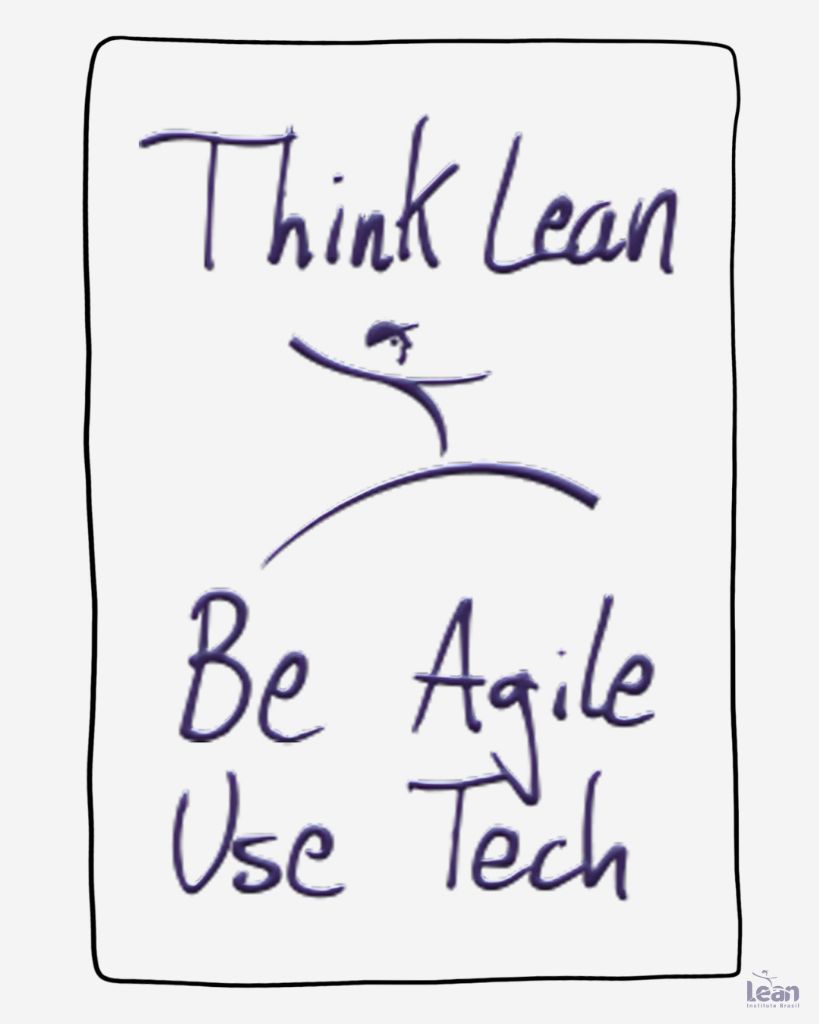
True lean digital transformation is not a technology race, but a strategic journey of efficiency. The success of this evolution depends on a fundamental premise: technology must be used to amplify what already works, and not to try to fix what is broken. Before applying disruptive technologies, such as artificial intelligence or advanced automation, it is indispensable to focus on stabilizing processes and eliminating waste.
If technology is introduced into an environment of chaotic processes and interrupted flows, the result will merely be the acceleration of failures, generating what we call "automated chaos." To avoid this scenario, it is necessary to look at the four fundamental points for an effective lean digital transformation, ensuring that the operational foundation is mature enough for digitalization to become, in fact, a sustainable competitive advantage. Without stability, the failure of the transformation is, unfortunately, guaranteed.
Technology as a lever: AI and automation
In the context of the LDTM, technology must always serve people, and never the other way around. One of the pillars for this to happen is the application of the concept of Jidoka (automation with a human touch). From this perspective, Artificial Intelligence should not be used merely to "automate chaos," but rather to act as a critical advisor that detects anomalies, questions assumptions and ensures quality at the source.
"Lean AI" has the fundamental role of freeing human intelligence from repetitive monitoring and data overload, allowing teams to focus on strategic decision-making and on solving complex problems.
In this scenario of high digital maturity, the figure of the Leader-Orchestrator emerges. This new manager profile goes beyond traditional people management; this leader is responsible for orchestrating the synergistic interaction among multiple types of intelligence (human and artificial).
- Anomaly detection: Using technology for the proactive identification of failures and interruptions in the workflow.
- Predictive analysis and VSM: Integrating data to anticipate bottlenecks in value stream mapping, allowing adjustments before value to the customer is affected.
"A successful digital transformation needs to be lean to ensure that technology is applied to stable processes, avoiding the strategic mistake of automating inefficient flows."
Indicators of success: beyond Bits and Bytes
The evolution of digital maturity should not be seen as a technical vanity metric, but rather read through financial, operational and experience indicators. These KPIs are essential to prove that technology is, in fact, generating real value for the organization.
For effective management under the LDTM model, the following indicators are essential:
- NPS (Net Promoter Score): Reflects customer loyalty and the perceived quality of the final delivery. It is the thermometer showing that digitalization is solving real user problems.
- GPTW and Climate Survey: Measures employee satisfaction and engagement with a clear purpose. In Lean, respect for people is the basis for the sustainability of any change.
- Lead Time and Productivity: Classic efficiency indicators that prove the reduction of waste and the agility of deliveries after the lean digital transformation.
- Real Value for the User: The direct impact on the customer's life, ensuring the profitability of the business and the sustainability of the operation in the long term.
Conclusion
Digital transformation should not be viewed as a final technological destination, but rather as a continuous stance of management and learning. Success on this path requires a profound transition: abandoning the old "command and control" model in favor of "Intelligence in Flow". This is a stance oriented toward understanding in detail how work is organized, allowing decisions to be adjusted in real time as learning emerges from daily practice in the digital gemba.
On this journey, digital maturity is fueled by the collective intelligence of the teams and by a relentless focus on the customer experience. If your company seeks relevance in an increasingly demanding market, the starting point is a structured diagnosis through the LDTM and the courage to review the management system from end to end. Remember: technology is the lever that amplifies results, but the Lean purpose is what defines the right direction of the leap.
Do you want to accelerate your digital maturity and turn technology into real business value? Learn about our Lean Consulting for Digital Transformation and get in touch with our specialists!


