

The lean candidate
EDITORS' NOTE: Planet Lean and Lean Institute Brasil do not endorse any political party, in Italy or anywhere else. The purpose of the content of this article is to inform readers about the approach adopted by one of the candidates, regardless of his political affiliation, and to provide a unique perspective on how a political campaign can be managed.
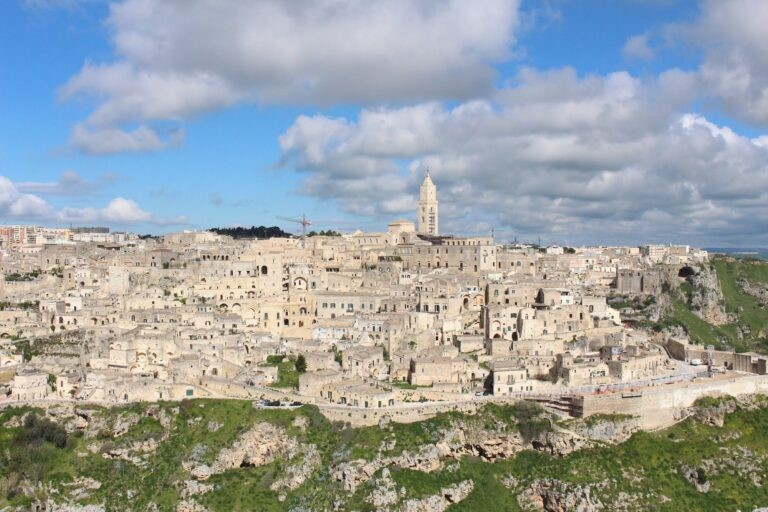
From September 20 to 21, millions of Italians were called to the polls to vote in local and regional elections. At stake were seven regions and several cities, including Matera. This city of 60,000 inhabitants, located in the southern region of Basilicata, is known for the Sassi, two extensive cave areas that represent one of the oldest continuously inhabited settlements in the world. It is a place of great beauty that, in 2019, was the European Capital of Culture.
You may wonder what this has to do with lean thinking. Well, for the first time in Italy, a lean approach was used there to run a political campaign – in this case, that of Domenico Bennardi, of the Five Star Movement. The idea was simple: achieve maximum value – winning the election – with minimum investment. In this case study, I will explain how this goal was achieved and how the people involved reacted to this rather unusual, marketing-oriented political approach.
MAPPING THE CURRENT STATE
To fully understand the context and the current state, the team relied on the A3 template and on the Lean Marketing Canvas (a tool I described in a recent article on Planet Lean – in English). In particular, these frameworks were used to:
- Gather data from the previous election (number of eligible voters, number of actual voters, number of parties, runoff results).
- Identify the mistakes made in the previous election.
- Study the Electoral Law, as well as the political process and dynamics.
- Analyze the voice of the customer (listen carefully to the problems raised by citizens).
- Identify the main causes of dissatisfaction with the current political scenario.
- Develop a vision to establish a new and younger political class.
Next, we defined the minimum and maximum objectives, the KPIs we would track and our target audience:
- Our minimum objective was to obtain 10,000 votes and reach the runoff of the mayoral election (which was held on October 4-5) with 20-23% of the votes.
- Our maximum objective was to win the election with the largest number of city councilors.
- We strove to renew the political class by ensuring that 80% of our slate were candidates who had never run before.
- Our target audience: people aged 18 to 99, which corresponds to the 50,730 eligible voters.
PROBLEM AND COMPETITOR ANALYSIS
As soon as we analyzed the initial situation, we realized that no party (excluding the Five Star Movement) could run alone and hope to reach the minimum objective – getting 20% of the votes. The reasons were several: they did not have many representatives on the City Council; they were newly established and therefore little known; they did not have much presence in public institutions; they had less history compared with other parties and were less activist.
To solve this problem, parties choose to form a coalition with other parties to reach the minimum objective, with one caveat (considering the beliefs of the candidate and of his party's statute): no city council candidate could have taken part in other coalitions in the past or run with other parties that had governed Matera in the previous legislature.
Another important step in any campaign (whether political or marketing, in fact) is understanding who you are competing with. So, we analyzed the other mayoral candidates and the parties that supported them. Here they are:
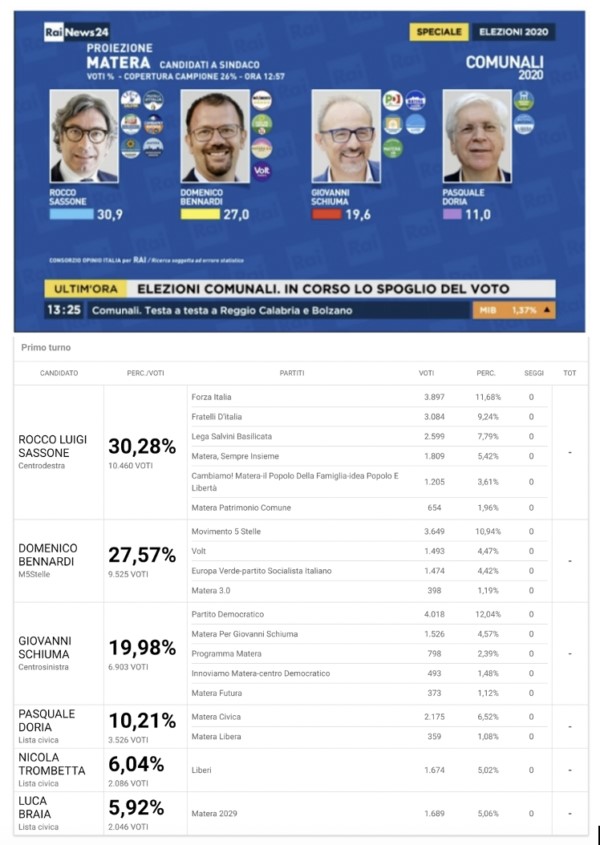
- Rocco Sassone, center-right, with six parties (Lega, Forza Italia, Fratelli d’Italia and three other civic parties) representing 188 city council candidates.
- Giovanni Schiuma, center-left, with five parties (including the Democratic Party) and four other civic parties, for a total of 138 candidates.
- Pasquale Doria with two civic parties and 54 candidates.
- Nicola Trombetta with one civic party of 32 candidates.
- Luca Braia with one civic party and 26 candidates.
- Domenico Bennardi, the candidate we supported, with four parties (Five Star Movement, VOLT, VERDI PSI and Matera 3.0) and 106 candidates.
At the same time, we started a process of nemawashi to informally lay the groundwork for the change we wanted to achieve by discussing our approach with the people involved in the campaign and supporting them continuously as they adjusted to the new method.
At first, the candidates were skeptical. They were not used to measuring their performance and were surprised by the practice of analyzing mistakes in front of their colleagues. After a few weeks, however, they began to see the benefits of this approach (it made it easier not to repeat the same mistakes) and dove in headfirst.
OUR LEAN MARKETING STRATEGY
With our objectives clearly defined, we were ready to move on to the execution phase. But not before clearly defining the roles and responsibilities of the campaign staff: social media, communication, logistics, strategic marketing, public relations, operations manager, etc. This helped a lot to develop a sense of responsibility in each team member.
At this stage of the campaign, our analysis took on a vital role. The Italian Electoral Law rewards the coalition that receives the largest number of votes in the first round of the election for the mayoral candidates, not for the city council candidates. Based on this, we began to train and develop staff and candidates, explaining to them how the law works in detail, aligning them toward a common goal and motivating them. Either we would win the election together or we would lose together.
Training took place throughout the campaign, with weekly 35-40-minute alignment sessions with the candidates. During these meetings, we offered them the tools they needed to run an efficient campaign – for example, data reports. In terms of KPIs, we tracked leads and prospects (leads being potential voters who had not yet chosen any candidate, while prospects are voters who are already actively engaged with the candidate). Week after week, we looked at the results achieved and at any deviation that might have occurred. This informed us on how to plan for rallies and other campaign events, which were meant to fill the gap identified.
Thanks to this approach, based on continuous analysis and control and motivation, the entire coalition stayed focused on the True North, getting Domenico Bennardi elected even if that meant sacrificing their own votes.
OUR APPROACH TO COMMUNICATION
Another reason behind the success of Bennardi's campaign was the mayoral candidate's style of communication with the rest of the coalition. This was precisely the focus of the training: ensuring the alignment of the candidates and shaping their communication during rallies and meetings with voters. The focus was on listening to the voice of the customer, discussing the real needs of the people of Matera instead of responding to rivals' attacks (in fact, part of the strategy was to avoid even mentioning Bennardi's opponents). All 106 candidates were to adopt this approach and only share information related to Bennardi's plan, instead of wasting time on futile wars of words with opponents. At first, this was perhaps the most difficult thing in the campaign – it is hard not to respond to provocations and personal attacks –, but in the end even the coalition's “keyboard warriors”1 began to embrace the policy, after seeing the excellent results we achieved week after week.
Lean thinking even defined the slogan of Bennardi's campaign, which was inspired by the Italian translation of the word kaizen: “Cambia in meglio,” which means “Change for the better.” This message was clearly embraced by the citizens of Matera and clearly contributed to Bennardi's victory.
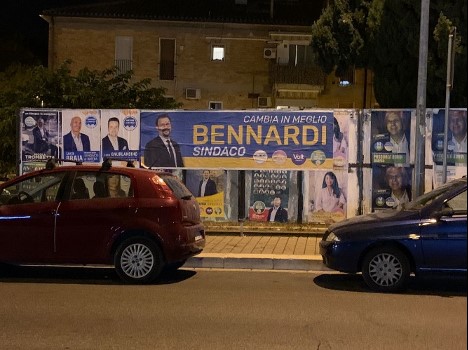 We also realized the importance of making the information we
shared as easily consumable as possible. With this in mind, we summarized
Bennardi's election program (which was still available in full on the website) in a
leaflet with different colors corresponding to different topics – from the environment to
urban planning, from tourism to sports. See the figure above. Lean teaches us the power of
visibility, something we took seriously when defining our approach to
communication.
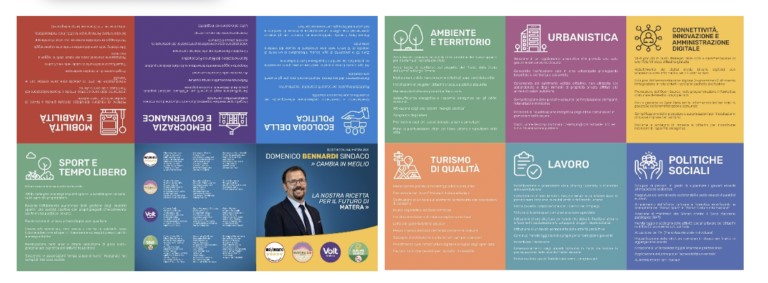
In order to reduce the time and cost of designing and printing leaflets, schedules, posters, billboards, etc., we decided to rely on a single vision for the entire coalition. This also helped us convey a message of consistency and unity, while offering voters a clear overview of who was part of the parties. Each leaflet or any other electoral resource could, therefore, be customized for each candidate of the coalition. Another benefit of this approach was that we were able to avoid personalism and ensure an equal level of visibility for all candidates (which is very important for those who do not spend money to print and put up billboards).
The website we created, which contains the most relevant information about Dominico Bennardi, his history and his plan for Matera, also became a tool to inform the campaign and adjust our objective: the data it provided us with precious information about users.
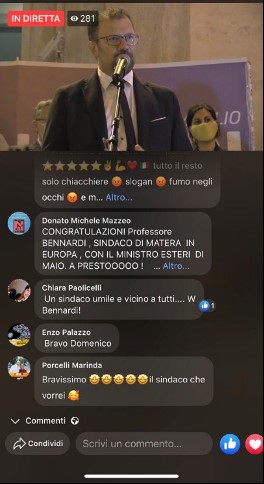
Our social media strategy focused mainly on Facebook and Instagram. The Facebook page, in particular, became the main platform the candidate used to reach his base. Here, we posted all the photos, graphics, activities, rallies, slogans, videos and live streams to keep people updated on Bennardi's daily activities.
 Critically, analyzing the page's insights allowed us to
measure the response to each post and, more importantly, to sense voters' reactions and their
opinions on important topics. Our work on Facebook helped us understand the main
topics of the campaign, the things people really cared about and the type of
communication they responded to most. Synchronizing our message (with all candidates
sharing the posts consistently and quickly) increased the visibility and popularity of our
content, which forced our competitors to spend money on advertising and sponsored
content to try to catch up with us.
Due to the pandemic, people were reluctant to attend rallies and other in-person events, which is why videos and live events on Facebook were such an important part of our strategy. They not only allowed us to reach more people, but also, as mentioned above, provided us with great insights that helped us shape our message.
Instant messaging apps, such as WhatsApp and Telegram, were also important in the campaign. They were used to inform staff about activities that were taking place and last-minute changes of plans, ensuring that the campaign ran smoothly.
RESULTS AND REFLECTIONS
In the first round of the elections, Bennardi received 27% of the votes (our target was 20-23%), which meant he would face Rocco Sassone (of the center-right coalition) two weeks later in the runoff. We chose not to join forces with other coalitions; instead, Bennardi and his campaign kept focusing on their lean-inspired communication efforts and maintained the strategy.
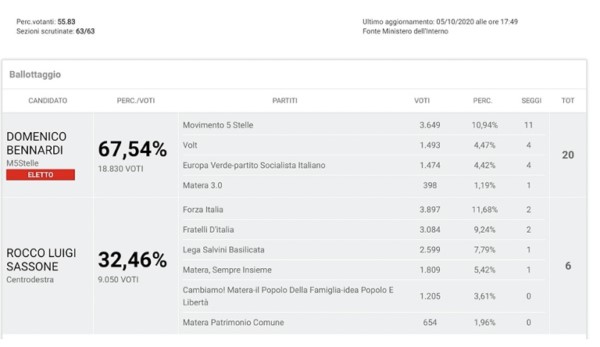
On October 4 and 5, this approach paid off, leading Bennardi to an emphatic victory over Sassone. The final result was 68% of the votes for Bennardi and 32% for Sassone (who had been the most voted candidate in the first round). So, maximum value was achieved for Bennardi's campaign at minimum cost: it cost one sixth of what the opponents' campaigns did.
Putting lean into our communication strategy meant we were able to concentrate most
of our campaign efforts on several platforms, which in turn resulted in much lower
marketing costs and in our ability to control the campaign more closely. We also felt the
effect of Covid-19: the fear of infection kept people at home and effectively made the campaign
digital, moving it largely to social media. By measuring the impact of our posts and our
online activity, we were able to understand what voters really cared about and adjust our message
accordingly to address their concerns.
Matera's new mayor and his
coalition had never thought that the scientific method could be so important
for a political campaign. People believe that politics is only about
relationships, rallies and emotions. Although this is partly true – there is
no doubt that emotion plays a role in choosing whom we vote for –, it was
amazing to see how much success the campaign had thanks to consistent data analysis, a focus
on voters' needs and a strategy based on continuous improvement. If this is not
proof that lean always wins, I don't know what is!
Translator's note
1. A person who makes abusive or aggressive posts on the internet, usually hiding their true identity. (Definitions from Oxford Languages)







