Four Types of Problems... One Management System
I have been studying and practicing lean thinking for the last 20 years, mainly learning by doing — on the job — and using our plant as a laboratory. Our constant desire to experiment led us, in September 2019, to try to implement the ideas contained in Art Smalley's book “Four Types of Problems”. The book had just been translated into Spanish and, when I read it, I was immediately impressed.
We decided to determine whether the lean management system we had in our plant was compatible with Art's categorization of problems. We started with a workshop we co-organized with the Lean Institute Colombia. The (many) questions that came up were really our starting point in this experiment.
The four types of problems Art Smalley describes in his book seemed very interesting to us, but at first we struggled to match them with our management practices. There were clearly some points in common but, overall, we found it hard to recognize the different types of problems in our context. Little did we know that Art's categorization would soon turn our management system upside down!
Not knowing exactly how to approach this experiment, we decided to look at the four types of problems in the context of the lean house, making the connection to our lean practices (from standards to kata and the balanced scorecard) more explicit. In this way, we were able to create an interesting model that we integrated into our weekly management review.
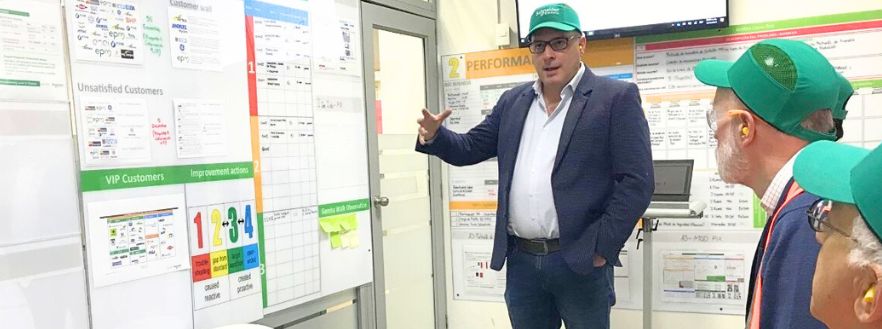
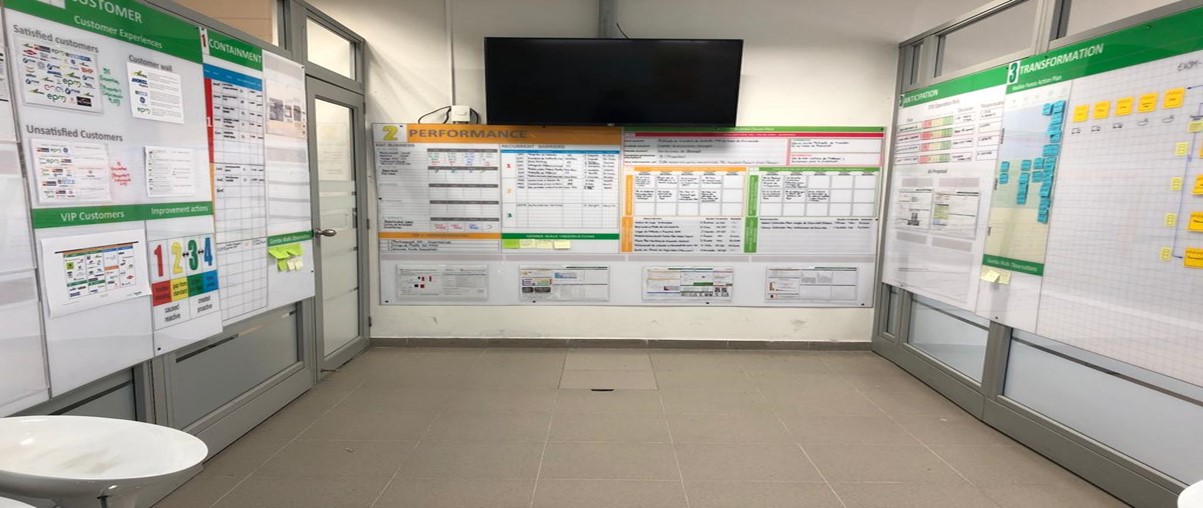
It wasn't long before the walls of our obeya (where our management review takes place) reflected the change we were hoping to create with our experiment. By readjusting the boards on our walls to reflect the four types of problems, we changed the way we talked about problems in the plant.
The structure of the meeting
Our weekly management meetings always start with the customer. We make sure they are satisfied and we review any complaints we have received. Then we start looking at the different types of problems:
- First, we review Type 1 problems — abnormal conditions that are rectified through quick containment — that have been “open” for more than five days. We look at one problem at a time to really make sure we are not missing anything.
- Then we move on to open Type 2 problems — true gaps from standard that require more structured problem solving — and we see whether we need to escalate any Type 1 problem to Type 2. We deal with Type 2 problems using dedicated A3s. At this point in the meeting, we use the balanced scorecard (a tool we are very familiar with) to assess how we are doing against our targets. We set a 30-day deadline to solve Type 2 problems. If we can't do it within a month, we know right away that we need to analyze them more deeply.
- For Type 3 problems — those that relate to our target condition, the strategic questions we need to answer to improve our performance —, we look at our hoshin plan. We also try to “anticipate” any potential risks we may face in the factory over the next three months using the “A3 proposal”.
- For us, Type 4 problems — those related to innovation — are connected to our digital transformation, which is also integrated into our hoshin. In particular, we have three digital initiatives that we consider strategically very important for us.
In its current form, the meeting lasts about two hours. We have found that a two-hour weekly meeting is more effective than an eight-hour monthly one: it allows us to go deeper while making preparation easier for managers.
Ready to take your company to a new level of productivity? Register for the Lean Summit today!
Changing the way we manage
Although we lean thinkers see problems as opportunities, we cannot expect that to be the case for everyone in our organizations. In fact, it is often difficult to talk about problems. And even when they are openly discussed, people find it hard to do so in a structured way. Initially, at Schneider Electric, we met some resistance from the team: they did not see the connection between the four types of problems and their work. Even so we persevered, knowing that we could not look at the four types of problems in isolation: they had to be embedded in our approach, from VSM to hoshin. The shift to the four-types-of-problems system was difficult, but people have already managed to internalize it. It is now a routine for them, part of their DNA. It has given us a common language, just as A3 and VSM had done in the past.
When I look around, I see many companies that are unable to identify which problems are a priority, and this happens because they cannot distinguish between the different types of challenges they face. For example, there is a clear tendency in the business world to treat Type 1 and Type 2 problems as if they were Type 3 or Type 4 (for example, implementing an app to work around the problem instead of truly understanding it and fixing it in the gemba). What is even worse is that many companies focus only on Type 1 and Type 2 problems, forgetting the critical Type 3 and Type 4. This happened to me too, but I think it is important to get away from it — something Art's methodology forces you to do.
It has been amazing to see how the four types of problems have transformed the way we manage our factory, perfectly complementing the lean management system we have built over the years. The greatest contribution of this new approach has been to teach us the importance of trying to predict problems (proactively) instead of simply responding when they occur (reactively). I have found great value in starting to look at Type 3 and Type 4 problems, although I have to admit that Type 1 and Type 2 problems often take up all the time we have available.
Developing leaders is investing in the sustainable growth of the company. The Lean Leadership program offers continuous training and effective practices to improve management at all levels. Contact a specialist to learn more.
The beauty of this approach is that, by consistently focusing on those Type 2 pain points, you are gradually building a smoother operation, which in turn will give you more time to focus on more strategic problems. At Schneider Electric Colombia, we are seeing things we did not see before and we are tackling problems more effectively, whereas before we often confused things and did not implement the right response to our problems. There is no doubt that we are now looking at our work in a more complete way, using a more logical structure for our work as managers. We are more confident in our ability to face any challenge that comes up.
We have even seen a small increase in productivity over the last nine months. Having reduced the number of Type 1 problems we face, people can now contribute more to improving the plant. In fact, most of the problems we have now come from outside — for example, a supplier that does not ship parts because of the pandemic.
Can this help companies after Covid?
Whatever your hoshin plans were for 2020, you probably had to revise the picture. I believe this is the perfect time to integrate the four types of problems into your activities, because in a crisis we tend to focus on Type 1 and Type 2 problems all the time. But the turbulent present moment should not make us forget about our future. Firefighting alone is not enough to get us out of the crisis.
Type 3 and Type 4 problems are about achieving better levels of service and reinventing yourself, respectively. Both are now more crucial than ever. In the face of Covid-19, many organizations seem paralyzed, unable to act (to take any action). But it is precisely when things get tough that you need to try new things, to run even more experiments than before.
The modern manager has to work with the four types of problems in mind.
Want to do more with less without sacrificing quality? Lean consulting for services shows how to reduce waste and intelligently increase productivity in your company's administrative areas. Talk to our specialists!
A comment from Art Smalley
I am happy to hear the company's reflections on its experience with the four types of problems. Most organizations struggle with improvement, and the ability to solve problems is fundamental in every case.
Beginners usually prefer to see things one way and focus on that point of view early in their development. The more advanced you become in your field, the more you learn to see things from different angles or perspectives.
Problems can sometimes be solved quickly through action, training and cooperation. Sometimes, more difficult problems require subject-matter expertise and deeper technical levels of analysis. In some instances, there is no problem as such, but there is still waste and many angles for improvement.
Occasionally, amazing insights occur and entirely new possibilities appear. Even expert scientists sometimes have to resort to containment due to some kind of time or resource constraint. On the other hand, beginners can sometimes see possibilities that a veteran observer may miss.
Problems are an opportunity to improve and develop our human potential. The context for problem solving is vital and never a static concept. In your respective line of work, please think about what type of problem you are facing and the best way to address it according to the circumstances. For each problem there is a different mix of time and resource constraints, levels of difficulty, impact or opportunity, capability and associated risk. I am happy when I see companies organizing their approaches accordingly.
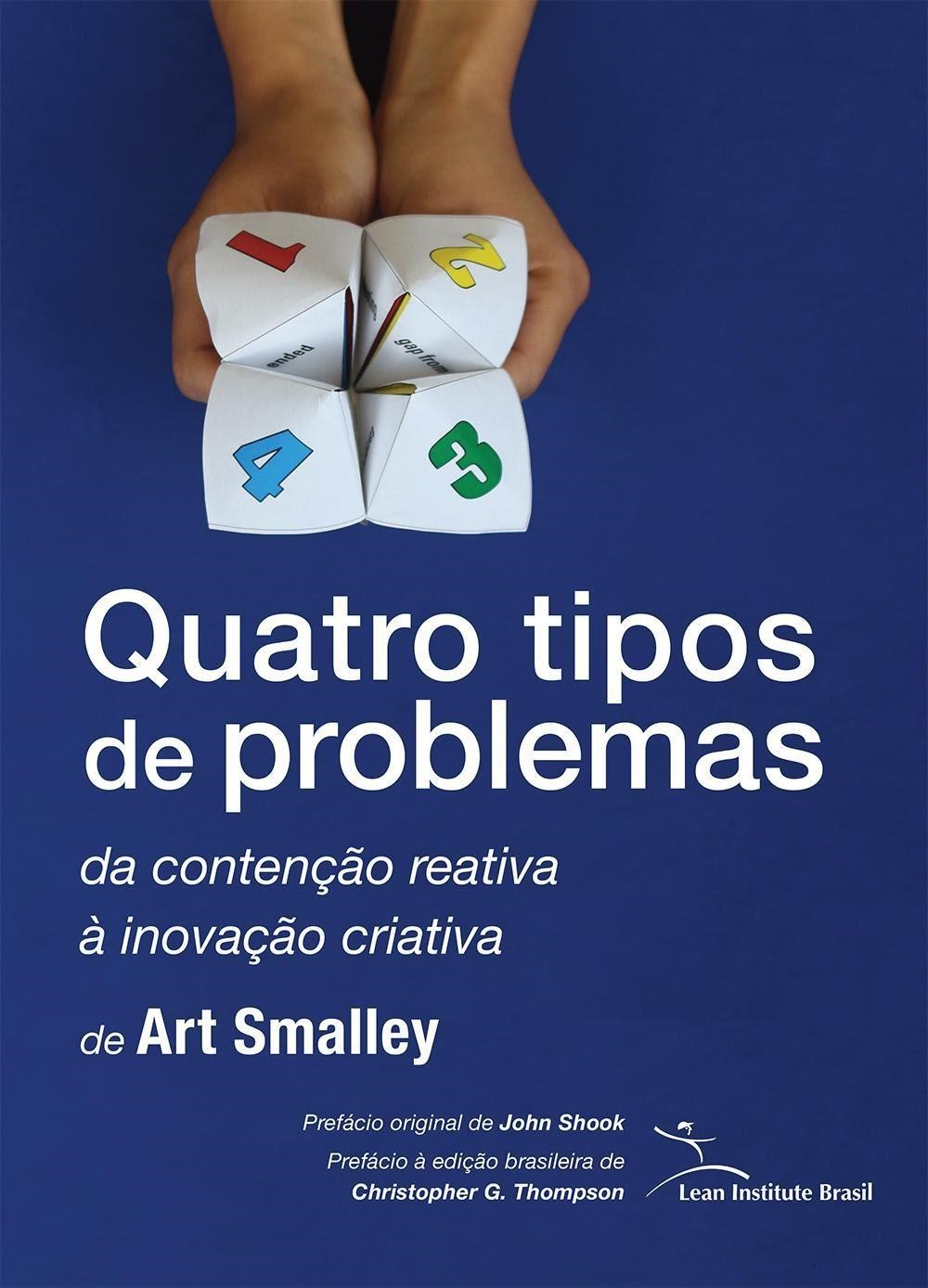
For more insights, read Art's book “Four Types of Problems”.
Also take the opportunity to explore the calendar of Lean events and take part in the initiatives that are shaping the future of management in Brazil. Find out where leading Lean professionals will gather to exchange experiences and accelerate innovation.