

Malika Mir on using the obeya at pharmaceutical company Ipsen
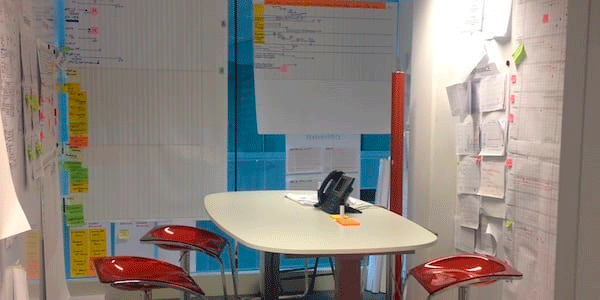
Malika Mir: I am the chief information and digital officer of the pharmaceutical company Ipsen. My focus is to facilitate business transformation through innovation and customer focus. Ipsen is a global pharmaceutical company that employs 3,500 people worldwide and specializes in neurology, endocrinology and uro-oncology. In 2012, our sales exceeded € 1.2 billion.
PL: How long has the company been using lean principles and techniques?
MM: We started about a year ago in the IT department, focusing on two main functions (for a total of about 60 people involved): project management and change and incident management.
PL: What was the situation in the department like before lean thinking was introduced?
MM: Our internal customers (the end users) were not satisfied with the service we were providing them. It was also very difficult to get clarity on the way we managed the volume of activities: everyone complained that they did not have enough time or resources. I was convinced that we had enough people to do the work, but I needed data to “connect the dots” and, eventually, decide whether we really needed to recruit more people or not. When lean came along, everything changed.
PL: Your presentation at the 2015 Lean IT Summit in Paris focused on the use of the obeya at Ipsen. Did you start using an obeya room right away or did you introduce it later in the journey?
MM: The obeya was a critical part of our plan from the start. We introduced it immediately to implement a new way of tracking activities, but also to make the new alternative work standards visible to the whole team. The daily 10-minute meeting in the obeya, during which people are aligned and focused on the same subject and can share their problems and challenges with others, has been particularly useful.
The department's workload is now under control, and that is the biggest benefit we are enjoying. The obeya is a versatile tool, and we use it in several ways: to work with business units, for the company's overall digital transformation and to train front-line managers. Its strength lies in the fact that it provides a simple, common language that is understood by everyone inside and outside the IT department.
We have now started inviting other areas into the obeya room to review projects together. Although lean has not yet spread to these other departments, we have begun to create awareness.
PL: What can you tell us about your talk at the Summit?
MM: My talk focused on showing participants how we are managing the project portfolio, with the goal of achieving end-to-end excellence in execution for our internal customers.
PL: In your opinion, what is the role of an IT department in an organization?
MM: I see the IT department as the main agent of change in an organization. We are the ones who are always implementing new technological and digital solutions, which will end up impacting the entire business.
We have a cross-functional view by nature and the ability to influence positive change across the organization. With every new technology that comes in, even when it is adopted in only one department, we have the opportunity to bring complete change to the business.
PL: In one sentence, what could participants learn from your presentation at the Lean IT Summit?
MM: How to lead a team of almost 100 project managers and get them all focused on the same goal: high customer satisfaction.







