

Jishuken at Toyota Motor Kyushu
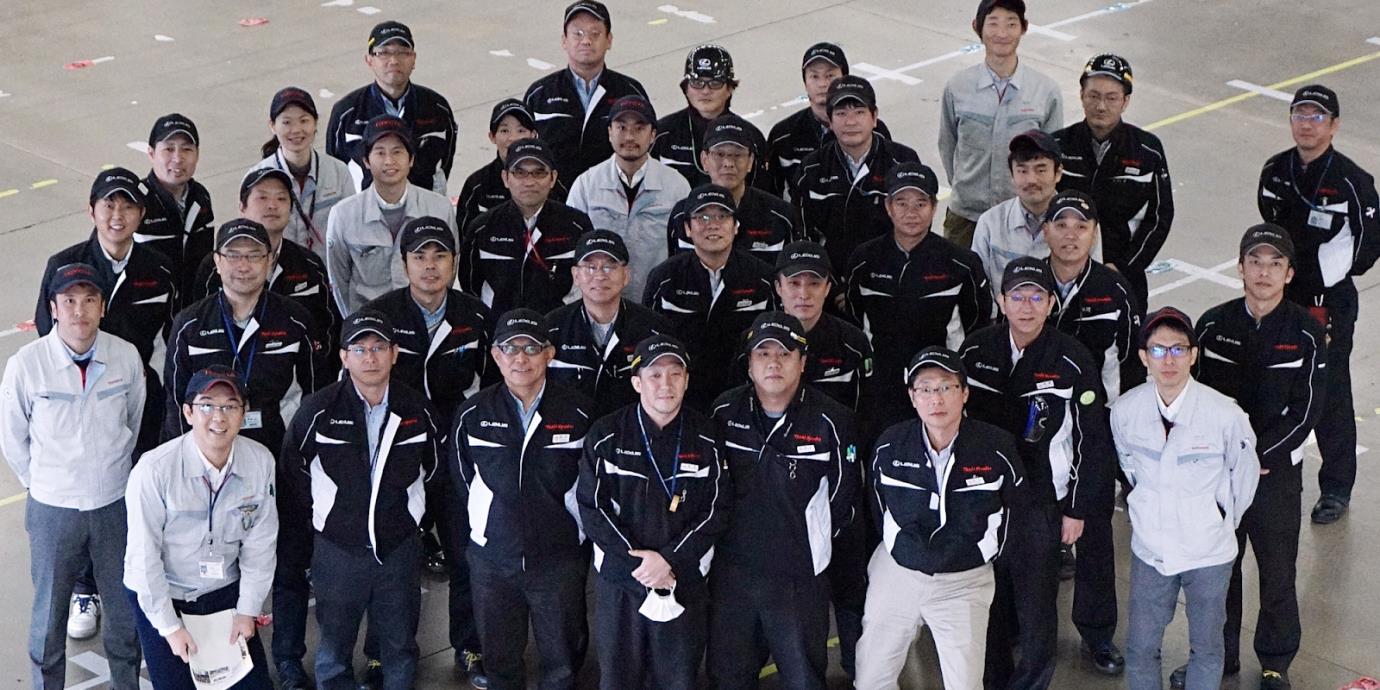
Roberto Priolo: Mr. Yokoi, thank you for your time. I would like to start by asking what jishuken is and how this five-day activity differs from a traditional kaizen week.
Hideshi Yokoi: In Japanese, jishu-ken means “self-study.” It is a tool used to develop people's capabilities in the gemba. The differences between kaizen and jishuken may seem subtle at first, but they are substantial: to begin with, in kaizen the target is usually given by management, while in jishuken it is the team that sets it (and managers challenge it). In addition, the goal of kaizen is to achieve the target, while the focus of jishuken is reflection and learning. Another difference is that jishuken is an ongoing activity (teams are usually asked to meet more than once to reflect on progress and continue improving), while kaizen is a one-off intervention (we often talk about a kaizen event). Finally, we can say that the scope of jishuken is often larger than that of kaizen: when we engage in it, we intend to make important and sustainable changes to the production system.
RP: How important is it to carry out jishuken repeatedly?
HY: Extremely! At Toyota Motor Kyushu, I used to call on some teams to do jishuken three times a year. In part, this is a way to ensure the effective development of people: by returning to the same situation several times, we make sure team members keep looking for new and better ways of doing the work. For me, jishuken is real continuous improvement, in that it allows us to progress in our transformation by making gradual changes (in this sense, improvement becomes similar to climbing a mountain). Another reason why recurring jishuken sessions are important is sustainment: if we do not return to the activity, people will probably go back to the old way of working.
RP: Speaking of Toyota Motor Kyushu, what led you to implement jishuken there? As plant manager, what problem were you trying to solve?
HY: When I became manager of the Miyata plant in 2013, my first impression was that it built high-quality cars and was full of hard-working, very polite people. However, I noticed they were very busy trying to keep up with the production schedule (I saw team members running all over the shop floor). I also realized that managers were not familiar with kaizen tools and therefore could not teach them to team members. The kaizen culture at Miyata had been diluted, so I decided to use jishuken to revive it.
All departments had to take part in this activity, and they were supported by TPS. At first, the staff were not convinced (“it's going to be more work for us,” they told me), but when I explained that I wanted them to use it for whatever they considered important, they started to believe. My message to team members was that I was not worried about productivity numbers and that our priority was to pursue safety (keeping my people safe was my responsibility as a manager) and quality. I knew that financial results would be natural consequences of working in a safe environment and building high-quality cars. That is why I encouraged team members to use the effort to make work easier, not to improve efficiency.
RP: From a results standpoint, what happened at the Miyata Plant after jishuken became part of the way of working?
HY: We saw improvements in quality, profitability and efficiency. We were proud to achieve the highest levels of productivity and quality in the history of Toyota Motor Kyushu. We are not yet fully satisfied with our safety performance, although the number of accidents is on a downward trend.
RP: A large part of your career has focused on helping others internalize TPS principles and practices, whether inside Toyota through the TPS division or in American companies through TSSC (where you also served as president). In your experience, what is the biggest obstacle to a successful business transformation?
HY: Management behavior, without a doubt. And this is as true in the West as it is in Japan. We can change the shop floor as much as we want, but if management does not understand and support our improvement efforts, the change will not hold. When I arrived at Miyata, managers were not spending enough time in the gemba. I, for one, went to the shop floor every day - often for two or three hours - and before long I saw managers begin to follow my lead. Ultimately, that is what accelerated the pace of change at the plant: seeing problems first-hand allowed the team to come up with countermeasures more quickly, which contributed greatly to their development.
As a manager, my job was to eliminate the need for my help. To achieve this, I gave people the authority to make changes and offered them guidance whenever they needed it - but always without providing solutions. In the process, they became increasingly involved, and they grew a great deal. Do not forget that making things means making people - monozukuri through hitozukuri.







