

Lean requires persistence

Anima is a higher-education group that has been implementing the lean philosophy in its administrative activities for several years now. We have already seen how it improved its communication with students and made it more efficient, and we have already interviewed the group's director of student relations. This time, we turn our attention back to Anima to see how important persistence is in the lean journey and how the path is never easy. In this first article of a trilogy, we have the opportunity to learn from a winding lean journey that began at the Distance Education Unit (EaD) and took shape in Exam Management.
As Anima began its lean journey, the group started holding presentations and exhibitions of the A3s developed in the first lean cycle. This was an excellent opportunity for all of Anima's areas, especially those not yet involved in the transformation efforts, to see the first results of applying the philosophy in the group and to start imagining what applying lean in their own areas would look like.
In the second academic cycle of 2016, Anima's EaD Unit joined the lean journey with two prioritized projects: content production and assessment. There was enormous excitement in the department, motivated by the projects developed in the first cycle; however, neither project was very successful at first. The project focused on the assessment process was even interrupted to resolve a serious problem that required the almost exclusive dedication of the entire team.
Despite the abrupt interruption of the lean project – Assessment, the group believed in the improvement possibilities that the lean methodology could bring to Anima as a whole and, in particular, to the assessment process, which urgently needed an intervention. Shortly afterwards, in the second half of 2017, the entire academic vice presidency underwent a restructuring, and the assessment process, which until then had been run by the EaD Unit, came to be carried out by Exam Management, whose scope of work now included not only the exams for courses offered online, but also all institutional exams. In that same period Anima began its third lean cycle and, once again, the assessment process was one of the prioritized projects.
The team knew it was necessary to see the project through to the end, not just to fulfill a project deliverable, but because they saw in lean important tools that would contribute to building positive results for the institution. The Exam Management team did not just go through a process of learning the lean methodology, but through a transformation, a cultural change in how problems were handled, and the result could not have been different.
In just one semester, positive results began to appear both on the financial side, with reduced cost and waste, and in other aspects, such as team engagement, process maturity, integration among areas, and the building and tracking of indicators; in short, this was the beginning of a management approach grounded in being data driven.
So what changed, after all? Why was the project unsuccessful the first time, yet achieved substantial gains the second time? What lessons and learnings were they able to draw from the failed efforts of the first time to make the second attempt work? The answer is not simple, but let us explore some of the changes in outlook and attitude that the team involved in these efforts had to go through to continue its lean journey.
A3 thinking
One of the biggest challenges for the exam management team was understanding and building an A3, a paradox, given that this very tool was what had made them fall in love with the lean methodology; but admiring an A3 already in its final stage and building your own A3 are very different situations. At first the methodology proved very complicated and nothing seemed to work. No wonder the team went as far as making eleven versions of an A3 before finally arriving at the final version.
What the team realized after doing a few A3s, however, is that the greatest difficulty was not in the process itself, but mainly in building the information to present the results. Building an A3 requires data, something that did not exist at the time, nor was it easy to collect. Nevertheless, this exercise of reaching the final objective and consolidating the A3 version led the Exam Management team to reflect on basic data that needed to be built and tracked periodically. This, in fact, was one of the area's greatest achievements: the A3 made it possible to develop ways of collecting data and creating indicators.
Today the team takes between ten and fifteen days to complete an A3, because they already understand the logic, dynamics and methodology of this tool and already have data and/or ways of obtaining it; more than the technique, the team has been maturing A3 thinking in its day-to-day activities. It is worth noting that this process requires alignment and integration with other areas and, therefore, calls for prior planning so that the process can be effective and the project successful.
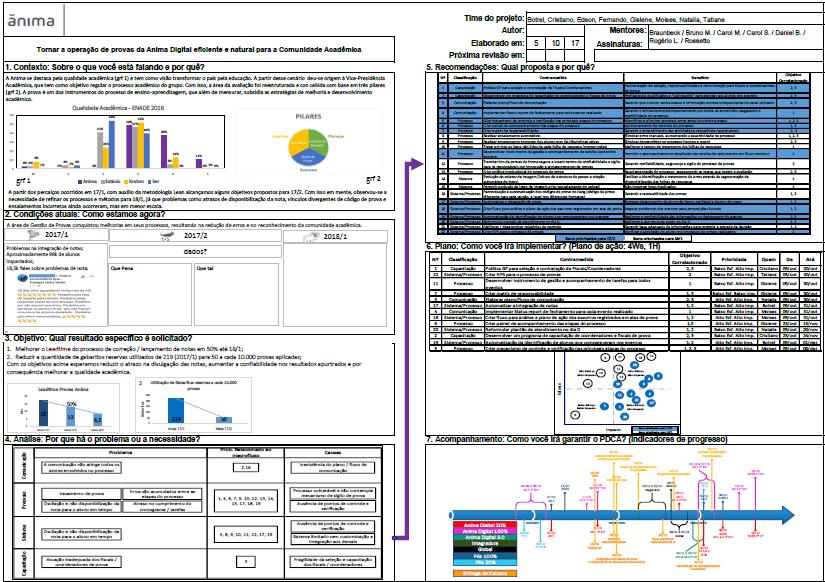
Figure 1: Version 1 – A3 – Exam Management
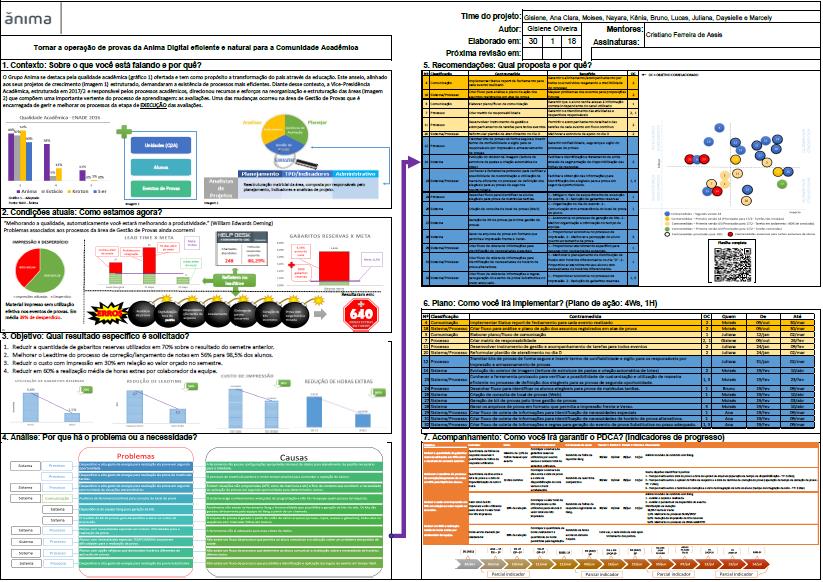
Figure 2: Final Version – A3 – Exam Management
Daily management and visual management
Daily management and visual management are among the best-known tools in lean, which is justified by the number of benefits they bring to the management and monitoring of processes.
Throughout the lean journey, one of the Exam Management team's main objectives was to consolidate a daily management flow tied to visual management. The first attempt, however, was a failure: the team ran into the difficulty of compiling a large volume of exam activities and events in a single space, one that was, moreover, static and visual, in addition to requiring a great manual effort from the team to write down each task. There was also an initial rejection due to the feeling of exposure of the team's individual deliverables, since everyone could see when they were behind on their daily tasks.
The challenge, then, was to come up with a way to manage around 800 events, with 35 activities on average, avoiding delays and guaranteeing the exam schedule.
After several days of reflection and discussion about the challenges encountered, the Exam Management team decided to develop an Excel spreadsheet covering the entire exam planning for the semester, so that each employee had a view of their deliverables and could plan to meet them.
For the DM (daily management), the choice was to group events by type and by school, thereby reducing the amount of information to be filled in and tracked daily.
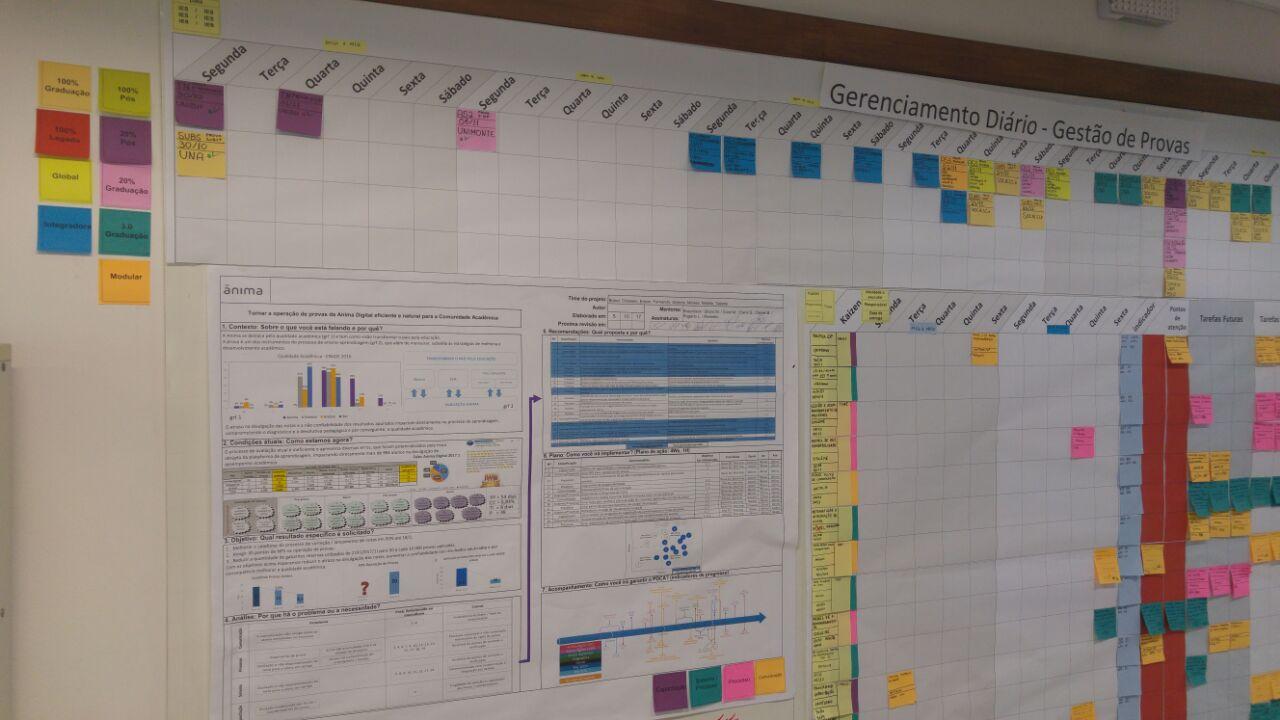
Figure 3: First Daily Management Board – Exam Management
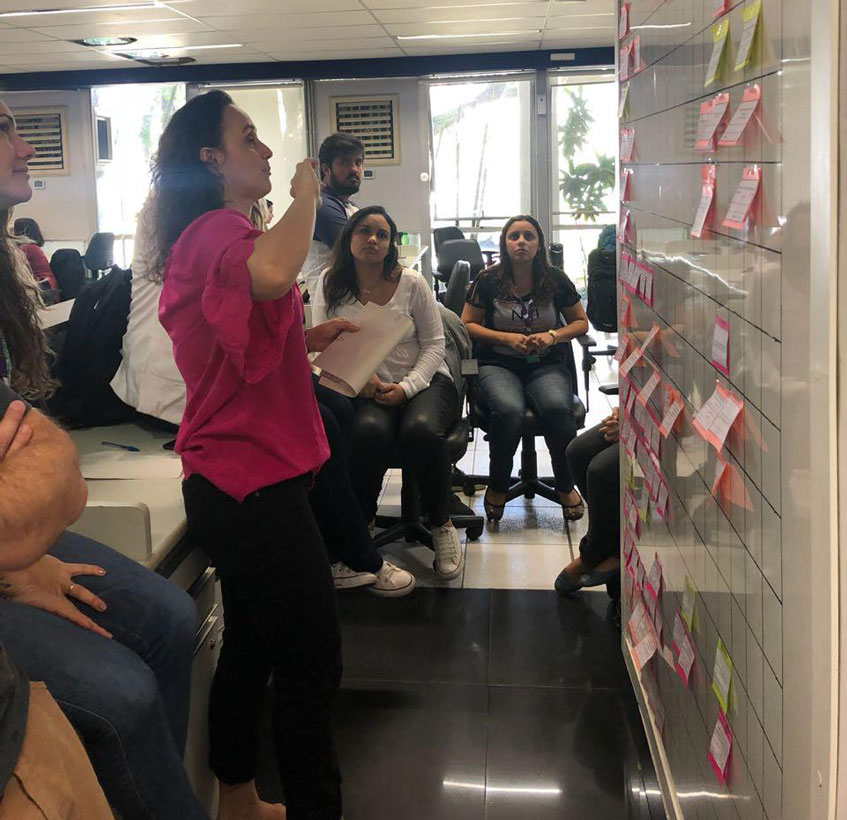
Figure 4: Exam Management DM
These two changes resulted in acceptance by the team and greater engagement in the project.
Kaizen
Kaizen is an important tool that helps teams in the pursuit of continuous improvement. One possible way to map the improvements to be implemented is to identify the department's weaknesses. Believing in this premise, the Exam Management team included in the DM a tracking of process errors, flagging in red the events and the HEIs that had problems, as well as categorizing these errors and their impact on students and on everyone involved in the process.
This daily tracking made it possible to implement kaizens (improvement actions) while the semester was still under way, which even earned the team third place at the Kaizen Day event promoted by the Anima group. An important recognition and motivation for the team to become even more engaged in its lean journey.

Figure 5: Exam Management Award at Kaizen Day
Along the way, the Exam Management team realized that these projects need to be the responsibility of the team members, and that each person in charge should call on, when necessary, the areas and/or employees from other teams for the final delivery of the project, because that person lives the work and knows what matters most for the kaizen to succeed.
Walks through the gemba
Lean places great emphasis on visiting and walking the gemba, the place where the work happens. That is why the Anima group's Exam Management team now visits the gemba, in this case the schools, in two different formats:
- Following exam events together with the HEIs' operations teams on “D” day (the day the event takes place). This follow-up brings different reflections to the team, making it possible to check the result of the pre-exam work carried out and its impact on the HEIs, and thus to identify opportunities for improvement.
- Workshops going through all the schools with group activities, identifying problems, seeing what works and what does not, and gathering information about the school's expectations.
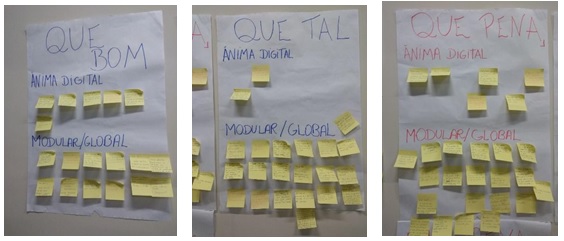
Figure 6: Group activity
An important insight for the Exam Management team in these meetings was that the HEIs did not want anything very innovative or disruptive; they just wanted the process to work.
Mindset
It is no news that lean thinking focuses on solving problems at the root cause. This was a lesson the Exam Management team learned throughout its lean journey; that is, it is necessary to change the mindset, to stop putting out fires and treating the symptoms at the expense of the root cause. In this way, it is possible to pursue continuous improvement and not repeat the same mistakes. What enabled this change of mindset in the Exam Management team was the maturing of the methodology through the implementation and application of lean tools in its daily activities. The Exam Management team comes to understand lean as the methodology that equips everyday activities in pursuit of project success.
Engagement
The greatest difficulty in a lean implementation is bringing the team on board. There is no point in wanting to implement lean if your team is not willing to do the same. And it is not easy to engage people.
The book “Lead with Respect”, by Michael and Freddy Ballé, was recommended to the Exam Management leadership to serve as inspiration for the changes related to the team's engagement in the project. At first, however, the change portrayed in the story seemed like a very abrupt transformation, far from the team's reality. The experience described in the book proved challenging for the Exam Management leadership when it came to turning what they had read into real actions for the team's transformation on its lean journey.
Little by little, the leadership realized that it was collective intelligence that would bring about this change and, therefore, the path could be none other than sharing and building the projects together, with the whole team involved and united, showing the importance of lean and demonstrating respect for each person; eventually everyone will come on board. However, this does not happen overnight. At first, there will be resistance. That is natural. What we need to do is know how to deal with this resistance.
As we can see from the journey of Exam Management, the lean path is difficult, but it is worth it. For us to do the same and overcome a failed attempt at lean implementation, we need to learn to own our mistakes, something people are not used to doing, and to build maturity. Lean implementation is always painful, because first we need to accept that we have problems and that we make mistakes constantly; but if we can accept this, in the end, when the results appear, everything will make sense, and that will give you the strength to improve more and more, continuously.







