

Lean learning also happens across sectors
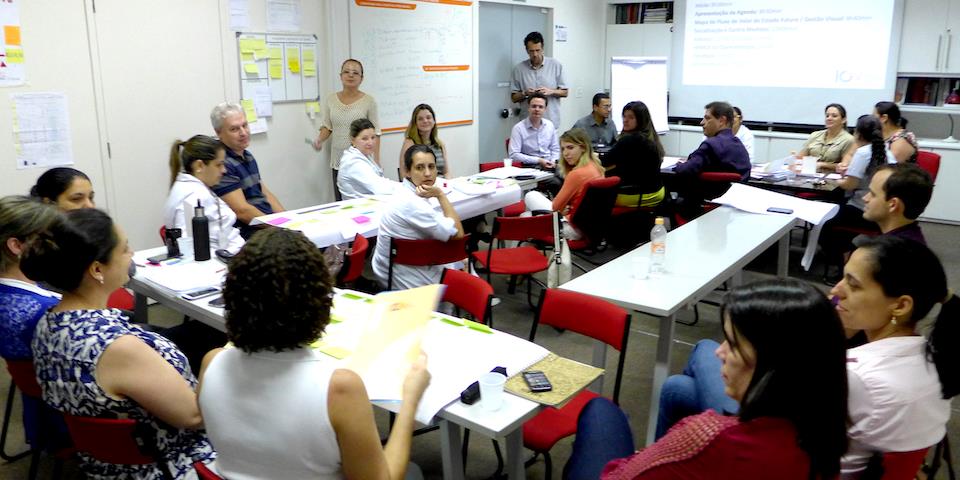
At the IOV oncology group (Instituto de Oncologia do Vale), we have worked with other organizations since the beginning of our lean journey in 2008. We have always been very open to learning from others and sharing our learning with them.
We have been supported in our journey by the Lean Institute Brasil, as well as by other lean companies. For example, Parker Hannifin, a manufacturer of motion and control systems and technologies, has shared its knowledge and time with us on many occasions. It is the relationship with Parker Hannifin that I would like to discuss in this short article.
In 2013, while we were working hard to develop our lean management system, we received monthly visits from organizations interested in learning about lean and willing to share their experience. Parker was one of the organizations that asked for a visit.
On that occasion, we had the opportunity to meet Parker's business systems manager for LATAM, Marcelo Lopes, and the LATAM controller, Tadeu Nunes. There was great chemistry from the start. They liked what they saw at IOV, and we were excited to have access to their knowledge. From that day on, our two organizations began an informal partnership, with several IOV teams visiting Parker and vice versa.
Ours was an open-door policy. We supported each other as we ran kaizen weeks, delivered training sessions and experimented with daily management practices. We could not be more grateful for the help we received from them. We know we still have a lot to learn from the best lean factory in the world (luckily, it is only 20 minutes from our headquarters).
WHAT WE LEARNED
If I had to sum up in one word what we have learned from Parker over the years, that word would have to be “method.” After several visits to their facilities, we were able to implement TPM (Total Productive Maintenance), OEE (Overall Equipment Effectiveness), kamishibai, a versatility matrix, milk runs and visual management of production. We also improved our 5S instruction methods and our gemba walks.
- Total Productive Maintenance
When it comes to TPM, we learned a great deal from Parker. For example, we realized that each machine needs someone responsible for its operation during working hours. After seeing TPM in action at Parker, we implemented a visual maintenance schedule, increased our focus on preventive maintenance to reduce process interruptions, and began monitoring the parts that need frequent replacement using a kanban system and better managing those being maintained.
- Overall Equipment Effectiveness
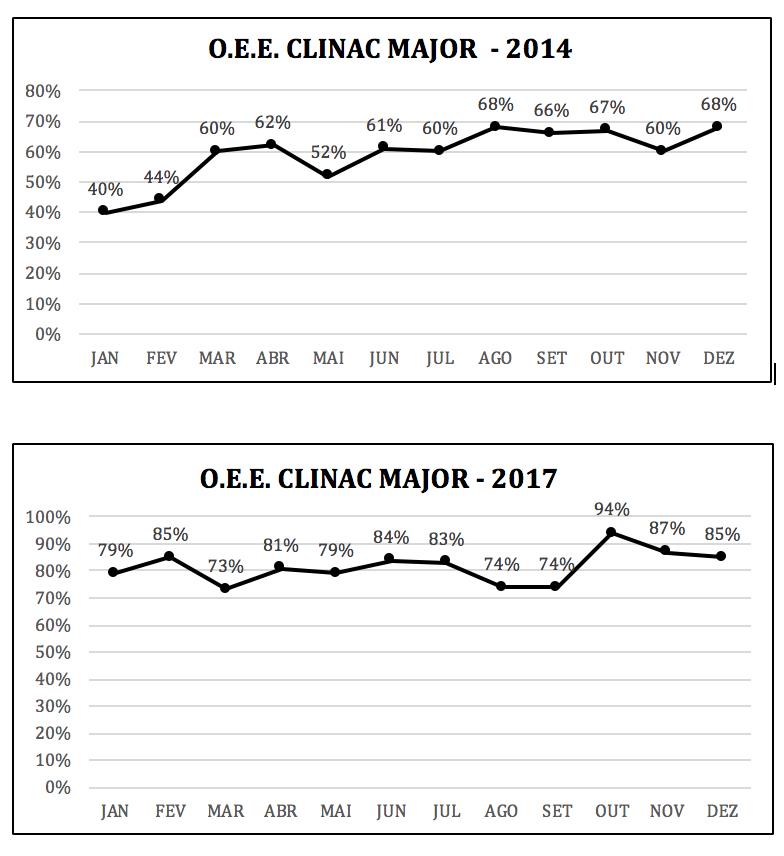
Part of the TPM approach, OEE quickly became a game changer for IOV once we started using it in our radiotherapy service. It allows us to check how well we are using the available machine, labor and material resources in our “production” function. In 2013, we had three radiotherapy facilities with five Clinical Linear Accelerators (CLINACs), which had a history of machine downtime and overtime. Our average initial OEE score was 40%! By reorganizing the engineering team, redesigning the maintenance flow, creating standards for maintaining the equipment and introducing daily maintenance and engineering meetings, our OEE score rose to an average of 80%.
- Kamishibai
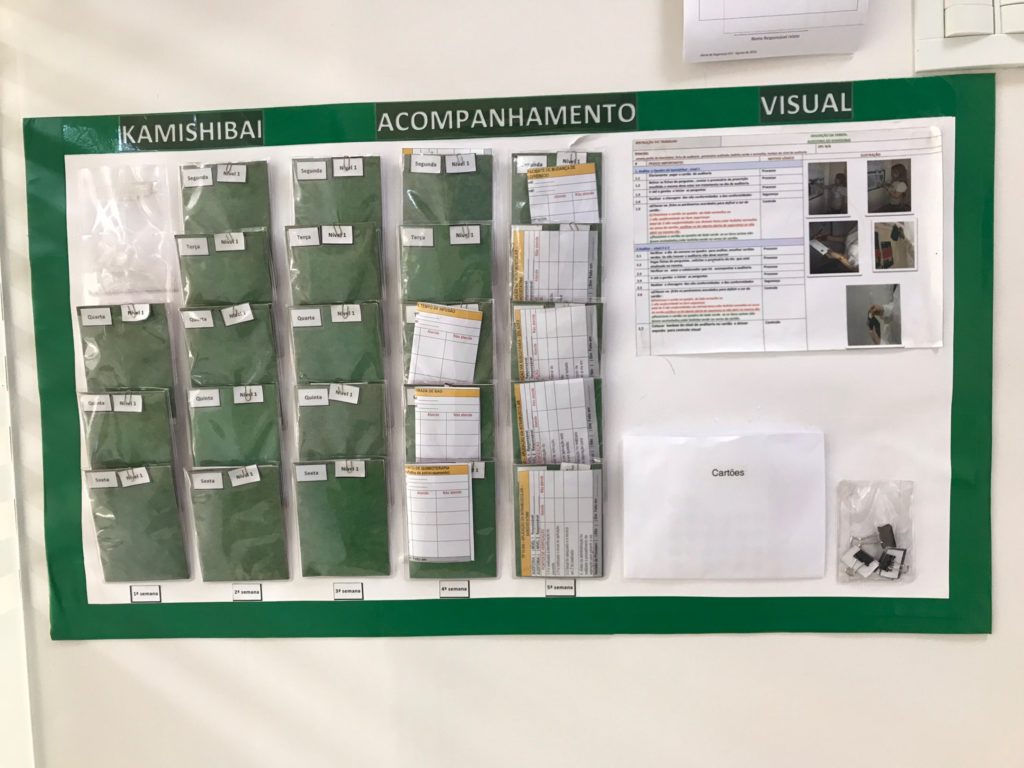
Another great addition to our processes was kamishibai, a visual control framework that allows us to carry out daily audits in a simple way within a given process. Thanks to the kamishibai board, we spend only two minutes a day auditing our standard work in most clinical areas. Gone are the days when we had to work overtime to keep our documents up to date. We also have safer processes, and it is very easy to meet accreditation standards with these boards (we hold three different quality certificates).
- Versatility Matrix
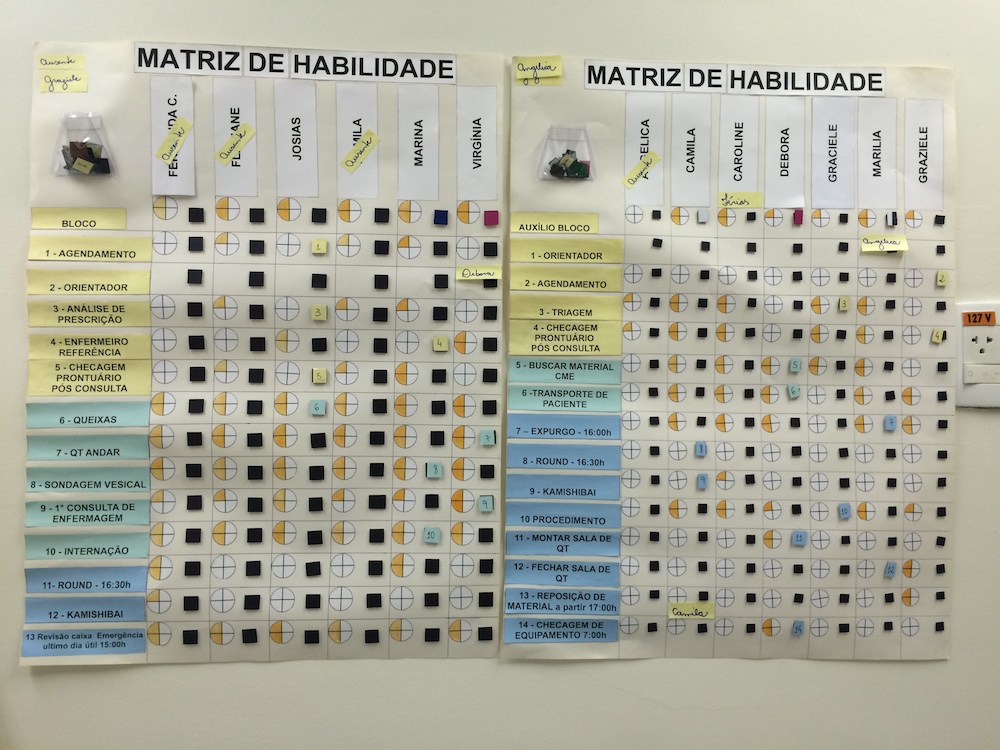
During a visit to IOV, a Parker team suggested that we develop a matrix to manage employees' capabilities, since we were having trouble understanding who had the knowledge within and across our many teams. The versatility matrix makes this very easy, and it also helps us immensely when it comes to organizing training for our people.
- Milk runs
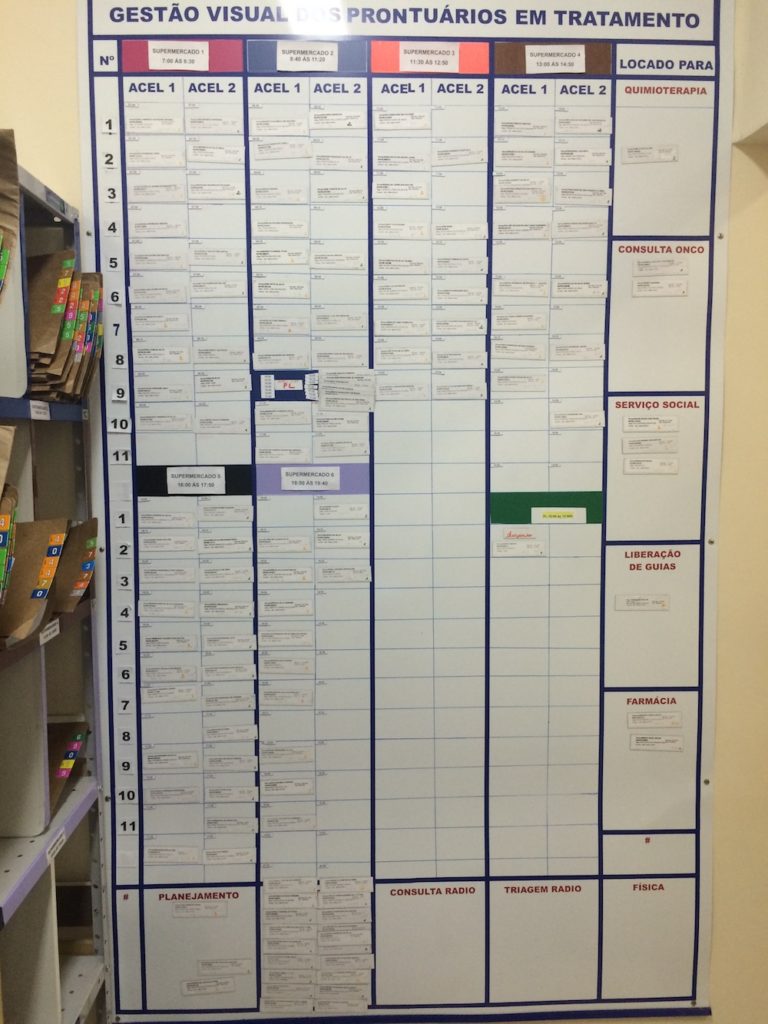
On one of our visits to Parker, we saw a milk run in action. This is a practice that comes from the old days of dairy farming in the United States: empty churns were left at the door of supplier farms and full churns were collected in their place, thus obtaining access to the raw material exactly when it was needed. We applied the same reasoning to medical records, because we had chemotherapy and radiotherapy patients being treated at the same time along the same long corridor in one of our facilities. It was a long walk for our people every time they had to fetch a record. So we created visual management for medical records, introduced a kanban system and organized a milk run along established routes every two hours, dropping off medical records for treatment or consultation according to the schedule.
- Visual management
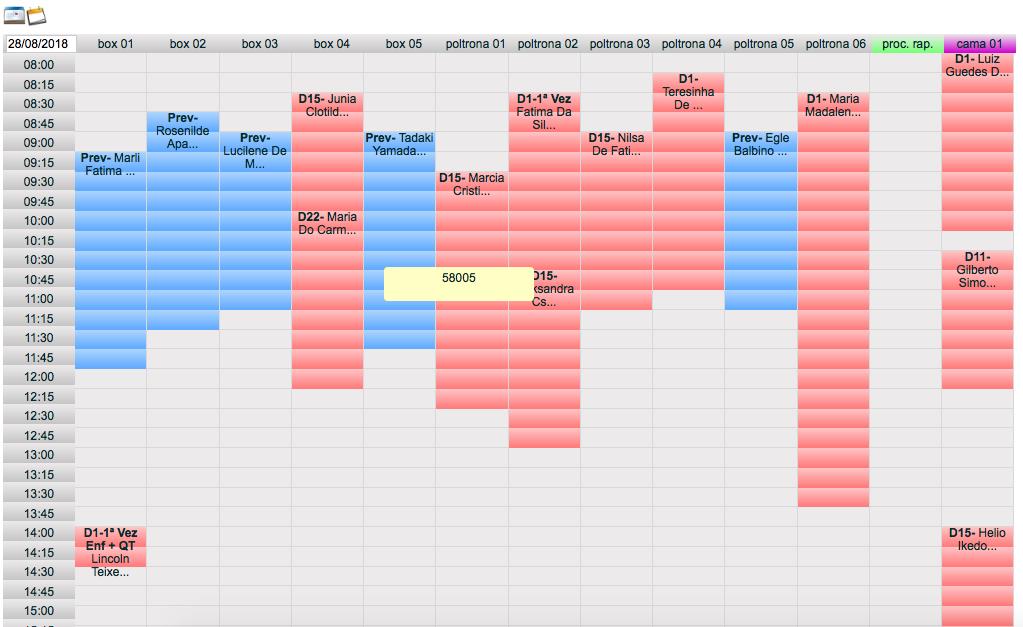
We drew inspiration from Parker's manufacturing visual management (the hourly production pace was set by a visual document at the operators' stations) to develop our chemotherapy schedule management. This involved including a framework to identify our daily workload and performance in our electronic medical record.
CROSS-POLLINATION, A DRIVER OF LEAN LEARNING
From time to time, Parker Hannifin supported us by sending its experts to take part in our kaizen events. Many of the improvements in our practice at IOV were introduced with the guidance and support of their employees - from workload balancing to bottleneck management, from cell-like workstations to flow improvements.
At the beginning of our lean journey, we struggled to understand how to translate tools and associated activities that had been developed for manufacturing equipment and production lines into our clinical practices. Several of the tools and techniques we observed at Parker ended up being adapted for IOV. Kamishibai is a great example: when we started using it (“Wow! This could be useful, let's try it”), the cards were merely for audits. Over time, we figured out the best way to deploy them and were able to connect them to a planned audit process and to our TWI (Training Within Industry) methods. Today, the kamishibai cards refer to our best clinical practices, standard work, training materials, versatility matrix and the human resources department's annual performance review, helping us manage how we learn and evolve as an organization.
The opportunity to see tools and practices at work in other organizations and to understand the meaning of those practices was crucial to our journey, but it certainly took time. Our learning curve was steep at first, but our persistence paid off. Learning to make the most of Parker's experience and making sure their “solutions” became ours was our focus as we tried to move forward in our lean transformation. There is no doubt that these exchanges were one of the great catalysts of IOV's lean transformation. Had we done everything on our own, it would have taken much longer to understand how to use, leverage and integrate these lean tools. Parker's experience helped us connect the dots as we faced our real-world challenges.
Sharing across different cultures and industries is a valuable and amazing activity, especially in healthcare, where management is often reluctant to consider the lean journey a serious undertaking. Parker is a large, mature lean company, and its humble support allowed us to take big leaps. Without them, our lean journey today would be much harder.







