

The school undergoing a lean and digital transformation
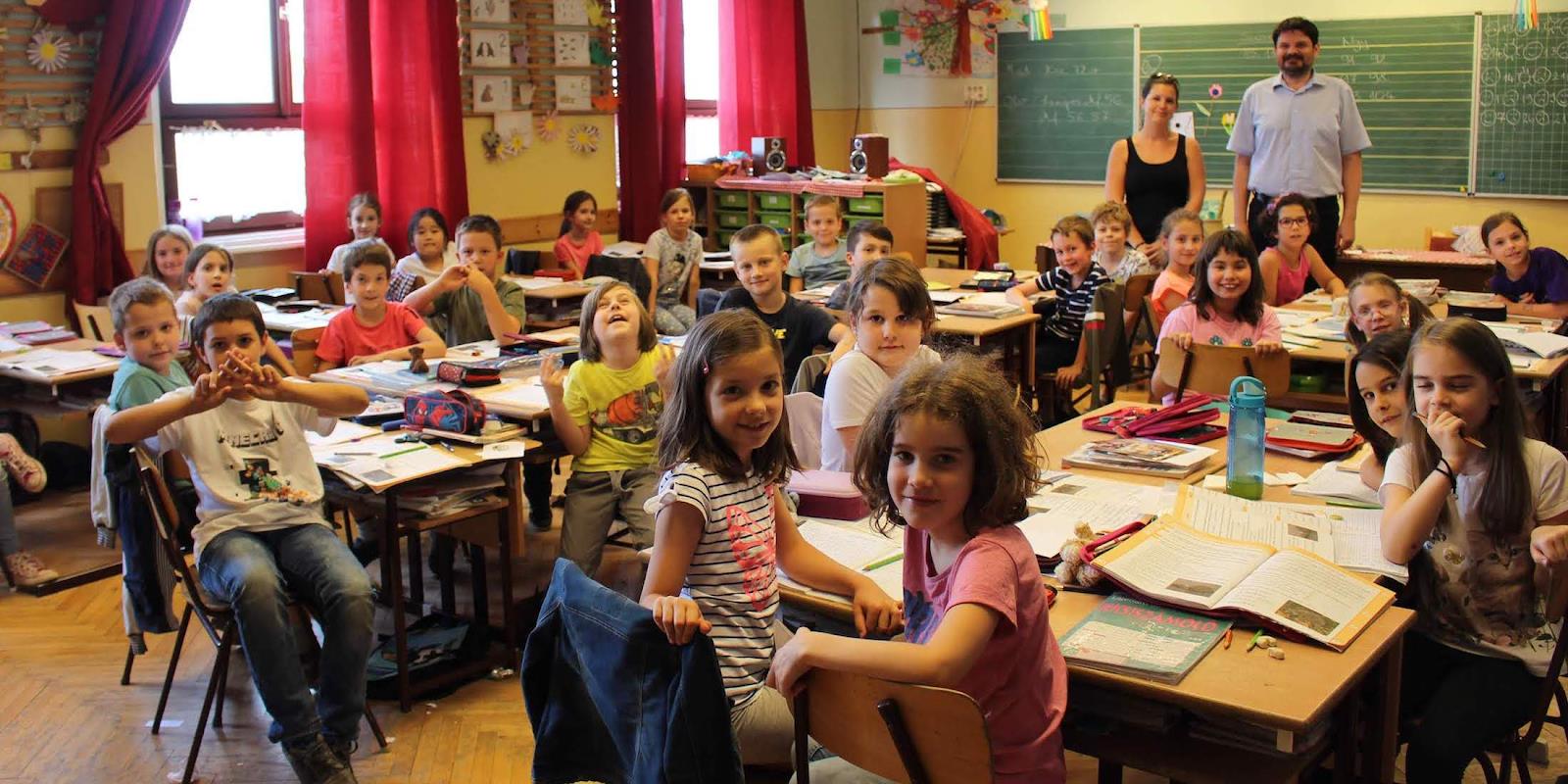
In many ways, our guiding principles have always been “lean”. Focusing on the needs of our students, their families and the environment - and trying to align our activities and the way the school is run to meet those needs - has always been at the heart of our strategy.
We have been working to become an innovative school (or perhaps to understand what it means to be an innovative school) since 2011. To gradually define our vision for the future of Herman Otto Primary School, we started working more collaboratively, changed the structure of our meetings and held workshops to think about and plan the next steps together. We introduced a new way of working together - based on the so-called "four Cs" (Creative Problem Solving, Critical Thinking, Communication and Collaboration) - which our teachers had to take on by developing these capabilities.
Officially, our lean journey began four years ago (you may remember an article I published on PL outlining our challenges and expectations), when we consciously adopted the methodology as something that could help us bring our vision to the school and build on the changes we had already made. The June 2014 conference organized by Lean Enterprise Hungary was a major milestone in our school's journey: it introduced us to the Hungarian lean community and gave us many good ideas on how to take the first steps toward becoming an adaptive organization.
The first two years of our lean transformation focused on giving our teachers the necessary lean skills and knowledge (the lean books were a great help to them) and on sharing information with our students' families so that they could truly understand the spirit of Herman Otto Primary School and how we were planning to change.
From a practical standpoint, one of the most impactful steps we took was introducing three-month PDCA (Plan-Do-Check-Act) cycles for 10 working groups we created around specific subjects, such as innovation or talent management. Injecting the scientific method into the way we work meant we began to monitor the progress of our projects, instead of simply assessing their impact retroactively upon completion (when changing anything is time-consuming and very difficult). Whenever we detect a deviation from the plan, we can now make adjustments immediately and gain learning points along the way that can inform our decision about the next improvement cycle. Let me give you an example: historically, onboarding new teachers has been one of our weaknesses. To make our onboarding activities more effective, we singled out seven important processes and produced videos to train teachers in the standards we have for those processes. Crucially, this approach proved successful not only for teaching newcomers, but also for practicing how we use storytelling in teaching (the videos are routinely used in the classroom to teach students).
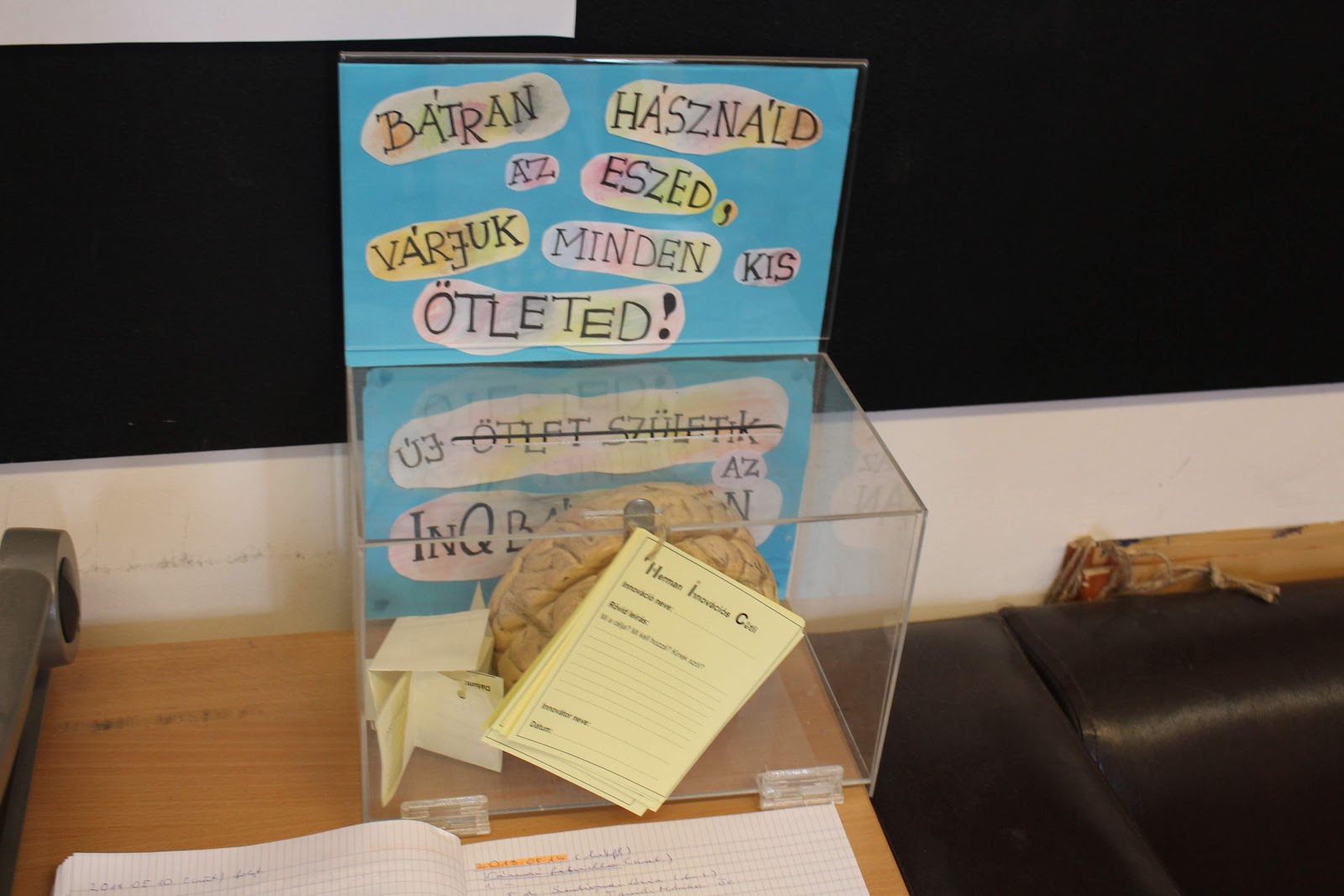
Another important foundation of our lean transformation is the Suggestion Box. Mindsets began to change when we started evaluating and using the ideas people put in the box, which became like honey to bees. People are making more and more suggestions, which we use to create new standards and improve existing ones - thereby improving the way we work together. This is also where our capability-building efforts really began, but not in the form of an incentive program: we built our teachers' competencies step by step, using the ideas submitted as ways to develop them.
The changes in our teaching and management style (the result of our lean efforts and the 4Cs approach) are reflected in the kind of education our students receive. First of all, our students learn about collaboration and teamwork: they are not just sitting together, they are actually working together, building trust and sharing knowledge and experiences. It has been wonderful to see a real sense of responsibility toward their partners.
Students can also influence the teaching they receive: for example, they can suggest subjects they want to learn about or improvement projects for the school they would like to carry out. Of course, there are parts of the curriculum we must teach, but there is also some flexibility in how we can teach some of the subjects: that's where we really address our children's needs and preferences.
A LEAN AND DIGITAL SCHOOL
More recently, we have deepened our digital transformation. First and foremost, this was in response to our teachers, who wanted to leverage technology to improve education (a push in this direction is also coming from the government, which is promoting several initiatives on digital education). It turns out this is also a great platform for learning-by-doing experimentation, which we can use to build capabilities for the school. Ultimately, our goal is to become a learning organization, and digital transformation is a tool to get there.
We have been collaborating closely with Microsoft for some time. It all started in 2012, when they came to us and offered to support our digital program. Among other things, this came in the form of a 10-step framework for digital change. After four years, Herman Otto became a showcase school in the "Partners in Learning for Schools" program (I have been teaching other school leaders in Hungary since 2016). This happened because the company saw our capabilities grow consistently over time and the excellent levels of engagement and collaboration among our teachers since the first workshop they organized for us (with groups of 4 to 5 teachers, who were challenged to tackle problems in 30 minutes at most).
Microsoft, which wants to help shape the future of education, supports our transformation in different ways. It gives us access to a learning platform, provides Office 365 for teachers and children, has even given us tablet computers and contributes to our WiFi, among other things. This means our students become familiar with these platforms from a very early age (an important skill to have in today's world) and that teachers have access to innovative and creative ways of teaching. Let's take one subject (one of our 17 areas of study for applying digital tools to teaching) as an example: according to the national mathematics program, students need to learn 3D shapes as part of the geometry curriculum, but it doesn't say how we need to teach students about creating these shapes, so we decided to use Minecraft: technology and games capture children's attention, keep them engaged and help them remember notions they would otherwise struggle to accept. We are approaching our digital transformation one experiment at a time, because we want to find out where the use of technology in education makes sense and where it doesn't. Many people ask me about the interplay between lean and digital at Herman Otto Primary School. What I usually tell them is that we are using both to build a platform for innovation in education. In this sense, lean is a tool that helps us make more people happy at work, but it is also the future state we aim to reach one day.
There is no doubt that lean's greatest contribution to our school is teaching us how to learn - something technology can support even further. First, we developed this critical capability in teachers, then in students, in order to equip them with the skills they need to thrive in our constantly changing world.
Everything in the world is constantly in flux: it is evident, at least to me, that we are in the final stages of the old teaching model. Governments are trying to launch initiatives to adapt education systems to the changing world, but I believe families can do a much better job as drivers of innovation. This creates a new demand for personalized learning, which puts pressure on teachers to adapt and learn. Perhaps this is one of the reasons why lean has resonated so much with us: as a way of thinking, it teaches us that everyone has a responsibility to improve themselves. We want Herman Otto Primary School to be a pioneer in the education of tomorrow.
There are also social challenges we must face: with the middle class increasingly turning to private education, the gap between those who can invest a lot of money in their children's education and those who cannot is growing. We believe everyone is entitled to an affordable, high-quality education, and we are committed to finding more and better ways to develop our students' capabilities. At the end of the day, that is what innovation in education means.







