

The fire department transforming itself and its city
Roberto Priolo: Grand Rapids is undergoing a citywide lean transformation. How does the fire department's lean journey fit into that?
Brad Brown: The fire department is really at the forefront of the city's lean initiative. We started about 10 years ago with A3s and looked at the ROI of systemic improvements. When we started seeing some results, we went out to the rest of the city and began leading the lean transformation. We regularly teach other city departments how to think and act lean.
RP: Ten years on the journey! Can you give us a summary of it?
BB: It's incredible to think of the many things we've learned over the last decade ... and all the mistakes we've made!
We started during the 2008 economic crisis. We weren't doing well at the time: we had to lay off firefighters, we were having trouble responding to our more than 20,000 emergency runs a year, and our infrastructure was crumbling. We were running out of resources. The city then reached out to a group of business professionals from the private sector and asked them to help implement lean thinking. They started with the A3 problem-solving tool, still one of our favorite methods today.
Unfortunately, it was still a push system: the city was telling the fire department's directors that they needed to use lean. At the time (I had just come out of fire suppression), my job was to make sure the lean mindset “trickled down” to the troops, who didn't want it. There was a lot of turbulence. It was only after several years of working on projects that improved the everyday lives of our people that we were able to switch to a pull system. I'm very happy to say that today we have great leadership and a great labor-management relationship: we're all at the table to solve problems together, union members and senior leaders.
And there's more. In the beginning, tools and techniques were at the center of what we did, but now we're focusing more on the cultural side of our transformation.
RP: How has the context around you changed over the last decade?
BB: According to the U.S. Bureau of Labor Statistics, Grand Rapids - a city of just under 200,000 people located in West Michigan - is one of the fastest-growing economies in the country. That means we have a lot of buildings going up right now, which means a higher fire risk and a larger volume of calls for our 11 stations and 200 firefighters. We're no longer doing lean to cut costs; now we're doing it to increase our capacity and keep up with the environment.
RP: How has your approach to capability development changed over time?
BB: At the beginning of the journey, we relied heavily on outside expertise (the Lean Enterprise Institute was among those who helped us). It was a good first step to get exposure to the ideas and principles, but we realized it wasn't sustainable. So we decided to take a look at the lean community in Grand Rapids and found that our local college offered a nine-month lean certification program. It was harder than my master's degree, I have to say: That's when we started developing our own people, and now we have seven lean champions in the city. Grand Rapids is a unique environment, where firefighters teach lean to city employees (I, for example, am teaching A3 thinking) and where the transformation is practically self-sustaining.
RP: What can you tell me about leadership in the fire department?
BB: In the past, much of the support for the transformation came from middle management, not from the top. About a year and a half ago, a new chief came in, and he is really getting directly involved. People understand that if this is important to him, it must be important to them too. That's when the tide turned for us, which shows how important it is to have leadership involvement.
RP: How has your process changed?
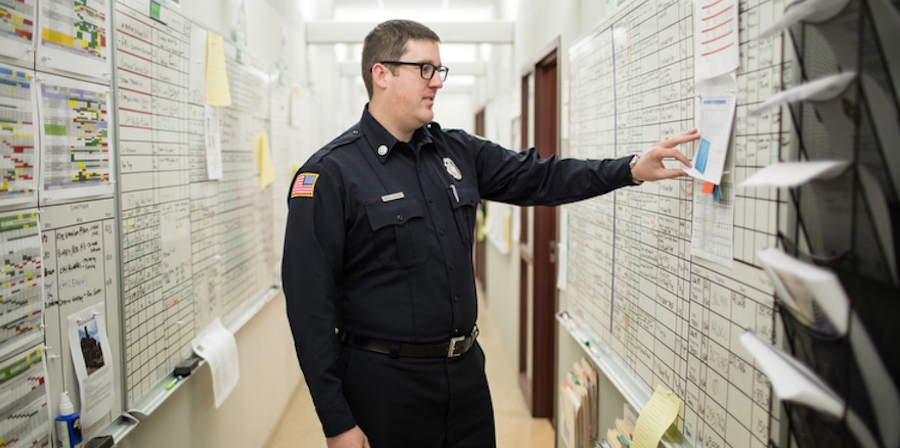
BB: We've implemented several different processes. From a tools standpoint, we ran 5S projects around the stations and applied value stream mapping to many of our administrative processes. But we were still disconnected from our men and women on the street. So, a few years ago, we started holding a daily huddle via Skype that gives all of our 11 stations 10 to 15 minutes with the fire chief.
Each individual work area also has its own meeting. There are three important questions we ask every day: what did you learn yesterday? What are you doing today? Do you need any help? As firefighters, we don't ask for help, and we're used to being the ones people call to solve problems, so we had to learn to be very explicit when asking these questions. The fact that the chief is increasingly visible has given us more than all the monetary savings combined.
I remember an anecdote that shows how much things have changed. A few years after we started the journey, when we were rolling out our system for managing daily improvements with our boards, I remember one of our colleagues (a fire truck driver) walking into the station and saying: “Boy, if I had a grenade, I could take care of this place". He was standing outside the office I shared with my partner at the time. He looked inside and said: “I'm talking about you two”. A few years later, this same person asked for a whiteboard to go up in the cab of the apparatus so he could better keep track of his fire truck and what it needed and pass that information on to the people on the other shifts. I have at least 20 or 30 stories of big skeptics turning into lean ambassadors. But that didn't happen until we started solving their problems - not ours.
RP: How are information and knowledge passed across the stations?
BB: A lot of it happens organically, even though we have 11 stations and three shifts (which actually means 33 different work teams, plus 15 rigs on the streets). When crews travel and see something working at another station, they want it - no matter what management says.
RP: From a practical standpoint, how has your ability to fight fires improved over time?
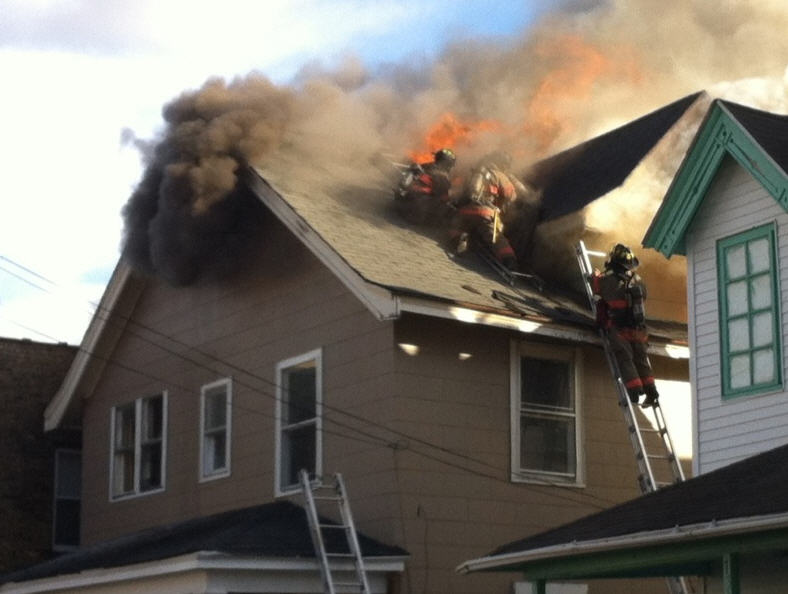
BB: We are one of 239 accredited fire agencies in the world through the Center for Public Safety Excellence, and lean helped us achieve that. One of the main things we do (something that happens in manufacturing all the time) is critical tasking and takt time. It's important for us to understand how quickly we need to perform certain tasks to meet customer demand. Through a lot of system mapping and critical task analysis, we now know that we can save 96% to 97% of a property if we can get seven crews with 19 people to the fire in under ten and a half minutes 90% of the time. All of this has been tested and validated over thousands of runs. Before accreditation and lean, we would never have thought of breaking the process down like that. The bell would ring, we would run to the truck, drive to the fire and work hard to put it out. We would still do a great job, but now we have data and we can see the waste and the opportunities for improvement in the process.
RP: How do you define success?
BB: In the past, success was very results- and metrics-oriented, almost to the point where the focus was on how much money we were saving. Now I see success as people asking me to help them. Giving people the tools, training them and seeing their smiles afterward is what success looks like to me, and that is a great motivator.
RP: Is it beneficial for the fire department to be part of a wider environment that uses lean?
BB: It's extremely beneficial! Within the city, lean practitioners have access to any department. We can call people at any time and go and see. Every few weeks, we have a different group of people coming to our gemba. Lean is very widespread in Grand Rapids, even outside city government: it's not unusual for me to go to the hospital once a month to see some lean friends there or to stop by a factory. It's fantastic, and we are very lucky to have so many lean practitioners in West Michigan.
RP: Can you share some numbers with us that show the impact of the lean transformation on the city's finances?
BB: When we started our lean journey, the city was running a deficit of tens of millions of dollars. Thanks to the diligence of our chief financial officer and to lean thinking, we have not only recovered but also built up cash reserves as a city. It's been a long road to get here, but we now have a sustainable model and we're ready to weather the next economic storm. It's a great place to be, but we're only here thanks to the hard work of our employees and the support of our citizens.







