

With A3, Copel ensures the survival of a product line
With an A3 developed in the Practical Lean Training Program, a precast concrete manufacturer increases productivity and reduces delays in block production and delivery, rescuing a line that might have been shut down.
Located in Araçatuba, in the interior of São Paulo state, Copel Construções is a precast concrete manufacturer and also a construction company that has been operating for more than 40 years in the infrastructure works market, serving mainly the states of São Paulo, Paraná, Minas Gerais, Mato Grosso do Sul and Mato Grosso.
At the beginning of 2016, the company found itself at risk of having to shut down one of its most important production lines: the one that manufactures concrete blocks for structural masonry. Basically, there was a decrease in the number of blocks produced, which created a series of problems for the company.
“The line began to show significant failures and started causing supply shortages for customers. In addition, we also noticed an increase in the standard deviation of the products manufactured. Because of this, we began to suffer problems with the company's profit margins”, summarized Caio Cezar Pimentel Ferraz Junior, Operations manager at Copel and one of those responsible for the company's block production.
Caio explained that it was then necessary to carry out a more thorough analysis of the line's poor performance, in order to try to solve the problems as soon as possible, since this was an important production line for Copel for a number of reasons.
First, because the line traditionally produces 23 different types of concrete blocks in three large families, which vary according to the size of the pieces.
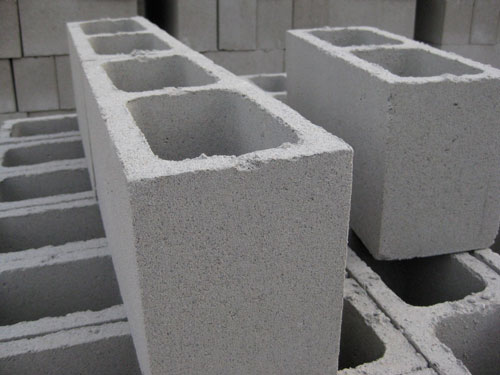
Figure 1: Different concrete blocks produced by the Copel line that was the subject of an A3 in the Practical Lean Training Program
In addition, the block line plays an important role in the company's business: just to give an idea, at the beginning of 2016 this business represented about 25% of the company's gross revenue.
And it is a significant line also because of the technological investment the company has made in this production.
Caio explains that all the concrete used to manufacture the blocks is batched in an automated plant with moisture control of the aggregates and homogenized in planetary mixers, ensuring the cohesion of the concrete and the standard of the finished products.
In addition, the production processes meet the requirements of Brazilian technical standards and undergo constant quality testing, carried out in the company's own properly equipped laboratory.
In this sense, before the problems appeared at the beginning of 2016, the line traditionally ensured a good profit margin and a stable cash flow for the company, since it served customers who, in general, had low default rates.
In January of this year, however, the line began to show various problems. It started to record, for example, a decline in productivity.
“In 2015, for example, we were producing about 1,000 pallets of blocks per day, which dropped right at the beginning of 2016 to 600 pallets a day”, summarized Caio.
As a result, problems such as customer supply shortages began. The company's manager explains that every week at least one of the main customers served by the line did not receive some product it had ordered. As a result, the buyers' construction projects came to a halt or suffered delays.
It was from then on that the company decided to look for more effective alternatives and solutions to recover the line's performance.
The company then sent its employee Caio Cezar Pimentel Ferraz Junior, Operations manager at Copel, to take part in the first-semester 2016 class of the Practical Lean Training Program (PPFL).
This is an educational project developed by Lean Institute Brasil that provides participants with comprehensive training in the Lean System, including learning and development in the conceptual, technical, practical and also behavioral aspects of this management system.
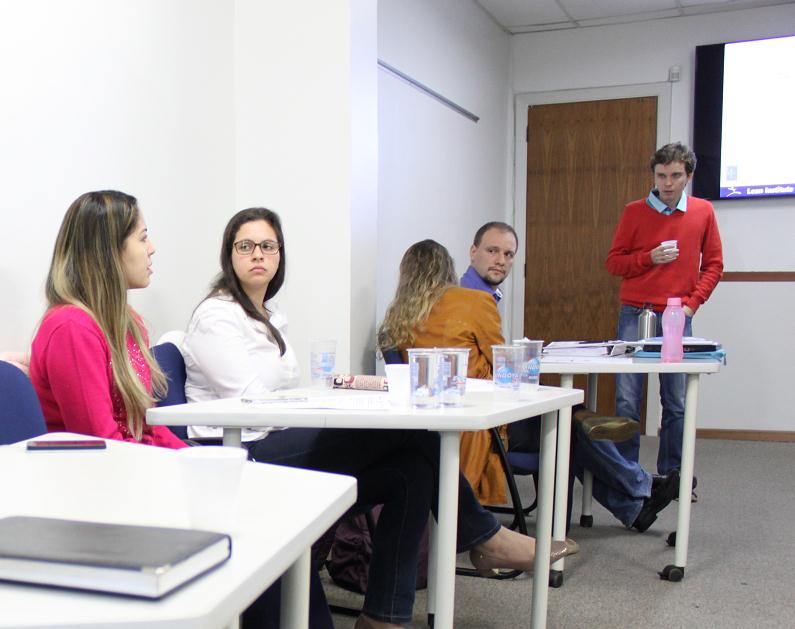
Figure 2: Standing, Caio Cezar Pimentel Ferraz Junior, Operations manager at Copel, interacts with other participants in Lean Institute Brasil's Practical Lean Training Program (PPFL)
While taking part in the PPFL, Caio then produced an A3 whose objective was to improve the performance of the problematic block production line.
The idea was to investigate the root causes of the problems that were affecting block production and, in this way, to think of appropriate and definitive countermeasures to return the line to its previous productivity.
With the A3 developed in the program, Caio was then able to see a series of problems that were generating the recent poor indicators in block production.
One of them, for example, resulted from an automation carried out on the line in 2015, in which racks were installed to receive the pallets responsible for transporting the blocks produced.
“We realized that these racks were not 100% adapted to the pallets used to transport the blocks. As a result, transporting the pieces was impaired and did not happen properly, which caused recurring delays in production”, Caio explained in detail.
A series of periodic breakdowns in the line's machines was also identified, which caused frequent production stoppages but always received palliative measures that did not adequately address the root causes. And so the problems frequently returned.
Another challenge identified concerned the team responsible for block production.
The company had a turnover of 80% of its employees between December 2015 and January 2016. This had an impact on the line, since the new employees were not yet fully adapted to the work in the area.
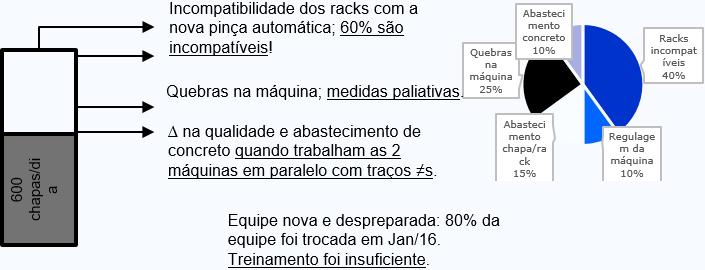
Figure 3: A3, the section analyzing the problems that were harming the concrete block production line
After analyzing the problems that were delaying the block line's production, it was then necessary to move on to developing the countermeasures needed to restore the line's good performance.
To “attack” the problems, the A3 prepared by Caio set out a series of main countermeasures.
First, redesign the racks responsible for transporting the pieces so that they would be 100% compatible with the trays that carry the blocks, thereby eliminating stoppages and delays in this important logistics of the pieces.
It was also fundamental to develop a training and qualification plan for the newly hired team, so that the new employees could work effectively on the line.
Equally essential was creating a maintenance plan for the machines, with the aim of seeing the root causes of the problems that were causing equipment breakdowns.
This plan aimed, on the one hand, to carry out preventive maintenance to avoid future breakdowns and, at the same time, to seek the root causes in the event of occasional problems in order to correct the failures definitively.
The main goals were, by the end of 2016, to return to producing 1,000 pallets of blocks per day, eliminate customer complaints caused by delivery delays and supply shortages, and recover the line's average profit margin.
Results
Caio explained in October that, although the A3 countermeasures were still being implemented and the data were still being compiled, it was already possible to see that results were beginning to appear quickly with the first implementations of the actions listed in the A3.
In about three weeks, for example, the block line's average production had already gone from 600 pallets a day to 800 pallets/day.
“The A3 had not been fully applied, we were still in the implementation phase, but production had already increased considerably just with the first pieces of work. And today we can see that we are ‘raising’ the production indicators. Very soon, we will certainly reach our goal, which is to return to 1,000 pieces a day, as last year”, summarized Caio when presenting his A3 to the PPFL class in October 2016.
According to Caio, with the implementation of the countermeasures it had also been possible to see a significant decrease in delivery delays to customers. And the forecast was that by the end of the year such delays should be eliminated.
According to the manager, the most important result was that, with the substantial improvements implemented, Copel decided to keep the block production line, which until then had been in danger of not continuing. It was thus an important contribution to recovering and maintaining the company's revenue and profitability.
Lessons learned
Caio believes that the A3 carried out for the concrete block line during the Practical Lean Training Program also generated a series of lessons that will be very useful for “attacking” other problems in the company.
“I realized how important it is to seek data and facts by always going to the gemba. This makes it possible to carry out a much deeper analysis of root causes and thus look for much more efficient and definitive solutions”, said the Copel manager.
“Perhaps the main lesson was realizing that it is necessary to 'know how to see'. In other words, to know how to look for the root causes of problems. It is also fundamental, first of all, to define the problem well, to recognize what the problem really is. And, from there, to learn to see in the search for root causes”, added Caio.
For him, the idea of how important it is to develop teamwork was also strengthened in the company, but always looking jointly for the root causes and the definitive solutions to problems.
“It is very important to be able to involve the team so that we can have a multifaceted view of both the causes and the solutions. And, in this way, develop the appropriate countermeasures to solve the problems”, concluded the manager.
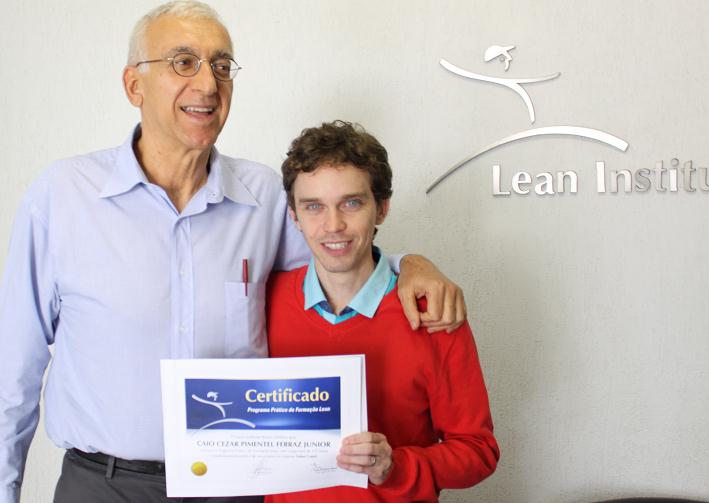
Figure 4: Caio Cezar Pimentel Ferraz Junior, Operations manager at Copel, receives the Practical Lean Training Program diploma from Prof. José Roberto Ferro, founder and president of Lean Institute Brasil







