

The Lean Process Development (LPD): A new approach to innovation in logistics and supply chain

Product and process innovation has been one of the focal points in the supply
chain, in the search for competitive advantages in the business environment. Innovating in products becomes a
strategy to escape the so-called “red ocean” of extreme competition,
while process innovation can breathe new life into businesses with gains in productivity and
quality. The combination of the two lines of innovation — products and processes —
can mean a leap in results for the corporation.
In this scenario, it is natural
that Supply Chain leaders look for approaches that support the development of new products and
processes, while also enabling speed in building engagement and
achieving results along the chain. The Lean approach, with its recognized ability to
add value for the customer and succeed in problem solving, has been
constantly sought by companies as a means of reaching this new state of continuous
innovation.
In this scenario, there is a need for a better understanding of some of the
main practices of the Lean approach in Process Development and their intersections with the
development and innovation of Logistics and Supply Chain. It is an important topic
in the Lean philosophy for innovation, but one that is often neglected. It is a fundamental mechanism
for enabling the structuring of a culture of continuous innovation. This article
defines the purpose of Lean Process Development (LPD), presents its basic structure,
outlining its main content elements, and, finally, explains its importance for a
transformation of the innovation culture.
Purpose
In the business environment, it is common for companies to be involved in developing new
generations of products and services, digital or analog, whose launch is
strategic to win markets with quality, cost and flexibility, even creating new global
markets.
Managers routinely discuss the limitations and obstacles that
traditional development approaches bring to the company’s day-to-day — and if not, they think of
startups as the solution to break the inertia. However, most of the time, they recognize
that the traditional way of developing must be changed.
A typical scenario is the
situation in which processes are improved after they are put into
operation and take months or even years to reach stability, working with the
operations and support teams. In other situations, the new processes run into
problems in their implementation and reach the market with performance problems. If it is
part of the digital transformation, the excuse of it being a technological advance ends up being
used to justify operational instability during implementation; however, over time,
it is bound to lose its power to contain those dissatisfied with the results.
In the logistics sector, this
situation of unstable processes can mean extreme dissatisfaction,
consumer irritation and situations in which quick problem solving
may no longer be enough, in addition to the fact that these containment measures bleed the
company’s cash.
Lean Development Process (LDP) is a structured approach with a
cross-functional work team, interacting with corporate strategy and customers’ value attributes. Its
purpose is to develop new lean and stable processes more quickly, aligned with
high quality and performance standards, contributing to the improvement of services and
products insofar as it adheres to simultaneous development.
Basic structure and elements of LPD
The foundation for structuring LPD is the use of two structuring elements of Lean thinking: the
A3 method in conducting development (Figure 1) and the 3P tool for
generating and choosing alternatives (Figure 2).
In the A3, understanding the context and the
current situation are starting points for the development team to seek data, facts and an
understanding of which problem they want to solve by developing the new processes. The company’s
strategic problems, obstacles to delivering value to the customer and society,
performance issues to be delivered to shareholders, and so on… the aim is to make it as
clear as possible what is intended to be achieved with the new processes.
This A3 step may require the
use of VSM to provide a view of what is intended to be accomplished with the processes in flow, the
calculation of takt time and the value attributes that need to be achieved. With this understanding of the
purpose of the development, which should involve the whole company, pulled by the cross-functional LPD team,
the next step of the A3 is reached, characterized by setting the development objectives, expressed in
indicators with targets and deadlines.
Once this step is completed, in which the A3 as a method plays the role of a guide and
organizer of thinking, indicating the agenda for discussions and the gathering of data and facts, we move on to the
analysis phase, in which the 3P tool will play the role of structuring the
generation of process alternatives to reach the targets.
The 3P tool
(Production Preparation Process) structures the step of designing the operational processes capable of achieving
the expected results and obtaining solutions to flow problems in order to create the
intended value (Figure 2). As a consequence, innovation of the current state is achieved.
The
multidisciplinary LPD group must assess whether one team will be enough to undertake the generation of
alternatives for all processes or whether other multidisciplinary groups should be created to apply 3P to
certain processes, dividing the development load, but always aligned with the main LPD team of the A3.
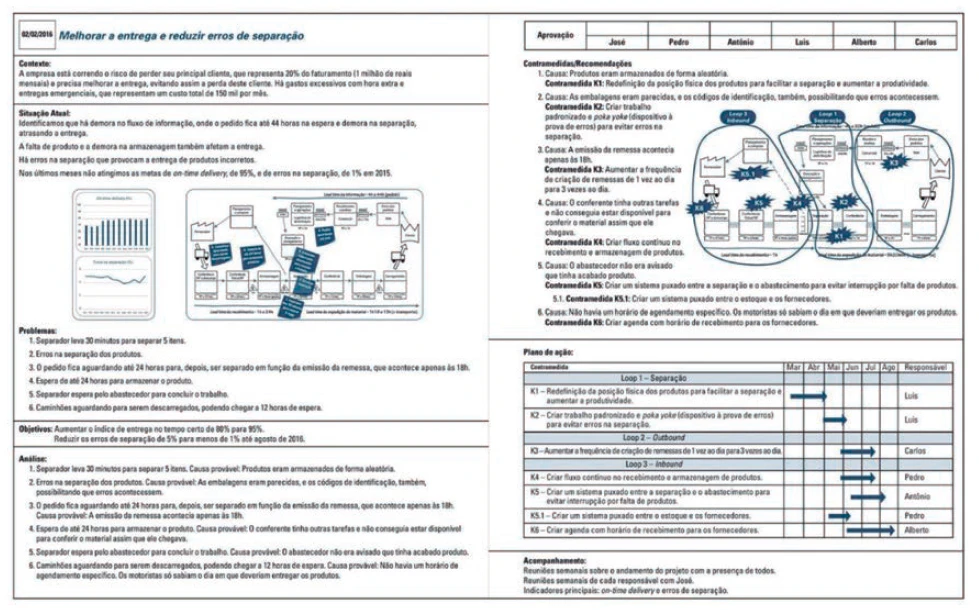
Figure 1 — Example of an A3 applied to the Logistics of a DC for the
generation
of new processes
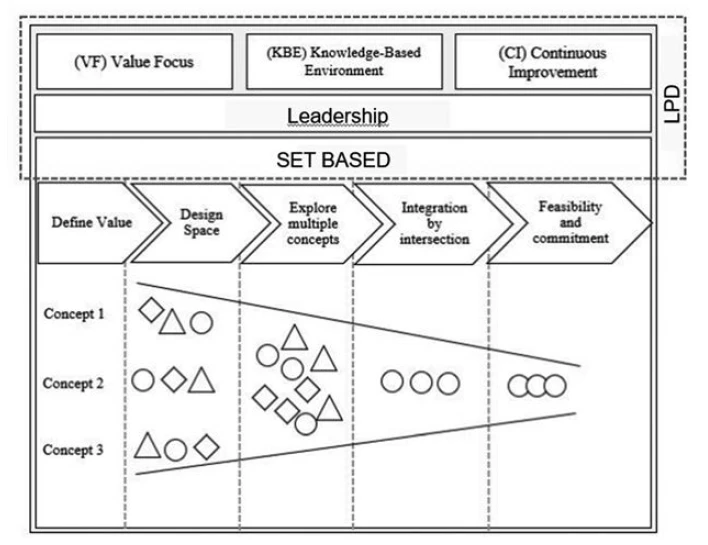
Figure 2 — Schematic drawing of the 3P tool with its structuring
elements
for generating process alternatives, which
will lead to the gradual convergence on the
best
process
In the first step, the group designs several alternative process concepts, using the targets as a stimulus for creation. In this step of 3P, the concept of “set-based” (considering several process alternatives with different concepts) is used instead of the traditional “point-based” (choosing a single alternative process concept). The objective is to develop a set of alternatives whose strengths converge into a more robust process, while the weaknesses are eliminated or replaced (Figure 3). The alternatives may contain improvements to the logistics service or product that is being developed simultaneously or proposals for changes in the case of current services and products in the portfolio. The first option is preferred because it boosts the likelihood of finding problems earlier and correcting them before the product with potential problems reaches the market.
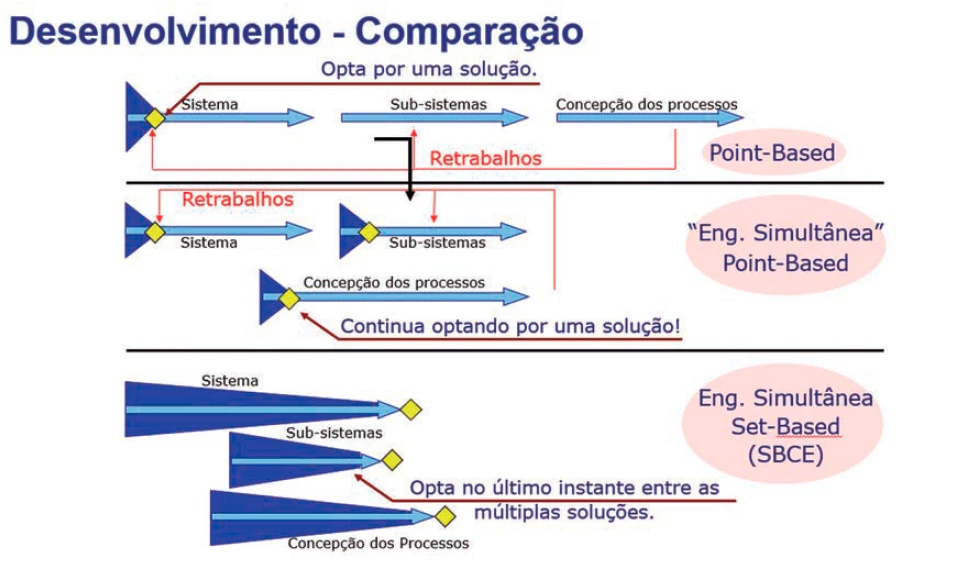
Figure 3 — differences in the generation and treatment of process alternatives
during
development, between traditional point-based and the
set-based technique used in the Lean approach
The concepts of the alternative processes are then evaluated against 14 requirements of a Lean
process system. The alternatives are evaluated with respect to the Lean process elements that 3P highlights, such
as “hanedashi”, “chaku chaku”, operator involvement, among others.
There is a structure for the direction in which the alternatives should converge, going
beyond time and motion in the work, since the processes must ensure flexibility,
resilience, adaptability and other characteristics that are conferred by the 14
requirements evaluated.
Each process alternative receives a score on each criterion representing its potential
to deliver value in a stable way. The alternatives with a significant total score,
meeting the established criteria, move on to the simulation and
experimentation step.
In simulation and experimentation, the development group (or groups)
must get closer to the Gemba and carry out full-scale simulations and
experiments on the critical performance points or to clear up doubts about
performance. The selected alternatives thus gradually converge toward the best solution,
revealing which process configuration comes closest to achieving and meeting the requirements of the
operating system, of the products and services, and their objectives.
As a reference, the
LPD group generally aims, in this phase, for around three to four process alternatives, which
are tested and compared with one another through iterations with the layout, in the case of material
flow, or in information flow simulators and Beta versions of applications. The
combination of simulation and physical and virtual experiments
is central to achieving convergence on the best concept. This is what provides the
validation of the earlier phases of generating and evaluating alternatives,
avoiding confirmation bias or optimistic thinking (wishful thinking). If the
generation was entirely biased or carried out just to tick a box, the experiments
reveal the poverty of the results, and the team is forced to go back to a new generation of
alternatives — this time taking care to avoid preconceived ideas or options
already chosen.
The team’s successive iterations, physical and virtual 3D experiments
and other tests aim to improve the selected concepts and achieve their
partial or total integration into a concept that has advantages over the others, in addition to
meeting the requirements of the Lean system and the company’s target. In this phase, it is also assessed whether the
concepts easily allow the introduction of solutions such as
“hanedashi”, “chaku-chaku”, balancing, flexibility of
“takt-time”, versatility in balancing and layout, so as to verify, through
these objective elements, the achievement of the characteristics of flexibility, adaptability and
resilience — factors that are still somewhat subjective in the treatment of
Supply Chain processes, but which, with this approach, gain objectivity. In the end, the convergent process is
represented by a future VSM (material and information, it is always worth remembering) and its respective
macro layout, then moving on to the next step of the A3: defining the countermeasures for
detailing and final configuration.
With convergence on a leaner process
configuration achieved, the next step is the detailed design of the process in the
countermeasures and future state step of the A3. It is in this step that the process concept chosen after
experiments and simulations takes shape, defining the technologies in detail. Now the
chosen concept must be detailed at each physical logistics workstation
through standardized work, relating it to the material flow and quality deliverables. The
relationships of the new process with the information systems, in turn, must be
designed in terms of data access and the quantity and quality of
transactions needed in a continuous flow. The definition of any
technologies is a consequence of the concept developed and chosen in the simulation. In
fact, before defining the technology, we must be concerned with the required mobility, relative movements
in the layout, forms of loading and unloading, physical agents employed, data origin and integrity,
required connectivity, data transactions, among other primary aspects of the
future state to be achieved.
Defining technology as a consequence and not
as the first definition of development is one of the most important concepts of
innovation with a Lean approach. It is the principle of the right-sized tool (right
size tools), not necessarily referring to every type of physical means and technology, which
will automatically avoid waste if its configuration respects the concept chosen,
tested and simulated. This step is a robust antidote to unnecessary consumption of
technology, which can amount to technological waste and even create other
problems. Technology is chosen based on its ability to fit the concept of the
lean process and not on the power of marketing. Companies practicing LPD report savings of 30 to 50% in
capital investments and 20 to 40% in operating costs as a result of applying
3P.
Following this phase, after the countermeasures have been defined with the detailing of the
selected concept, development moves on to the A3 step of defining the schedule and monitoring the
construction of the process, with each detailing action monitored through the
continuous evaluation of tests, “try-out” and alignment among the
operational steps, in order to make adjustments and integrate the physical and information systems
with a view to achieving the results of the operational and financial metrics.
There is no
progress if the expected indicators are not evaluated and delivered. Suppliers are
monitored at their sites with the same evaluation in short, continuous cycles as a
way of identifying possible problems before the delivery is finalized. Problems detected earlier and
smaller are easier to correct.
For monitoring, it is recommended to use other Lean tools
that support the A3, such as DM and OBEYA, in which the phases and their deliverables are displayed and discussed among
groups and with senior leadership. Visibility is total, with transparency about problems along the
way, risks and obstacles, and support groups are assigned as a chain of help at various
hierarchical levels to overcome difficulties and bring agility to solutions and
adjustments.
With this last step of the A3 — supported by the 3P tool —, the expected results
are gradually confirmed or adjustments are made earlier and, therefore, more easily and
economically, in order to converge toward the confirmation and completion of the
process. The new process is delivered ready for the start-of-operation step and able to
meet demand with stability and efficiency.
Final considerations
The LPD described here is a scientific work roadmap adapted for application in
process development, based on hypotheses and experiments, with action maps
designed to achieve a desired state. However, if this roadmap were assigned only to one
department or group, process development would stagnate and be confined to experiments based on a
single concept of how things should be done or to a specific class of processes and technology.
We would limit the reach of innovations, reduce the results, and an organizational culture
focused on innovation would not be developed.
The key to LPD is
to carry out development through multidisciplinary groups in logistics and Supply Chain, using the
technique of generating alternatives with the “set-based” approach and their
convergence through experiments and simulations, with the involvement of the Gemba and of
people, seeking participation as a way of confirming the validity of the process’s value
hypothesis.
This structure drives the creation of a culture of
innovation through “learning on the job”, with an effective understanding that
development must be grounded in facts and data and validated empirically in a hierarchy of deliverables. First,
we generate concept alternatives, evaluate the potential of the concepts, select the fittest, converge on
the definition of the chosen concept, the core of the process, then the complete process, the layout,
and only at the end do we think about technology. All of this with transparency, debates based on facts and
data, and the pursuit of results with waste-free processes. A cultural change, in practice.







