From lean tools to lean management: the state of lean thinking in 2007
After a 70-year effort, Toyota, the most prominent innovator in lean production, has overtaken General Motors, the architect and archetype of the previously dominant system of mass production. What's more, Toyota has continued its run as the world's most consistently successful industrial company over the past 57 years — in terms of profitability and growth in market share. It has enormous momentum to keep moving forward.
No doubt there will now be a surge of interest in "lean" methods. Indeed, there is a strong likelihood of a "lean wave" similar in form (rapid adoption followed by rapid abandonment) and origin (the global consultancies) to the Total Quality Management, Business Process Reengineering and Six Sigma processes that came before.
However, before production engineers mount their surfboards to ride the lean wave, a great deal of wasted effort (muda) can be avoided with a quick look at where the lean concept comes from.
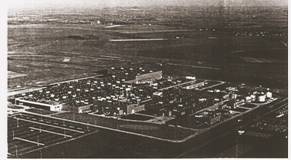
Toyota's plant in Valenciennes, France.
The basic concepts of lean thinking are not new. They have evolved through a number of stages or "eras," beginning almost a century ago in 1914, when Henry Ford set up what he called "flow production" at his Highland Park plant in Detroit. Ford can fairly be called the first systematic (lean) process thinker, but only in the special case of a highly standardized product with practically no options produced over a very long product life cycle.
Inventions — ideas — become useful to organizations only when they are demonstrated in real operations, in a moment of innovation. Starting in the late 1940s, lean concepts were tested in every area of Toyota's business. The fulfillment system, from order, through production, to delivery, was transformed by Taiichi Ohno.
The product and process development system was first used by Kenya Nakamura, Toyota's first Chief Engineer. The customer management system was formulated by Shotaro Kamiya. The supplier management system was conceived by Kiichiro Toyoda, as he created the Toyota Group of suppliers. And the management system that tied all the parts together was added by Toyota's Chairman, Eiji Toyoda, in the 1950s and 1960s.
Refining these interrelated innovations and spreading them to every aspect of Toyota and to its supplier and dealer groups was a lengthy task that stretched into the 1970s. It was only after Toyota's energies were focused by the 1973 energy shock that the lean innovations were carried out throughout the company.
In 1977, Fujio Cho (Toyota's Chairman) and several colleagues produced the first English-language explanation of the Toyota Production System (one of the five elements of the complete lean business system). [Y. Sugimori, K. Kusunoki, F. Cho and S. Uchikawa, "Toyota Production System and Kanban System—Materialization of Just-in-Time and Respect-for-Human System", Proceedings of the 4th International Conference on Production Research, London: Taylor & Francis, 1977.]
This paper explained the two pillars of the "Toyota House"—Just-In-Time for production and Jidoka for quality. It also revealed the competitive power of the system. Comparing Toyota's operations with an American competitor, the authors reported labor productivity more than twice as high and a 10-fold advantage in the speed of goods through the production process, expressed as inventory turns. In addition, the paper reported changeover (setup) times in stamping operations of 12 minutes versus six hours at the American competitor, and the production of much smaller batches between changeovers. Finally, the authors noted that reportable injuries per hour worked at Toyota were slightly more than half the level at American auto companies.
This was highly provocative, particularly when combined with Toyota's continued growth in export markets in the 1970s. This picture led to what I call the Era of Discovery, in which a number of investigators (I being one of them) began visiting Japan (and specifically Toyota) to discover the secrets.
The report of MIT's International Motor Vehicle Program, The Machine That Changed the World (Womack, Jones and Roos, 1990), which described the entire lean business system and gave the word "lean" its modern usage, came at the end of this process. At that point, the debate centered substantially on whether lean methods were better and whether they could be spread globally by their Japanese creators. The question became how American and European car companies could implement them.
So far, the spread of lean methods to fields beyond automotive has not yet taken the form Toyota pursued in its own operations. In its brand-new facilities around the world, Toyota has focused on first installing a management system, before thinking about specific lean techniques.
Toyota focused first on installing a management system, before thinking about specific lean techniques. The companies that copied Toyota did the opposite.
By contrast, most companies that copied Toyota did exactly the opposite, applying the tools first. This led to what I call the Era of Tools.
The tools are necessary. Anyone trying to create a lean enterprise will need 5S, poka-yoke, andon, SMED, cellular layouts, pull systems, simultaneous engineering, target costing and many other techniques. All of them will need to be introduced with the help of improvement methods such as kaizen, value stream maps and A3 thinking. But there is strong evidence that despite a great deal of hard work in the area of lean construction, most lean practitioners are moving forward without clear maps of the design of the comprehensive lean enterprise. And this makes the advance of lean tools—regardless of their level of sophistication and conscientious application—very difficult to sustain. This situation suggests the need for a new era. I will call it the Era of Lean Management.
The specific contribution of lean thinking is to change the focus of organizations as they provide goods and services to consumers. (And this includes practically every organization in today's world, from manufacturing, through healthcare and retail, to governments.) Such organizations have always been organized by departments and focused vertically, and they probably always will be. Knowledge, assets and careers are most easily managed in departments or functions aligned with the top of the organizational chart. In fact, the current model of lean thinking, Toyota, is a highly vertical organization with strong functions reporting to executives at the upper levels. The challenge of lean thinking is to introduce a new and overriding focal plane for managers, which is the horizontal flow of value to customers, along with a complex value stream that runs through many departments and functions. Both of these lie within the walls of the organization and extend into independent organizations. Focusing horizontally exposes waste of every sort, along with mismatches between what the organization really wants to do and what the customer really wants done. The problem is that in most organizations, no one is responsible for analyzing and improving the horizontal flow of value while ensuring that customers' needs are really being met.
One of my favorite activities in my value stream analyses at many organizations is to pick up a product or point to a service in the value stream at the point closest to the customer. I ask who is responsible for ensuring that the entire stream is free of waste, clearly linked to customers' wishes, and responsive to changes in customers' needs. In most organizations, this question produces an embarrassed silence. "Would you like to talk to someone in marketing? How about the sales department? Perhaps the senior plant manager? You seem to be asking to talk to someone who doesn't exist in our organization." Exactly.
The predictable result of managers and production associates focusing on their own piece of the value stream is a lot of point optimization and an enormous underperformance of the complete stream. To move ahead in obtaining the full benefit of the many lean tools available, a new concept of lean management is needed.
For most of economic history, companies were little more than workshops, where a master craftsman and a few apprentices thought through a simple design and the production processes. It was easy to see all of the activity, and practically no coordination was needed between the steps along the value streams. Let's call this period the Era of Craft Management.
As Ford achieved a great breakthrough with Flow Production between 1908 and 1914, he realized that a new type of management was needed to cope with the long product flows in a mass organization. Conveniently for Ford, he was able personally to provide the horizontal oversight the value streams needed during this extraordinary period.
He could directly oversee the development of the Model T in 1908, and he was directly involved in the layout of all the assembly and fabrication value streams needed to put the product's fabrication and assembly into continuous flow. Ford could boast, as he did in his 1922 volume, “My Life and Work” (My Life and Work), that the Ford Motor Company had no organization chart, and he was largely correct in the company's early days.
But the Ford system could never cope with a broad product line, short product life cycles, many options and markets that swing wildly. And Ford himself soon lost touch with his development and production chains as he became a world figure after 1914. His company quickly became chaotic and impossible to manage.
As this happened, Alfred Sloan, as President of General Motors after 1920, had a new management concept to tackle the problem of complexity in what business historian Alfred Chandler called the "giant enterprise." This began today's Era of Mass Production Management.
Sloan assumed that in a giant enterprise it would be impossible for the top executive to know personally more than a few of his managers. So it was important to identify how to control and align their activities to support the larger goals of the organization.
One technique was to create a very formal organization chart and to delegate clear authority to the senior manager of each area. But how could one be sure that each department or unit manager was doing a good job? The answer was to create quantitative performance metrics, some physical (e.g., inventory turns or scrap percentage) and some financial (e.g., meeting budgets and return on invested assets).
To avoid managers with a narrow vision, Sloan also rotated his senior managers through the different areas of the organization as preparation for higher-level assignments. The advantage was exposure to a broad range of problems. The disadvantage was a very modest knowledge of the technical problems involved in marketing, production or purchasing.
This last problem was addressed by creating a large organizational staff of specialists. The quality staff, the production staff, human resources, etc. If managers ran into a problem with the performance of the area under their authority, they simply called in the staff to help find a solution.
The end result of Sloan's innovations was the creation of a cadre of managers with clear authority and a clear scorecard, all trained to provide an answer to every problem. But the weak point was that managers often had little technical knowledge of what they were managing in their departments, little or no training in problem solving as a scientific activity and, most important, no familiarity with the value stream running across the many departments on the way to the customer.
As Toyota began to gain traction with lean techniques in the 1950s, Chairman Eiji Toyoda gradually created a management system able to take full advantage of the new methods. The key was to make someone responsible for each value stream, but often without formal authority. The most notable example was the Chief Engineer, who was responsible for developing a product along with a design and production process for that product that satisfied the customer while generating an acceptable profit for Toyota. Unlike the chief engineers of other companies, Toyota delegated little authority to its chief engineer. In fact, to this day Toyota's chief engineers have no direct reports in engineering or any other function.
Instead of authority granted by the organization chart, the chief engineer relied on deep knowledge of the product and the process to ask the organization whether it was truly creating a product and process that would meet the needs of customers and of the organization. Doing this meant, above all, asking hard questions of those working in the departments and functions. Over time, Toyota insisted that all of its managers refine this problem solving process through very structured methods based on the PDCA cycle.
At the same time, as Toyota was developing managers able to see the processes that created value and propose ways to improve them, it was de-emphasizing the mass production management practice of developing precise metrics for managers to hit at the end of the reporting period. Toyota concluded that this type of management was the equivalent of quality inspection at the end of the production line, something it had long since abandoned in order to build in quality at the source. Instead, Toyota asked managers to focus every minute on how the processes under their supervision were doing, and whether their condition was normal or abnormal. They were then called on to take immediate corrective action if there were abnormalities. The fundamental belief was that if the process was right, the results would be too.
Sustainability has long been a problem in the lean movement. It is about the ability of organizations to sustain process improvements. In other words, the ability of managers to make rapid leaps in lean production through kaizen (incremental change) and kaikaku (revolutionary change) that are permanent and not fleeting.
The root cause of the problem is vertical management. Most improvements in organizational processes are led by internal improvement teams (another department) or outside consultants (an outside department with special knowledge). As long as the "lean team" is on the job, dramatic results can be achieved, and even continuously improved.
The problem stems from the simple fact that most line managers have received little training in analyzing value streams to continuously improve each process once the improvement team goes away. And they have no training in "standard management" in the form of the periodic audits of each process required to sustain the improvements. (This standardized management is the critical complement to the standardized work of the front-line employees who actually touch the product and create value as it moves along the chain.)
I feel like a lean archaeologist. I can see clear evidence of brilliant processes at some points in the process, but today they are buried under waste.
The only thing standing between a brilliantly flowing value stream and a continuous slide back into sclerotic mediocrity is lean management. Its absence is why, all too often in my value stream analyses, I feel like a lean archaeologist. I can see clear evidence of brilliant processes at some point in the process in the past, but today they are buried under waste and many kinds of confusion.
If the need is for lean management, what are its elements? The first is the need to have someone clearly named as the person responsible for the condition of each value stream. These include three main value streams for each product family, running from concept to launch, order to delivery, and service to the support cycle. And they include the many support streams that feed the human resources, materials, process technology and methods needed at each point along the value stream.
At Toyota, this person is the Chief Engineer for each vehicle (a "platform" in automotive parlance), who must ensure that the product and its fulfillment process are able to meet the customer's needs and Toyota's need to earn an adequate return.
In other organizations, this will be different. For example, I have witnessed in recent years a dramatic and very successful effort by General Motors to "lean out" its administrative processes. Thirteen internal value streams were chosen as a starting point, and each was given a responsible person with a prominent role in some part of the organization. This "lean" leader was responsible for overseeing the leap and ensuring that the level of performance was not only sustained but continuously improved.
Like Toyota's Chief Engineer, these individuals have no authority in the organization chart to drive superior performance. Instead, they voluntarily take on the responsibility for leading the process of mapping the value stream. This involved everyone who touches the stream and was followed by a discussion of the performance gaps and the changes that would be needed to serve the customer, who in these cases was inside the organization.
The production engineer's task becomes much easier when someone takes responsibility for the performance of each value stream, and the gap in its current performance can be identified and agreed upon. The role of process technologies in the performance of value streams can be determined, and trials can be run with superior technologies that are more capable and have higher operational availability, often "right-sized" for product-family value streams rather than shared by many value streams.
If an Era of Lean Management can now be overlaid on today's Era of Lean Tools, every organization and every value stream will benefit. And the production engineering function or department, still organized vertically to channel knowledge and careers, will play a more satisfying role in accelerating the horizontal flow of value.