

Renewable energy is an ideal setting for lean construction
Renewable energy construction projects generally require intensive use of labor and equipment. Using lean concepts and practices (for example, in the daily analysis of the waste that needs to be eliminated on site) can bring significant productivity increases, in addition to a reduction of about 30% in the use of this labor and equipment.
The renewable energy market is booming with foreign and local investment, following the global trend toward greater environmental sustainability. It has generated direct and indirect jobs and helped Brazil at this time of water crisis and the threat of a “blackout”.
This growth brings great business opportunities to the construction sector and therefore attracts the attention of many companies. These are high-volume undertakings led by private investors, which demand high efficiency. It is an ideal scenario for applying the lean system.
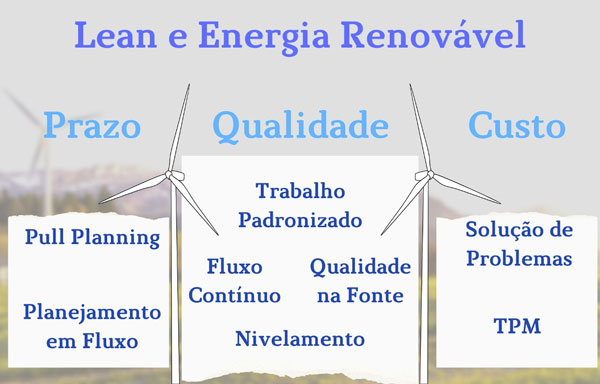
This is because it is a market, for example, with projects that have tight deadlines (with high penalties for delays), that demand a great deal of quality and that require tight costs. Lean works on these three fronts:
1. Meeting deadlines
In this context, to ensure deadlines are met, it is necessary to apply collaborative planning, with the participation of the various agents involved in the chain, such as clients, designers, suppliers, project management firms, construction and assembly companies and their subcontractors. The lean concepts of pull planning and flow planning apply to the entire project management with great results.
2. Meeting deadlines with quality
The sector has large-scale undertakings characterized by the repetitiveness of processes. This facilitates and enhances the application of continuous flow in the execution of activities.
For example, in a photovoltaic solar farm project, there is a need to build modules that repeat, sometimes by the thousands. This makes it possible to implement a lean assembly line, resulting from the application of standardized work, with a constant pace, leveling of resources and quality at the source. These and other lean concepts and tools generate high-productivity cycles that repeat throughout the entire project.
3. Meeting deadlines with quality and low costs
There are several characteristics of these renewable energy undertakings that make logistics a complex equation requiring more efficient management. In general, they are located in areas far from large urban centers. They stretch over kilometers and use imported components.
Here, too, internal and external lean logistics concepts apply, with weekly and daily follow-ups that provide rapid identification and solving of problems, as well as synchronized coordination of the resources used, with assembly kits pulled by the stable pace of progress in the field.
In addition, it is worth investing in tools that support equipment maintenance, such as TPM (Total Productive Maintenance), since the costs of repairing or replacing equipment and the time these machines are out of use significantly hurt the progress of the project.
***
These undertakings mobilize a large production chain. The use of lean principles of partnership and joint development of products and processes (Lean Product and Process Development) also applies and can create groups of companies with highly competitive proposals to offer a complete solution.
The aspects mentioned are just a few examples that illustrate how lean construction and renewable energy undertakings form a perfect match, including in the environmental aspect, since lean is a way of building that eliminates waste and consumes fewer resources.







