

What lean marketing teaches us about packaging
What role does packaging play when it comes to marketing a product? The author discusses “lean packaging” and shares the example of an Italian toilet paper manufacturer.
The importance of packaging can never be emphasized enough. It is your product's “clothing” and can really help boost your sales by standing out on the shelves. In this sense, packaging relates to two of the 4 Ps of marketing: not only Product, but also Promotion.
But what does it take for packaging to be considered lean? Marketing and communication experts tend to focus on image, which is an essential component of the product, along with the color and the materials that make up the packaging. In some cases, we speak of neuropackaging, when neuromarketing techniques are applied to packaging to attract the consumer.
In packaging planning, lean marketing teaches us to go beyond image and pay attention to the following fundamental factors: planning and design; sustainability and materials; logistics; production; innovation and digitalization.
- Planning and design
Planning your packaging is an important part of your product strategy. The more carefully thought out it is, the greater the benefits in terms of both image and sales; the more hastily it is planned, the greater the waste and hidden costs in the form of returns, defects or damaged products. Planning involves more than just brand positioning. There are also important technical aspects that must be considered, such as ergonomics (to make the packaging easier to handle), the choice of materials and the function of the product itself. At Christmas time, for example, at least here in Italy, people seem to prefer buying bottles that come in a nice bag – even if they are more expensive. In fact, the more elegant the packaging, the more value the customer will perceive.
- Sustainability and materials
Sustainable materials extend the product's useful life and may allow it to be reused or even given a new life. Many brands around the world are increasingly opting for sustainable packaging with the “cradle to cradle (C2C)” concept in mind. For example, selling ground coffee in cans not only keeps product quality high but is also an ecological choice: people can buy refills when the coffee runs out and reuse the can. In this case, the packaging image itself becomes a kind of household utensil, not to mention a storytelling device that speaks to the company's creativity.
- Logistics
Truly lean packaging cannot just be attractive and functional; it must solve logistics problems too. This means it needs to be less bulky, optimizing the use of space and reducing costs and CO2 emissions. Want some examples? Look at how napkin boxes or liquid laundry detergent containers save space. Here in Italy, the food company Autogrill recently changed the packaging of its sugar sachets, making them smaller and thus reducing the amount of raw material used. This change resulted in a 9% reduction in paper use, corresponding to savings of 4 tons a year. And this was more than a benefit for the environment or simply the elimination of some waste: as Arnaldo Camuffo wrote in his 2014 book “L'arte di migliorare,” consumers benefited from the change with a more appropriate amount of sugar in each sachet, with a positive effect on their health and a lower glycemic risk.
- Production time
Lean packaging also needs to be designed so as to reduce setup times on the production line, simplify processes and minimize machine downtime for changeovers.
- Innovation and digitalization
Packaging must not only tell a story but also create value and help develop a relationship with the customer. Using digital tools, it is possible to create “digital packaging,” which can improve the user experience. For example, it has been shown that the QR code is perceived as a tool that can complete the user experience after the product has been purchased, rather than improving the purchasing experience itself (for example, by showing product information – not least because cell phone and WiFi signals in a supermarket are usually very poor).
A CASE STUDY
High Paper is an Italian company that produces toilet paper, tissues and paper towels. Last year, they decided to invest in a small restyling of their packaging to meet new customer requirements. After market research and in-store customer interviews, they found that customers prefer compact, space-saving packs – which, in the case of toilet paper, makes 4- and 8-roll packs a much better alternative than packs of 6 or 12, respectively.
The company had to find a way to rethink the packaging while keeping 50% of the existing packaging, adapt the product image without distorting it and apply the new format to most products, reducing production costs and machine setup time.
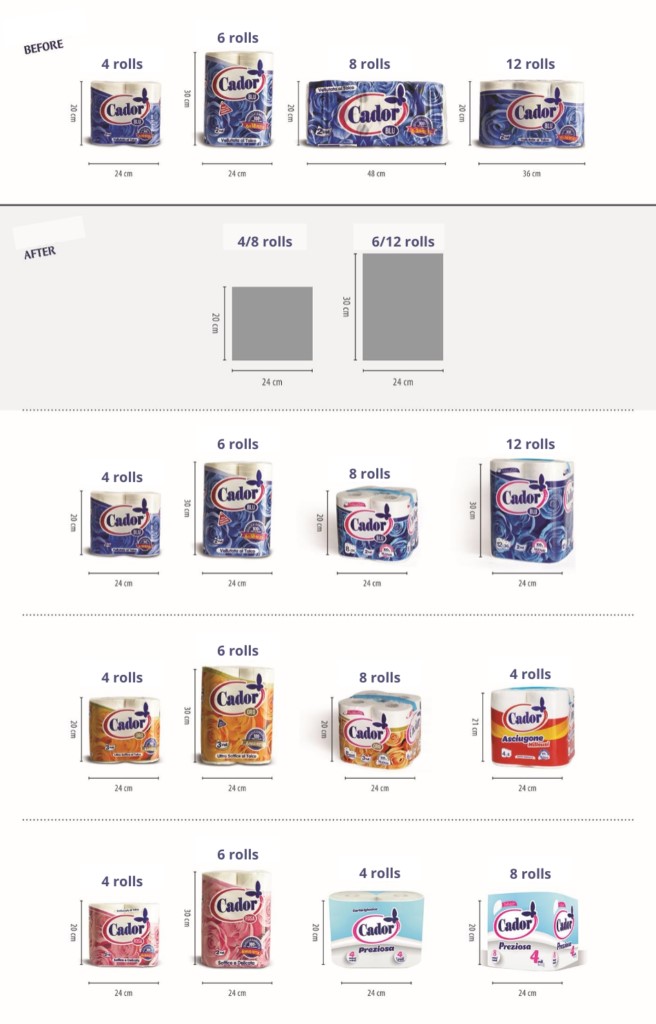
High Paper produces four types of packs – 4 rolls, 6 rolls, 8 rolls and 12 rolls. Analysis of the current state revealed that, although each was different in shape, two of the packs (the 4-roll and the 6-roll) had the same base size.
Once the necessary information had been gathered, a lean marketing plan was drawn up using the Lean Marketing Canvas. A simulation was used to accurately analyze the different size options and understand the possible optimizations and how much they could save with the new 8- and 12-roll packs. The team then simulated the composition of the cases (containing 10 packs each) and pallets for the different toilet paper pack formats.
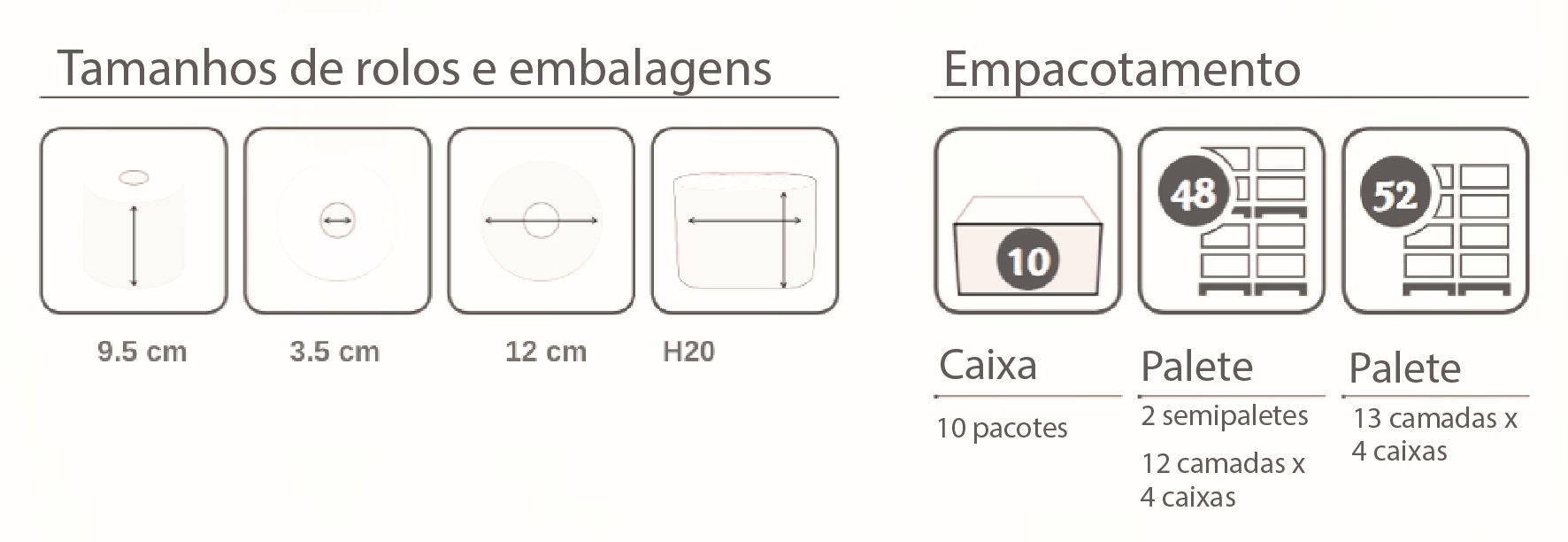
After this analysis, High Paper decided to standardize all packaging and have only two formats – both with a 24-centimeter base, but with different heights (20 centimeters for the 4- and 8-roll packs and 30 centimeters for the 6- and 12-roll packs, with a depth of 12 or 24 centimeters, respectively). The innovation was also applied to the 2- and 4-roll paper towel packs, which led to a simplified product line, standardized logistics and a reduced number of defects.
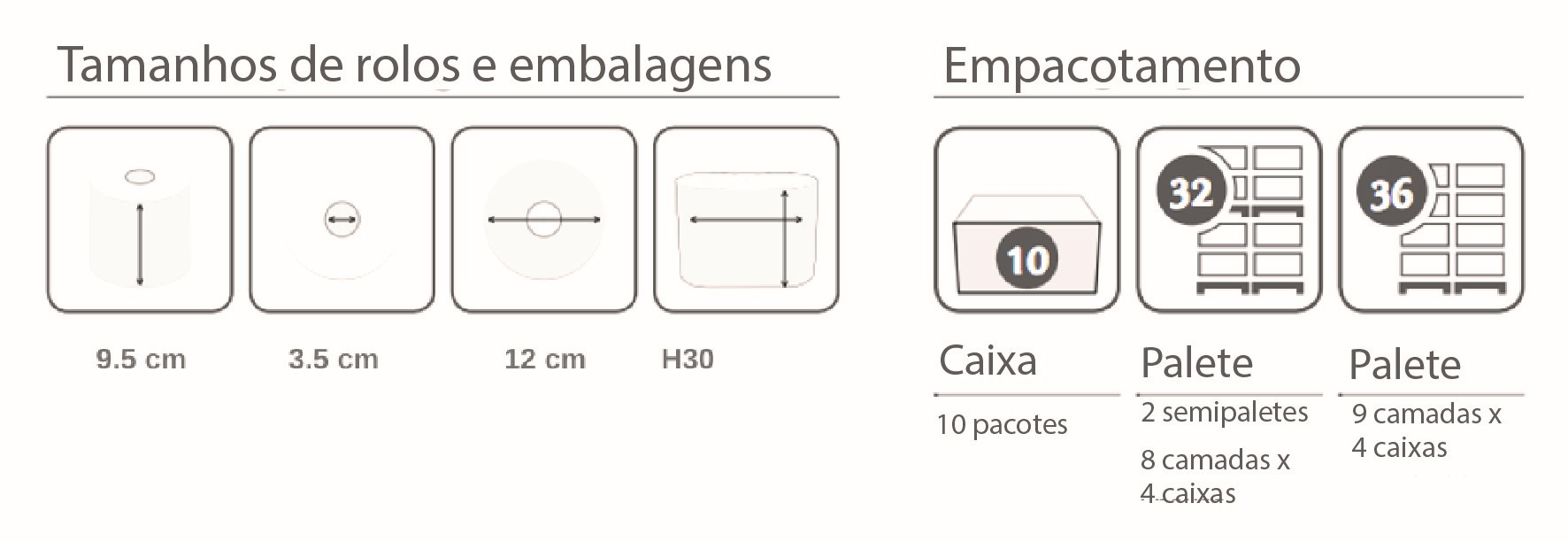
After simulating and choosing the two new MVPs, it was time to measure and simulate production setup times to understand how to shorten them, reducing costs and waste. The decision to use a single 24-centimeter base reduced setup times by 33% to 66%, since now only the height and depth had to be adjusted, as similar products could be produced on the same day. The palletizing phase was then studied, measuring the new times after the simplification and standardization of the product types and of the two assemblies and the optimization of the process.
Efficiency gains were also achieved in the time and costs required for graphic design and in the creative development of the new packaging line. Standardizing the packaging dimensions meant that the design of the new formats could be aligned with the new look in a matter of just a few days – also considering that the packaging size was the same across all formats. The printing cost was reduced by 20%, and color accuracy and alignment became almost perfect.
A QR code was added to product labels across the entire line, allowing customers to access clear information and personalized content and to communicate directly with the company when necessary (for example, through social media). The new packs with QR codes give customers a more pleasant experience, thanks to an included music playlist.
With this impressive change, High Paper achieved two goals: on the one hand, it standardized packaging across all product lines in the production phase and, consequently, the image of the products; on the other, it reduced time and cost, leading to a lower retail price (12% cheaper) and an increase in sales.
Companies often see primary and secondary packaging as an auxiliary element that is not even considered during the product development phase. They tend to think that the customer experience is limited to using the product itself, instead of seeing it in terms of product lifecycle management. As shown in this article, lean marketing turns packaging into a strategic element that adds value and can lead to financial gains and boost a brand's image.







