“Forced” home office will change the way we work in companies
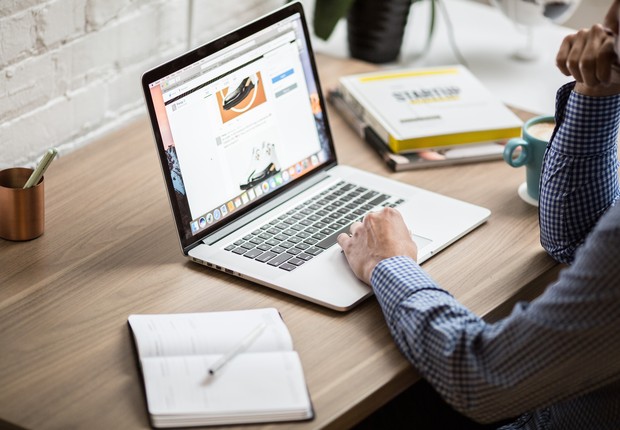
“Forced” home office will change the way we work in companies (Photo: Reproduction/Pexel)
Among its many worldwide repercussions, covid-19 has also had an enormous impact on the way we work in companies, and everything suggests this will have lasting effects.
Many companies moved almost all of their employees who previously worked in offices to home office. Practically overnight, millions of people around the world began performing their jobs from home.
A number of problems arose, since the vast majority were not prepared for such a sudden move: lack of adequate hardware and software, unfamiliarity with the necessary tools, difficulties with space and living together at home etc.
However, amid the inevitable difficulties, people and companies are adapting and reaping many lessons in this process.
The first impact was felt in the ways we communicate and collaborate. Everyone quickly had to learn to use specific tools to interact with colleagues, suppliers and customers in ways different from how they did it “in person”.
The use of work meetings by videoconference, for example, reached an unprecedented scale. Of course, part of human communication is lost in this process, but what is interesting is that, in many cases, productivity gains have been observed in several respects. In general, meetings start more punctually, are shorter, and tend to be more objective, with less drifting from the subject at hand.
These are behaviors that can have positive effects if they are cultivated and maintained in face-to-face meetings once they resume. And certainly many decisions will come to be made in quick remote meetings, with face-to-face interactions used more selectively for more complex issues.
The ways of sharing lessons learned have also become more agile. Never have there been so many webinars and live streams spreading experiences and good practices for coping with the crisis or on general topics. Distance learning formats have also received a great boost, and this will certainly have repercussions after the crisis.
The new situation has also brought the need for changes in many work processes. To adapt quickly, some routines had to be simplified, and the use of digital solutions was enormously accelerated.
I have received accounts from companies reporting that in a few days they managed to implement changes that would normally take months, streamlining routines and making more intensive use of technology.
In these cases, the positive impacts on internal and customer service processes made possible an immediate response to the crisis and brought lessons in agile problem solving that will be extremely useful going forward.
Another issue that has always been complex and that has taken on an even greater dimension in the current scenario is the need to give visibility to the work done in administrative flows, which basically process information.
How do we know whether we are carrying out activities with the expected quality, timeliness and efficiency, so as to achieve the objectives we have set? If answering these questions was always complicated, with the intensive use of home office it has become even more difficult.
Lean thinking has always emphasized the importance of applying concepts and tools that can provide visibility of processes and their performance, in real time, to everyone who takes part in them.
This starts with understanding what value is for customers and all the steps involved in delivering that value. It continues with eliminating waste and designing simple, direct processes, with clear deliverables and standards. And it is completed by establishing visual management of the standards and parameters set, so that the team involved identifies deviations daily, analyzes the causes, and makes corrections and improvements.
It is a transformation path that requires in-depth analysis, with strong involvement of the team. Even companies that were already advanced in this visibility of processes and in daily management are having to learn how to adapt in-person practices to the new reality of home office. Companies that did not yet have their processes and routines well structured are suffering even more in the new scenario.
But the good news is that, in this field too, interesting lessons are being learned. Virtual visual management boards are being used, together with online discussions, recovering at least in part the essence of the teams' daily management routines. Companies that did not have formalized practices in this regard, and relied only on the proximity of supervision for follow-up and support, are seeking to establish virtual means of bringing the team together in short cycles to check the progress and performance of the work.
In-person ways of working will certainly continue, since they are fundamental and represent essentials of the lean system, such as the need to go to the gemba – the place where things happen, to see problems with your own eyes, where they occur etc. But they will possibly be combined more
intensely with remote interactions and technology, with impacts on corporate, residential and perhaps even urban spaces.
All this experience we are going through will leave a legacy. It will certainly help us to better visualize processes, identify waste, better understand the essential value our customers want, and speed up the way we improve processes and incorporate digital solutions. And it should also make in-person work even more valued, but done in a more assertive way.
We are going through an intense cycle, which is breaking paradigms and bringing rapid changes in cultural, social, economic and so many other aspects. The mass experience of “forced home office” is just one example of a situation that will have lasting consequences, at both the corporate and the individual level.
Every crisis brings opportunities. We need to be attentive to the lessons that can be reaped, so that they are used in ways that help strengthen organizations and society, both during the crisis and in the period that follows.