


Related term
Batch and Queue
A mass-production approach to operations in which large lots of parts are processed and moved to the next process…
View termA method for maintaining flow between disconnected processes, separated by steps outside the line or plant that are too costly or too large to move.


The tsurube system is a method for maintaining flow between disconnected processes – processes separated by steps outside the line or plant that are too costly or too large to be moved. Using the technique of pulling through FIFO (first in, first out) lanes, tsurube keeps a standard number of parts leaving and returning to the system in sequenced order.
The name comes from the Japanese tsurube houshiki, the system of two buckets tied to the same rope used to draw water from a well: an empty bucket goes down toward the water while the other, full, comes up to the surface. In the same way, each time items are withdrawn for the isolated process, the same quantity of already processed items returns to the main flow.
How to apply it in your organization
In the Lean Lexicon example, a tsurube system maintains flow between the main process and heat treatment. Every 20 minutes, a set number of items arrives at the heat-treatment inbound FIFO lane from the outbound FIFO lane of operation 20. Also every 20 minutes, the same number of heat-treated items is carried from the heat-treatment outbound FIFO lane to the inbound FIFO lane of operation 40. The FIFO lanes maintain the sequence of the items to be processed.
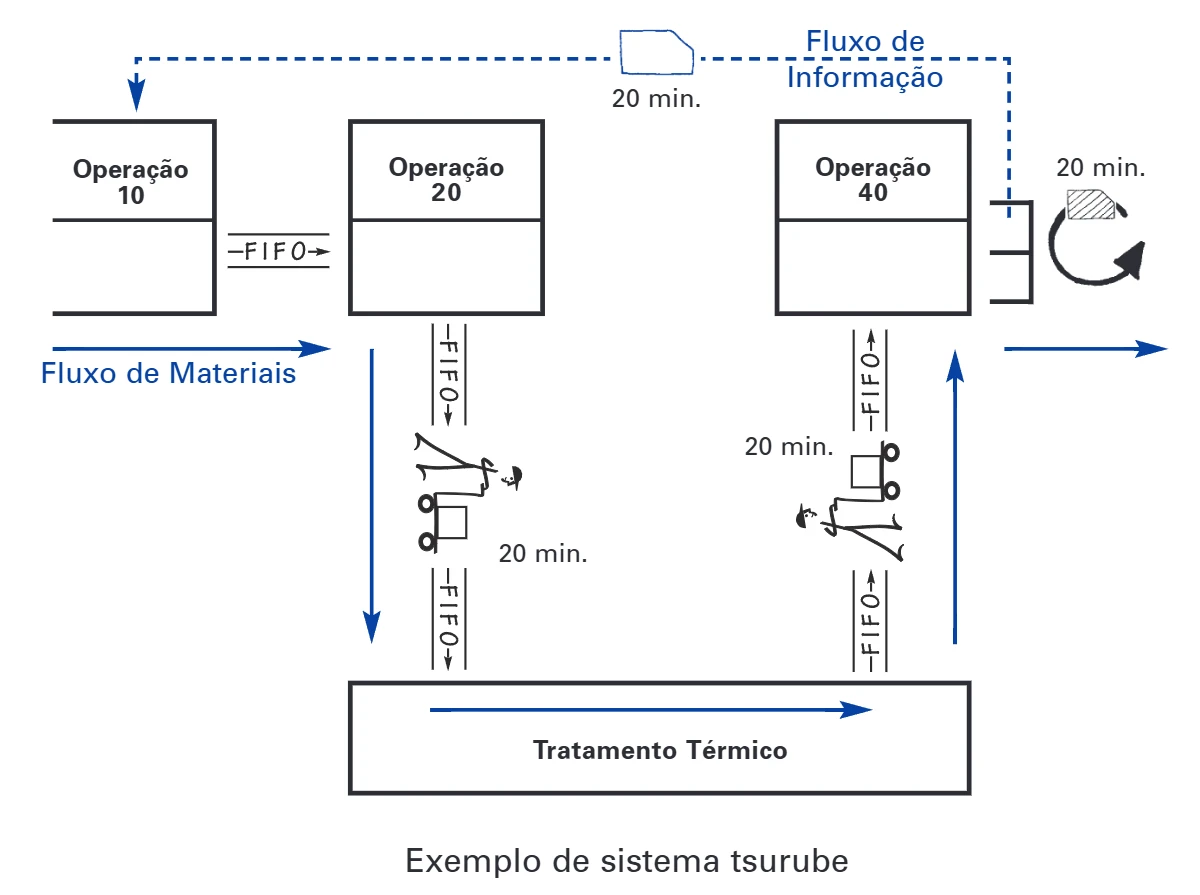
Because withdrawals and deliveries happen at regular intervals, managers know at every interval whether there has been any disruption in the flow.
Key takeaways on the topic
Explore related terms and go deeper with real-world analyses by our industry leads.
A mass-production approach to operations in which large lots of parts are processed and moved to the next process…
View term
See how this concept and management mindset were applied in practice to deliver real business results.
Read the full article
Build leadership and problem-solving skills at the gemba with support from our specialists.
See the training
