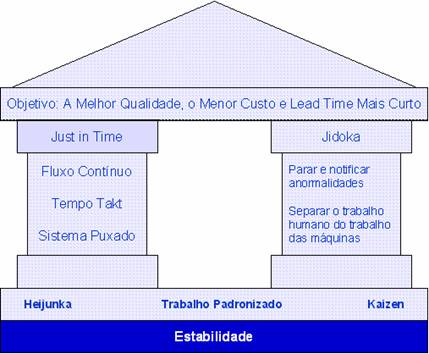
Production Stability at Toyota do Brasil
Based on my personal experience, this article seeks to show how Toyota prioritizes the stability of its production process, and how and with which tools its professionals “fight” daily against the causes of instability.
First, Toyota's definition of stability is presented, followed by the relevance of effective planning of production resources. The factors that generate instability are shown, as well as the methods for solving these problems. The fundamental role of middle management in the effort to ensure stability is also highlighted, and finally, companies that are starting out or are already advanced in their respective lean journeys are encouraged to place the pursuit of balance as a central element of their strategies.
In particular, we will show the instabilities on the assembly line due to changes in customer demand, how this affected line speed and the need to change the distribution of work.
1) DEFINITION OF STABILITY AT TOYOTA
Stability in production occurs when you are able to produce according to plan, that is, first calculating the Takt Time (the pace of customer demand) and determining which resources are needed (when we say “needed”, read the number of people, machines and materials defined by the Takt) to produce with the least possible waste, without affecting safety and while ensuring quality.
According to Toyota, production is stable when it meets at least 95% of the plan, with resources to make up the shortfall within the same period, because we live in a world in which problems will certainly occur. This is why at Toyota work shifts are spaced one to two hours apart, so each shift must make up its own shortfall.
In addition, a production or process is considered stable when it has clear and robust methods to quickly solve all problems that occur.
2) PLANNING THE RESOURCES NEEDED FOR STABILITY
Toyota always devotes careful attention to the resource planning stage so as to avoid, as much as possible, waste or failing to provide the resources needed to meet demand. In particular, the 4M’s (Manpower, Method, Material and Machine) are meticulously planned.
a) MANPOWER
The number of people needed is obtained by dividing the required work time by the Takt time (see “Creating Continuous Flow” workbook, by Rother and Harris, published by the Lean Institute). But since we live in an imperfect world, we identify an Operational Cycle time for the line or cell, usually between 90% and 95% of the calculated Takt value. For example, if we had a Takt of 15 minutes per vehicle, the Operational Cycle time would be 13.50 to 14.25 minutes per vehicle, that is, the line should work a little faster and with more people than necessary.
b) METHOD
In the case of production lines made up of several stages or workstations, the Operational Cycle time is known as “Line Speed”, the speed at which we must work. So if we determine that the line speed is, for example, 13.5 minutes, each person would have 13.5 minutes of work to be done per work stage. The SWCT (Standardized Work Combination Table, one of the Standardized Work documents) was then prepared with this time of 13.5 minutes, and the content, time and sequence of each operation defined.
c) MATERIALS
Materials should also follow the Line Speed, that is, material handling and delivery routes (see the “Making Materials Flow” workbook by Harris, Harris and Wilson, published by the Lean Institute) should take place within the 13.5-minute interval. But since this time would require many resources, Toyota normally uses 1-hour routes.
d) MACHINES
In the case of assembly lines, with each workstation being 5 meters long, this results in a conveyor speed of 0.37 meters/minute (5 meters / 13.5 minutes per vehicle), and the machines and equipment at each stage must be designed with a cycle time of up to 80% of the Line Speed value (13.50 x 0.80 = 10.80 minutes per vehicle). This is how we determined the design of a piece of equipment, taking into account possible variations in this speed.
3) HOW TO MEASURE AND MONITOR STABILITY
How do you know whether a process or line is stable? You must define the expected production hour by hour and record actual production. Deviations between actual and planned represent the process's lack of stability, meaning that problems have occurred.
For the example already mentioned, we knew that 4.44 vehicles should be produced in one hour of work, and 35.5 vehicles in 8 hours of work in 1 shift. Production was controlled with a tracking board, on which planned vs. actual was recorded. Every hour of work, the leader checked what had been done, and if there were no problems, it was recorded that 4.44 vehicles had been produced in that hour. But if, for example, a problem with a particular machine stopped the line for 10 minutes, we recorded that production had been 3.70 vehicles, with 10 minutes of delay or line stoppage (so we knew every hour the delay and the respective problems, and at the end of the day the accumulated delay).
In fact, the “process downtime” indicator was watched, because the higher the value of this indicator, the more unstable the process was. For production to be considered stable, in the example above the maximum allowed was 27 minutes of downtime (accumulated delay for a total of 480 minutes per shift). Late production could be recovered with extra–hours (overtime).
A change in demand also generates instability, because the line speed must be changed and this always requires a new SWCT, that is, a redistribution of work and people. These changes included rearranging the layout and the number of people and modifying equipment, generating many problems during production. Downtime in this situation reached very high levels, because a perfect interaction between people, methods, materials and machines at the new line speed was required.
On the production tracking board, many problems arising from this interaction were recorded, and the team made up of management together with the operators had to carry out kaizens to eliminate or reduce the causes of the problems.
4) METHODS TO ENSURE STABILITY
How did we achieve production stability? It was enough to solve problems as they appeared, as quickly as possible, with a scientific method or based on the knowledge and attitudes of Middle Management.
Line stoppages occur due to countless problems such as deficient machines, breakdowns, long set-ups, lack of parts, operator errors, incorrect or defective parts, and others. Everything was recorded on the production tracking board and addressed by the team as soon as it arose. For example, if there was a stoppage due to a malfunction in a piece of equipment, management immediately began planning a kaizen to eliminate or reduce it, because they knew this problem could happen again. Among the various difficulties, a theme (main problem) was chosen and the “five whys” were applied to find the root cause.
It is important to stress that the alert for a possible stoppage and the real need “to stop” were determined by the operators. Another example: a worker who fell behind during work could, by means of a “cord” (or push buttons at all stages or workstations), signal that he was having difficulties. Using these devices triggered an andon (at that moment a yellow lamp lit up) that indicated which area was in trouble and set a certain time (one tenth of the Takt or Line Speed) for the problem to be solved.
The yellow lamp triggered a real “battle”, in which the leaders, supervisors and department heads rushed to check and fix the issue before the line stopped, all within one tenth of the Line Speed. If they could not solve it in time, when the red lamp lit up, several other red lamps lit up in the area Director's office, in the Maintenance Manager's office and, if applicable, in the office of the Department that caused the failure (often, when assembling the transmission, errors occurred with the machined parts, and the managers immediately went to the line where the problem was happening). When, unfortunately, the line stopped, a whole group of people from various related areas set out to solve it more methodically, and this reaction of people was automatic; in other words, it was a habit. At the end of the hourly check, the problem was described, the stoppage time determined, and the number of vehicles produced recorded.
This procedure was daily, and in this way unsolved or recurring problems were identified. Then a more systematic action was taken, when those responsible for Production (managers, supervisors, foremen) met during the day to solve more significant failures, using a scientific approach and drawing up an action plan, with urgent execution during and after working hours, including during “line stoppages”. During these stoppages, line workers were reassigned to carry out the kaizens defined by the action plan, and this was vital: the employees themselves made the improvements.
5) THE CENTRAL ROLE OF MIDDLE MANAGEMENT IN ENSURING STABILITY
Responsibility for action on the “shop floor” lies with Middle Management, not with the Board. Middle Management must direct immediate actions (when the andon turns yellow) and emergency actions (when the andon turns red), and coordinate problem solving through QCC groups, KC (Kaizen Circle) and Suggestions. It must make decisions, request resources from the Board, and coordinate and integrate the Maintenance, Tooling, Engineering, Quality, Human Resources, Purchasing and other departments. It must have good relationships with and free access to all these departments.
Many might question Middle Management's ability to plan and carry out improvements. This was possible at Toyota do Brasil due to a strategy of the Board whereby Managers or Supervisors were generally highly qualified professionals coming from Industrial/Process Engineering who, after some years of training in Engineering and other areas (including internships at headquarters), were promoted to the production area. This means that production management had the technical knowledge to approach problems scientifically, within the company's and the department's procedures, and with the support of the production people. This procedure sped up problem solving, because it was not necessary to wait for the related departments to come and solve them.
As mentioned, one of the interesting resources for solving the most difficult equations was for management to hand over to the QCC (Quality Control Circle) and KC (Kaizen Circle) groups the obligation to understand, analyze, diagnose and solve the issue. In this case, the resolution time was longer, taking on average 3 to 6 months under the guidance of management itself. Another resource used was the Suggestion Plan, in which employees who detected problems solved them under guidance and then filled in suggestion forms to present to the Board. This is another Toyota differentiator, because it is voluntary and brings back everyone's participation in the fight against waste and problems.
With all these functions, Middle Management performs the role of “value stream manager”, since it is responsible for the product door to door. This professional is supported by his staff, his employees and all those responsible in other departments. This is one of the differentiators of the Toyota Production System: people's commitment and involvement in solving problems. You can see that everyone is engaged in the company's continuous improvement.
6) LESSONS FOR OTHER COMPANIES.
Our experience implementing “lean” has shown that companies that are starting out or that have been on the Lean Journey for some time should mainly focus on basic process stability, proper planning, real tracking of the plan, problem solving and leadership development, perhaps with the daily participation of a “sensei” (lean expert), because continuity is only achieved through people's attitudes. Initially this sensei should be linked directly to the company's number “1”, reporting actions and results, and being backed in all the necessary changes. The number “1” must also be re-educated, because we should follow the assumption that the superior must always be at the same level as the expert, so that he can carry on the teaching.
The Production, PPC and Industrial Engineering Departments must implement the production planning and tracking procedure systematically, with plans, production reports and measurement of indicators. They must implement follow-up meetings on the problems raised in production for the rapid removal of waste, in addition to immediate intervention by Leadership for small and easy problems (not forgetting that leaders must be trained for this).
Another important point is the need to restructure the Maintenance, HR, Engineering, Quality and Purchasing Departments so that they support Production's needs for better leveling and optimization of resources.
Maintenance should improve its service to Production, with a methodology for preparing work orders that makes it easier to identify the type of work, its priority and intervention, determine exactly its capacity vs. service efficiency, classify critical services and machines (ABC curve), and implement the preventive maintenance plan, moving toward the implementation of TPM.
The HR Department should support the restructuring of shifts, providing intervals that make it possible to make up delays, redesigning organizational levels to allow for multi-skilled employees, planning training and development for people, among other actions.
7) CONCLUSION.
Process “Stability” is the basic foundation we must seek, because it supports the “Toyota Production System”. It is of fundamental importance for companies beginning Lean implementation to have the 4M’s stabilized before introducing the tools, and this is achieved through teamwork, with Middle Management playing a fundamental role in this process.