

When learning is pulled by students
GLean – Lean Study Group – is a group linked to the Department of Production and Systems Engineering of the Federal University of Santa Catarina, whose purpose is to provide a learning environment focused on the lean philosophy, which originated in the Toyota Production System. Through research and hands-on implementation work in companies, GLean seeks to train professionals with distinctive knowledge and experience in lean philosophy and practices. The group is made up of UFSC undergraduates and has the support of a faculty tutor.
GLean arose as an initiative of Production Engineering undergraduates at UFSC to learn more about lean concepts and philosophy. The initial impetus for forming the group came from an internship involving lean concepts, experienced by one of the group's founders. This brought to light UFSC's need to learn this way of thinking. So she proposed to some friends the creation of a group whose objective would be to study lean. With the help of a professor, the group began meeting weekly to discuss the concepts covered in a few books.
Little by little, this initiative took shape and acquired a more defined structure, with its own headquarters, bylaws and the publication of papers at conferences, thereby motivating other undergraduates to join the group. This desire to learn and make GLean a recognized group encouraged the members to seek more, whether by increasing the number of members on the team or by broadening their learning in theory and practice. All this with the aim of truly becoming a hub that brings together lean knowledge at the university. In this way, GLean began to gain robustness, with internal processes and the creation of a well-defined strategy.
Today, the group has a strategy defined on the basis of its Mission, Vision and Values, which are reviewed every 5 years. The group's Mission shows GLean's purpose, which is “to set members apart in lean philosophy and practices through learning, in order to sustain our continuous evolution”. The vision, in turn, “to be a group recognized in national academic circles and as a reference in the business world for developing professionals in the lean philosophy”, represents spreading lean knowledge in the academic community and making an impact on the business world through quality projects.
A member's development cycle within GLean lasts about 2 years. In each semester of learning, called a module, the member has specific activities consistent with their maturity in lean philosophy and practices. During the first module, the member focuses on absorbing concepts, taking part in training sessions and carrying out an exercise known as the “Screw Dynamic” (more about this exercise in the following paragraphs). In the second module, the member begins to consolidate their knowledge and develop their leadership skills by working as a coach in the Screw Dynamic and serving as shusa, leader of the group's strategic processes and A3s.
Modules three and four focus on consolidating knowledge through hands-on projects, spreading the knowledge acquired by mentoring the newer modules and acting in the group's strategic leadership. To meet the learning needs and challenges of each module, the Member Development Plan was created, which spells out the basic activities for the member to become qualified in the “GLean Standard”.
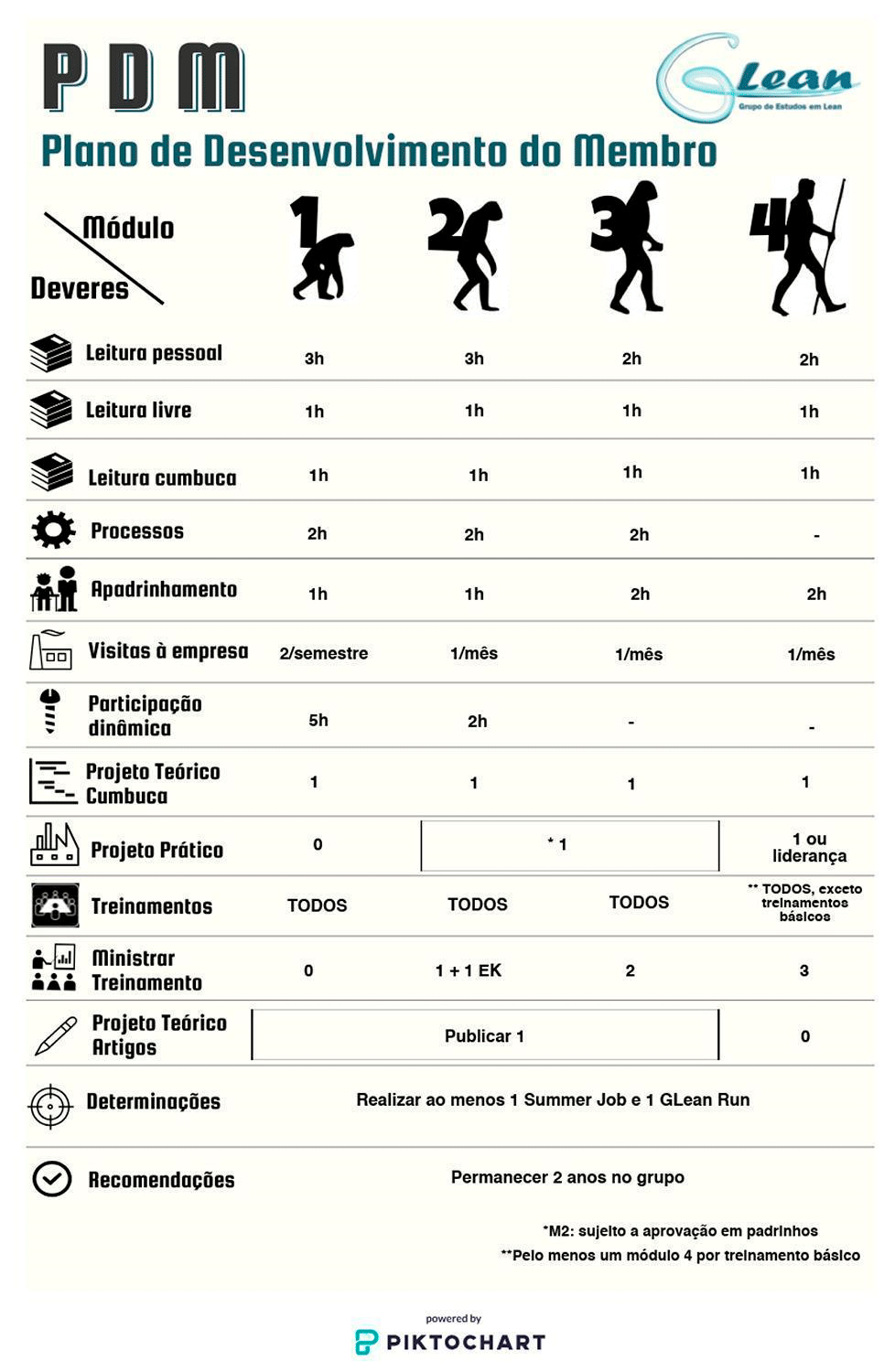
Figure 1 – Member Development Plan (MDP)
The group divides its activities according to the focus of theoretical and practical learning. In the theoretical pillar, study groups are formed on variations of lean, whose focus is to study in depth concepts that differ from the group's base literature. These groups are called “cumbucas” (bowls), which, through weekly meetings in which the members study and discuss some literature of interest, foster the accumulation of knowledge about specific aspects of lean. In addition, they seek practical experience in applying the knowledge from the cumbucas, whether through technical visits or interactions with professionals in the subject being studied. Also in pursuit of the constant evolution of the group's theoretical knowledge, weekly workshops are held, taught by the members themselves, on the main concepts of the lean philosophy.
The main way new members of the group are trained is through the theoretical project called the “Screw Dynamic”. The purpose of this project is to put the concepts seen in the literature into practice. Thus, the use of educational games for teaching makes it possible to address different techniques by simulating the production process, so that the team moves toward increasing the factory's productivity along with a higher level of knowledge absorption among the members.
The exercise begins with a simulation of the current state of a screw assembly factory, which receives components from suppliers and puts them together to form kits. Thus, in the first stage, an analysis of the factory's current state is carried out, applying concepts such as the value stream map, which helps them see the existing problems in the company. Next, a target condition is created, the future state that the members must pursue for about 2 months. In addition, to facilitate the learning process in problem solving, the A3 methodology is used.
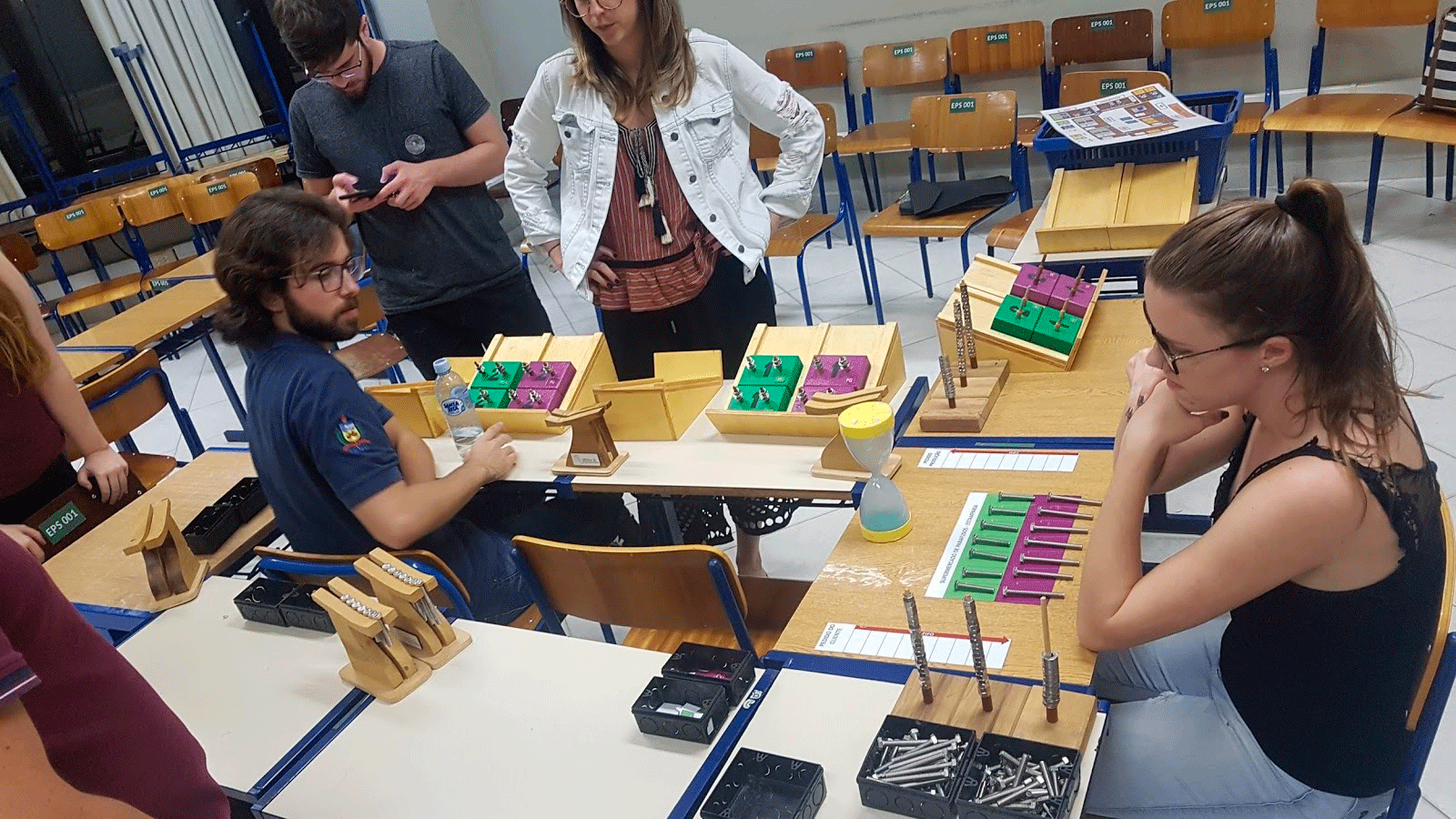
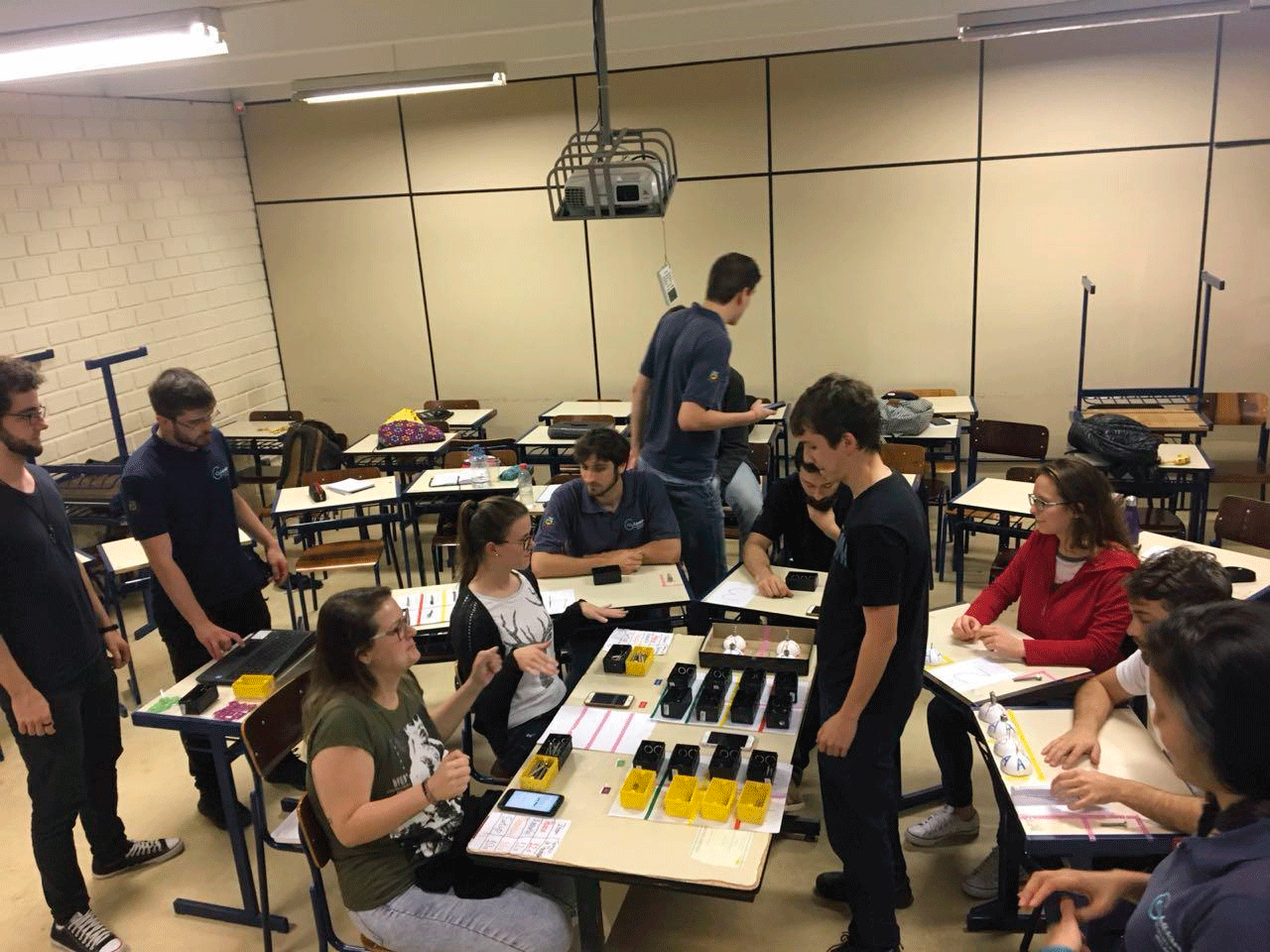
During the semester, there are constant validations of the project as it is built with the group's older members, in the form of deliverables and presentations. After about 2 months, the final results are presented to the whole group. Some benefits perceived from applying the Screw Dynamic over the years are the bonding of new members, the personal growth of the participants and the dissemination of the lean philosophy, as well as its tools.
In the practical pillar, members carry out short-term projects during the academic semester in companies in the Florianópolis region. In addition, in July, the group makes a series of technical visits, getting to know companies that are references in applying the lean philosophy. Another way of acquiring practical knowledge is through summer internships in large companies, in which members spend 2 to 3 months in lean reference companies, learning new concepts and applying their knowledge in practice.
With regard to summer internships, a level of excellence was reached by carrying out projects in reference manufacturing companies such as Mercedes-Benz, Nestlé, Zen, Bosch-Rexroth and Malwee. This achievement came as recognition of the group's ability to learn and apply its knowledge in companies of national and international impact. Some significant results that GLean helped build were:
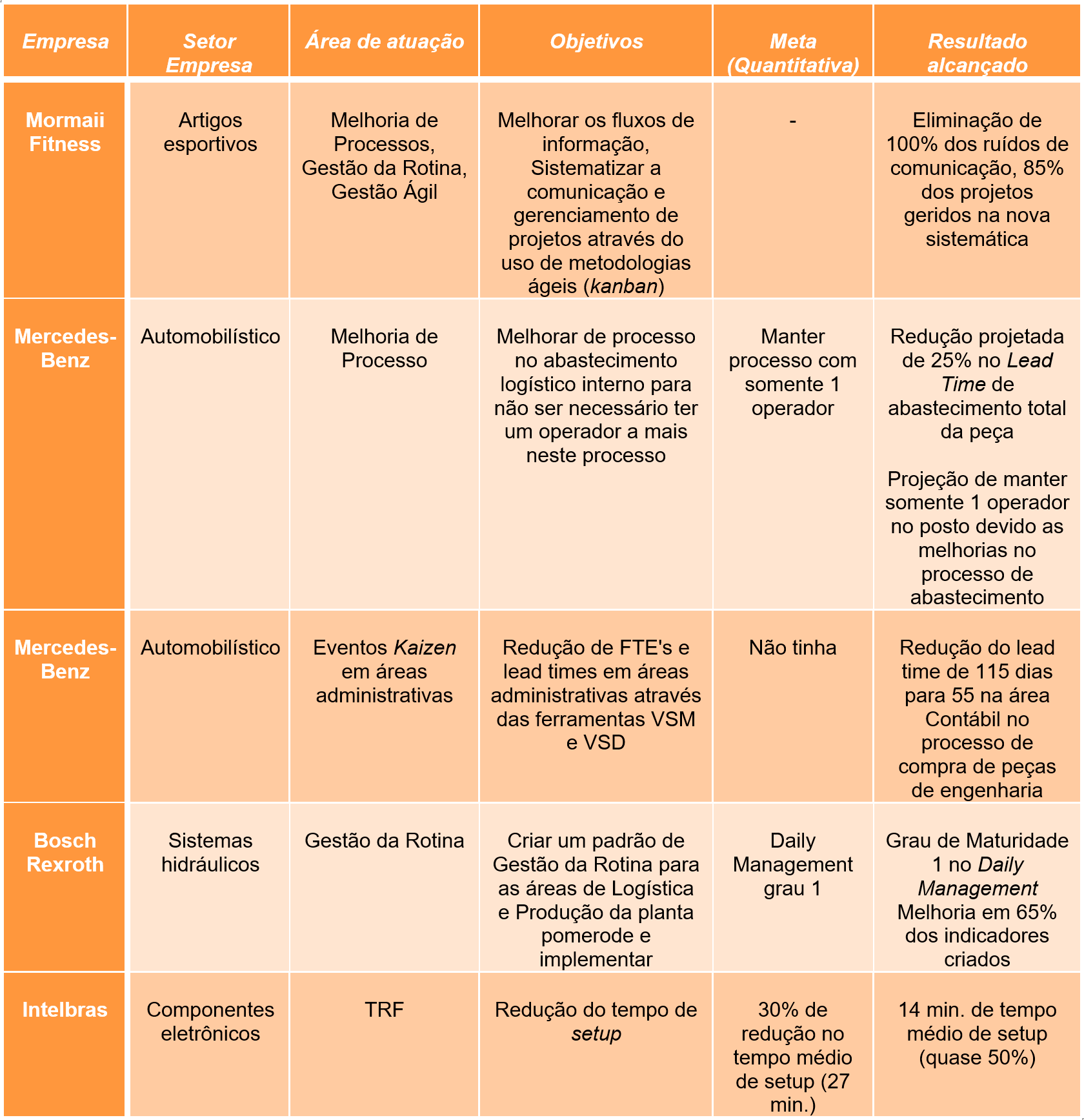
Table 1: Results obtained by company company
In addition, as a way of bringing the business world closer to the university, GLean holds the "Kaigi Lean" every year, a discussion forum that addresses the best practices of lean production systems, the experiences of people involved in lean implementations and the challenges that are part of the reality of lean in companies.
However, to be prepared to work in the market, the day-to-day work is hard, but rewarding. Each semester, the members need to read for more than 1,000 hours; in addition, over the group's history, the members have already published 12 papers at conferences and symposia and, in 2019, they reached the milestone of 40 hands-on projects carried out in the Florianópolis region since the group's founding, thus uniting theory and practice.
However, the challenges over the group's 13 years of existence have been many, among which the fact that it is a small group stands out, around 15 people, with a turnover of 30% every semester. As a result, they need to learn to structure themselves internally and, at the same time, keep growing, building knowledge and developing people. Currently, the group seeks to gain robustness in order to deploy the strategy effectively through a routine with stable processes. And to be able to evolve GLean every semester, they seek undergraduates at the university with an interest in lean over the years.
Managing to foster the lean philosophy consistently has been as great a challenge for the group as structuring itself internally, but GLean remains firm on its journey with the aim of helping the country's future professionals become ever better prepared. We hope that, through initiatives like this, more people can be inspired and realize that we ourselves – whether we are professionals in the field, teachers or students - can be the protagonists of our own learning.







