

The role of a lean educator
What does it mean to be a lean educator?
As an assistant professor at one of Italy's leading universities, this is a question I reflect on very often. For me, anyone who teaches others lean thinking and practice is a lean educator – this includes teachers themselves, like me, but also managers and coaches.
It is important that we don't forget that we are all learners too and that we strive to be lean. This means living and breathing the principles every day, starting with making sure that the needs of our customers (also known as our students) are always the focus.
This, however, requires absolute clarity about who we are teaching, because the challenges we will encounter as educators vary greatly depending on who is in front of us.
WHO ARE WE TEACHING?
It is essential that we educators truly understand who we are going to teach if we really want to have an impact on our students. So far, I have become used to teaching mainly two types of students: master's students and business executives. The two experiences couldn't be more different!
Teaching students at a university gives us the opportunity to shape their thinking, which in most cases is free of constraints and preconceptions. When trying to teach lean in an organization, however, we typically come up against long-established cultures and seemingly unshakable ways of thinking. Anyone who has engaged in a lean transformation will know how hard it is to change hearts and minds and will therefore understand the importance of lean education in companies.
For me, both roles are critical. Whether we are changing mindsets or shaping new ones, our role as lean educators couldn't be more important. The future of our community depends on our ability to get people excited about lean and help them understand it.
The difficulty of getting students to absorb and adopt lean is not the only difference between teaching university students and company executives. There is also a generational issue at play here: university students are usually Millennials, while executives are, more often than not, Baby Boomers or Generation X. Each has its own way of learning. And as if that weren't hard enough, we now have a new generation (Generation Z) knocking on our door. With them, we can expect a completely different game.
Generation Z people learn fast. They are entrepreneurial and environmentally conscious. They are very engaged and expect immediate answers. They were born in the digital age and are therefore incredibly tech-savvy (and have probably never set foot in a library). Their problem is that they tend to have a very short attention span – 8 seconds on average (a goldfish, by comparison, has 9 seconds!) –, something that is increasingly happening to us too, as technology (and social media) has a growing influence on our daily lives. This is forcing us to rethink the way we teach.
HOW DO WE TEACH LEAN?
Given the drastic changes our society is undergoing, can we use old teaching methods to teach the new generations of students? And can we expect positive results if we do? I think it is crucial to adapt our teaching method to the constantly changing circumstances around us. We need to innovate to reflect the dynamism of our society.
One recently established way of teaching is through video, and we believe this trend is here to stay. Generation Z individuals spend up to 10 hours a day using technology, and a good part of that is spent watching videos. Seventy percent of them say video helps them learn. Not to mention the fact that their short attention span demands simple, quick messages, which video does very well.
The content we teach also needs to change. Once again, lean comes to our aid. A few years ago, with digitalization and Industry 4.0 becoming some of the hottest topics in boardrooms and academic settings, people became convinced that data would fix the world. Give people data, and they will succeed. Data – the Holy Grail that will solve all of our company's problems. The problem is that humanity has access to so much information these days that it is becoming imperative to find a way not to drown in it. It is not enough to collect data; we need to collect valuable data. Who needs this information? Why? In what format? It makes no sense to give information to someone who doesn't need it. Lean thinking creates critical thinkers and good decision-makers and teaches us what information is needed by whom, when and why. The real Holy Grail is using data intelligently to solve social problems. I think there are great lessons to be learned here for us educators, as we are called upon to design curricula or develop training for a company.
If we want to impact the world in a meaningful way, our teaching approach also needs to become more holistic. Although my main focus as a teacher is lean product development, I also teach my students about the circular economy, product lifecycle management and the lean startup.
We also need to change the way we engage students. Games have always worked very well (I use a LEGO game to teach my students about set-based concurrent engineering and another game called “The Lifecycle Perception Game” to teach them about product lifecycles), but they are not the only way. I also find that going to the gemba helps a lot: for example, every year I take executives on a learning trip to Japan to help them appreciate different aspects of lean thinking that they wouldn't be able to witness in their own workplaces.
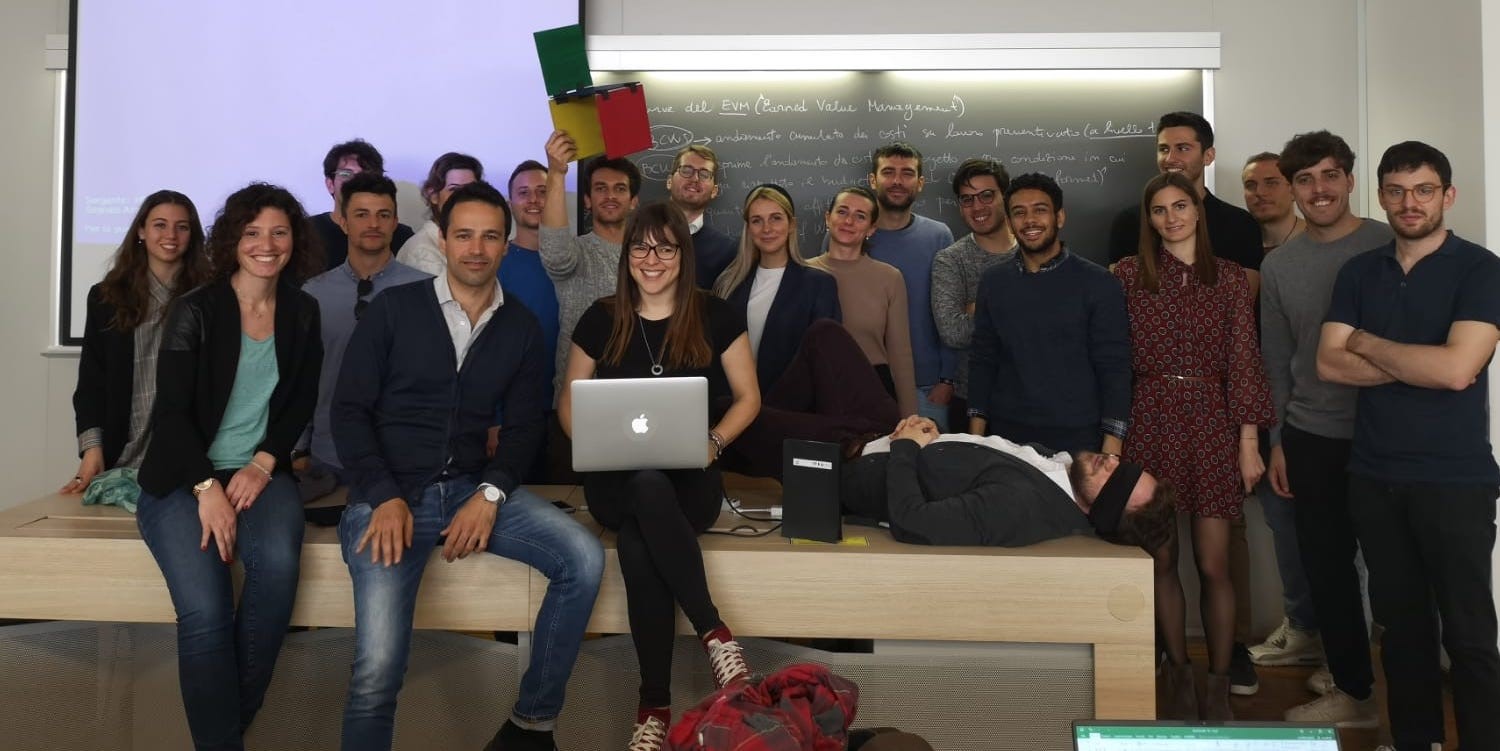
Finally, I place a lot of emphasis on learning by doing. Gone are the days when the teacher would stand at the blackboard and talk to students nonstop for an hour or two. To make sure students stay interested (and awake), it is necessary to keep them actively engaged in hands-on activities. At the start of my course, for example, I create a team of students and ask each member to choose a function, as if they were part of a “cross-functional” team in a company. Then I set a challenge (“Create a product that makes life easier for Monica – a busy teacher who is always traveling”) and ask them to prepare a prototype of a product. Throughout the classes, I teach everyone the concepts they need, but I also ask them to put them into practice. I think this is a much more effective way of teaching them: it engages, entertains and helps students learn from the work and from their mistakes.
The figure of a lean educator is very diverse. But there is one thing we all have in common: the challenge of finding the best way to teach our students and turn them into lean thinkers. It's important that we keep talking about how we can do this better. Join me at the European Lean Educator Conference in Milan, November 11-13 – everyone is welcome, from academics to CEOs, from coaches to consultants.







