
What a good supermarket should look like
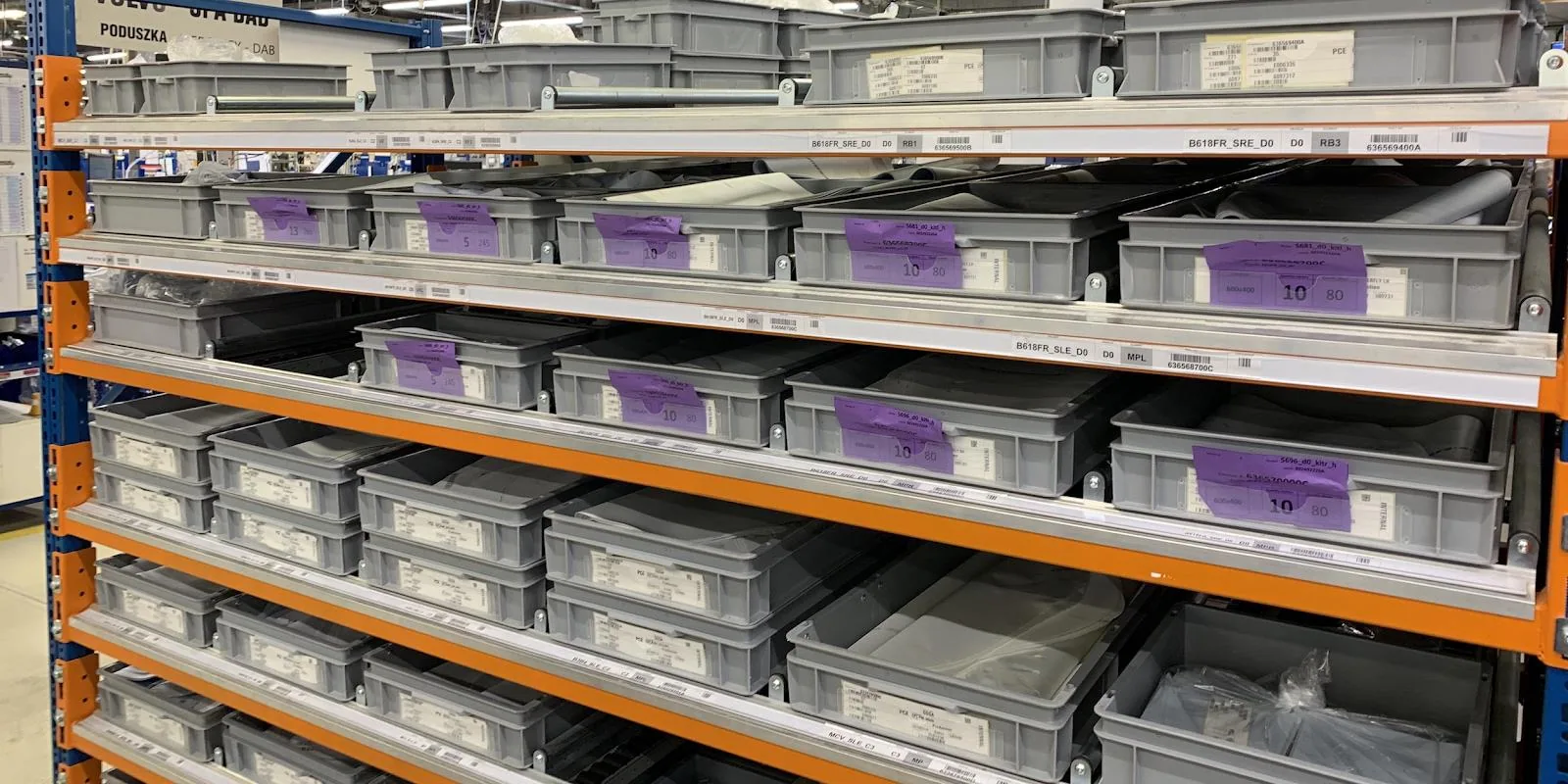
We often define the ultimate goal of lean thinking as the “total satisfaction of customer needs, continuously producing and delivering what the customer wants”. This idea naturally leads us to adopt the concept of flow and to reduce or completely eliminate everything that interrupts that flow (which we usually call “waste”).
However, making products or services “flow” to customers continuously and the way they want is easier said than done. There can be many reasons behind this – from the presence of waste to the non-exclusivity of a process (while I am producing for one customer, I cannot use the same equipment to produce for another), from an uneven production pace across the different phases of the work (due to different cycle times or the need to operate using different batches, for example) to different shifts for the customer and the supplier.
These elements can contribute to interrupting the flow and result in longer waiting times and the associated levels of work-in-process inventory. To manage these interruptions, lean organizations usually rely on the so-called “supermarket”.
As a way of managing this problematic flow of material, a supermarket carries extra items in a quantity that varies between a minimum and a maximum determined by the size of the interruption it is meant to address.
A supermarket must be associated with a pull system. Thus, when the quantity of material reaches a low level, a replenishment order can be generated for the material's supplier in order to maintain the level.
CHARACTERISTICS OF A SUPERMARKET
There are several elements we can use to identify a supermarket in the gemba. Let me describe them.
- Supermarkets are located between loops, process steps that can work together without interruption. To belong to the same loop, the operations in a sequence need to have a similar production pace (similar cycle times, downtime, changeover times, etc., and the same operations batch), have similar requirements for team members (operators in the same loop need to be able to achieve a certain level of multitasking) and be located close to one another.
- Supermarkets on a shop floor are remarkably similar to the regular supermarkets where we buy groceries: within a few meters, they should give us access to a wide range of products. In fact, history tells us that Taiichi Ohno found his inspiration in supermarket aisles, which is why the supermarkets we are talking about in this article are usually organized on shelves.
- The shelves are stocked by the supplier on one side and picked from the other, so that the FIFO sequence is followed and everyone involved can immediately see the state of things. This means that the supplier will see “holes” (signaling that the customer has consumed the product), where it will place new materials, and the customer will always have the item it needs readily available. Using the principles of karakuri, the shelves are usually tilted to make picking easier. This shelving system promotes responsibility for different parts of the gemba, since the supplier will not have to invade the customer's space to supply materials, and the customer will not have to leave its work area to get what it needs. The customer does not need to know where the supplier is; it only needs the material to work (in cases where the supplier is far from the customer, the company's dedicated department will act as a bridge between the two).
- The different items in a supermarket have a specific location and are organized in the exact quantity in which they are needed. This ensures that the team has the correct information about which materials have been used and which have not and, therefore, which materials need to be replenished and which do not.
- Materials are usually placed in plastic bins, whose size depends on the size of the material, the supplier's batch size or supply frequency, the consumption rate and the available space.
- Each bin is identified by a label showing which item can be found in the bin, which supermarket it is located in, the supplier and the quantity.
- The number of bins in the supermarket depends on the total number of items to be supplied, which, in turn, depends on the size of the interruption we need to manage with them. We may have different quantities of the same material, based on the situation we are facing. Cycle stock is the quantity needed to guarantee supply to the customer while the supplier is producing other items or serving other customers (it is directly proportional to the replenishment lead time and inversely proportional to the takt time of consumption). Buffer stock is the quantity we need to add to the cycle material to allow for small variations in demand (be careful not to confuse variation or fluctuation with seasonality) and is directly proportional to the service rate we offer the customer. Safety stock is the quantity of material we need to place in the supermarket to protect the customer from the supplier's shortcomings. It is directly linked to the level of inefficiency the supplier experiences.
- Each bin that leaves the supermarket (used by the customer) generates a replenishment signal for the supplier, which can come in several forms: 1) the bin's label can be placed in the mailbox and sent to the supplier (when the new material is ready to be placed in the supermarket, the label comes back with it in the next bin). This kanban card identifies the material when it is attached to it and becomes a replenishment order when it is separated from it. 2) Instead of removing the label and sending it to the supplier, we send the entire bin. This way, we will have a kanban container that will be replenished directly by the supplier in the quantity shown on the label. 3) The mere presence of a hole in the supermarket can work as a signal that a specific item must be replenished in the defined quantity. For this technique to work, the supermarket has to be in sync with the pace of the process so that the right decision can be made. 4) In recent years, the use of electronic kanban cards has become increasingly prevalent. It works exactly like a conventional card, except that, instead of using the same label to signal the need for new material, a new order is generated electronically. E-kanban cards are particularly useful when the supplier is located far from the customer.
It is important to remember that, however useful they may be, supermarkets are still inventory and therefore represent waste. For this reason, we need to strive to reduce their size as much as we can and, eventually, eliminate them, by acting on the very causes that make their existence necessary.
To learn more about supermarkets, be sure to check out one of the great lean classics: “Making Materials Flow”.