

Decision-Making Process at Toyota
The intense spread of the lean business model in recent years has led the unwary to focus almost exclusively on the most visible part of the system: the work methods and superior results of lean plants. However, right at the beginning of every lean transformation journey, the difference shows up in the way decisions are made about what to do, how to do it, who will do it, when and for how long. Let us examine this peculiar way of making decisions by analyzing what the decision-making elements at Toyota are like and comparing them with traditional approaches.
First of all, the decision to begin implementing Lean principles in an organization is one of those decisions that must be made by the managers who set the direction of the business, and it cannot be delegated. It necessarily involves the CEO and must be preceded by an understanding of the scope and influence that this decision will have on the development of new processes and on changes in people's mindset and behavior, including the way decisions are made. In fact, the company will follow a path of innovations that will involve constant decisions about the paths of what we call lean thinking, seeking to create value for the customer through processes that make this value flow, exposing waste so that it can be eliminated and/or minimized, and pursuing perfection.
However, the nature of the decision-making process itself must undergo changes in the content of its decision-making elements. It is well known that at Toyota decisions are made by consensus, not in the sense of automatic alignment, but a consensus resulting from debates involving actors from all the areas concerned, until an agreed plan is reached and signed on an A3-size form, which we will return to later.
Nemawashi is the word that the Lean Lexicon uses for this process: “the process of gaining acceptance and pre-approval for proposals by discussing the idea – and later the plan – with managers and others involved, in order to gather additional information, recognize resistance in advance and align the proposed change with other perspectives and priorities in the organization”. The Japanese term, the definition adds, literally means “preparing the ground for planting”.
The lean transformation also begins to operate and be felt by those involved when it is no longer simply idea A or B that will be implemented or considered, whether because of hierarchical dominance or because a given specialist was consulted. In fact, the whole process requires the participation of those directly or indirectly connected with the activities, and their effective collaboration and understanding are a necessary condition for the success of the changes.
First, we recommend that companies begin their lean journey by understanding and representing their current situation through value stream mapping. In this process, all the areas involved should take part in drawing how the company creates value for the customer, the operations, the inventories, the information and material flows, with the elements represented pictorially. Through a common representation, everyone will be able to understand where the problems are and prioritize the changes. But more than a graphic representation, it is a shared language that makes it easier to visualize improvement opportunities and also facilitates the nemawashi process, in which the group shares its knowledge and begins debating what to do, how to do it, who will do it, when and for how long.
Next, the group involved should build the future state, aiming to design the lean principles into the operation, which represents a first step toward consensus, recording on the map the common objective to be shared toward creating flow and pursuing perfection. This is only the beginning of the decision-making process. It is followed by an intense process of discussion and debate between the person responsible for the Project and the areas involved. One by one, those involved are consulted until the plan is established by mutual agreement and recorded on the A3 form, taking into account each agent's difficulties in achieving the results, including alternatives in the plan and negotiations to overcome the obstacles to what one wants to achieve.
The A3 form, or simply A3 (fig. 1), so called in reference to its standardized size (210 x 297), facilitates this communication process among the agents. The first half of the sheet, on the left side, must contain the background of the problem or situation, a description of the current situation (the current-state map should be used if there is one), an analysis of obstacles, constraints and opportunities, and a definition of the objectives and targets to be achieved. The second part begins with a drawing of the future situation (here, too, the future-state map should be used if applicable), followed by the basic plan with actions over time to achieve it, and ends with the definition of checkpoints. The descriptions should use graphic diagrams that represent the situations and make them easier to understand. More than a representation or summary, the use of the A3 represents a common language that facilitates the nemawashi process, in which the group shares its knowledge about the current process and, finally, reaches a consensus on what it wants to change.
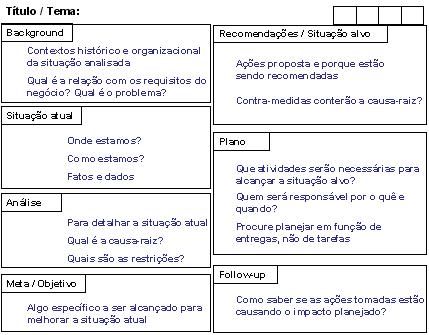
Figure 1 – A3 form (adapted for this article from Pascal Dennis's version)
As these interactions unfold, which are by no means easy, it should be said, divergence is very welcome and, during nemawashi, the person advocating an alternative must discuss it with each person involved, seeking them out individually, listening to their criticisms and advice, and must have the skill to strike bargains - over actions, resources and indicators - so as to obtain the approval of that organizational area, a process that is part of nemawashi and known at Toyota as catchball It is an exchange among those involved, encouraging good listening and respect for opinions, while targets and actions are set without giving up on the purposes.
Unlike conventional decision makers, who emphasize the answers about what to do, the lean decision maker goes further and is concerned with the flow of decision making, with the answers to the questions of how to do it, with whom, where and by when, knowing that it is during the flow of information and materials that the consumer's experience takes shape or that waste and value are created. A question that should be asked frequently is: what creates value for the customer? Broadening our perspective and considering that the external and/or internal customer is also part of the value stream, they should be brought into the nemawashi process, interacted with, and ways of acting discovered that avoid the frequent mistake of designing future maps that do not actually represent significant advances in value creation. Ask the customer: does this process, or this product feature resulting from such processes, give you any satisfaction? Be critical: are we still doing nemawashi only among engineers and specialists? In fact, this is one of the traps companies fall into. Homogeneous groups, even within an isolated process, may reflect a closed, self-contained corporate consensus that does not represent a decision consistent with lean principles. In the lean system, the decision-making process must necessarily be open to all stakeholders: from suppliers to customers, in a systemic view not only of manufacturing but of the business.
To use a metaphor, conventional decision making can be seen as one of those fishing nets used by fishermen to catch only certain fish of a given size, which in our metaphor represent the process owners, the managers and the most outspoken people, leaving aside others that are not considered important or commercial fish. However, if we use a finer-mesh net, we will drag treasures to the surface, smaller fish with little pearls, which would otherwise escape the traditional decision maker. Lean decision making means having a fine net that brings to light the real day-to-day events, the supplier's discontent, the operator's difficulties on the shop floor and the customer's real perceptions and experiences with the product.
Thus, another point that characterizes lean decision making is the continuous promotion of the practice of Genchi Genbutsu. At Toyota, this practice consists of understanding a given situation or problem through direct observation of reality. “Go and see” with your own eyes should be the keynote that precedes any discussion in lean decision making.
For example, a decision-making group working on a process improvement to increase plant capacity should observe the process under investigation, go to the Gemba - the shop floor - interact with operators, listen to the support areas, and visit at different times and on different shifts. Are conditions on the night shift the same as during the day? See with your own eyes; have the decision-making group collect or receive data obtained directly from reality. Conventional decision making relies predominantly on electronic data and management indicators - nothing against technology – however, it is not unusual for such data to already be a reading or interpretation of a slice of a given reality, when in fact, for decision making, what matters to us is to keep reality in mind in all its aspects.
Another example is the application of lean principles to administrative processes. The data available in databases almost never show the difficulties in serving the customer, or fail to capture the information that, misunderstood, led to rework; or the data represent averages and do not flag specific cases that produce value for the market; or, finally, the information requested by the customer is not available and there is no indicator to represent the extent of dissatisfaction with that service. There is the case of the service-speed indicator at a certain company. The figures were excellent, but customers did not come back. A trip to Genchi Genbutsu revealed that the speed was so excessive that customers perceived it as a lack of attention.
Thus, every decision-making process should be guided by a factual understanding of what happens at the Gemba. Deciding based only on indicators means deciding based only on slices of reality and losing sight of the whole or, further, the opportunity to detect problems of another kind.
Finally, practicing these elements in the day-to-day lean routine will lead to the learning and training needed to establish this routine more confidently in strategic decisions, but with greater scope and more responsibilities. At this point, Toyota applies a routine of constant management and deployment of the company's policy – the so-called hoshin kanri – with its strategic planning carried out with all the elements described so far, plus the particularity of taking place at all hierarchical levels. At first there is a downward movement of nemawashi until it reaches the operational base, followed by an upward movement, as catchball takes place, with plans and targets negotiated between levels, without giving up the company's purpose but considering the difficulties of the immediate base and listening to direct subordinates, so that when the deployment returns to the top, it is known that the plan is feasible and has been negotiated and committed to throughout the organization. We recommend reading Pascal Dennis's excellent book, Getting the Right Things Done, in which the hoshin kanri process is described in detail.
This article sought to raise fundamental aspects for the decision maker or decision leader in a Lean environment: Nemawashi, Genchi Genbutsu, Catchball, the A3 form and Hoshin Kanri, which strongly support the process of deciding how, with whom, where and by when to do things, ensuring not only the success of the journey but also the quality of the results.
Final note: I thank Mr. Gilberto Kosaka for the enlightening conversations about his experience with the decision-making process at Toyota.
Bibliography:
DENNIS, Pascal. Fazendo acontecer a coisa certa. São Paulo: Lean Institute Brasil, 2007.
DENNIS, Pascal. Produção Lean Simplificada. Porto Alegre: Bookman, 2007.
FUJIMOTO, Takahiro. The evolution of a Manufacturing System at Toyota. Oxford: Oxford University press, 1999.
* Instructor at Lean Institute and Professor at FEA-USP.





