
Becoming a role model
In 2012, when I returned to Córdoba – after almost 11 years in the United States – to work at Instituto Modelo de Cardiología Privado SRL (IMC), I told the board that the hospital did not need another cardiologist. Instead, I offered to leverage the lean knowledge I had acquired in the United States through research and connections to help the organization identify and solve its most critical problems and improve patient outcomes.
With the full support and participation of the board, one of the first steps was to talk to the leaders of the different areas. We wanted to understand how they were managing their areas and which indicators they were using. What we found was that many of the department leaders did not have a clear idea of their current state. Hardly any indicators were being tracked and there was no visual management. There was a disconnect between these leaders and their teams and between the department and the organization's True North. So, to give visibility of the current state to the hospital's various processes, we started measuring.
IMC is a hospital with 44 years of history. In 2019, we recorded 8,703 admissions and 238,000 outpatient visits (of which 57,284 were emergency visits). We have only 72 beds but, with more than 250 physicians, we cover a total of 53 specialties. Cardiology is the main one. I knew that transforming a small but complex organization like ours would require patience, especially considering that not all of our physicians are always on site (some are here only two hours a week).
Bringing everyone on board would be a challenge, which is why we started our improvement efforts in the areas and processes that seemed to respond most positively to the first timid lean steps we took. Three in particular – our cardiac rehabilitation program, our laboratory and our pharmacy – became our model cells. We began examining their processes, involving local leadership and frontline staff in the improvement work.
Slowly but surely, the changes we made caught the attention of other areas, and people began to get curious. In those early years, our transformation efforts focused on support functions – laboratory and pharmacy, of course, but also HR, purchasing and administration. We hoped that improving these areas would capture the imagination of the physicians and encourage them to get involved as well.
The first large-scale improvement led directly by physicians was in our operating rooms. In fact, they were the ones who asked for help. The problem was that surgeons often did not know when they would operate because it was hard to understand when an operating room was available and when it was not. A team was created – which included the heads of traumatology, cardiovascular surgery, vascular surgery, operating rooms, ICU and anesthesiology, as well as administrative staff, a board member and me –, and a series of basic lean tools, such as value stream mapping, were introduced to clarify the situation.
Accreditations and training
It was our wish for the hospital to obtain international accreditations. In 2016, we applied for the “Chest Pain Center Accreditation Version 5 with Primary Percutaneous Coronary Intervention”, which at the time was granted by the American College of Cardiology and the American Heart Association, in the United States. It was a big step for us, but I believed that teaching our people to apply lean thinking to our processes would help us get there.
Eager to deepen our knowledge of lean, we obtained a grant sponsored by Cardinal Health (USA) to take a team to the United States for a two-week training at the Academy for Excellence in Healthcare, offered by the Fisher School of Business at Ohio State University. It took place in July and October 2016, and we were the first international team to take part in the program. The team was made up of the head of heart failure, the head of post-cardiovascular surgical care, the head of the surgical center, the head of the catheterization laboratory and me. To prepare the team and familiarize it with the lean language, we read together “Management on the Mend”, by John Toussaint, as well as the program's pre-readings.
In many ways, those two visits to the United States were a watershed for the lean transformation at IMC. I was frustrated with the slow progress and the low physician engagement we were seeing; as always, the answer was in the gemba. Having our hospital's leaders visit other organizations that were further along in their journey – such as the Ohio State University Wexner Medical Center in July (at the time, their transformation leader and chief quality officer was Susan Moffatt-Bruce, who was our assigned coach during the training) and Cardinal Health's main distribution center in October – opened our people's eyes to the opportunities offered by lean. That was when things started to fall into place: on the one hand, we had projects run by support functions across the hospital; on the other, physicians who were finally understanding the value of lean.
From 2012 to 2016, when change was driven by our support areas, the progress we made was great, but limited to the different silos and largely invisible to physicians. Even when we transformed the process in the operating rooms, they recognized the progress, but still did not fully engage outside the operating rooms. Things changed after we went to the US, however. That was when physicians began to get involved, and we started to see more cross-functional projects and the systemic change they are able to bring about.
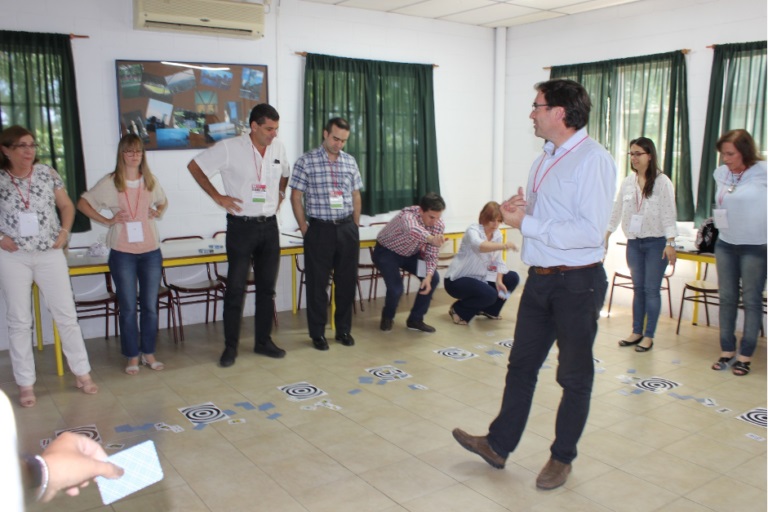
As part of our training with the Academy, we successfully completed a project to improve discharge time – a pain point for hospitals around the world. By introducing flow into the process, we were able to make big improvements: between 2016 and 2017, we reached our target of 40% of patients discharged before 10:30 a.m., 60% before 12:30 p.m. and 80% before 2:30 p.m. (today, in 2021, our target is 50%, 70% and 80%, respectively). Our work was documented in a White Paper.
Proving that we were on the right track, in 2017 we received the much-desired “Chest Pain Center with Primary PCI” accreditation. It took us less than a year. In 2018, we also earned the “ACC Heart Failure” accreditation – the only one outside the United States. Eager to continue our progress, in 2018 we brought the Academy to Argentina for three one-week teaching sessions and two two-week coaching sessions. This was another powerful catalyst for change, which created incredible synergies and understanding and greatly deepened our grasp of lean thinking.
The key to all these achievements (we also won the “ACC First Place” award for quality improvement and were recognized by the ACC as an International Center of Excellence in 2019) was helping our people speak the same language – that of lean thinking – and work toward a common goal. Ultimately, this also allowed us to sustain our results over time.
There is no doubt that another fundamental element of our transformation is the support we have received from leadership at all levels (without it, sustaining change is impossible in my opinion). Our approach is based on the idea of continuously training leaders and educating from the top down, and I believe this helped us not only to get the support we needed from leadership to drive the transformation, but also to identify our best change agents.
When it comes to learning from others, since 2014 we have invited many lean experts to visit our gemba and spend several days with us at IMC – including Marcelo Zottolo, Susan Moffat-Bruce and Peter Ward, from the US, Myrna Flores, from Switzerland, and José Ferro and Frederico Pinto, from Brazil. Some of them led workshops, and others gave talks to share their vast knowledge. Doing gemba walks with them and getting feedback on our A3s was fundamental.
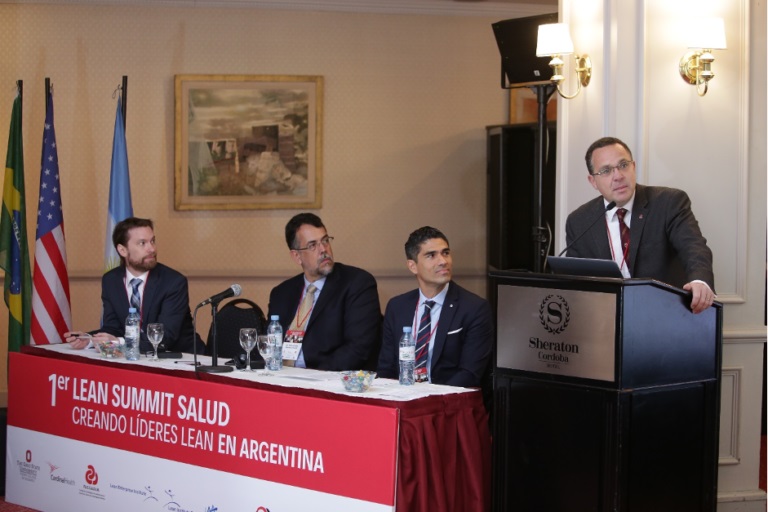
As for internal knowledge sharing, word of mouth is still our modus operandi. It is not structured and it is not what we want, but it works, at least until we can standardize and develop our own lean healthcare development programs (which we hope to accomplish this year). It is through word of mouth that we have been able to take lean from one area to another at IMC – the same idea behind our Lean Day, a year-end get-together in which different people present their A3s. We are also very proud to see how our lean efforts are inspiring other organizations: after attending our Lean Healthcare Summit in 2018, the first in Argentina, we saw several hospitals in Buenos Aires embark on their own lean journeys.
Raising the bar, even in the midst of a pandemic
An article published in The Economist in October 2018 said that “most economies are ill-prepared for even a mild recession”. We could talk about the “hospital economy”, and the sentence would still make perfect sense. In Argentina, unfortunately, we are very used to economic turbulence: the country recorded an increase in inflation of 53.8% in 2019 and 36.1% in 2020. In 2019 alone, our labor costs also rose 53.8% and, in 2020, 21.4%. What do you do in a situation like this? Our answer was clear: we need to create more value for patients. As George Merck once said: “We try never to forget that medicine is for the people. It is not for the profits. The profits follow, and if we have remembered that, they have never failed to appear”.
In fact, this idea has underpinned our improvement work from the beginning, whether we are trying to answer our patients' calls faster or improve patient flow in outpatient care. We have achieved great results by continuously raising the bar, reminding ourselves that we can always do better and offer the patient a better experience. It is worth remembering, for example, that while today more than 90% of our patients go from reception to blood draw in less than 10 minutes, our initial target was 15 minutes – in line with the Cleveland Clinic's 2016 target.
Overall, since 2012, thanks to lean, Instituto Modelo de Cardiología has achieved – before Covid-19 – increases of 31% for surgeries, 68% for admissions, 84% for outpatient visits and 103% for emergency visits (among other results). Lean thinking has allowed us to streamline processes, reduce patient waiting time and improve the quality of our care. Something I am very proud of is the fact that we have also been able to sustain these results during the pandemic.
Over the past year, many of our projects had to be put on hold, as the fight against Covid-19 became our number one priority. This is a war, and we are not immune to losses (in fact, we have lost some of our patients to this virus), but I think it is also important to celebrate our successes: our in-hospital mortality for Covid patients is 10%, considerably below the global average, and, in such complicated economic conditions here in Argentina, we have been able to keep our entire staff intact.
It is moving to see our team come together and draw on their lean knowledge to protect one another and our patients in the best possible way. For example, we have seen physicians carry out some of the tasks that are normally the prerogative of nurses as part of our collective effort to reduce the number of contact points with Covid-19 patients and thus limit staff exposure to SARS-CoV-2, and optimize the amount of PPE used without compromising our quality. Since the beginning of the pandemic, standardization has allowed us to make correct use of our PPE stock in every corner of the hospital without ever running out (in fact, we consumed more in March, when we were at the beginning of the curve and admitted only one Covid-19 patient in the whole month, than at the October peak, when we were receiving 150 suspected Covid-19 cases a day). Simply put, I do not know how we would have handled this emergency without lean.
Lean has been fundamental to our transformation and success since we started our journey nine years ago. Therefore, we encourage all healthcare organizations around the world to explore everything lean can provide, to improve their processes, patient outcomes and staff and patient satisfaction.







