
Understand the difference between “lean coaching” and “traditional coaching”
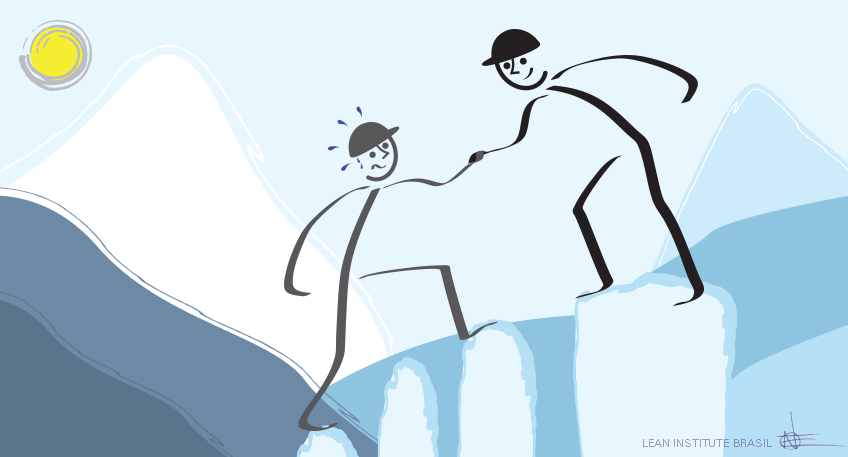
Everyone who takes part in a lean transformation is surprised by the enormous improvement in results that comes from relatively simple changes in work processes.
What not everyone realizes is that, for the transformation to take hold and keep moving forward, the real change that needs to happen lies in people, adopting new attitudes and mindsets. This is where a fundamental element comes in: every leader, at every level, needs to act as a “lean coach”, developing their team.
I notice that many people confuse this idea of the lean coach with the traditional concept of coaching, which is being used more and more by companies and executives. In fact, these are activities with different objectives, content, scope and formats, and they are neither conflicting nor mutually exclusive.
In the corporate world, the people management departments of many companies have been offering their executives participation in formal coaching processes. These are sessions led by professionals specialized in coaching, as a rule external and hired specifically for this purpose, which aim to support the person receiving the coaching in achieving their personal and professional goals better and faster.
The lean coaching process, on the other hand, is quite different, starting with its objectives. In traditional coaching, the person receiving the coaching sets their personal goals. In lean coaching, the objective and content are specific: the coach (“instructor”) aims to develop the coachee (the English term for the person who receives the coaching) in the skills and behaviors needed for them to act as a lean leader.
A good starting point can be an assessment of their current behaviors against the principles of lean leadership desired in the company, which can be based, for example, on the principles described by Michael and Fred Ballé in the book Lead with Respect.
Another fundamental difference lies in the people involved - who the coaches and the coachees are. In traditional coaching, the coaches are always specialized external professionals, and the coachees, not least because of the costs involved, are generally limited to the executive level.
In lean coaching, every people manager, at any level, is developed as a lean leader, and must in turn develop their direct reports so that they too become lean leaders. In other words, lean coaching creates a cascading process in which each leader, starting from the highest level, acts as coach to their team. For example, a manager is a coachee, with their director as coach. At a second stage, this same manager is the coach of a supervisor who reports to them, who becomes their coachee, and so on. Of course, in a company that is beginning its lean transformation, top management will first need to develop its own skills, which may require an external sensei . From then on, the process needs to be cascaded by the company's own leaders and maintained permanently.
Mike Rother, in his book Toyota Kata, illustrates well how this cascade works, focusing on a fundamental skill that everyone must develop to sustain the lean system: making improvements using the scientific method. Rother shows that every manager needs to develop two kata (routines practiced repeatedly until they become habit): the improvement kata and the kata of coaching (in which the manager teaches the members of their team the improvement kata , and so on).
Another specific feature of lean coaching concerns how it is carried out. The coach's interactions with the coachee, generally take as their focus of discussion the solving of specific problems that are the coachee's responsibility. The coach lean works by asking questions that prompt the coachee's reflection on the methods and behaviors they use when trying to solve that specific problem. This allows the two to interact in real situations, in the gemba (where things happen), enabling the coachee to see what they need to stop doing and the new habits they need to develop, for example, in terms of knowing how to listen, understanding the situation with facts and data before jumping to solutions, asking more questions in order to develop their team, etc.
Every company that starts a lean transformation experiences exceptional results when it changes the value streams that deliver products and services to its customers. This transformation will only take hold when a continuous flow of people development is created through the cascading of lean coaching at all levels, developing the mindsets needed for continuous improvement.