
How to show respect during a pandemic
As lean practitioners, we often talk or hear about respect for people, but we don't have a common understanding of what it means. Many people think it means being nice, which is essential, but merely scratches the surface of what respect for the person really means and the role it plays in ensuring that people are satisfied and high-performing. Toyota's guiding principles define respect for people along two lines: respect and teamwork.
- Respect: we respect others, make every effort to understand others, take responsibility and do our best to build mutual trust.
- Teamwork: we stimulate personal and professional growth, share the opportunities for development and maximize individual and team performance.
The risk for leaders who misinterpret this aspect of showing respect, confusing it with being nice, is that they don't give people the feedback they need to learn and improve. Not giving honest feedback causes a lack of alignment with the principle of teamwork, which allows people to develop and maximize their performance. To show respect when offering critical feedback, leaders first need to understand the situation. A leader shows respect and enriches the learning opportunity by asking people about a problem or a project. Over time, such interactions provide the environment needed to develop people's capabilities, which in turn maximizes individual and team performance.
Even so, how to show respect is already a challenge under normal working conditions, but during a pandemic it can be especially difficult. Thinking about Maslow's hierarchy of needs can be a useful framework for overcoming this challenge.
A framework for understanding needs
If the foundation of showing respect for people is understanding their current situation and their readiness for growth, Maslow's hierarchy of needs offers a framework that can help you assess them.
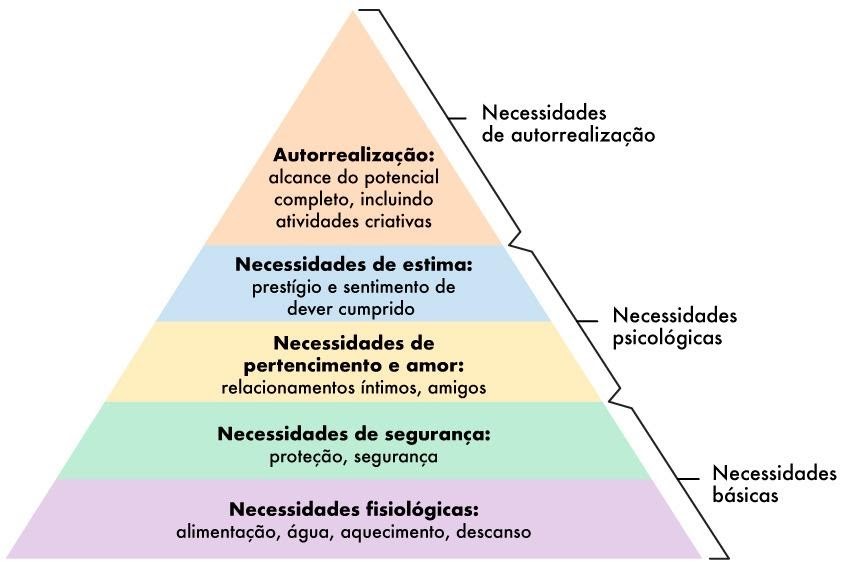
This framework illustrates that people need to have their basic needs (the bottom of the pyramid) met before they can focus on the needs associated with learning and development (at the top of the pyramid). Once our basic physiological needs — food, water, warmth and rest — are met, we can begin to focus on our need for safety. As soon as we know we are safe, we can pursue our psychological needs for belonging, love and esteem. We achieve belonging and love through our relationships with people, and esteem through what we accomplish. When these needs are met, we can focus our attention on self-actualization, our need to fulfill ourselves by reaching our full potential, which includes taking part in creative activities.
Seek to understand
Lean thinking is a system designed to support people who have already had their basic and psychological needs met and can focus on their self-actualization needs. Before the pandemic, most people, though not all, had their basic needs met. Our new reality has forced many of us to return our focus to meeting our basic needs. Some of us were lucky enough to recalibrate relatively quickly, which allowed us to focus on self-actualization and growth. But others — perhaps many of the people you lead — are still working on meeting their basic and psychological needs.
To further complicate the situation, people will likely oscillate between the ability to focus on growth and the need to focus on basic and psychological needs as we navigate this pandemic.
Leading with respect in this environment requires you to recognize that people are probably in a different place than they were a few months ago and to adjust how you interact with them. It can also be helpful to realize that, when people resist accepting feedback, they are often preoccupied with their basic needs. You can't focus on public health safety measures if you don't have food. If you believe that staying home is an overreaction in this pandemic, you will keep socializing to meet your psychological needs. Taking time to try to understand others' needs is how leaders show respect for them.
As we transition to our new normal, leaders must recognize that they have no idea how this pandemic is impacting their workforce. It is better to err on the side of assuming that people are preoccupied with their basic and psychological needs, which is especially critical when we interact virtually. Online interactions can make communication, and efforts to understand what others are going through, more difficult. When we were co-located before the pandemic, we had more opportunities to meet for a coffee or a glass of water and have informal conversations, which made it easier to know how others were doing. Now, even if we are in the same location, while we try to keep a physical distance of two meters, those same conversations don't happen.
During this pandemic, leaders must be more deliberate in their efforts to understand people's needs and show what they are doing to support them. One countermeasure is to schedule more one-on-one meetings to replace the informal conversations that aren't happening. These conversations need to happen more often in times of uncertainty and rapidly changing conditions. Another countermeasure is to devote time in your huddles, stand-up meetings, obeyas etc. to talk about team members' feelings regarding their physical and psychological safety. Although these tactics are especially essential during a pandemic, they are effective ways to show respect in any situation.
You don't need to solve people's problems, but you do need to create an environment that allows people to share where they are, and you need to show that you care. This can be as simple as asking how people are doing, as long as you are asking and responding because you really care. Ask about their concerns and how you can support them. Remember that, especially now, during the pandemic, employees' needs neither begin nor end in the workplace. Ask about what is happening with their family, their friends and their community. Ask about how the pandemic has impacted them and their ability to have their needs met.
Tell and show people what you are doing
If there is ever a time to overcommunicate and be transparent, that time is now. If you don't show people, including employees, customers and suppliers, what you are doing to keep them safe, they will probably assume you are doing nothing. Consider:
- Have you asked people how they are coping with the stress of this pandemic?
- Have you created the conditions to allow two-meter physical distancing in the workplace?
- Have you made PPE available?
- Have you adopted other safety measures?
- Have you shared what you have and have not done to ensure the safety of employees, customers and suppliers?
- Have you explained the rationale behind your decisions?
You show respect for people by sharing what you are doing to keep them safe and by showing that you care about them as people, and not just as employees.
Only when you are sure that people are having their basic and psychological needs met will you be able to focus on helping them achieve self-actualization by supporting their growth. Getting to the point of supporting that growth is how we want to show respect, and it is okay that many organizations and people are currently not able to do this while we focus on our most basic needs.