What would lean retail look like?
WOMACK'S YOKOTEN – With the upcoming negotiations over Great Britain's exit from the European Union and the protectionist stance of the new US administration, trade is back in the headlines. But what would trade look like in a world of lean organizations?
Today's world is full of bitterness about trade rules: free trade, fair trade, managed trade or even autarky (the last meaning self-sufficiency with little or no trade, which is practiced only by North Korea at the moment, but you never know). And it is evident that the number of jobs lost in recent decades, due to transnational shifts of production to countries with cheaper labor, has been a major issue in national politics in the more advanced economies. So transnational trade may now be significantly curtailed.
While the debate over trade rules continues, I have recently been thinking about trade from the opposite perspective: what would trade patterns look like – even in a world with no trade barriers – if all companies were lean? Or, more simply, what does a truly lean company think about trade? In this month's column, I would like to share my conclusion.
Lean companies want, first and foremost, to solve their customers' problems by offering them the greatest value at acceptable prices. This means they want to avoid competing with commodity products (which will always be focused on price and never customized to the customer's specific wishes) by tailoring their offering to what customers want at the right time. This desire has an important consequence: lean companies need to locate production as close as possible to customers in order to reduce lead times and get fast feedback, which ideally means locating and sustaining production in high-wage areas close to customers. That is why lean companies do not like to produce in other countries. Distance is a type of muda.
Even the leanest companies, however, cannot ignore the reality of the gap that currently exists between low-wage and high-wage countries. So, to keep production close to the customer in high-wage markets, they strive to apply and sustain lean thinking in all value-creating activities, to introduce flow wherever possible and to pull instead of push. This also means employing lean product and process development to offer more creative products with greater refinement at lower development costs, so that selling prices can rise (because the products offer more value to customers) while production costs fall.
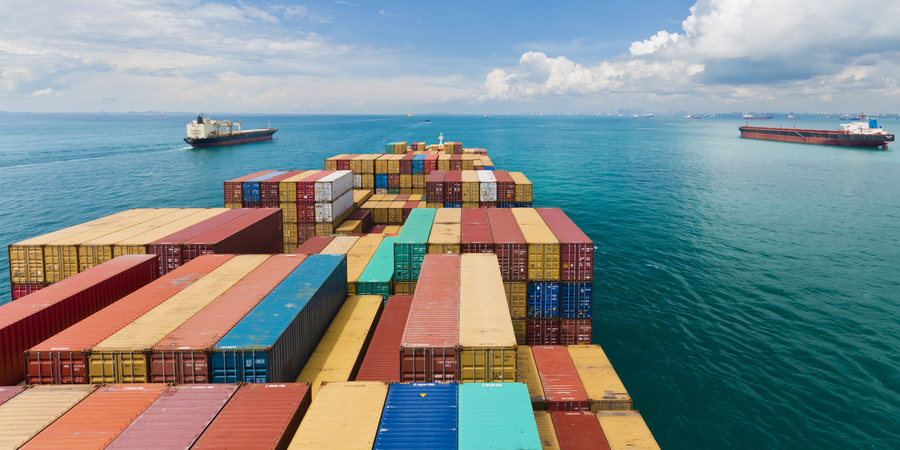
In some cases, wage differences are so large that it is impractical to manufacture products with significant labor content in a high-wage market. So lean producers may need to shift production to a lower-wage location, but, if possible, still within the sales region. Trucks for shipments within the same region are very fast and cheap, while containers for international shipments are cheap but very slow, and airplanes are fast but very expensive. For most products whose lead time is short and whose labor is a large fraction of total costs, shipping from within the same region as the sale is ideal.
Moving production farther from the customer is never desirable, but it is not so bad for the country losing jobs if a neighboring low-wage economy grows because of increased manufacturing. This will result in imports from the high-wage neighbor (creating new jobs), and the flow of immigrants from low-wage countries to the high-wage one will probably decrease, as has been happening with Mexico since 2008, with net immigration (people leaving minus people arriving) reaching zero (the tragedy of the NAFTA agreement, on which I advised the Mexican government, was the failure of the Mexican economy to grow in the fifteen years after 1992. Continued economic stagnation failed to attract imports and pushed the wave of immigration in search of jobs, which had begun decades earlier and continued until the Great Recession).
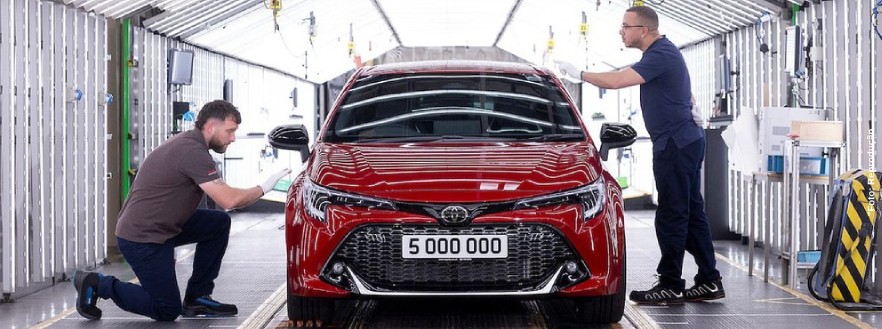
Finally, lean companies, which survive and flourish by continuously improving and even drastically transforming all value streams, do so by continuously engaging and developing all employees. This means they make a commitment to their employees in high-wage regions and face cost pressures by staying with them until every possible improvement in the product offering, design and production methods has been tried. Toyota, the poster child of lean, never had a mass layoff in Japan after the requests for outsourcing that European and US governments made in the 1980s. And not a single employee was laid off anywhere in the world during Toyota's 2010 quality crisis (the only exception to Toyota's no-layoff policy in the last 60 years happened in Australia, where all automakers left in the last decade, with Toyota being the company that held on the longest until the supply base that had served the other automakers also disappeared).
In short, lean companies apply the basic principles of lean thinking: specify value correctly, identify the value stream for each product, make products flow continuously and smoothly from beginning to end wherever possible, introduce pull to replace push when flow is not possible, and pursue perfection. By virtue of their hard work applying lean methods, they feel less need to move production locations because of shifting cost factors (labor, energy, raw materials, etc.). These principles have not changed since Dan Jones and I described them 20 years ago in “Lean Thinking”.
What I have been discussing is the trade pattern of a world of lean companies. But the real world is full of mass-production companies with modern managers. These managers usually believe in free trade as a philosophical proposition. But they calculate the total cost of purchased goods correctly, thinking of the benefits of outsourcing as being far greater than they are (had they done the “lean math”, they would know that shifting production from the US market to China hardly saved much money). And they do not apply lean principles to their production systems, when they could save a great deal and serve their customers better where they are, with little or no spending needed on automation (the other way of dealing with expensive labor). Moreover, they have no loyalty to their employees, who are voting en masse for politicians who are against trade.
Let me cite an example to show that this backward way of thinking is still alive and causing problems: I recently visited a US manufacturing company that was far behind in updating its products to changes. As a result, it was competing with commodity products, and its volume per product line was falling, undoing the cost advantage it had with its mass-production equipment. Now it is planning to abandon its current high-wage location and run the low-volume, high-variety operations it needs in low-wage regions. Even so, the managers have not done any calculation of the total cost of the product at the new location, have not thought about applying lean practices to the low-volume, high-variety production system that is now needed at its current location, and have no loyalty to employees, who are treated as costs instead of assets capable of helping the employer continuously improve its competitive position.
The consequence of such behavior in advanced economies over the last 20 years is a political debate in which even trade that benefits everyone is threatened. As I see it, bad management behavior has created a backlash that threatens managers' free-trade ideology. So thank you, modern managers. I hope it all works out in the end, but I fear something different will happen.
If trade is curtailed and production brought back to high-wage economies, but without changing the stance toward the customer and without improving the inferior production practices that were applied before outsourcing, we will see high inflation rates (which hurt low-wage workers more than high-wage professionals) and more jobs, but with lower wages until mass-production factories learn how to substitute capital for labor through automation. A bad situation for everyone.
This is what we should do: apply lean thinking to reduce unnecessary international flows of goods and treat employees with respect, as partners in improving the business. Trade policies will then take care of themselves.