How to improve care coordination for pregnant women with syphilis in UBSs: a step-by-step guide with an example
Congenital syphilis is a public health problem in Brazil that predominantly affects socially vulnerable populations. Tackling this epidemic requires timely diagnosis and treatment of pregnant women with syphilis in primary care. The challenge is to reach 40 thousand units in Brazil and develop in them a robust method for managing this problem. This study is a pilot of the collaborative carried out in ten units spread across eight Brazilian states.
This collaborative, carried out by the Institute for Healthcare Improvement (IHI), Lean Institute Brasil (LIB) and the Universidade Federal do Rio do Norte – UFRN, had the opportunity, with the help of specialists, to put whole-system quality into practice in order to improve health in the country and ensure better care for people. The collaborative focused on the diagnosis and treatment of syphilis in pregnant women, and through it the participating UBSs (primary health care units) were able to speed up care for pregnant women, ensuring appropriate care and treatment.

Daily Management board of the Viamão team
When the team mapped the value stream and understood how the current process worked, they quickly realized where they wanted to go. Improving the initial intake process would be essential so that a potential pregnant patient who came to the unit would be seen and treated, avoiding the risk of “losing” her care.
Why syphilis in pregnant women?
As the old saying goes: “an ounce of prevention is worth a pound of cure.” Those who work in health care see examples of this every day, and congenital syphilis is a great example. Diagnosing and treating a pregnant woman with syphilis is a relatively simple process, but when she is not treated, the child ends up becoming the real victim, suffering the negative consequences of the disease and often carrying them throughout life.
If we focus on diagnosing and treating pregnant women and partners with syphilis before the disease can infect the baby, we will be ensuring quality of life for a child who would otherwise be born condemned to carry this disease and deal with its effects throughout life had we done nothing; it is a matter of protecting a life and ensuring it has good conditions. This is humane and it is fundamental.
Whole-system quality
You may be asking yourself: “but this case is about diagnosing and treating syphilis in pregnant women. What if I am in another area? Why should this matter to me?”. This collaborative's initial focus was syphilis in pregnant women, but the journey seeks to maintain a view of managing the whole in order to create an organization that is always learning. So we hope this case will be a success story that can be replicated in any UBS journey, whether in the pharmacy, vaccination, reception or any other area.
The changes implemented in this collaborative are, for the most part, cultural and use techniques that can be easily replicated; in other words, it is much more about creating the working and care conditions to ensure humane and appropriate care.
A step-by-step application guide
We have prepared a short step-by-step guide to serve as a basis for future efforts by any health unit. Always with a view to creating a learning culture so that we can continually improve health care in our country, this sharing is essential for us to continue with the purpose of supporting and transforming health care in Brazil.
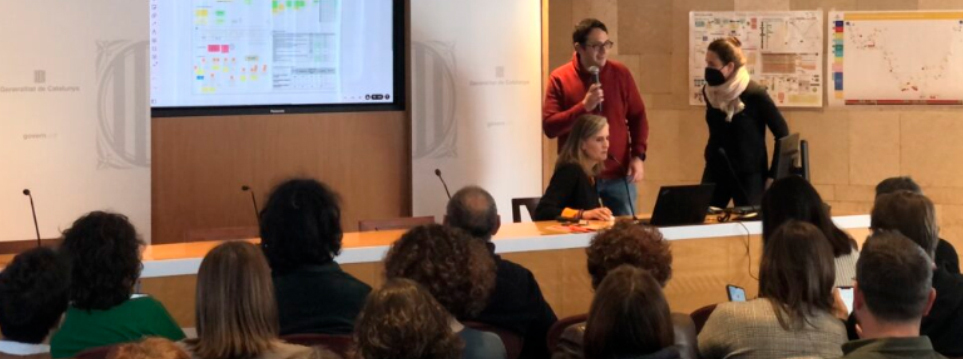
First of all, it is worth noting that some initial conversations between the specialists and the leaders of the UBSs that took part in the efforts were necessary so that everyone involved in the process could engage and understand what would be developed. This initial alignment is very important to ensure that everyone is on the same page when it comes time to do the work.
That said, here are four steps for a successful lean implementation in health care:
Step 1: Understand your current situation

The first step consists of understanding the current situation, that is, how your process works today. To do this, you need to follow it closely, at the place where care happens. Mapping the value stream means drawing all the activities in the process and understanding how it happens as a whole, allowing a clear view of the entire path the patient follows on arriving at the UBS.
In this first step, each team had the opportunity to follow some pregnant women who arrived at the UBS and, with the Value Stream Mapping tool presented to them, drew each step with its times and the people responsible.
By following the process closely, the teams were able to identify some opportunities, that is, problems that could be avoided or changed. For example, in some units, when a pregnant woman came in to be seen, she was directed to schedule an appointment and did not receive immediate initial care. In others, the rapid syphilis test was only performed on certain days of the week. In these cases, it was common for the woman not to return for the scheduled appointment. Another problem found was differences in the way the health professionals who saw pregnant women worked. They had no daily management follow-up of what was happening in the unit. So how could they know how many pregnant women were seen that day? How many tests were positive for syphilis? What problems were found? What important things had been done? What should be done?
Step 2: Think about the ideal scenario

The second step consists of defining what the process would look like in an ideal scenario, eliminating waste and unnecessary steps. At this point, there is no need to think about how it would be achieved, only about what the desired situation would be. The new process will not include the waste and unnecessary steps of the current situation.
In this step, the teams together designed an ideal, standard process; the main focus was to ensure initial care for the pregnant woman on her first visit to the unit, with rapid pregnancy and syphilis tests performed and immediate action in case of a positive result. In addition to defining the pregnant woman's complete prenatal journey, the exams, appointments and procedures required in each trimester were considered. The idea was to have everything structured, organized and explained to the pregnant woman at this first visit or appointment.
Step 3: Figure out how to get there

In the third step, we need to figure out how to move from the current situation to the ideal scenario. For this, the scientific method known as PDSA (Plan, Do, Study, Act) is one of the most effective and widely used, because it ensures that the plan is well executed. Like every scientific method, PDSA requires an approach geared toward experimentation, and like any aspect of lean, it also requires that everything be done collaboratively, with everyone's participation.
At this point, each unit assessed what its challenges were in reaching the ideal situation and defined problems that were worked on using PDSA. One of them worked on immediately seeing 100% of the pregnant women who came to the unit. Others worked on the availability of the syphilis test, faster return of results and the administration of penicillin doses.
Step 4: See whether it is working

Finally, the last step requires you to follow up on all the actions taken during the PDSA cycle on a daily rhythm, to understand whether what you are doing is having the desired effect and bringing you closer to the ideal scenario, as well as making it possible to manage the journey daily. For this, the tool known as Daily Management was used, which allows teams to meet daily in front of a board with the main information about the process, such as purpose, indicators, team, help chain, PDSA, among others, to understand what is on plan, what is off plan and what they can do to adjust whatever is necessary.
---------
This guide can be applied to any UBS process, regardless of the area. Some UBSs that took part in the collaborative have already seen its potential and are implementing it in other processes. We hope many can follow their example, using this case as inspiration and achieving results as good as, or even better than, those we saw in this collaborative.
Soon, you will be able to read an exclusive interview with some of the people involved in this collaborative.
Inspired by this guide? Start implementing lean in your health unit too, and tell us how it is going.