Start with the products' takt time
Lean Product and Process Development (LPPD) is, without a doubt, the most impactful aspect of Lean Thinking. After all, product development is where customer value is created: why should customers choose your product over competitors' products or other ways of achieving the same results? How can you offer superior design, better customization, as well as fast delivery, service and maintenance? And how do you offer all this at an affordable price? These results are the fruit of thousands of engineering decisions, both at the level of product features and in the right choice of manufacturing and materials.
- Feature choices that deliver real customer value, which depend on engineers' good judgment to distinguish between what customers say they want, influenced by current market trends, and what they actually buy. These are very difficult judgment calls that require constant questioning, going back to the customer's gemba time and time again, and developing a deep understanding of what each brand truly stands for.
- Manufacturing choices that determine the quality, cost and availability of products, and that also require a lot of reflection: should we stick with existing, proven methods to keep costs low and share assets with other products on the line? Or should we invest in newer manufacturing methods with less of a track record and that require more investment, but that may represent the future of the company's manufacturing base?
- Material choices that determine the value network, production methods and footprint (footprint) of the product. Should we stick with tried-and-tested materials that we know deliver the attributes we are looking for, but with low recyclability, complex value networks and a high environmental footprint? Or should we invest in new materials with a higher cost of investment in new value networks and production methods and a greater degree of uncertainty, which will allow easier recycling and reuse and offer improved sustainability performance?
Product development is a flow of design information and engineering, manufacturing and materials decisions. Making these decisions based on the available design information is even harder because a set of features does not make a product, just as a set of manufacturing decisions in terms of Return on Investment (ROI) on a project does not guarantee an overall return on assets for the company. For example, there are cases in which the counterintuitive choice of abandoning large legacy plants for smaller, newer setups, as our lean friends in Ukraine are currently forced to do with the Russian invasion, improves the return on the asset base. The same goes for materials performance: switching from plastic-based materials to paper does not necessarily improve the product's footprint.
Unfortunately, because CEOs see lean as a "production thing", one of many methods for improving operational efficiency rather than a complete business strategy (and because consultants tend to stick to what they know and sell manufacturing projects), most companies miss the deeper insight of LPPD: manufacturing is the testing method for design decisions. The impact of each design decision will show up first in production and at suppliers (can we make this safely, with quality and at cost?) and then in the market (will customers adopt the product?).
What is worse is that, since much of lean manufacturing originates outside Toyota (inside Toyota, the focus has always been on designing and building ever better cars, since its founding while it was taking apart and copying GM and Ford vehicles), LPPD tends to be interpreted as the application of lean manufacturing techniques to remove waste in engineering processes – which clearly makes little sense. Speeding up project timelines will not deliver a better product by itself; on the contrary, it risks forcing engineers to make premature decisions that will affect the products' market performance. As engineers learn to make better judgments, development lead times will shrink with fewer redesigns and less rework, but you can't make a car go faster by moving the speedometer needle on the dashboard. The goal of any LPPD activity should be to create the conditions for better engineering choices, in order to make products more attractive to customers.
In engineering, the two tricky questions are: are we doing things right? (Following design guidelines, modeling the correct calculations, checking the impact of decisions, etc.) And, are we doing the right things? These are hard questions to answer.
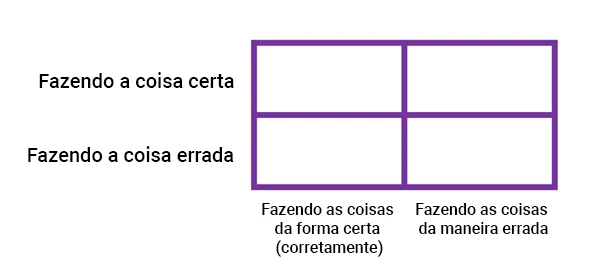
Without a crystal ball, how can we know whether we are doing the right things and doing things right? Creating a vision for future products is critical in product development, as it fundamentally challenges existing products. Therefore, choosing the right design topics is hard: should we go all in on solid-state batteries or work with existing batteries? Should we focus only on BEVs (Battery Electric Vehicles) or continue to develop a full range of hybrids? Are customers really buying electric vehicles at their real price, or are their choices unduly influenced by government incentives and communication? How can we know?
There is no way to know, but we can improve our odds in our assumptions by reducing the scope of our bets. We can start LPPD reasoning by looking at our full product range, assuming that each product offering fits into a market niche, and then ask ourselves: what is the products' takt time?
Instead of choosing to redesign a product when sales have fallen catastrophically, we can establish a discipline of reviewing each product every six months, two years, four years, to decide what we should change and what we should keep. What are the long-term investments in new assets (technology, materials, etc.) that the company is committing to, and when are we ready to make the change?
Thinking this way, a lean Chief Engineer (Chief Engineer) starts with clear sales and profitability targets for a product renewal and answers deep questions about what customers are looking for now and what they still value and buy without even mentioning it (things like quality, safety and durability are obvious to them). Thinking in terms of product takt time radically changes the engineering perspective, because it encourages you to look at a complete value stream, not a single product launch. This will have immense consequences for manufacturing cost, as we can better choose which new processes need to be installed and which existing processes can be leveraged.
Product takt time is also the key to making better use of marketing and model identity, as marketing professionals can answer with greater confidence the question "what does this product need to attract customers today?" rather than "what would be the perfect product for this niche tomorrow?" Product takt time helps calibrate all marketing and engineering questions and avoid lethal flights of fancy with impossible requirements and utopian thinking about features that customers will never actually buy once they are told how much they cost.
Clearly, there is much, much more to LPPD than just product takt time. Years ago, we tried to capture the complete lean product and process development system with Freddy Ballé:
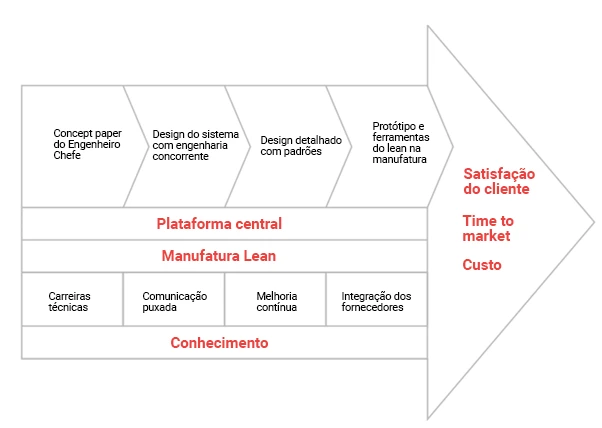
But it is also easy to get lost in an exercise of bureaucratic compliance with requirements and miss the overall point. By starting with the product line and the product launch takt time, you steer your engineers' minds the right way and start thinking differently about how to distribute and develop your engineering resources (for example, do you have the right people to develop the next generation of products?).
There are, of course, different kinds of takt times. As we have suggested, looking at regular product updates is a great starting point, but by no means a good place to stop. As we accumulate new knowledge from these engineering activities, we should leverage that knowledge to think ahead. Which markets or segments are we not competing in? What will the next generation of customers value that is different from today's customers? How do we keep our product portfolio up to date? And what regulations will we face in the future, and how do we form new solutions in response to them?
To deal with these long-term challenges, we can also think in terms of takt time. In fact, this is what Toyota does with its model renewals. It is also how Apple systematically deploys new and improved technologies across its product portfolio. For example, Toyota has historically moved in different cycles in terms of product takt time, linked to the training of new Chief Engineers (CEs). Regular updates happen annually and are led by aspiring CEs at "junior level". Mid-level CEs handle the generational model changes that usually happen every three or four years – product launches that usually involve major changes in technology and value offerings for existing models. Finally, senior CEs are responsible for developing completely new models that often address new markets and new technologies at the same time. Famous examples are Hasegawa and the first Corolla, Uchiyamada and the first Prius, Suzuki and the first Lexus. However, there are other examples of Toyota developing new market niches with product launches: for example, the first model in the luxury crossover segment was the Lexus RX series, developed by chief engineer Tsuneo Uchimoto. This type of launch usually happens at intervals of about eight to ten years and requires much more investment in all aspects of product design and development. Apple, on the other hand, maintains a smaller product portfolio that is relentlessly updated in annual or biannual cycles. Sometimes, only small design changes are implemented, because new technologies are not deployed until they are fully ready (see the case of portrait mode in this HBR article), while at other times major upgrades are made to fundamental design or technology.
One of the biggest reasons for the failure of these kinds of high-risk development projects (and both Apple and Toyota have had their share of failures), however, is undoubtedly the lack of accumulated knowledge in Engineering, both technical and market-related, and regarding customer preferences. Knowledge that can only be developed gradually, while testing hypotheses at the gemba, the real and messy world of customers and manufacturing. So, start with product takt time and ask yourself what the natural cycles (short, medium, long term) of your markets and customers are and how you can align Engineering with these cycles. As we discussed in this article, the answer will be takt time.