A new way to build
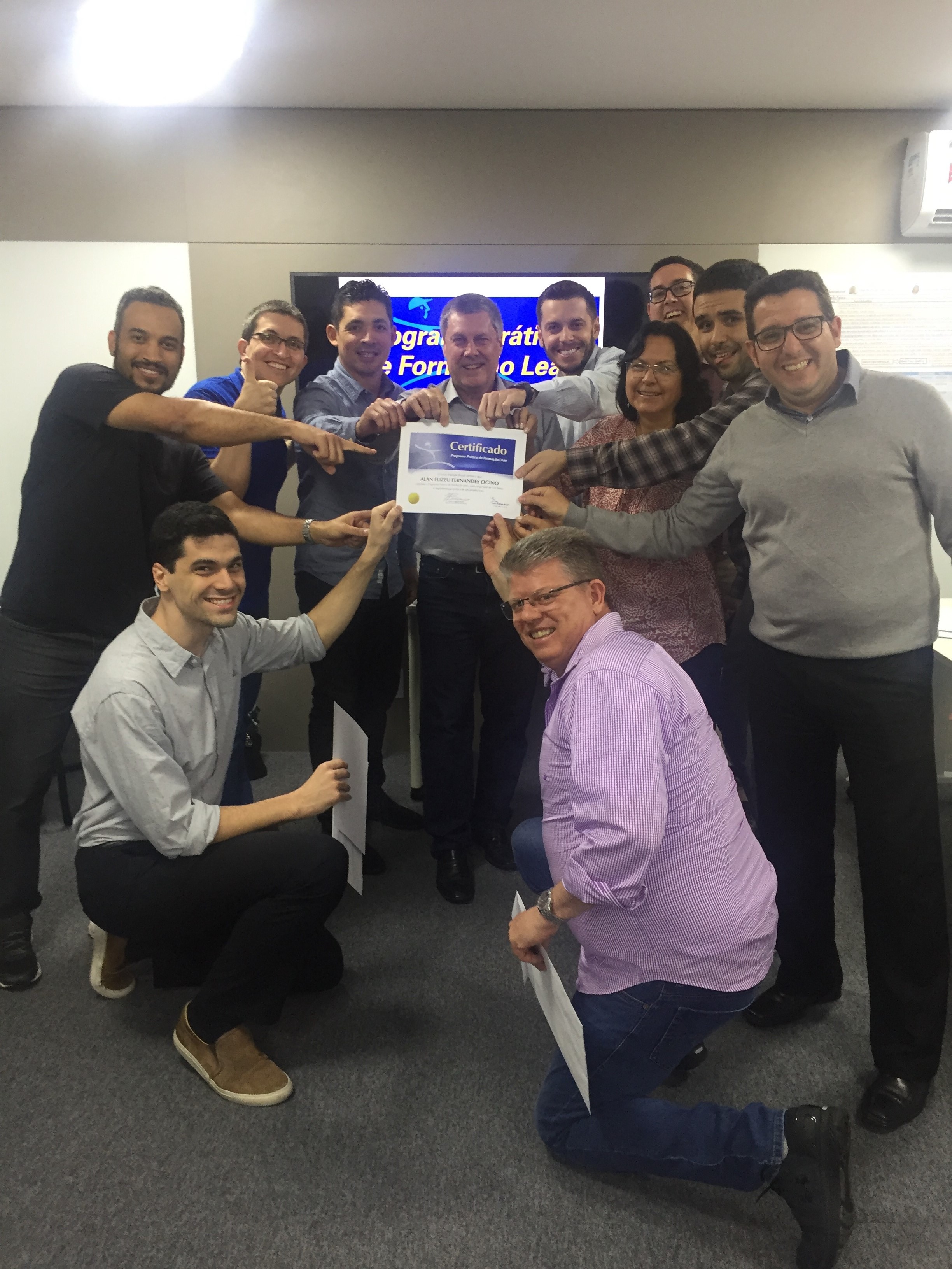
We know that the exchange of experiences across sectors and cultures is one of the most powerful concepts of the lean philosophy, with people from different industries, countries and situations increasingly adopting this way of thinking and creating value through adaptations and evolutions. At this event the scenario was no different; professionals from many sectors of the economy were present to show how lean can help in their particular context.
The PPFL closing events are a chance for participants to share the experiences they gained during the course, or even at other moments, so that results and lessons learned can be presented and serve as an example for everyone, and so that everyone has the opportunity to voice their concerns and receive contributions from their colleagues.
This year, in addition to the participation of the program manager, Mário Ferrari, and the director of Lean Institute Brasil, Flávio Battaglia, a special guest had the opportunity to tell everyone how his lean journey has been taking shape since he took part in PPFL in 2016. He is Flavio Venturelli, who heads one of the first lean startups in the construction field.
Flavio had his first contact with the lean philosophy when he worked at IOV (Instituto de Oncologia do Vale), years before taking part in PPFL. In 2013, he was hired as project manager at a real estate developer located in the city of Caraguatatuba. His job was to recover the company's projects, and at that time he was responsible for 216 mid-range apartments; in other words, the idea was to use lean thinking to optimize processes, reduce waste and meet the stipulated deadlines.
The problem, however, was that at the time Flavio thought of the lean philosophy as a set of separate, disconnected tools, something that is very commonly observed and that destroys any chance of lasting success. The construction works were frequently behind schedule, and Flavio soon realized he would need to take a different approach to overcome the difficult situation he found himself in.
That was when Flavio came across PPFL and decided to bet on a deeper knowledge of lean as a way to reduce waste and improve the company's performance. He took part in the program in the first half of 2016, when he began to better understand lean as a whole, as something integrated.
The first thing that came to Flavio's mind about lean after starting the program was that it is actually simpler than everyone thinks. In fact, it is so simple that this is the very reason people do not understand it right away. People expect something complex, so they try to make it complicated, because they cannot believe that an approach brimming with simplicity could be the solution. “Something must be wrong here” is part of the common thinking.
During the execution of one of these projects, Flavio ran into a big problem (which, in lean, is understood as a big opportunity): midway through, it was noticed that the building lacked a sizable water reservoir, that there was no physical space to build one, and that it was not in the project's budget at that point either, since everyone believed it was already done. As if that were not enough, the project, under traditional construction methods, was scheduled to be finished in 8 months but had to be delivered in just 90 days. It seemed impossible to solve this problem, but using the A3 he had developed during PPFL, Flavio managed to succeed and even return money to the buyers. His experience with lean in civil construction had been very positive.
After the PPFL class of the first half of 2016 ended, Flavio was so excited about what he had just learned that he had an idea: why not set up a lean construction startup in Brazil? From scratch, starting with its conception. That is how FFA Construtora Lean was born, in Caraguatatuba/SP, perhaps the first construction company in Brazil to fully implement lean management in the civil construction sector since its founding, as the essence of its competitive strategy.
The prospects for this venture were ambitious, just as the challenges were also great and unknown, because starting a fully lean business requires knowledge, integration, planning and, above all, the absolute involvement of all the main stakeholders. Since it was something pioneering in the industry, the business had to be thought through from its foundations to the conception of the product, which is today among the first fully lean projects under development in the country: the Évora Building.
One of the biggest problems in the civil construction sector is that waste in this area is excessive, reaching approximately 30% of the total cost of the work in some cases. As mentioned earlier, lean sees problems as opportunities; that is why Flavio brought together a team in 2016, and together they tried to learn from the mistakes of previous projects to solve the problems of quality and excessive waste.
After a year of planning involving architects, engineers, employees and consultants, the team was ready to begin. Since then, the project has been moving full steam ahead, already showing some impressive results when compared with previous projects. For example, a wall that required the work of two bricklayers and two helpers to be built in two months came to be built in just twenty-five days with the work of only one bricklayer and one helper.
Flavio says that one of the most evident advantages of lean over the traditional construction method lies in the low commitment of cash flow and in the ability to work in batches and deliver much more while using fewer resources.
“In previous projects, we had fully pushed processes generating great waste. It was practically impossible to do anything without waste, and waste was inherent to every step of the process, but it was invisible to us. After adopting lean, we learned to see and were able to realize that much of what we did could be approached more efficiently. Every step of the process came to be designed so as to remove its complexity and increase its quality and speed of execution. Although this seemed somewhat magical in such a well-explored market, we discovered a new way of seeing what we had been doing for years”.
Flavio notes that the manager of a construction project often makes a decision based simply on the unit price of products and ends up ignoring other points of waste which, in the end, cost far more than the amount saved with a good purchase, even causing unforeseen delays and disruptions.
“An example of this: in the past, we bought cement blocks in closed trucks at a price we thought was advantageous. When we studied the processes that use this resource, we realized that unloading the trucks, transporting the blocks, storing them until they were used and moving them to the place of use generated brutal waste, because during the process many blocks broke or disappeared (not to mention the labor that was paid practically just to move around and that added no value whatsoever to the final result). We then started buying blocks on closed pallets, which were unloaded by crane trucks in specific batches and, when possible, already close to the places where they would be used. Although more expensive, at the end of the process this delivered considerable gains in the speed and quality of the process and, what was most incredible, with lower costs in the end, because it allowed the labor that would have been used for transport to be used at other points where it was needed, or simply not used at all”.
Expectations for the Évora Building are high regarding the delivery date and the processes being built, but Flavio stresses that the most important thing in this project is not just meeting the schedule, but becoming a new model for civil construction.
Now Flavio seeks to extend the knowledge he has acquired in recent years to his next projects. We know that Brazil is going through a troubled economic period, and Flavio's story is proof that lean may be the way out the country is looking for.
Many people may be worried, thinking that lean will make the building construction process “cheaper”, in the sense of compromising quality and safety. What happens, however, is the opposite. Lean eliminates waste and increases efficiency in order to free up resources to be used to make construction even safer and of higher quality. Lean construction can bring immeasurable benefits to society.
Of course, it is not easy to convince people. Resistance to lean happens naturally, as it does with anything people are not familiar with. However, if you involve everyone around a common goal and show everyone how lean can simplify the work, you will be able to make them feel part of the project. It is not easy, but it is the leader's job to understand that nothing should be imposed on people; rather, they should be convinced through facts, data and a great deal of respect.
Flavio's story is just one more of the many success stories that have come through PPFL. We hope, and know, that many others are yet to come. Flavio began to better understand lean thinking through the program and, at this event, closed one more learning cycle, passing on what he learned from the program and from his subsequent experiences to the new PPFL graduates.
Flavio reminded everyone that PPFL brings benefits that cannot be measured: it offers a practical view, moving away from theory and using your own reality to understand the philosophy. It helps break paradigms and, as his story has shown us, serves as a watershed, opening new horizons. But above all, it allows people with more experience to help those who are starting the journey to take the right steps in the right direction. Flavio has been on both sides, as a participant in 2016 and as an example of success in 2018. Either way, he keeps on learning.
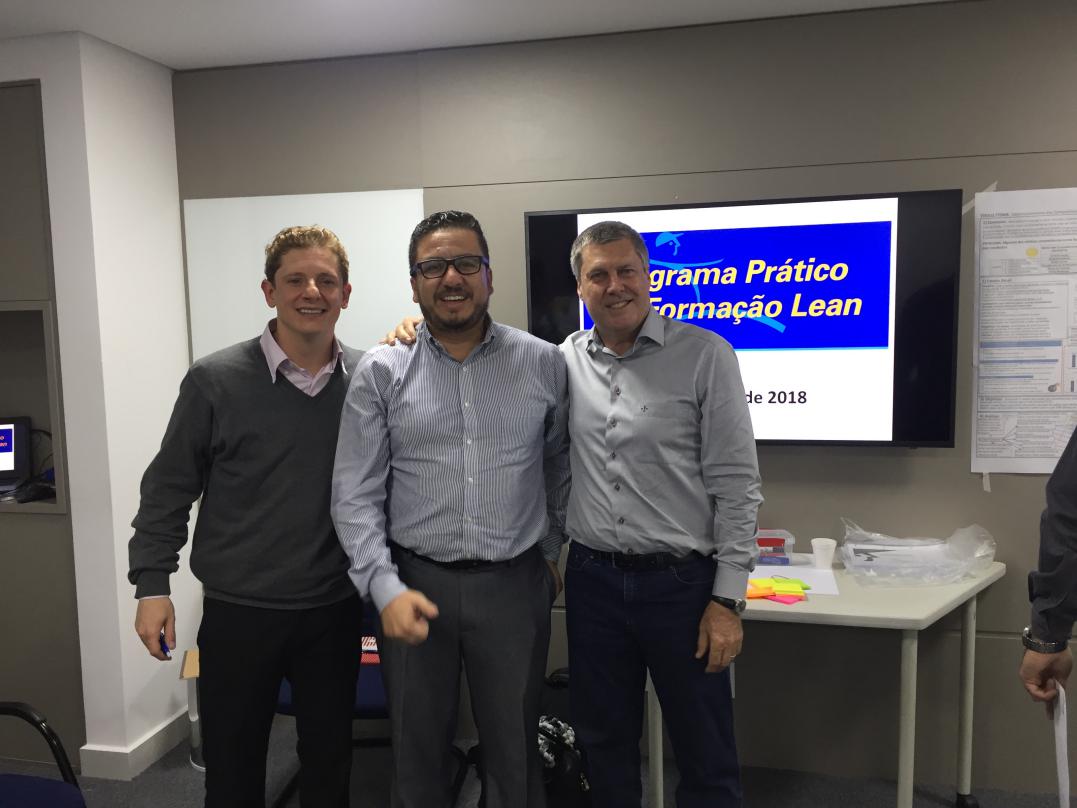
We thank Dr. Carlos Frederico Pinto (Instituto Oncológico do Vale), Mário Ferrari (LIB) and Flávio Battaglia (LIB) for their valuable contributions to this article.